Feb 13, 2026 Written by 

But is it permissible for him to participate in the Eucharist?

The Conversion, forbidden things and the Doctor of opposites

(Lk 5:27-32)


At the time when Luke wrote his Gospel (immediately after the mid-80s), the community of pagans converted to Christ in Ephesus was pervaded by lively temptations and marked by defections.

In addition, a question arises in the internal church debate about the kind of admissible participation in the meetings, and the Breaking of Bread.

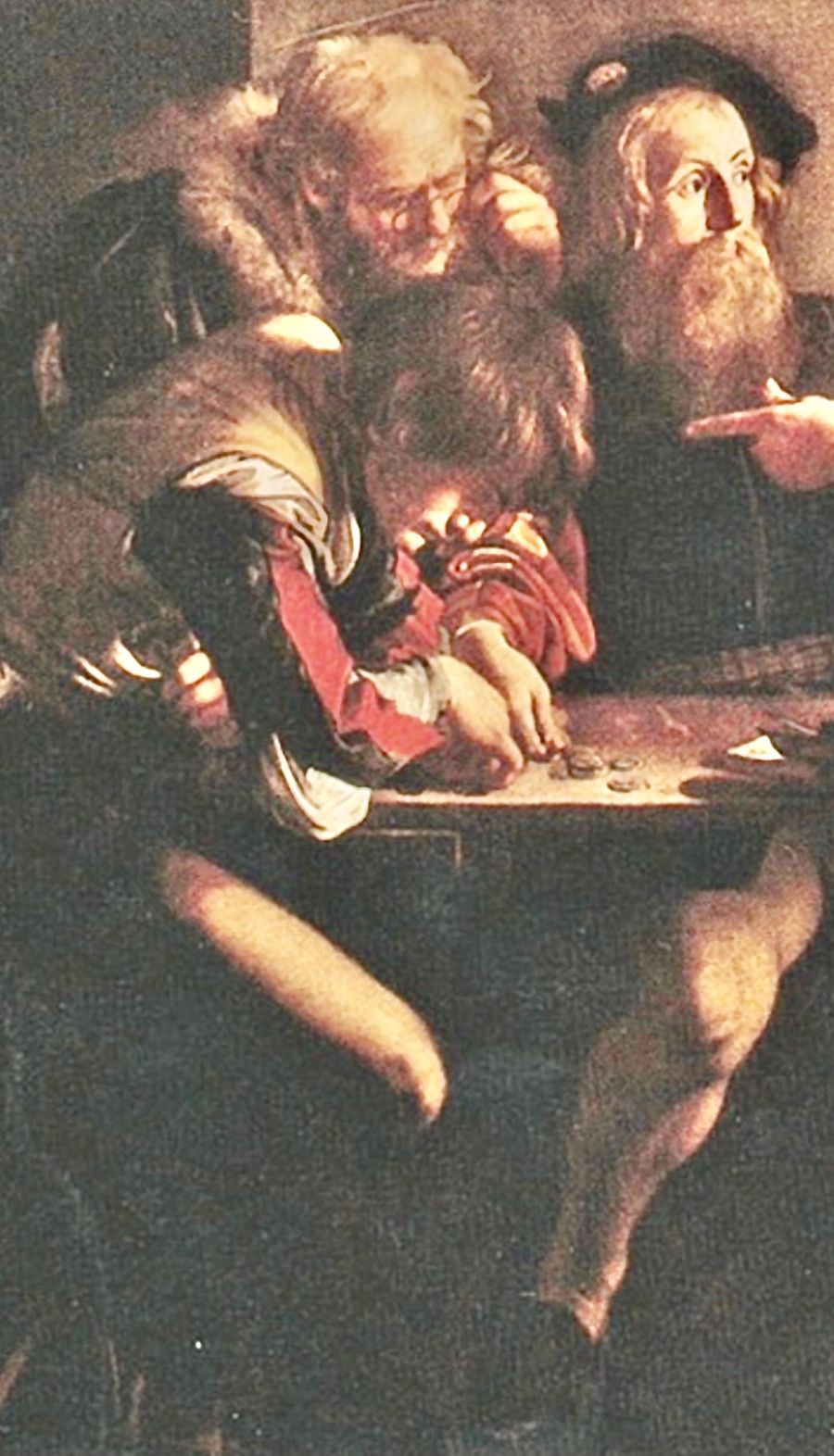
The evangelist narrates the episode of «Levi», avoiding simply calling him Matthew - almost as if to accentuate his Semitic and paradoxically cultic derivation.

Thus Lk wants to describe how Jesus himself had faced the same conflict: without any ritual or sacral attention, if not to man.

According to the Master, in the journey of Faith the relationship with the distant, different, and our very discomforts or hidden abysses, have something to tell us.

The Father is a friendly Presence. His life-saving initiative is for everyone, even for those who don't know how to do anything but look after their own gain.

This diminishes and overcomes the obsession with sin that religions considered an insurmountable barrier to communion with God - by marking life.

The Good News is that the Eucharist (v.29) is not a reward for merit (v.30).

Eating together was a precious sign of sharing, even on a religious level. At banquets, legalists avoided contact with sinful members of their own people.

Instead, all are called and each can be reborn, even surpassing the pure ones.

So putting yourself among sinners is not a defeat, but truth. And sin itself is no longer just a deviation to be corrected.

This is why the figure of the new Master touched the hearts of the people: he bore the sign of Grace; communion with the lost and guilty.

But with these gestures the Son seemed to put himself in God's place (v.30).

In fact, the Father catches us without fences, at the point where we are: He doesn’t pay attention to social condition and origin.

Among the disciples, it is likely that there were quite a few members of the Palestinian resistance [guerrillas fighting against the Roman occupiers].

On the other hand, here Jesus calls a collaborator of the Romans who let himself be guided by the advantage.

As if to say: the new community of children and brothers doesn’t cultivate privileges, separations, oppressions, hatreds.

The Master always stood above the political clashes, ideological distinctions and external disputes of time.

In his Church there is a strong sign of discontinuity.

He does not invite the best or the worst to follow, but opposites - even of our own personality. He wants to dispose us «to conversion» (v.32): to make us change our point of view, mentality, principles, way of being.

In this adventure we are not called to forms of dissociation: we start from ourselves.

Thus Jesus inaugurates a new kind of relationships, even within us. A New Covenant, of fruitful differences.

And the single Word «Follow Me [not others]» creates all (v.27).

Therefore, in this Lent we can put the idea of ​​“belonging” in brackets; to rely on God alone, break down barriers, and celebrate.


It’s not ‘perfection’ that makes us love the Exodus.


[Saturday after the Ashes, February 21, 2026]

523 Last modified on Saturday, 21 February 2026 12:04
don Giuseppe Nespeca

Giuseppe Nespeca è architetto e sacerdote. Cultore della Sacra scrittura è autore della raccolta "Due Fuochi due Vie - Religione e Fede, Vangeli e Tao"; coautore del libro "Dialogo e Solstizio".

The Church keeps watch. And the world keeps watch. The hour of Christ's victory over death is the greatest hour in history (John Paul II)
Veglia la Chiesa. E veglia il mondo. L’ora della vittoria di Cristo sulla morte è l’ora più grande della storia (Giovanni Paolo II)
Before the Cross of Jesus, we apprehend in a way that we can almost touch with our hands how much we are eternally loved; before the Cross we feel that we are “children” and not “things” or “objects” [Pope Francis, via Crucis at the Colosseum 2014]
Di fronte alla Croce di Gesù, vediamo quasi fino a toccare con le mani quanto siamo amati eternamente; di fronte alla Croce ci sentiamo “figli” e non “cose” o “oggetti” [Papa Francesco, via Crucis al Colosseo 2014]
The devotional and external purifications purify man ritually but leave him as he is replaced by a new bathing (Pope Benedict)
Al posto delle purificazioni cultuali ed esterne, che purificano l’uomo ritualmente, lasciandolo tuttavia così com’è, subentra il bagno nuovo (Papa Benedetto)
If, on the one hand, the liturgy of these days makes us offer a hymn of thanksgiving to the Lord, conqueror of death, at the same time it asks us to eliminate from our lives all that prevents us from conforming ourselves to him (John Paul II)
La liturgia di questi giorni, se da un lato ci fa elevare al Signore, vincitore della morte, un inno di ringraziamento, ci chiede, al tempo stesso, di eliminare dalla nostra vita tutto ciò che ci impedisce di conformarci a lui (Giovanni Paolo II)
The school of faith is not a triumphal march but a journey marked daily by suffering and love, trials and faithfulness. Peter, who promised absolute fidelity, knew the bitterness and humiliation of denial:  the arrogant man learns the costly lesson of humility (Pope Benedict)
La scuola della fede non è una marcia trionfale, ma un cammino cosparso di sofferenze e di amore, di prove e di fedeltà da rinnovare ogni giorno. Pietro che aveva promesso fedeltà assoluta, conosce l’amarezza e l’umiliazione del rinnegamento: lo spavaldo apprende a sue spese l’umiltà (Papa Benedetto)
If, in his prophecy about the shepherd, Ezekiel was aiming to restore unity among the dispersed tribes of Israel (cf. Ez 34: 22-24), here it is a question not only of the unification of a dispersed Israel but of the unification of all the children of God, of humanity - of the Church of Jews and of pagans [Pope Benedict]
Se Ezechiele nella sua profezia sul pastore aveva di mira il ripristino dell'unità tra le tribù disperse d'Israele (cfr Ez 34, 22-24), si tratta ora non solo più dell'unificazione dell'Israele disperso, ma dell'unificazione di tutti i figli di Dio, dell'umanità - della Chiesa di giudei e di pagani [Papa Benedetto]
St Teresa of Avila wrote: «the last thing we should do is to withdraw from our greatest good and blessing, which is the most sacred humanity of Our Lord Jesus Christ» (cf. The Interior Castle, 6, ch. 7). Therefore, only by believing in Christ, by remaining united to him, may the disciples, among whom we too are, continue their permanent action in history [Pope Benedict]
Santa Teresa d’Avila scrive che «non dobbiamo allontanarci da ciò che costituisce tutto il nostro bene e il nostro rimedio, cioè dalla santissima umanità di nostro Signore Gesù Cristo» (Castello interiore, 7, 6). Quindi solo credendo in Cristo, rimanendo uniti a Lui, i discepoli, tra i quali siamo anche noi, possono continuare la sua azione permanente nella storia [Papa Benedetto]

Due Fuochi due Vie - Vol. 1 Due Fuochi due Vie - Vol. 2 Due Fuochi due Vie - Vol. 3 Due Fuochi due Vie - Vol. 4 Due Fuochi due Vie - Vol. 5 Dialogo e Solstizio I fiammiferi di Maria

duevie.art

don Giuseppe Nespeca

Tel. 333-1329741


Disclaimer

Questo blog non rappresenta una testata giornalistica in quanto viene aggiornato senza alcuna periodicità. Non può pertanto considerarsi un prodotto editoriale ai sensi della legge N°62 del 07/03/2001.
Le immagini sono tratte da internet, ma se il loro uso violasse diritti d'autore, lo si comunichi all'autore del blog che provvederà alla loro pronta rimozione.
L'autore dichiara di non essere responsabile dei commenti lasciati nei post. Eventuali commenti dei lettori, lesivi dell'immagine o dell'onorabilità di persone terze, il cui contenuto fosse ritenuto non idoneo alla pubblicazione verranno insindacabilmente rimossi.






