Jan 22, 2026 Written by 

Rhythm of Nature. The evolutionary factor

From below, not from a summit

(Mk 4: 26-34)


Here we are introduced to a different mentality, to a new Family, to another Kingdom, not very "elevated"; indeed, completely reversed. Different from that expected on a mighty mountain (Ez 17:22).

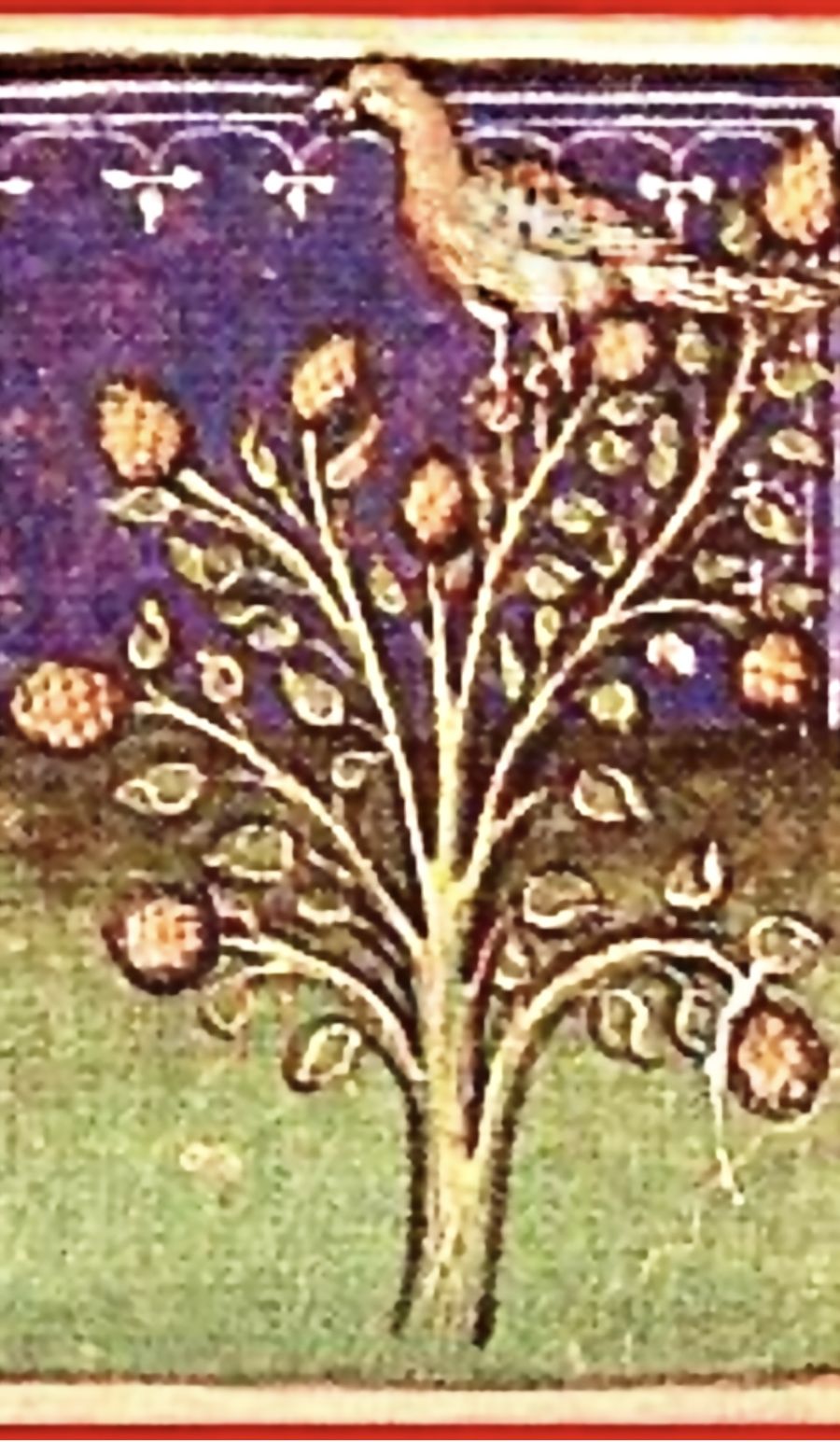
It will not be portrayed by the majesty of the cedar of Lebanon [which once covered the mountain slopes of the Near East] but by a simple shrub in the kitchen garden (Mk 4:32a). 

And the very origins of this new reality will not come from the top of a lofty stem, but from a small seed, simply planted on the ground.

Little grain like the others. Nothing remarkable in itself. Which develops horizontally, rather (v.32b).


How much gas must be given to accelerate the spread of the Kingdom?

According to Jesus, we must wait for everyone to meet himself, without neuroses.

A proposal that knows no borders: it’s aimed at everyone. It is enough to let the grain do its normal things - thus integrating the energies; giving space, even giving way.

The Seed grows on its own, intertwined with the soil and climate, yet according to a deep individual character.

He escapes cerebral explanations: «How, it itself does not know» (v.27).


After sowing, the author of the gesture resumes normal life.

Letting it go, the little hidden grain walks its way, to the end.

This is the evolutionary factor.

No farmer tramples on his field, nor investigates what happens (bothering the seedlings): development, growth and maturation are in themselves guaranteed.

Anyone who wants to enter would disturb the sprouts.

Whoever dug to control the evolution of little bud that is intertwining its roots with the ground, would ruin everything.


Our sacred identity is inextricably linked to personal singularity: it entangles with an unrepeatable sensitivity and vicissitude.

It’s the darkness, the silence, the waiting, that make tender shoots sprout, in their uniqueness and authenticity.

They would only be harmed by the one who wanted to interfere, modifying, overlapping other patterns and trends - never conforming to the realities in spontaneous singular development.

Beware of the hastiness of those who immediately want a result other than to be ourselves in relation to the innate essence and personal mission, which emanate from the hidden Source.

Time of love is not immediate: it takes place along a path, whose periods cannot be marked by any hasty plan - only irritating - if not by the Spirit, so that we can manifest the intrinsic unprecedented.

No one can bother such exceptional wealth, which arises and develops «automatically» (v.28), so that we are enabled to give birth to the inner world, the quintessence, the Jesus who hatches in heart; not others.


«Laying hold of the scythe» (v.29) means that at this point the soul is awakened for the Kingdom, ready to ‘give life’ to itself and to brethren, overflowing its wholeness to others, even distant or wandering like birds (v.32).

Together, a Church that - without thinking too much about "how it should be" - convinces all those in need of shelter from the "heat".

And Seed can be transmitted anywhere by the same «volatiles» that settle there even just enough for each one to take flight again.


‘Parables of the kingdom’ in Mt 13 and here in Mk 4 do not narrate a solemn, epochal, majestic reality that stubborns and imposes itself.

Rather, the new kingdom will be comparable to a common shrub, which grows modestly - silent, in the home garden (v.32).

As if to say: we evolve into tiny signs - nothing extraordinary - but we are people, not facsimiles.

Thus we announce Paradise.


[Friday 3rd wk. in O.T.  January 30, 2026]

223 Last modified on Friday, 30 January 2026 12:02
don Giuseppe Nespeca

Giuseppe Nespeca è architetto e sacerdote. Cultore della Sacra scrittura è autore della raccolta "Due Fuochi due Vie - Religione e Fede, Vangeli e Tao"; coautore del libro "Dialogo e Solstizio".

Man is involved in penance in his totality of body and spirit: the man who has a body in need of food and rest and the man who thinks, plans and prays; the man who appropriates and feeds on things and the man who makes a gift of them; the man who tends to the possession and enjoyment of goods and the man who feels the need for solidarity that binds him to all other men [CEI pastoral note]
Nella penitenza è coinvolto l'uomo nella sua totalità di corpo e di spirito: l'uomo che ha un corpo bisognoso di cibo e di riposo e l'uomo che pensa, progetta e prega; l'uomo che si appropria e si nutre delle cose e l'uomo che fa dono di esse; l'uomo che tende al possesso e al godimento dei beni e l'uomo che avverte l'esigenza di solidarietà che lo lega a tutti gli altri uomini [nota pastorale CEI]
St John Chrysostom urged: “Embellish your house with modesty and humility with the practice of prayer. Make your dwelling place shine with the light of justice; adorn its walls with good works, like a lustre of pure gold, and replace walls and precious stones with faith and supernatural magnanimity, putting prayer above all other things, high up in the gables, to give the whole complex decorum. You will thus prepare a worthy dwelling place for the Lord, you will welcome him in a splendid palace. He will grant you to transform your soul into a temple of his presence” (Pope Benedict)
San Giovanni Crisostomo esorta: “Abbellisci la tua casa di modestia e umiltà con la pratica della preghiera. Rendi splendida la tua abitazione con la luce della giustizia; orna le sue pareti con le opere buone come di una patina di oro puro e al posto dei muri e delle pietre preziose colloca la fede e la soprannaturale magnanimità, ponendo sopra ogni cosa, in alto sul fastigio, la preghiera a decoro di tutto il complesso. Così prepari per il Signore una degna dimora, così lo accogli in splendida reggia. Egli ti concederà di trasformare la tua anima in tempio della sua presenza” (Papa Benedetto)
And He continues: «Think of salvation, of what God has done for us, and choose well!». But the disciples "did not understand why the heart was hardened by this passion, by this wickedness of arguing among themselves and seeing who was guilty of that forgetfulness of the bread" (Pope Francis)
E continua: «Pensate alla salvezza, a quello che anche Dio ha fatto per noi, e scegliete bene!». Ma i discepoli «non capivano perché il cuore era indurito per questa passione, per questa malvagità di discutere fra loro e vedere chi era il colpevole di quella dimenticanza del pane» (Papa Francesco)
[Faith] is the lifelong companion that makes it possible to perceive, ever anew, the marvels that God works for us. Intent on gathering the signs of the times in the present of history […] (Pope Benedict, Porta Fidei n.15)
[La Fede] è compagna di vita che permette di percepire con sguardo sempre nuovo le meraviglie che Dio compie per noi. Intenta a cogliere i segni dei tempi nell’oggi della storia […] (Papa Benedetto, Porta Fidei n.15)
But what do this “fullness” of Christ’s Law and this “superior” justice that he demands consist in? Jesus explains it with a series of antitheses between the old commandments and his new way of propounding them (Pope Benedict)
Ma in che cosa consiste questa “pienezza” della Legge di Cristo, e questa “superiore” giustizia che Egli esige? Gesù lo spiega mediante una serie di antitesi tra i comandamenti antichi e il suo modo di riproporli (Papa Benedetto)

Due Fuochi due Vie - Vol. 1 Due Fuochi due Vie - Vol. 2 Due Fuochi due Vie - Vol. 3 Due Fuochi due Vie - Vol. 4 Due Fuochi due Vie - Vol. 5 Dialogo e Solstizio I fiammiferi di Maria

duevie.art

don Giuseppe Nespeca

Tel. 333-1329741


Disclaimer

Questo blog non rappresenta una testata giornalistica in quanto viene aggiornato senza alcuna periodicità. Non può pertanto considerarsi un prodotto editoriale ai sensi della legge N°62 del 07/03/2001.
Le immagini sono tratte da internet, ma se il loro uso violasse diritti d'autore, lo si comunichi all'autore del blog che provvederà alla loro pronta rimozione.
L'autore dichiara di non essere responsabile dei commenti lasciati nei post. Eventuali commenti dei lettori, lesivi dell'immagine o dell'onorabilità di persone terze, il cui contenuto fosse ritenuto non idoneo alla pubblicazione verranno insindacabilmente rimossi.






