Jan 16, 2026 Written by 

Crisis, Good News and social aspect

Overwork Mission Family, by unbalanced

(Mk 3:20-21)


Today’s short Gospel can be interpreted according to different reading plans: let’s start with a vocational approach.

The family core of society should also be a springboard to the adventure of Faith that urges other bonds.

The kinsmen can be dismayed by our desire to give ourselves entirely to God in sisters and brothers in a wider sense.

And sometimes the affections and natural constraints can prevent the fulfilment of the Mission to which we are called.

Sometimes, even important commitments in the Church’s action remain half or completely frustrated - due to a “fondness” and impediments that we are unable to ‘cut’.


Now we come to the historical level:

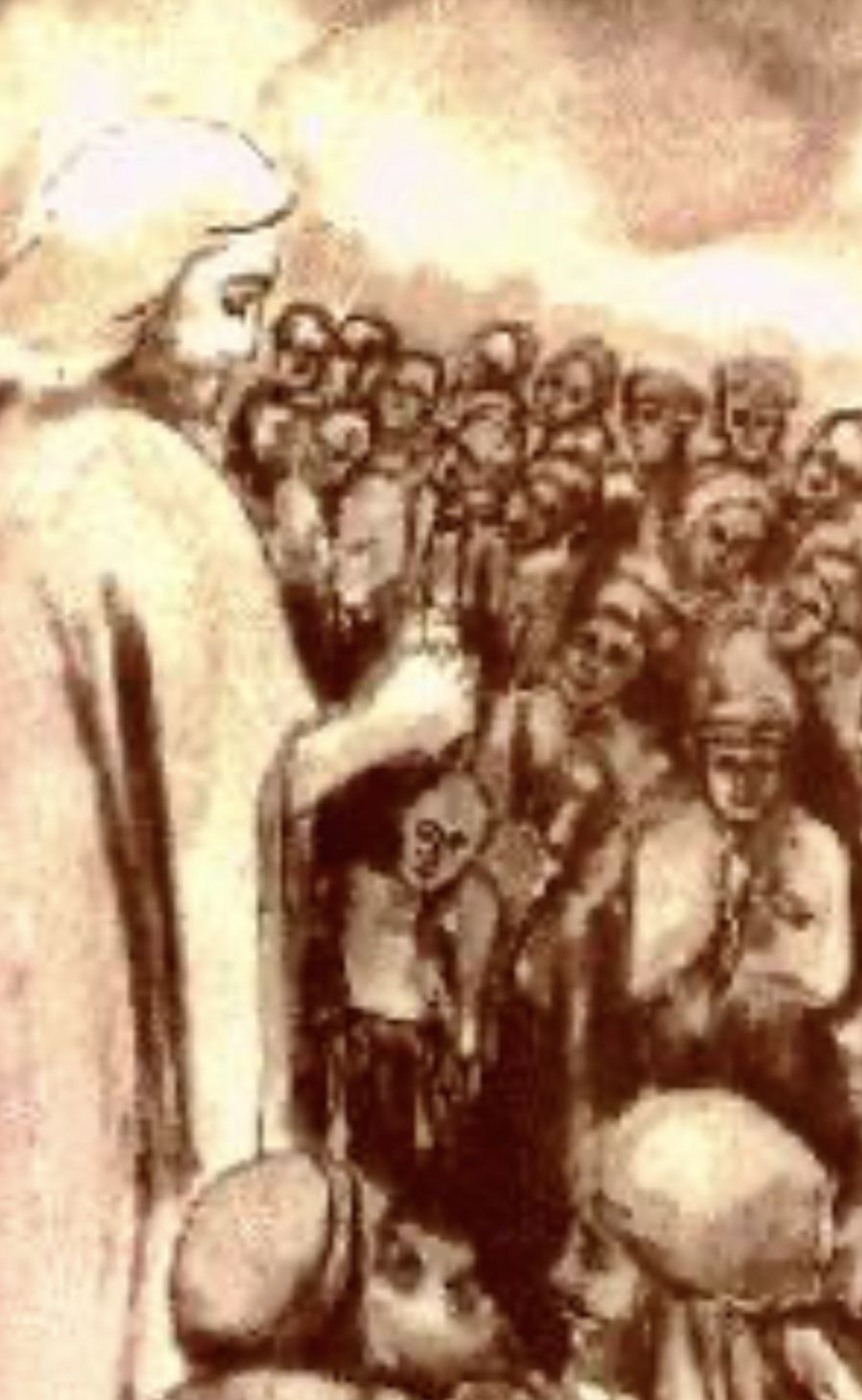
Jesus also had serious problems in his “house”, but the Gospel passage refers to the nascent Church in Peter’s dwelling in Capernaum, very close to the Synagogue.

Over time, the two almost adjacent realities found themselves fiercely facing each other.

Yet in the Abode of Peter at one point the number of those from Judaism, as well as pagans, who converted to the Lord's proposal exploded.

The People themselves and the religious culture that generated Christ [his «Family»] had difficulty questioning themselves. And the first reaction was rejection.

That new portion of the Jewish lineage that recognized Jesus Messiah seemed to want to do more and more of its own.


Social aspect:

Indeed, the hearth and its own clan had become alarmed, because adult Jesus did not follow a submissive behavior.

So the relatives decided to bring him back by force (cf. vv.31-35) considering him an unbalanced who wore out their internal and with authorities on the territory relations.

But the beliefs now crystallized in the Synagogue - as well as the theological and ‘cordial’ heritage of all its compromise reality - no longer seemed viable. Why?

The imperial system implanted in Galilee had weakened the sense of sharing and fraternity. Closures strengthened by the religiosity of the time.

The increasing observance of purity standards was a factor of serious social and cultural marginalization.

Entire sections of the population were excluded from the relationship with God: precisely those most in need of hope, and of a lovable ‘face’.

Instead of promoting acceptance and participation, the devoted rules even favoured separations and exclusions.

Political, economic and social structure, and sacred ideology, conspired in favor of weakening the central values of the spirit of communion.


In today’s Gospel passage we note precisely how the narrow limits of the family went to conflict with the proposal of the new Rabbi, to recover the clenchement of solidarity..

In short, it was in the House of Peter that every small family gained breath, opening up itself not only to the nation, but to the wider human Family.

Integral Assembly, even with women and sickly ill persons, or of uncertain and distant.

An absolutely new reality; no longer gathered only for worship but unable of ‘living together’.


[Saturday 2nd wk. in O.T.  January 24, 2026]

208 Last modified on Saturday, 24 January 2026 12:00
don Giuseppe Nespeca

Giuseppe Nespeca è architetto e sacerdote. Cultore della Sacra scrittura è autore della raccolta "Due Fuochi due Vie - Religione e Fede, Vangeli e Tao"; coautore del libro "Dialogo e Solstizio".

For so long as we are sheep, we conquer: though ten thousand wolves prowl around, we overcome and prevail. But if we become wolves, we are worsted, for the help of our Shepherd departs from us (St John Chrysostom)
Finché saremo agnelli, vinceremo e, anche se saremo circondati da numerosi lupi, riusciremo a superarli. Ma se diventeremo lupi, saremo sconfitti, perché saremo privi dell’aiuto del Pastore (S. Giovanni Crisostomo)
Today, as on the day of our Baptism, we hear the words of Jesus addressed to us: “Ephphatha, be opened!” Open your ears. Jesus, I want to open myself to your Word; Jesus, open myself to listening to you; Jesus, heal my heart from being closed, heal my heart from haste, heal my heart from impatience (Pope Francis)
Sentiamo rivolta a noi oggi, come nel giorno del Battesimo, quella parola di Gesù: “Effatà, apriti”! Apriti le orecchie. Gesù, desidero aprirmi alla tua Parola; Gesù, aprirmi al tuo ascolto; Gesù, guarisci il mio cuore dalla chiusura, guarisci il mio cuore dalla fretta, guarisci il mio cuore dall’impazienza (Papa Francesco)
And this is the problem: when the People put down roots in the land and are the depository of the Law, they are tempted to place their security and joy in something that is no longer the Word of God: in possessions, in power, in other ‘gods’ that in reality are useless, they are idols. Of course, the Law of God remains but it is no longer the most important thing, the rule of life; rather, it becomes a camouflage, a cover-up, while life follows other paths, other rules, interests that are often forms of egoism, both individual and collective. Thus religion loses its authentic meaning, which is to live listening to God in order to do his will — that is the truth of our being — and thus we live well, in true freedom, and it is reduced to practising secondary customs which instead satisfy the human need to feel in God’s place. This is a serious threat to every religion which Jesus encountered in his time and which, unfortunately, is also to be found in Christianity. Jesus’ words against the scribes and Pharisees in today’s Gospel should therefore be food for thought for us as well (Pope Benedict)
Ed ecco il problema: quando il popolo si stabilisce nella terra, ed è depositario della Legge, è tentato di riporre la sua sicurezza e la sua gioia in qualcosa che non è più la Parola del Signore: nei beni, nel potere, in altre ‘divinità’ che in realtà sono vane, sono idoli. Certo, la Legge di Dio rimane, ma non è più la cosa più importante, la regola della vita; diventa piuttosto un rivestimento, una copertura, mentre la vita segue altre strade, altre regole, interessi spesso egoistici individuali e di gruppo. E così la religione smarrisce il suo senso autentico che è vivere in ascolto di Dio per fare la sua volontà - che è la verità del nostro essere - e così vivere bene, nella vera libertà, e si riduce a pratica di usanze secondarie, che soddisfano piuttosto il bisogno umano di sentirsi a posto con Dio. Ed è questo un grave rischio di ogni religione, che Gesù ha riscontrato nel suo tempo, ma che si può verificare, purtroppo, anche nella cristianità. Perciò le parole di Gesù nel Vangelo di oggi contro gli scribi e i farisei devono far pensare anche noi (Papa Benedetto)
Salt, in the cultures of the Middle East, calls to mind several values such as the Covenant, solidarity, life and wisdom. Light is the first work of God the Creator and is a source of life; the word of God is compared to light (Pope Benedict)
Il sale, nella cultura mediorientale, evoca diversi valori quali l’alleanza, la solidarietà, la vita e la sapienza. La luce è la prima opera di Dio Creatore ed è fonte della vita; la stessa Parola di Dio è paragonata alla luce (Papa Benedetto)

Due Fuochi due Vie - Vol. 1 Due Fuochi due Vie - Vol. 2 Due Fuochi due Vie - Vol. 3 Due Fuochi due Vie - Vol. 4 Due Fuochi due Vie - Vol. 5 Dialogo e Solstizio I fiammiferi di Maria

duevie.art

don Giuseppe Nespeca

Tel. 333-1329741


Disclaimer

Questo blog non rappresenta una testata giornalistica in quanto viene aggiornato senza alcuna periodicità. Non può pertanto considerarsi un prodotto editoriale ai sensi della legge N°62 del 07/03/2001.
Le immagini sono tratte da internet, ma se il loro uso violasse diritti d'autore, lo si comunichi all'autore del blog che provvederà alla loro pronta rimozione.
L'autore dichiara di non essere responsabile dei commenti lasciati nei post. Eventuali commenti dei lettori, lesivi dell'immagine o dell'onorabilità di persone terze, il cui contenuto fosse ritenuto non idoneo alla pubblicazione verranno insindacabilmente rimossi.






