


Second Lent Sunday (year A) [1st March 2026]
*First Reading from the Book of Genesis (12:1-4)
The few lines we have just read constitute the first act of the entire adventure of our faith: the faith of the Jews, then, in chronological order, of Christians and Muslims. We are in the second millennium BC. Abram* lived in Chaldea, that is, in Iraq, and more precisely in the extreme south-east of Iraq, in the city of UR, in the Euphrates valley, near the Persian Gulf. He lived with his wife Sarai, his father Terah, his brothers (Nahor and Aran) and his nephew Lot. Abram was seventy-five years old, his wife Sarai sixty-five; they had no children and, given their age, would never have any. One day, his old father, Terah, set out on the road with Abram, Sarai and his nephew Lot. The caravan travelled up the Euphrates valley from the south-east to the north-west with the intention of then descending towards the land of Canaan. There was a shorter route, of course, connecting the Persian Gulf to the Mediterranean, but it crossed a huge desert. Terah and Abram preferred to travel along the 'Fertile Crescent', which lives up to its name. The last stop in the north-west is called Harran. It is there that old Terah dies. And it is above all there that, for the first time, about 4000 years ago, around 1850 BC, God spoke to Abram.
"Leave your land," says our liturgical translation, but it omits the first two words, probably to avoid excessive interpretations, which have not always been avoided. In fact, in Hebrew, the first two words are "You, go!" Grammatically, they mean nothing else. It is a personal appeal, a setting aside: it is a true story of vocation. And it is to this simple invitation that Abram responded. It is often translated as "Go for yourself," but this is already an over-interpretation of faith. "Go for yourself": we must be aware that we are moving away from the literal meaning of the text and entering into an interpretation, a spiritual commentary. It is Rashi, the great 11th-century Jewish commentator (in Troyes in Champagne), who translates "Go for yourself, for your own good and for your happiness". In fact, this is what Abram will experience in the course of the days. If God calls man, it is for man's own good, not for anything else! God's merciful plan for humanity is contained in these two little words: 'for you'. God already reveals himself as the one who desires the good of man, of all men**; if there is one thing to remember, it is this! 'Go for yourself': a believer is someone who knows that, whatever happens, God is leading him towards his fulfilment, towards his happiness. So here are God's first words to Abram, the words that set off his whole adventure... and ours! Go, leave your country, your family and your father's house, and go to the land that I will show you. And what follows are only promises: I will make you a great nation, I will bless you, I will make your name great, and you will be a blessing... All the families of the earth shall be blessed in you. Abram is torn from his natural destiny, chosen, elected by God, invested with a universal vocation. Abram, for the moment, is a nomad, perhaps rich, but unknown, and he has no children; his wife Sarai is well past childbearing age. Yet it is he whom God chooses to become the father of a great people. This is what that 'for you' meant earlier: God promises him everything that, at that time, constitutes a man's happiness: numerous descendants and God's blessing. But this happiness promised to Abram is not only for him: in the Bible, no vocation, no calling is ever for the selfish interest of the one who is called. This is one of the criteria of an authentic vocation: every vocation is always for a mission in the service of others. Here is this phrase: 'In you all the families of the earth shall be blessed'. It means at least two things: first, your success will be such that you will be taken as an example: when people want to wish someone happiness, they will say, 'May you be as happy as Abram'. Second, this 'in you' can mean through you; and then it means 'through you, I, God, will bless all the families of the earth'. God's plan for happiness passes through Abram, but it surpasses him, it overflows him; it concerns all humanity: 'In you, through you, all the families of the earth will be blessed'. Throughout the history of Israel, the Bible will remain faithful to this first discovery: Abraham and his descendants are the chosen people, chosen by God but for the benefit of all humanity, from the first day, from the first word to Abraham. The fact remains that other nations are free not to enter into this blessing; this is the meaning of the seemingly curious phrase: "I will bless those who bless you, and those who curse you I will curse" (12:3). It is a way of expressing our freedom: anyone who wishes to do so can share in the blessing promised to Abram, but no one is obliged to accept it! The time for the great departure has come; the text is extraordinary in its sobriety: it simply says, "Abram departed as the Lord had commanded him" (12:4), and Lot went with him. One cannot be more laconic! This departure, at the simple call of God, is the most beautiful proof of faith; four thousand years later, we can say that our faith finds its source in that of Abraham; and if our whole lives are illuminated by faith, it is thanks to him! And all human history becomes the place of the fulfilment of God's promises to Abraham: a slow, progressive fulfilment, but certain and sure.
Notes: *At the beginning of this great adventure, the man we call Abraham was still called only Abram; later, after years of pilgrimage, he would receive from God the new name by which we know him: Abraham, which means 'father of multitudes'.
**This 'for you' should not be understood as exclusive, even if it was not immediately understood at first. Only after a long discovery of God's Covenant were believers able to access the full truth: God's plan concerns not only Abraham and his descendants, but all of humanity. This is what we call the universality of God's plan. This discovery dates back to the Exile in Babylon in the 6th century BC.
Addition: At another point in Abraham's life, when he offers Isaac as a sacrifice, God uses the same expression, "Go," to give him the strength to face the trial, reminding him of the journey he has already made. The Letter to the Hebrews takes Abraham's departure to explain what faith is (cf. Heb 11:8-12).
*Responsorial Psalm (32/33)
The word 'love' appears three times in these few verses, and this insistence responds very well to the first reading: Abraham is the first in all human history to discover that God is love and that he has plans for the happiness of humanity. However, it was necessary to believe in this extraordinary revelation. And Abraham believed, he agreed to trust in the words of the future that God announced to him. An old man without children, yet he would have had every reason to doubt this incredible promise from God. God says to him: Leave your country... I will make you a great nation. And the text of Genesis concludes that Abram left as the Lord had told him.
This is a beautiful example for us at the beginning of Lent: we should believe in all circumstances that God has plans for our happiness. This was precisely the meaning of the phrase pronounced over us on Ash Wednesday: "Repent and believe in the Gospel." To convert means to believe once and for all that the Newness is that God is Love. Jeremiah said on behalf of God: 'I know the plans I have for you, says the Lord, plans for welfare and not for evil, to give you a future and a hope' (Jer 29:11). Thus, the first two Sundays of Lent invite us to make a choice: on the first Sunday, we read in the book of Genesis the story of Adam: the man who suspects God in the face of a prohibition (not to eat the fruit of the tree of the knowledge of good and evil), imagining that God might even be jealous! These are the insinuations of the serpent, which means poison. For this second Sunday of Lent, however, we read the story of Abraham, the believer. A little further on, the book of Genesis says of him: Abram believed in the Lord, who counted him as righteous. And, to help us follow the same path as Abraham, this psalm suggests words of trust: 'The eye of the Lord is on those who fear him, on those who hope in his love to deliver them from death'. At the beginning, we read: 'The earth is full of love...' and then the expression 'those who fear him' is explained in the next line: 'those who hope in his love', so far from fear, quite the opposite! The temptation is to want to be free and do whatever we want... to obey only ourselves. All this comes from experience, and that is why the chosen people can say: 'the eye of the Lord is on those who fear him, on those who hope in his love' because God has watched over them like a father over his children. When it says that he frees them from death, it is not talking about biological death. We must remember that at the time this psalm was composed, individual death was not considered a tragedy; what mattered was the survival of the people in the certainty that God would keep his people alive. At all times, and especially in times of trial, God accompanies his people and delivers them from death. The reference to times of famine is certainly an allusion to the manna that God sent during the Exodus, when hunger became threatening. All the people can bear witness to this care of God in every age; and when we sing "The word of the Lord is upright, and all his work is done in faithfulness," we are simply repeating the name of the merciful and faithful God who revealed himself to Moses (Ex 34:6). The conclusion is a prayer of trust: "May your love be upon us, Lord, as we hope in you" is an invitation to believers to offer themselves to this love.
*Second reading from the second letter of St Paul the Apostle to Timothy (1:8b-10)
Paul is in prison in Rome, he knows that he will soon be executed, and here he gives his last recommendations to Timothy: "My dear son, with the strength of God, suffer with me for the Gospel." This suffering is the persecution that is inevitable for a true disciple of Christ, as Jesus had said (cf. Mk 8:34-35). Both at the beginning and at the end of the passage, there is a reference to the Gospel, which is presented as an inclusion. In the middle, framed by these two identical references, Paul explains what this Gospel is. He uses the word Gospel in its etymological sense of good news, just as Jesus himself said at the beginning of his preaching in Galilee: "Repent and believe in the Gospel, the Good News" means that Christian preaching is the proclamation that the kingdom of God has finally been inaugurated. For Paul, it is in the central sentence of our text that we discover what the Gospel consists of: ultimately, it can be summed up in a few words: God has saved us through Jesus Christ. *"God saved us": it is a past tense, something that has been accomplished; but at the same time, in order for people to enter into this salvation, it is necessary that the Gospel be proclaimed to them. It is therefore truly a holy vocation that has been entrusted to us: "God saved us and called us to a holy vocation" (1:9). It is a holy vocation because it is entrusted to us by God who is holy; it is a holy vocation because it involves proclaiming God's plan; it is a holy vocation because God's plan needs our collaboration: each of us must play our part, as Paul says. But the expression "holy vocation" also means something else: God's plan for us, for humanity, is so great that it fully deserves this name. The particular vocation of the apostles is part of this universal vocation of humanity.
*"God has saved us": in the Bible, the verb "to save" always means "to liberate". It took a long and gradual discovery of this reality on the part of the people of the Covenant: God wants man to be free and intervenes incessantly to free us from every form of slavery. There are many types of slavery: political slavery, such as servitude in Egypt or exile in Babylon; and each time Israel recognised God's work in its liberation; social slavery, and the Law of Moses, as the prophets never cease to call for the conversion of hearts so that every person may live in dignity and freedom; religious slavery, which is even more insidious. The prophets never ceased to transmit this will of God to see humanity finally freed from all its chains. Paul says that Jesus has freed us even from death: Jesus "has conquered death and brought life and immortality to light through the gospel" (1:10). Paul affirms this
as he prepares to be executed. Jesus himself died, and we too will all die. Jesus, therefore, is not speaking of biological death. What victory is he referring to then? Jesus, filled with the Holy Spirit, gives us his own life, which we can share spiritually, and which nothing can destroy, not even biological death. His Resurrection is proof that biological death cannot destroy it, so for us biological death will be nothing more than a passage towards the light that never sets: in the funeral liturgy we say: "Life is not taken away, but transformed". If biological death is part of our physical constitution, made of dust – as the book of Genesis says – it cannot separate us from Jesus Christ (cf. Rom 8:39). In us there is a relationship with God that nothing, not even biological death, can destroy: this is what St John calls 'eternal life'.
*From the Gospel according to Matthew (17:1-9)
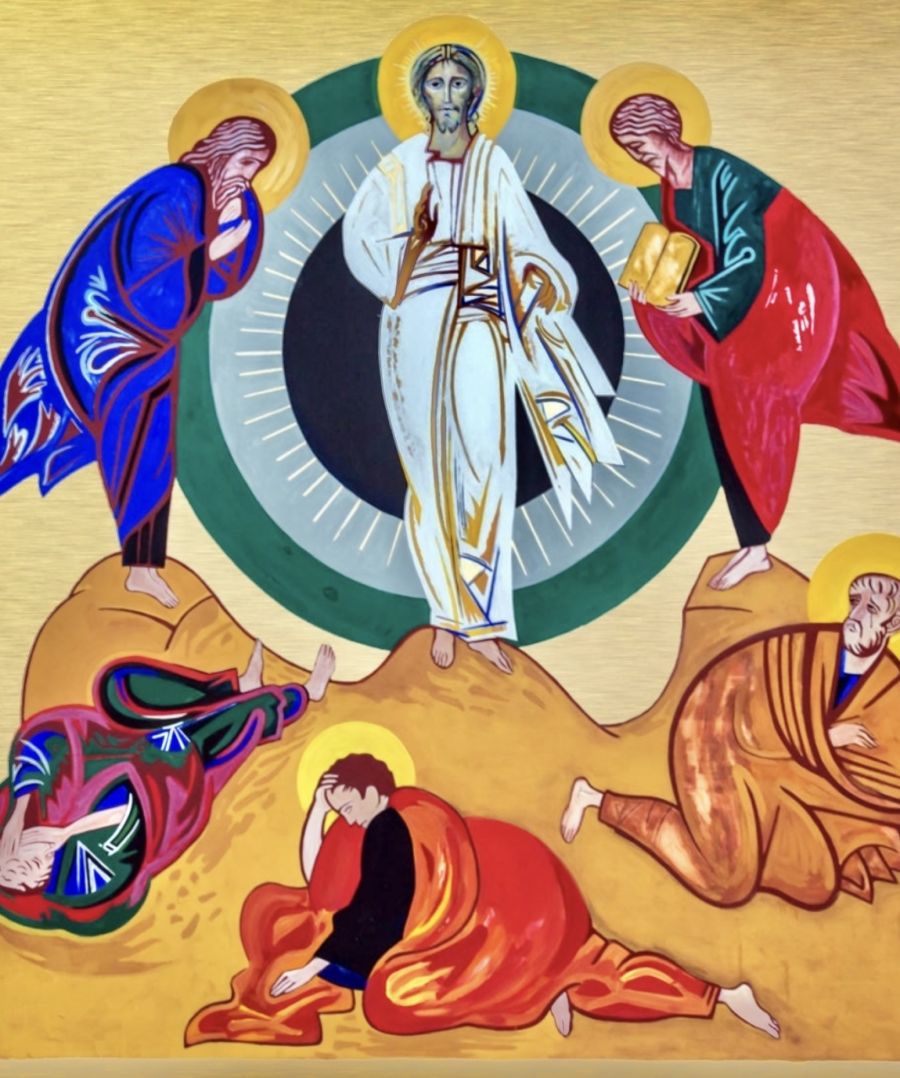
"Jesus took Peter, James and John with him": once again we are faced with the mystery of God's choices. It was to Peter that Jesus had said shortly before, in Caesarea: "You are Peter, and on this rock I will build my Church, and the powers of death will not prevail against it" (Mt 16:18). But Peter is accompanied by two brothers, James and John, the two sons of Zebedee. "And Jesus led them up a high mountain, apart": on a high mountain Moses had received the Revelation of the God of the Covenant and the tablets of the Law; that Law which was to progressively educate the people of the Covenant to live in the love of God and of their brothers and sisters. On the same mountain, Elijah had received the revelation of the God of tenderness in the gentle breeze... Moses and Elijah, the two pillars of the Old Testament... On the high mountain of the Transfiguration, Peter, James and John, the pillars of the Church, receive the revelation of the God of tenderness incarnate in Jesus: "This is my beloved Son, in whom I am well pleased". And this revelation is granted to them to strengthen their faith before the storm of the Passion. Peter will write about it later (cf. 2 Pt 1:16-18).
The expression "my beloved Son: listen to him" designates Jesus as the Messiah: to Jewish ears, this simple phrase is a triple allusion to the Old Testament, because it recalls three very different texts, but ones that are well present in everyone's memory; all the more so because the expectation was intense at the time of Jesus' coming and hypotheses were multiplying: we have proof of this in the numerous questions addressed to Jesus in the Gospels. "Son" was the title usually given to kings, and the Messiah was expected to have the characteristics of a king descended from David, who would finally reign on the throne of Jerusalem, which had been without a king for a long time. The beloved, in whom I am well pleased, evoked a completely different context: it refers to the "Songs of the Servant" in the book of Isaiah; it meant that Jesus is the Messiah, no longer in the manner of a king, but of a Servant, in the sense of Isaiah (Is 42:1). 'Listen to him' meant something else: that Jesus is the Messiah-Prophet in the sense that Moses, in the Book of Deuteronomy, had announced to the people: 'The Lord your God will raise up for you, from among your own brothers, a prophet like me; you shall listen to him' (Dt 18:15). ' "Let us make three tents": this phrase of Peter suggests that the episode of the Transfiguration may have taken place during the Feast of Tabernacles, or at least in a climate linked to it, a feast celebrated in memory of the crossing of the desert during the Exodus and the Covenant made with God, in the fervent experience that the prophets would later call the betrothal of the people to the God of tenderness and fidelity. During this feast, people lived in huts for eight days, waiting and imploring a new manifestation of God that would be fulfilled with the coming of the Messiah. On the Mount of Transfiguration, the three apostles suddenly find themselves faced with this revelation of the mystery of Jesus: it is not surprising that they are seized with the fear that grips every man before the manifestation of the holy God. nor is it surprising that Jesus raises them up and reassures them: the Old Testament had already revealed to the people of the Covenant that the most holy God is the God who is close to man and that fear is not appropriate. But the revelation of the mystery of the Messiah, in all its dimensions, is not yet within everyone's reach; Jesus orders them not to tell anyone for the time being, before the Son of Man has risen from the dead. By saying this last sentence, Jesus confirms the revelation that the three disciples have just received: he is truly the Messiah whom the prophet Daniel saw in the form of a man, coming on the clouds of heaven (cf. Dan 7:13-14). Daniel himself presents the Son of Man not as a solitary individual, but as a people, whom he calls "the people of the Most High". The fulfilment is even more beautiful than the promise: in Jesus, Man-God, it is the whole of humanity that will receive this eternal kingship and be eternally transfigured. But Jesus said clearly: Tell no one anything before the Resurrection. Only after Jesus' Resurrection will the apostles be able to bear witness to it.
+Giovanni D'Ercole








