Jan 12, 2026 Written by 

Conflicts of conscience: Law or hunger

Incarnation, or the spiritual module without humanity

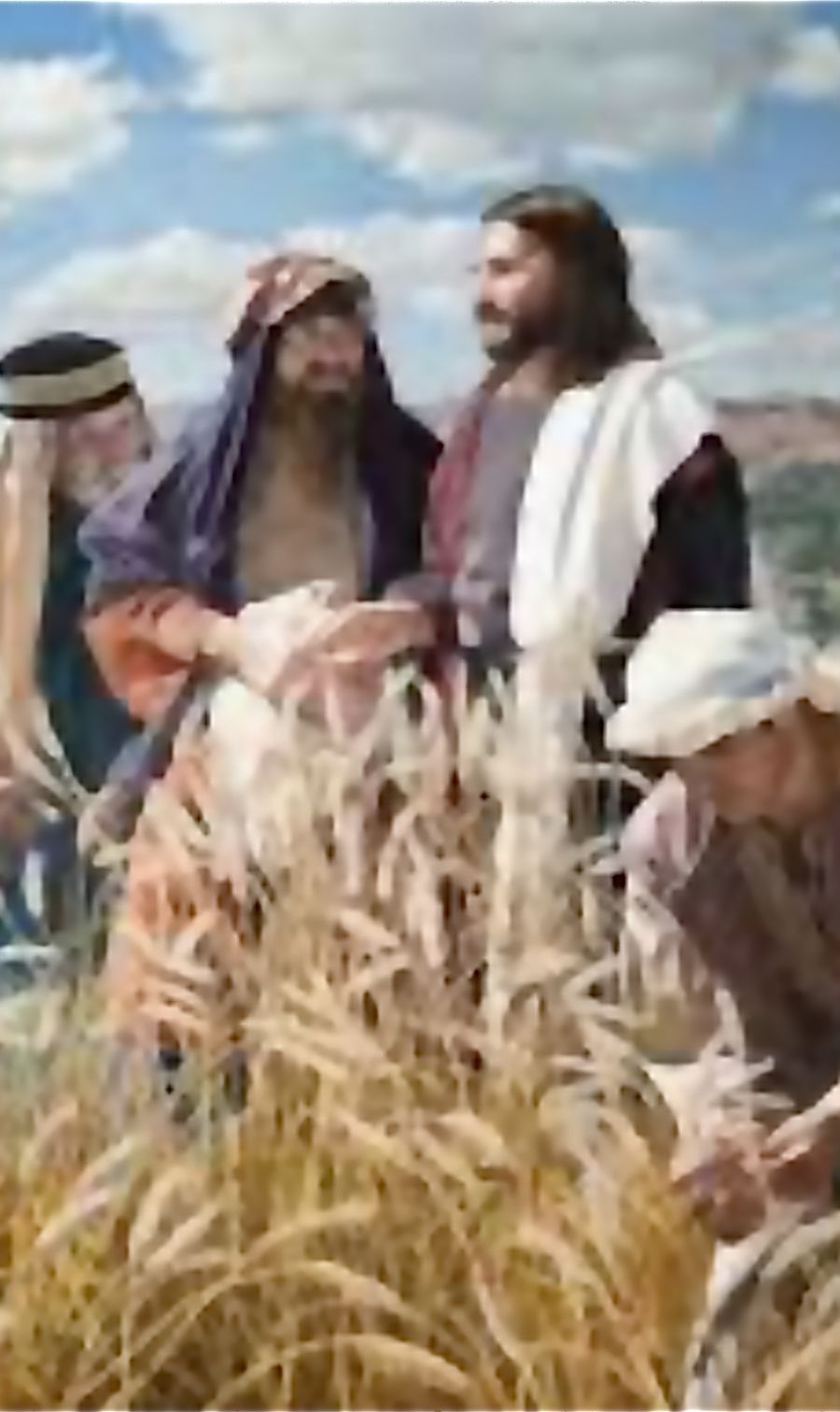
(Mk 2:23-28)


On the way of conversion, conflicts of conscience are not parentheses or accidents of the path, but crucial nodes.

The genuineness of believing then generates implicative force and new expressive abilities.

According to ordinary religious evaluations, the legislation was worth more than hunger...

To be honest, the observance of the Sabbath had become a central law not because of theological subtleties, but because in the period of the Exile the weekly rest had allowed to gather, share hopes, encourage each other, maintain the identity of the people.

But legalism ended up stifling the spirit of the day of worship, once a sign of a freedom at the service of faith and man, both of which cannot be enslaved.

Thus where Jesus arrives, every empty spiritual module of humanity crumbles, and the Incarnation takes hold: the place where God and man seriously ‘rest’ [other than the saturday!].

In the parallel passage of Mt (12:1-8), Jesus' response is more articulated and complete:

On Jewish Sabbath, priests had many more sacred and preparation engagements, slaughter and reordering of the Sanctuary, than the other days of the week, and the Torah obliged them... it happens to us too.

Again in Mt, the Lord quotes a famous phrase from the prophet Hosea - a man of raw experience, but who well defines the peak of intimacy with God: an authentic rite is to realize the hopes of our neighbour and to have the heart in the needs of others.


Christ emphasizes the poverty of every legalistic and hypocritical attachment in the mode of conceiving relations with the Father.

The sign of the Covenant with God, and Encounter (authentic sanctification) is adherence that continues in the plot of the days and in his active Person - not a ridiculous idolatry of observances or cultic parentheses.

Facts and rites celebrate love; and the sincere fulfilment does not follow the pedantic "as we should be", but expresses a Liberation of the person.

The biblical episode that Jesus quotes could perhaps appear not entirely pertinent to the theoretical question: his disciples did not seem to be kings or even priests.

Instead, in the new time that’s urgent, yes: ‘sovereigns’ of one’s life by Gift and Call, as well as ‘mediators’ [of divine blessings on humanity] - and also Prophets.

The lovable God establishes with us a dialogue and a friendship that invites, gives impetus, transmits taste for doing.

It’s the result of a messianic conscience as «Son of man» (v.28): transmissible to us, his brothers and friends - very united to him by Faith.

For this reason [after the call of the disciples and the first healings, then the vocation of Levi and the controversy about fasting] the Lord presents himself to the Pharisees in the royal stunt double of David, who is about to conquer the ‘kingdom’ even with a small handful of followers.

In the time of the global crisis that affects the future (and still tries to calculate it by directing it a priori, according to selective interests) the challenge is more open than ever.


To internalize and live the message:


How did you perceive that you were reliving Christ in the fluency of the norms?


[Tuesday 2nd wk. in O.T.  January 20, 2026]

249 Last modified on Tuesday, 20 January 2026 12:02
don Giuseppe Nespeca

Giuseppe Nespeca è architetto e sacerdote. Cultore della Sacra scrittura è autore della raccolta "Due Fuochi due Vie - Religione e Fede, Vangeli e Tao"; coautore del libro "Dialogo e Solstizio".

And this is the problem: when the People put down roots in the land and are the depository of the Law, they are tempted to place their security and joy in something that is no longer the Word of God: in possessions, in power, in other ‘gods’ that in reality are useless, they are idols. Of course, the Law of God remains but it is no longer the most important thing, the rule of life; rather, it becomes a camouflage, a cover-up, while life follows other paths, other rules, interests that are often forms of egoism, both individual and collective. Thus religion loses its authentic meaning, which is to live listening to God in order to do his will — that is the truth of our being — and thus we live well, in true freedom, and it is reduced to practising secondary customs which instead satisfy the human need to feel in God’s place. This is a serious threat to every religion which Jesus encountered in his time and which, unfortunately, is also to be found in Christianity. Jesus’ words against the scribes and Pharisees in today’s Gospel should therefore be food for thought for us as well (Pope Benedict)
Ed ecco il problema: quando il popolo si stabilisce nella terra, ed è depositario della Legge, è tentato di riporre la sua sicurezza e la sua gioia in qualcosa che non è più la Parola del Signore: nei beni, nel potere, in altre ‘divinità’ che in realtà sono vane, sono idoli. Certo, la Legge di Dio rimane, ma non è più la cosa più importante, la regola della vita; diventa piuttosto un rivestimento, una copertura, mentre la vita segue altre strade, altre regole, interessi spesso egoistici individuali e di gruppo. E così la religione smarrisce il suo senso autentico che è vivere in ascolto di Dio per fare la sua volontà - che è la verità del nostro essere - e così vivere bene, nella vera libertà, e si riduce a pratica di usanze secondarie, che soddisfano piuttosto il bisogno umano di sentirsi a posto con Dio. Ed è questo un grave rischio di ogni religione, che Gesù ha riscontrato nel suo tempo, ma che si può verificare, purtroppo, anche nella cristianità. Perciò le parole di Gesù nel Vangelo di oggi contro gli scribi e i farisei devono far pensare anche noi (Papa Benedetto)
Salt, in the cultures of the Middle East, calls to mind several values such as the Covenant, solidarity, life and wisdom. Light is the first work of God the Creator and is a source of life; the word of God is compared to light (Pope Benedict)
Il sale, nella cultura mediorientale, evoca diversi valori quali l’alleanza, la solidarietà, la vita e la sapienza. La luce è la prima opera di Dio Creatore ed è fonte della vita; la stessa Parola di Dio è paragonata alla luce (Papa Benedetto)
Even after his failure even in Nazareth (vv.1-6) - his heralds gladly confused the Servant [who was educating them] with the victorious, sighed, respected and glorious Messiah…
Ancora dopo il suo fallimento persino a Nazareth (vv.1-6) - i suoi banditori hanno ben volentieri confuso il Servo [che li stava educando] col Messia vincitore, sospirato, rispettato e glorioso…
During more than 40 years of his reign, Herod Antipas had created a class of functionaries and a system of privileged people who had in their hands the government, the tax authorities, the economy, the justice, every aspect of civil and police life, and his command covered the territory extensively…
Durante più di 40 anni di regno, Erode Antipa aveva creato una classe di funzionari e un sistema di privilegiati che avevano in pugno il governo, il fisco, l’economia, la giustizia, ogni aspetto della vita civile e di polizia, e il suo comando copriva capillarmente il territorio…

Due Fuochi due Vie - Vol. 1 Due Fuochi due Vie - Vol. 2 Due Fuochi due Vie - Vol. 3 Due Fuochi due Vie - Vol. 4 Due Fuochi due Vie - Vol. 5 Dialogo e Solstizio I fiammiferi di Maria

duevie.art

don Giuseppe Nespeca

Tel. 333-1329741


Disclaimer

Questo blog non rappresenta una testata giornalistica in quanto viene aggiornato senza alcuna periodicità. Non può pertanto considerarsi un prodotto editoriale ai sensi della legge N°62 del 07/03/2001.
Le immagini sono tratte da internet, ma se il loro uso violasse diritti d'autore, lo si comunichi all'autore del blog che provvederà alla loro pronta rimozione.
L'autore dichiara di non essere responsabile dei commenti lasciati nei post. Eventuali commenti dei lettori, lesivi dell'immagine o dell'onorabilità di persone terze, il cui contenuto fosse ritenuto non idoneo alla pubblicazione verranno insindacabilmente rimossi.






