Dec 15, 2025 Written by 

Do not copy ‘names’, nor categories of possibility

Prophetic ardour, Salvation that does not repeat

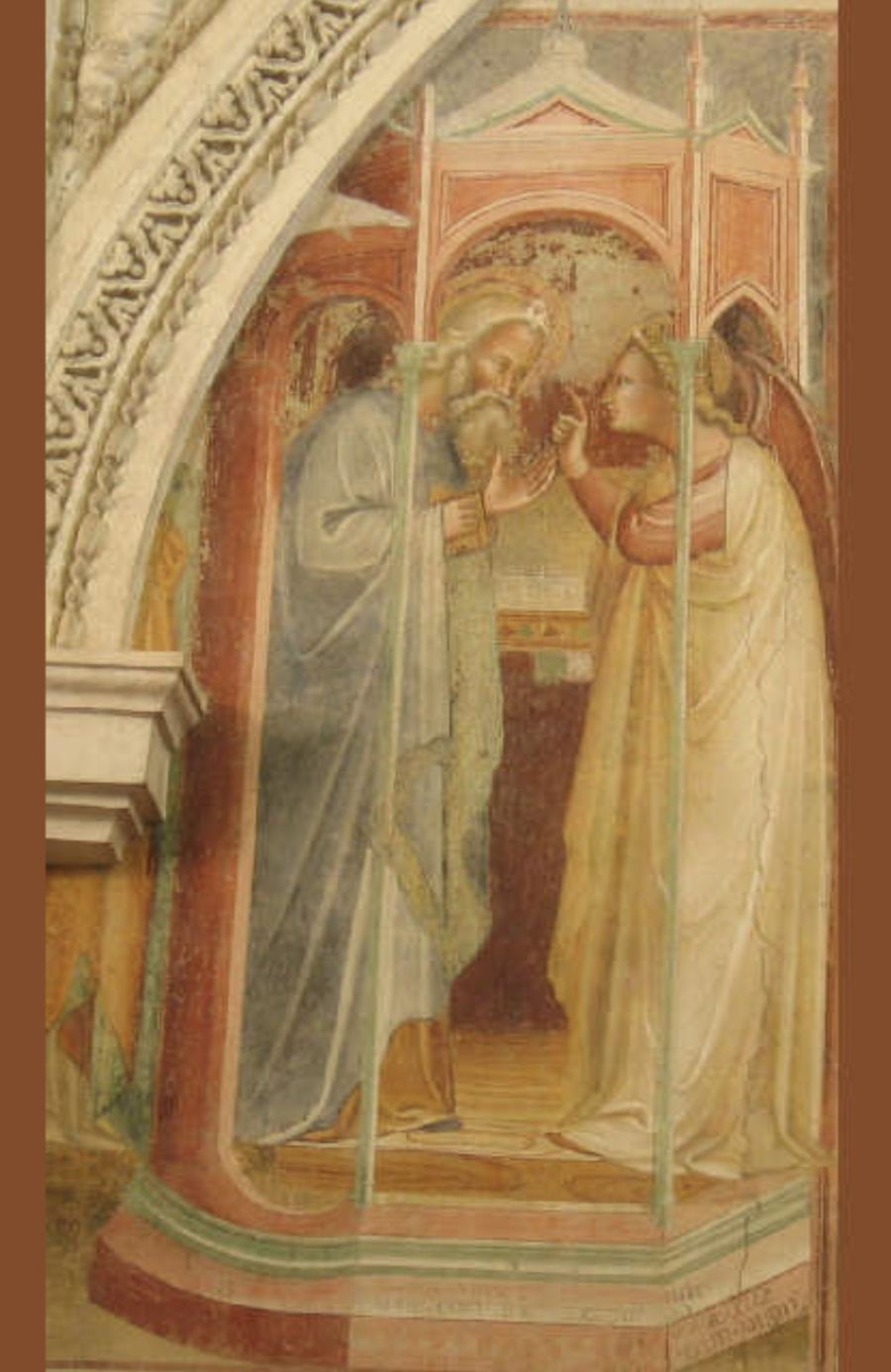
(Lk 1:57-66.80)


Salvation - the cue for a full existence - runs through increasingly vast spaces and breaks into in a peremptory way, without ever repeating itself.

It doesn’t ask for authoritative permits, nor does it wait for a beautiful swept and adorned dwelling.

It even enters the House (Israel) in which nothing was done but to commemorate, with no possibility of renewal and progress.

It transforms it, though scented with incense and pureness.

In that context, unfortunately, the Waiting had become a habit [to wait] that no longer expected anything.

The announcement of the new times, conversely, arouses contagious joys, a desire to make and affect the ancient habitual enclosure - in all aspects of mentality, suddenly no longer compliant.

Change ushers in an era of redemption: concretely, a life as people saved.

Trajectory now able to open loop holes on the great wall of conventions that bridle the freedom to be and to do.

Zechariah [«God makes memory»: the usual God and the usual memory] generates a Promise that is being fulfilled before the eyes.

Word-event that really visits the people - here and now, every dawn - imposing the «none of your kinship» (v.61) ie of the custom: here is Johanan [«God has made Grace»].

The Merciful Living One is no longer exactly that of the bloody and propitiatory cults at the Temple - but of the perspectives, of the deployed horizons. 

You find lightness. No conditioning blockage, no guilt sense for having diverted. In His proposals for dilated life, He is and remains «Favourable».

The Name to be imposed by ancient tradition conveyed a culture and a role (even) with sacred accents, reassuring.

By changing it, destiny is modified. Thus we doesn’t fall into a garment, in a part to be recited; we grasp the essence of the expected Face.

The Eternal is not the One who invites to a series of identified roles to trace without respite: his unconditional initiatives offer every day a decisive field’s opening.

The Most High creates, and calls for development, for the better and further: the categories of possibilities are overflown!

The ancient barriers between Heaven and Earth, between Tradition and Manifestation, are about to fall in favor of a world prone to life.

Redemption begins to make sparks with textbook choices: they can't stand each other anymore.

Even in our journey, accepting different horizons from the expected we allow the divine soul of salvation history to visit us.

This is so that the essence of our deep states detaches itself from the common judgment, and re-tunses on how much is still Unknown but we feel it belongs to us.

In each shift of gaze we will find another cosmos, a discreet, reserved Beauty - in which the Secret for each is nestled, a stage of complete realization for all.

Fulfilment is now «fortified in Spirit and in deserts» instead of according to manners and measure - in special places (v.80) from which one can push oneself out, even irregularly.


[Weekday Liturgy, December 2023]

316 Last modified on Tuesday, 23 December 2025 12:08
don Giuseppe Nespeca

Giuseppe Nespeca è architetto e sacerdote. Cultore della Sacra scrittura è autore della raccolta "Due Fuochi due Vie - Religione e Fede, Vangeli e Tao"; coautore del libro "Dialogo e Solstizio".

Thus, in the figure of Matthew, the Gospels present to us a true and proper paradox: those who seem to be the farthest from holiness can even become a model of the acceptance of God's mercy and offer a glimpse of its marvellous effects in their own lives (Pope Benedict))
Nella figura di Matteo, dunque, i Vangeli ci propongono un vero e proprio paradosso: chi è apparentemente più lontano dalla santità può diventare persino un modello di accoglienza della misericordia di Dio e lasciarne intravedere i meravigliosi effetti nella propria esistenza (Papa Benedetto)
Man is involved in penance in his totality of body and spirit: the man who has a body in need of food and rest and the man who thinks, plans and prays; the man who appropriates and feeds on things and the man who makes a gift of them; the man who tends to the possession and enjoyment of goods and the man who feels the need for solidarity that binds him to all other men [CEI pastoral note]
Nella penitenza è coinvolto l'uomo nella sua totalità di corpo e di spirito: l'uomo che ha un corpo bisognoso di cibo e di riposo e l'uomo che pensa, progetta e prega; l'uomo che si appropria e si nutre delle cose e l'uomo che fa dono di esse; l'uomo che tende al possesso e al godimento dei beni e l'uomo che avverte l'esigenza di solidarietà che lo lega a tutti gli altri uomini [nota pastorale CEI]
St John Chrysostom urged: “Embellish your house with modesty and humility with the practice of prayer. Make your dwelling place shine with the light of justice; adorn its walls with good works, like a lustre of pure gold, and replace walls and precious stones with faith and supernatural magnanimity, putting prayer above all other things, high up in the gables, to give the whole complex decorum. You will thus prepare a worthy dwelling place for the Lord, you will welcome him in a splendid palace. He will grant you to transform your soul into a temple of his presence” (Pope Benedict)
San Giovanni Crisostomo esorta: “Abbellisci la tua casa di modestia e umiltà con la pratica della preghiera. Rendi splendida la tua abitazione con la luce della giustizia; orna le sue pareti con le opere buone come di una patina di oro puro e al posto dei muri e delle pietre preziose colloca la fede e la soprannaturale magnanimità, ponendo sopra ogni cosa, in alto sul fastigio, la preghiera a decoro di tutto il complesso. Così prepari per il Signore una degna dimora, così lo accogli in splendida reggia. Egli ti concederà di trasformare la tua anima in tempio della sua presenza” (Papa Benedetto)
And He continues: «Think of salvation, of what God has done for us, and choose well!». But the disciples "did not understand why the heart was hardened by this passion, by this wickedness of arguing among themselves and seeing who was guilty of that forgetfulness of the bread" (Pope Francis)
In today’s Gospel passage, Jesus identifies himself not only with the king-shepherd, but also with the lost sheep, we can speak of a “double identity”: the king-shepherd, Jesus identifies also with the sheep: that is, with the least and most needy of his brothers and sisters […] And let us return home only with this phrase: “I was present there. Thank you!”. Or: “You forgot about me” (Pope Francis)
Nella pagina evangelica di oggi, Gesù si identifica non solo col re-pastore, ma anche con le pecore perdute. Potremmo parlare come di una “doppia identità”: il re-pastore, Gesù, si identifica anche con le pecore, cioè con i fratelli più piccoli e bisognosi […] E torniamo a casa soltanto con questa frase: “Io ero presente lì. Grazie!” oppure: “Ti sei scordato di me” (Papa Francesco)

Due Fuochi due Vie - Vol. 1 Due Fuochi due Vie - Vol. 2 Due Fuochi due Vie - Vol. 3 Due Fuochi due Vie - Vol. 4 Due Fuochi due Vie - Vol. 5 Dialogo e Solstizio I fiammiferi di Maria

duevie.art

don Giuseppe Nespeca

Tel. 333-1329741


Disclaimer

Questo blog non rappresenta una testata giornalistica in quanto viene aggiornato senza alcuna periodicità. Non può pertanto considerarsi un prodotto editoriale ai sensi della legge N°62 del 07/03/2001.
Le immagini sono tratte da internet, ma se il loro uso violasse diritti d'autore, lo si comunichi all'autore del blog che provvederà alla loro pronta rimozione.
L'autore dichiara di non essere responsabile dei commenti lasciati nei post. Eventuali commenti dei lettori, lesivi dell'immagine o dell'onorabilità di persone terze, il cui contenuto fosse ritenuto non idoneo alla pubblicazione verranno insindacabilmente rimossi.






