Nov 19, 2025 Written by 

Values and emotional independence

Placing in the events of persecution

(Lk 21:12-19)


The course of history is a time when God composes the confluence of our freedom and circumstances.

In such folds there is often a vector of life, an essential aspect, a definitive destiny, that escapes us.

But to the non-mediocre eye of the person of Faith, abuses and even martyrdom are also a gift.

To learn the important lessons of life, every day the believer ventures into what he is afraid to do, overcoming fears.

The spousal and gratuitous love received places us in a condition of reciprocity, of active desire to unite life to Christ - albeit in the meagre nature of our responses.

Continuing instead to complain about failures, dangers, calamities, everyone will see in us women like the others and ordinary men - and everything will end at this level.

We won’t be on the other side. At most we will try to escape the harshness, or we will end up looking for circumstance’s allies (vv.14-15).


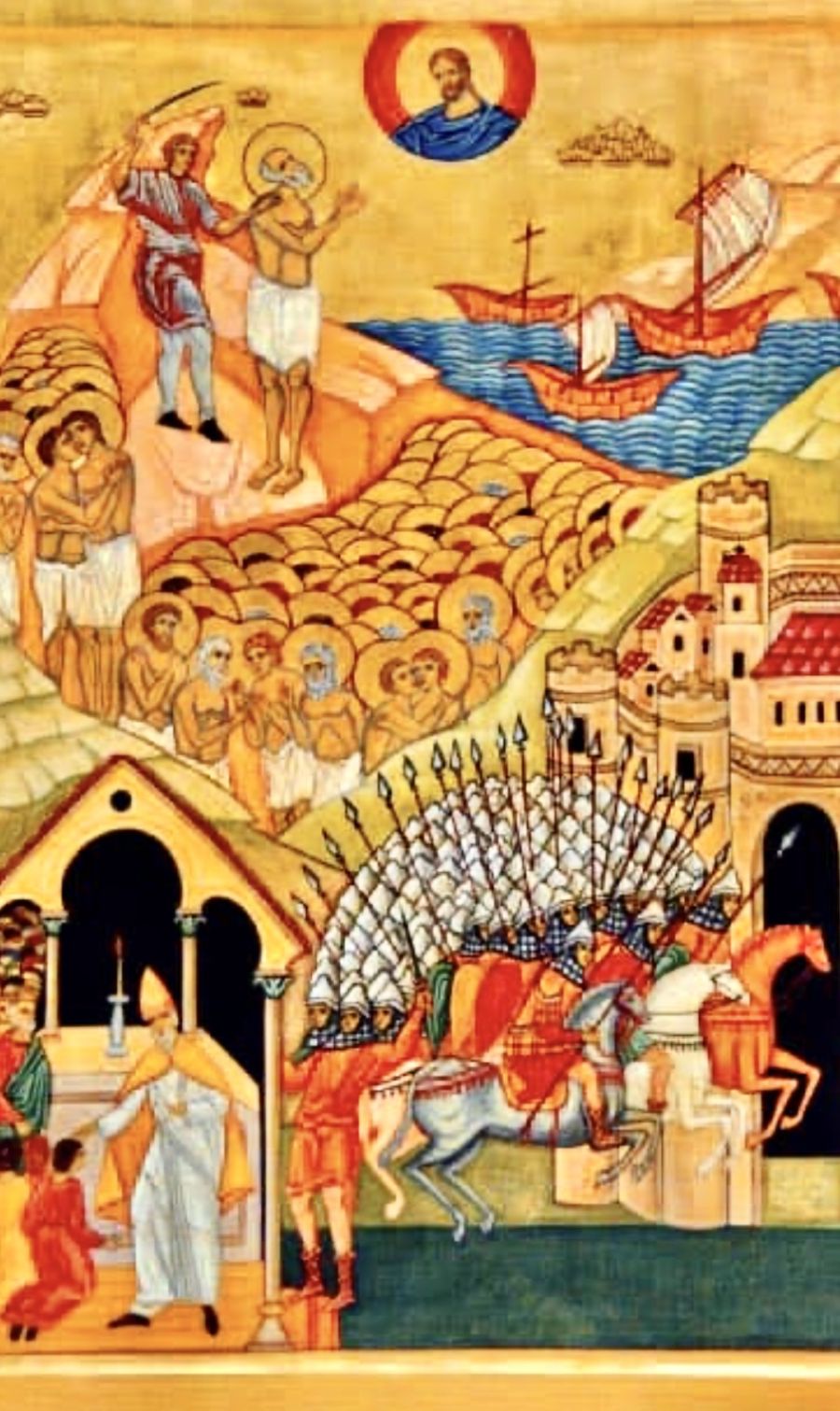
Mt intends to help his communities to clash with worldly logic and to place themselves fervently in the events of persecution.

Social harassments are not fatalities, but opportunities for mission; places of high eucharistic witness (v.13).

The persecuted do not need external crutches, nor do they have to live in the anguish of collapse.

They have the task of being signs of the God’s Kingdom, which gradually leads the distant and the usurpers themselves to a different awareness.

No one is the arbiter of reality and all are twigs subject to reverses, but in the humanizing condition of the apostles overflows an emotional independence.

This happens through the intimate, living sense of a Presence, and the reading of external events as an exceptional action of the Father who ‘reveals himself’.

In this mouldable energy magma, unique paths emerge, unprecedented opportunities for growth... even in adversity.

Attitude without alibi or granite certainties: with the sole conviction that everything will be put back on the line.


Sacred and profane times come to coincide in a fervent Covenant, which nests and bears fruit even in moments of travail and nonsense.

Here the only necessary resource is the spiritual strength to go all the way... yes, in paradoxes of other side.

It’s in the Lord and in the insidious or day-to-day reality the "place" for each of us. Not without lacerations.

Yet we draw spiritual energy from the knowledge of Christ, from the sense of deep bond with Him and even minute and varied reality, or fearsome - always personal (v.18).

Our story will not be like an easy and happy ending novel.

But we’ll have the opportunity to witness in the present the most genuine ancient roots: at every moment God calls, manifests himself - and what seems to be failure becomes Food and source of Life.


To internalize and live the message:


What kind of reading do you do, and how do you place yourself in events of persecution? 

Are you aware that setbacks do not ‘come’ for despair, but to free you from closure in stagnant cultural patterns (and not yours)?


[Wednesday 34th wk. in O.T.  November 26, 2025]

180 Last modified on Wednesday, 26 November 2025 11:59
don Giuseppe Nespeca

Giuseppe Nespeca è architetto e sacerdote. Cultore della Sacra scrittura è autore della raccolta "Due Fuochi due Vie - Religione e Fede, Vangeli e Tao"; coautore del libro "Dialogo e Solstizio".

Man is the surname of God: the Lord in fact takes his name from each of us - whether we are saints or sinners - to make him our surname (Pope Francis). God's fidelity to the Promise is realized not only through men, but with them (Pope Benedict).
L’uomo è il cognome di Dio: il Signore infatti prende il nome da ognuno di noi — sia che siamo santi, sia che siamo peccatori — per farlo diventare il proprio cognome (Papa Francesco). La fedeltà di Dio alla Promessa si attua non soltanto mediante gli uomini, ma con loro (Papa Benedetto)
In the communities of Galilee and Syria the pagans quickly became a majority - elevated to the rank of sons. They did not submit to nerve-wracking processes, but spontaneously were recognizing the Lord
Nelle comunità di Galilea e Siria i pagani diventavano rapidamente maggioranza - elevati al rango di figli. Essi non si sottoponevano a trafile snervanti, ma spontaneamente riconoscevano il Signore
And thus we must see Christ again and ask Christ: “Is it you?” The Lord, in his own silent way, answers: “You see what I did, I did not start a bloody revolution, I did not change the world with force; but lit many I, which in the meantime form a pathway of light through the millenniums” (Pope Benedict)
E così dobbiamo di nuovo vedere Cristo e chiedere a Cristo: “Sei tu?”. Il Signore, nel modo silenzioso che gli è proprio, risponde: “Vedete cosa ho fatto io. Non ho fatto una rivoluzione cruenta, non ho cambiato con forza il mondo, ma ho acceso tante luci che formano, nel frattempo, una grande strada di luce nei millenni” (Papa Benedetto)
Experts in the Holy Scriptures believed that Elijah's return should anticipate and prepare for the advent of the Kingdom of God. Since the Lord was present, the first disciples wondered what the value of that teaching was. Among the people coming from Judaism the question arose about the value of ancient doctrines…
Gli esperti delle sacre Scritture ritenevano che il ritorno di Elia dovesse anticipare e preparare l’avvento del Regno di Dio. Poiché il Signore era presente, i primi discepoli si chiedevano quale fosse il valore di quell’insegnamento. Tra i provenienti dal giudaismo sorgeva il quesito circa il peso delle dottrine antiche...
Gospels make their way, advance and free, making us understand the enormous difference between any creed and the proposal of Jesus. Even within us, the life of Faith embraces all our sides and admits many things. Thus we become more complete and emancipate ourselves, reversing positions.
I Vangeli si fanno largo, avanzano e liberano, facendo comprendere l’enorme differenza tra credo qualsiasi e proposta di Gesù. Anche dentro di noi, la vita di Fede abbraccia tutti i nostri lati e ammette tante cose. Così diventiamo più completi e ci emancipiamo, ribaltando posizioni
We cannot draw energy from a severe setting, contrary to the flowering of our precious uniqueness. New eyes are transmitted only by the one who is Friend. And Christ does it not when we are well placed or when we equip ourselves strongly - remaining in a managerial attitude - but in total listening
Non possiamo trarre energia da un’impostazione severa, contraria alla fioritura della nostra preziosa unicità. Gli occhi nuovi sono trasmessi solo da colui che è Amico. E Cristo lo fa non quando ci collochiamo bene o attrezziamo forte - permanendo in atteggiamento dirigista - bensì nell’ascolto totale
The Evangelists Matthew and Luke (cf. Mt 11:25-30 and Lk 10:21-22) have handed down to us a “jewel” of Jesus’ prayer that is often called the Cry of Exultation or the Cry of Messianic Exultation. It is a prayer of thanksgiving and praise [Pope Benedict]

Due Fuochi due Vie - Vol. 1 Due Fuochi due Vie - Vol. 2 Due Fuochi due Vie - Vol. 3 Due Fuochi due Vie - Vol. 4 Due Fuochi due Vie - Vol. 5 Dialogo e Solstizio I fiammiferi di Maria

duevie.art

don Giuseppe Nespeca

Tel. 333-1329741


Disclaimer

Questo blog non rappresenta una testata giornalistica in quanto viene aggiornato senza alcuna periodicità. Non può pertanto considerarsi un prodotto editoriale ai sensi della legge N°62 del 07/03/2001.
Le immagini sono tratte da internet, ma se il loro uso violasse diritti d'autore, lo si comunichi all'autore del blog che provvederà alla loro pronta rimozione.
L'autore dichiara di non essere responsabile dei commenti lasciati nei post. Eventuali commenti dei lettori, lesivi dell'immagine o dell'onorabilità di persone terze, il cui contenuto fosse ritenuto non idoneo alla pubblicazione verranno insindacabilmente rimossi.






