


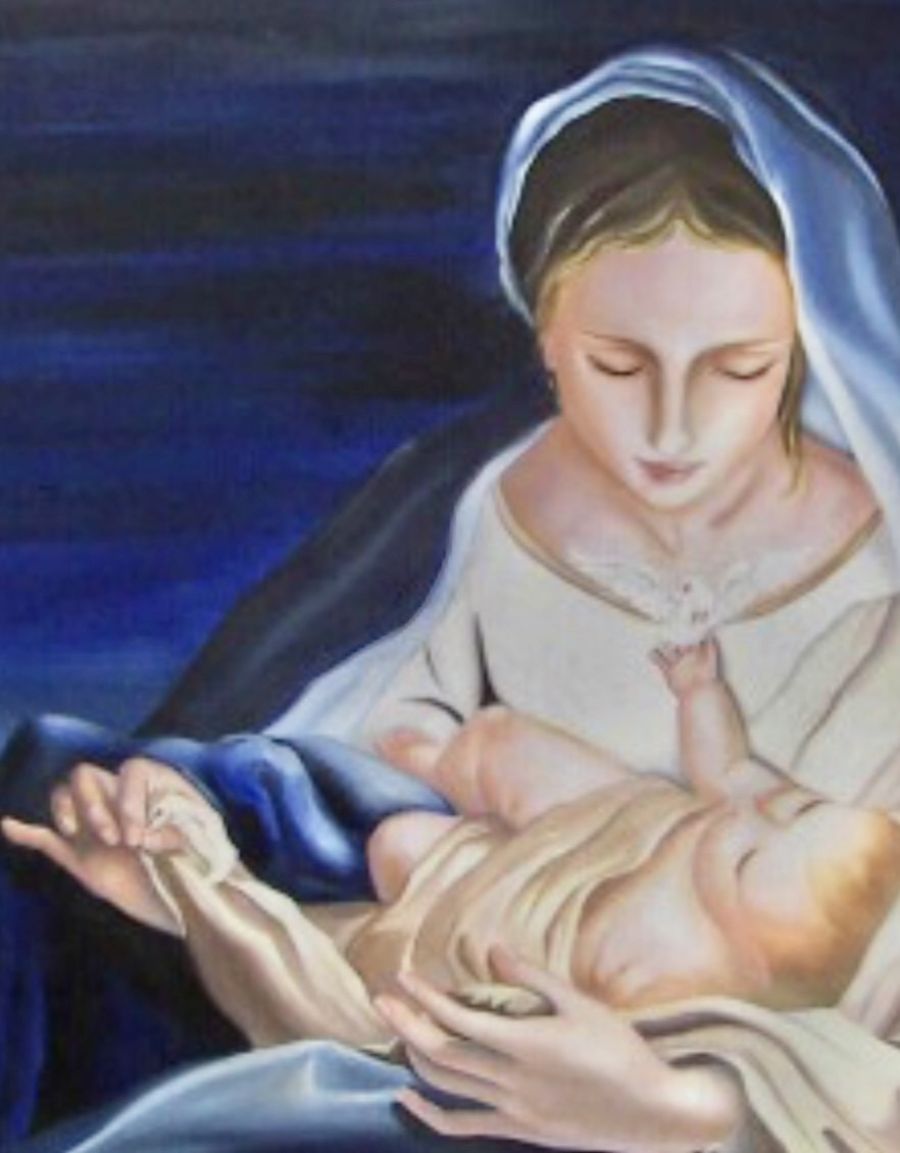
Mary, Holy Mother of God (year A) [1 January 2026]
May God bless us and the Virgin protect us! Best wishes for the new year, invoking God's blessing throughout 2026
*First Reading from the Book of Numbers (6:22-27)
The blessing "May the Lord make his face shine upon you and be gracious to you" comes from the Book of Numbers and has been pronounced by the priests of Israel since the time of Aaron. It has also become a permanent part of Christian liturgy, as the solemn blessing at the end of Mass. The expression "invoking the Name of God" must be understood in the biblical context: the Name represents the person himself, his presence, his protection. For this reason, pronouncing the Name of God over the people means placing them under his protection. When God reveals his Name, he makes himself accessible to the prayers of his people. Consequently, any offence against the people of God is an offence against his own Name. This also sheds light on Jesus' words about becoming a neighbour to the least among us: God has placed his Name on every person, who must therefore be regarded with respect and with new eyes. The blessing is formulated in the singular (may he bless you), but it refers to the entire people: it is a collective singular, which Israel understood as extending to all humanity. The use of the subjunctive does not indicate any doubt about God's will to bless, since God blesses unceasingly; rather, it expresses man's freedom to accept or reject this blessing. To bless means, in the biblical sense, that God 'speaks well' of man. His Word is effective and transforming: when God speaks well, he brings it about. To ask for a blessing is to open oneself to his transforming and life-giving action. To be blessed does not mean to be preserved from trials, but to live them in communion with God, within the Covenant, certain of his faithful presence. This finds its fulfilment in Mary, mother of God, the 'full of grace', upon whom the Name of God is placed in a unique and definitive way. The original Hebrew text further enriches the meaning: the Name YHWH is a promise of continuous presence, and the verbal form indicates a blessing that spans the past, present and future. God has blessed, blesses and will bless his people forever.
Important elements: +The blessing of Numbers 6 as Jewish and Christian heritage. +The Name of God as presence, protection and belonging. +The collective singular: blessing for all the people and for humanity. +The subjunctive as an expression of human freedom to accept grace. +Blessing as an effective Word that transforms. +Blessing not as the absence of trials, but as communion with God. +Mary as fully blessed and bearer of the Name. +The richness of the Hebrew text: eternal blessing of YHWH.
*Responsorial Psalm (66/67)
Psalm 66 responds harmoniously to the priestly blessing in the Book of Numbers: "May the Lord bless you and keep you." The same spiritual atmosphere pervades the psalm: the certainty that God accompanies his people. To say that God blesses is to affirm that God is with us. This is the most authentic definition of blessing, as the prophet Zechariah suggests: God's presence is so evident that it attracts the nations. The very Name revealed on Sinai, YHWH, expresses precisely this promise of faithful and permanent presence. In the psalm, it is the people themselves who ask for the blessing: "May God bless us." God blesses without interruption; however, man remains free to accept or reject this blessing. Prayer then becomes an opening of the heart to God's transforming action. For this reason, in the faith of Israel, prayer is always marked by the certainty of being heard even before asking. Israel does not ask for blessings only for itself. The blessing received is destined to radiate to all nations, according to the promise made to Abraham. Two inseparable dimensions are intertwined in the psalm: the election of Israel and the universality of God's plan. The expression "God, our God" recalls the Covenant, while the invitation to all peoples to praise God shows that salvation is offered to the whole of humanity. Israel gradually understands that it has been chosen not for exclusion, but to bear witness: the light that illuminates it must reflect the light of God for the whole world. This awareness matures especially after the exile, when Israel recognises that the God of the Covenant is the God of the universe. Zechariah's prophecy (8:23) clearly expresses this vision: the nations will draw near to the chosen people because they recognise that God is with them. Today's believers are also called to be a witnessing people: every blessing received is a mandate to become a reflection of God's light in the world. At the beginning of a new year, this becomes a mutual wish: to bring God's light where it is not yet welcomed. Finally, the psalm states that 'the earth has yielded its fruit'. Because the Word of God is effective, it bears fruit in history. God has kept his promise of a fruitful earth, and for Christians, this verse finds its full fulfilment in the birth of the Saviour: in the fullness of time, the earth has borne its fruit.
Important elements: +Psalm 66 as an echo of the blessing in Numbers 6. +Blessing as God's presence and accompaniment. +The Name YHWH as a promise of faithful presence. +God always blesses; man is free to accept. +Prayer as openness to God's transforming action. +The election of Israel and the universality of salvation. Israel (and the Church) as a witnessing people. +The blessing intended for all nations. +The Word of God bearing fruit in history. +Christian fulfilment in the mystery of the Incarnation.
Second Reading from the Letter of Saint Paul the Apostle to the Galatians (4:4-7)
"When the fullness of time had come, God sent forth his Son, born of a woman": with this expression Paul announces the fulfilment of God's plan. History, according to biblical faith, is not an eternal return, but a progressive journey towards the realisation of God's merciful plan. This perspective of fulfilment is a fundamental key not only to understanding Paul's letters, but the entire Bible, beginning with the Old Testament. The authors of the New Testament insist on showing that the life, passion, death and resurrection of Jesus fulfil the Scriptures. This does not mean that everything was rigidly planned and predetermined: fulfilment should not be understood as fatality, but as a reinterpretation in faith of real events through which God, respecting human freedom, carries out his plan. God accepts the risk of human freedom, even when it conflicts with his plan; nevertheless, he never tires of renewing his promise, as Isaiah and Jeremiah attest. In Jesus, believers contemplate the definitive fulfilment of these promises. Paul then states that the Son of God was "born of a woman and born under the Law". In a few words, he expresses the whole mystery of Christ: true Son of God, true man, fully integrated into the people of Israel. The expression "born of a woman" simply indicates his full humanity, as attested by biblical language; being "under the Law" means that Jesus shared the condition of his people to the full. The purpose of this coming is clear: to redeem, that is, to free those who were under the Law, so that they might become adopted children. It is no longer a question of living as slaves who obey orders, but as children who obey out of love and trust. Thus, we move from submission to the Law to the freedom of filial obedience. This transition is made possible by the gift of the Spirit of the Son, who cries out in our hearts, 'Abba, Father'. It is the cry of trusting abandonment, the certainty that God is Father in all circumstances. For this reason, the believer is no longer a slave, but a child and, as a child, an heir: everything that belongs to the Son is also promised to him. The difficulty for human beings often lies in not daring to believe in this reality: not daring to believe that the Spirit of God dwells in them, that God's strength and capacity to love are truly given to them. And yet, none of this is due to human merit: if we are children and heirs, it is by grace. It is in this profound sense that we can say that everything is grace.
Important elements: +The fullness of time as the fulfilment of God's plan. +History as a journey towards God's benevolent plan. +The fulfilment of the Scriptures in Jesus, without determinism. +Respect for human freedom in the divine plan. +Jesus: Son of God, true man, born under the Law. +Redemption as liberation from the slavery of the Law. +The transition from slaves to children. +The gift of the Spirit who cries out 'Abba, Father'. Sonship as a promised inheritance. +Grace as the foundation of everything.
*From the Gospel according to Luke (2:16-21)
'What you have hidden from the wise and intelligent, you have revealed to the little ones' (Lk 10:21/ Mt 11:25): this verse illuminates the story of Jesus' birth, which is apparently simple but deeply theological. The shepherds, marginalised men who did not observe the Law, are the first to receive the angel's announcement: they thus become the first witnesses, bearers of the good news. Luke's narrative (Lk 2:8-14) emphasises how God's glory envelops them and how they are seized with fear and joy. Their experience recalls the words of Jesus: God reveals his mystery to the little ones, not to the wise. The story takes place in Bethlehem, the city of David and 'house of bread', where the newborn is laid in a manger: a symbol of the one who gives himself as nourishment for humanity. Mary observes in silence, meditating in her heart on all the events (Lk 2:19), showing attentive and filial contemplation, in contrast to the loquacity of the shepherds. Her attitude is reminiscent of that of Daniel, who kept the visions he received in his heart (Dan 7:28), foreshadowing the messianic destiny of the child. The name 'Jesus', which means 'God saves', reveals his saving mystery. Like every Jewish child, Jesus is circumcised on the eighth day and subjected to the Law of Moses, in full solidarity with his people. Luke insists on the circumcision and presentation in the Temple (Lk 2:22-24) to emphasise Mary and Joseph's perfect observance of the Law, not to highlight a ritual detail, but to show Jesus' complete adherence to the history and tradition of his people. This is consistent with his future identification with the wicked, as foretold: "And he was numbered among the wicked" (Lk 22:37). Finally, the discretion and silence of Mary, mother of God, show her humility and ability to become an instrument of God's plan. The centre of the plan is not Mary, but Jesus, the Saviour.
St Ambrose of Milan (4th century), commenting on the scene of the shepherds and Mary's attitude, writes: Mary kept all these things, pondering them in her heart: she did not try to explain the mystery in words, but kept it in faith" (cf. Expositio Evangelii secundum Lucam, II).
Important elements: +The revelation of God's mystery to the 'little ones', not to the wise and the shepherds: marginal witnesses and first heralds. +Bethlehem as the city of bread, symbol of saving nourishment. +Mary meditates on the events in her heart, a model of contemplation and silence. +The name Jesus means 'God saves'. +Circumcision and observance of the Law: Jesus' solidarity with the people and Presentation in the Temple: total adherence to the Law of Moses. +Jesus identified with the wicked: a sign of his mission. +Mary's silence and humility: an instrument of the divine plan, not the centre. + The plan of salvation has Jesus, the Saviour, at its centre.
+Giovanni D'Ercole








