Sep 12, 2026 Written by 

Carrying the weight of the day? It is never too late

(Unique Coin and smart working: Love)

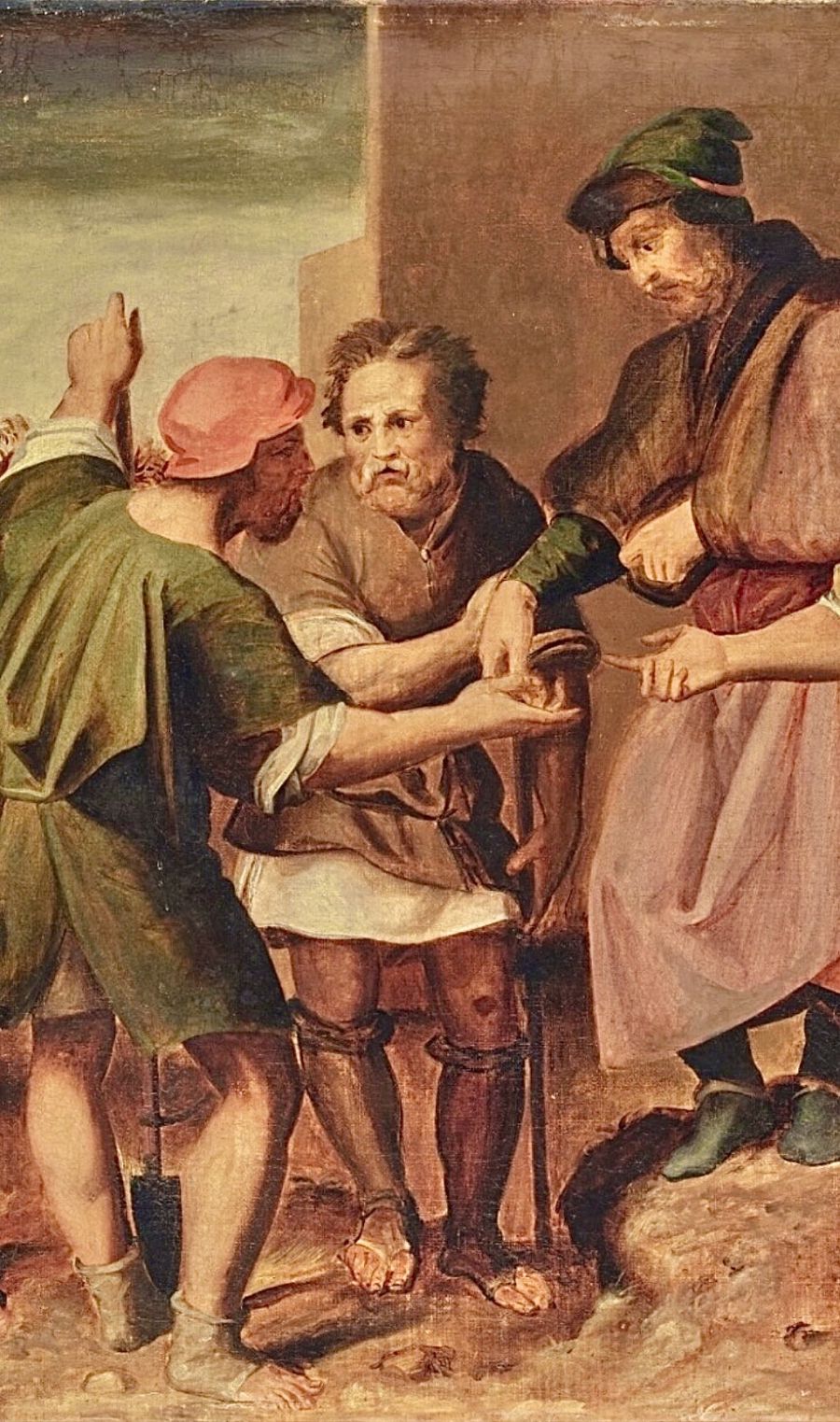
(Mt 20:1-16)


In the atrium of the Temple in Jerusalem, the climbing vine of the portal was a symbol of the gifts that people were called to present to God: mutual acceptance, understanding, sharing... for the happiness of all.

Obviously, entering at the beginning of the day (that is, of our existence) into this logic of love is better, than entering at the last hour.

Being in communion with God, being in his Vineyard and having had the grace not to lose even a moment of life without his Presence, is a «bearing the burden» or vice versa a pleasure?

Believers of the first hour feel deeply offended, because they identify the "advantage" with what they have always denied themselves.

They think the "enjoy life" in the same way as the pagans! The work is indeed... «endured» [v.12: notice the verb!].

Well, God has no wage workers: only sons; no subordinate. And none of us is negligible for "inefficiency".

That of the Models is a blocking effect; tied to insignificant comparisons.

Not in deep synchrony with oneself [vv.6-7].


The Gospel according to Mt originated from Syro-Palestinian communities, which were beginning to experience pagans and sinners flocking in large numbers and becoming a numerical majority.

The attitude of the newcomers who turned up at the gates of the communities was far more relaxed than the (stiff) demeanour of the embarrassed veterans.

The new mentality, dissolved from constraints, provoked jealousy among those who were accustomed to scrutinizing the lives of others - almost out of religious duty.

After all, the story of the beginners and ‘half-breeds’ who wished to embark on a journey of love was nothing more than reflection of that sublime, overflowing fluidity, of those magnanimous divine blessings.

‘Gratis’: given without conditions or exclusions; not on the basis of past merits.

A Gift free from any requirement for reciprocity – and based solely on need.

Therefore, today’s passage remains a strong Call.


The importance of work induces the Master not to send his factor (!) whom he unfortunately knows he cannot fully trust.

He himself goes out repeatedly and does not want dirigistic interference, in personally calling the workers.

Because He is the Unique who understands: it is never too late!


This teaching is precisely for community leaders, who often do not take on the burden of bothering themselves from home in the continuous search for everyone, and adapting themselves to people and events.

The Father wants a Family (Vineyard) that presents to the world the sweet and sugary fruit of the Feast - the only really important thing, non-negotiable principle.

Thus, to the always morbids top of the class the Lord continues to do a very educational "spite".

From now on they must discover that He does not discriminate on the basis of external profitable percentages, nor other negative mental states.

He “pays” everyone unreservedly and with a unique single «currency»: his Person. No automatic pilot is enabled to disturb our breathing.


The soul counts, not the curriculum [CV] or performance.


[25th Sunday in O.T. (year A)  September 20, 2026]

91 Last modified on Saturday, 12 September 2026 00:32
don Giuseppe Nespeca

Giuseppe Nespeca è architetto e sacerdote. Cultore della Sacra scrittura è autore della raccolta "Due Fuochi due Vie - Religione e Fede, Vangeli e Tao"; coautore del libro "Dialogo e Solstizio".

The sower is Jesus. With this image, we can see that he presents himself as one who does not impose himself, but rather offers himself. He does not attract us by conquering us, but by donating himself: he casts seeds. With patience and generosity, he spreads his Word, which is not a cage or a trap, but a seed which can bear fruit (Pope Francis)
Il seminatore è Gesù. Notiamo che, con questa immagine, Egli si presenta come uno che non si impone, ma si propone; non ci attira conquistandoci, ma donandosi: butta il seme. Egli sparge con pazienza e generosità la sua Parola, che non è una gabbia o una trappola, ma un seme che può portare frutto (Papa Francesco)
The Church desires to give thanks to the Most Holy Trinity for the "mystery of woman" and for every woman - for that which constitutes the eternal measure of her feminine dignity, for the "great works of God", which throughout human history have been accomplished in and through her (Mulieris Dignitatem n.31)
La Chiesa desidera ringraziare la Santissima Trinità per il «mistero della donna», e, per ogni donna - per ciò che costituisce l'eterna misura della sua dignità femminile, per le «grandi opere di Dio» che nella storia delle generazioni umane si sono compiute in lei e per mezzo di lei (Mulieris Dignitatem n.31)
Simon, a Pharisee and rich 'notable' of the city, holds a banquet in his house in honour of Jesus. Unexpectedly from the back of the room enters a guest who was neither invited nor expected […] (Pope Benedict)
Simone, fariseo e ricco “notabile” della città, tiene in casa sua un banchetto in onore di Gesù. Inaspettatamente dal fondo della sala entra un’ospite non invitata né prevista […] (Papa Benedetto)
God excludes no one […] God does not let himself be conditioned by our human prejudices (Pope Benedict)
Dio non esclude nessuno […] Dio non si lascia condizionare dai nostri pregiudizi (Papa Benedetto)
«The Russian mystics of the first centuries of the Church gave advice to their disciples, the young monks: in the moment of spiritual turmoil take refuge under the mantle of the holy Mother of God». Then «the West took this advice and made the first Marian antiphon “Sub tuum Praesidium”: under your cloak, in your custody, O Mother, we are sure there» (Pope Francis)
«I mistici russi dei primi secoli della Chiesa davano un consiglio ai loro discepoli, i giovani monaci: nel momento delle turbolenze spirituali rifugiatevi sotto il manto della santa Madre di Dio». Poi «l’occidente ha preso questo consiglio e ha fatto la prima antifona mariana “Sub tuum praesidium”: sotto il tuo mantello, sotto la tua custodia, o Madre, lì siamo sicuri» (Papa Francesco)
The Cross of Jesus is our one true hope! That is why the Church “exalts” the Holy Cross, and why we Christians bless ourselves with the sign of the cross. That is, we don’t exalt crosses, but the glorious Cross of Christ, the sign of God’s immense love, the sign of our salvation and path toward the Resurrection. This is our hope (Pope Francis)
La Croce di Gesù è la nostra unica vera speranza! Ecco perché la Chiesa “esalta” la santa Croce, ed ecco perché noi cristiani benediciamo con il segno della croce. Cioè, noi non esaltiamo le croci, ma la Croce gloriosa di Gesù, segno dell’amore immenso di Dio, segno della nostra salvezza e cammino verso la Risurrezione. E questa è la nostra speranza (Papa Francesco)
In the divine attitude justice is pervaded with mercy, whereas the human attitude is limited to justice. Jesus exhorts us to open ourselves with courage to the strength of forgiveness, because in life not everything can be resolved with justice. We know this (Pope Francis)

Due Fuochi due Vie - Vol. 1 Due Fuochi due Vie - Vol. 2 Due Fuochi due Vie - Vol. 3 Due Fuochi due Vie - Vol. 4 Due Fuochi due Vie - Vol. 5 Dialogo e Solstizio I fiammiferi di Maria

duevie.art

don Giuseppe Nespeca

Tel. 333-1329741


Disclaimer

Questo blog non rappresenta una testata giornalistica in quanto viene aggiornato senza alcuna periodicità. Non può pertanto considerarsi un prodotto editoriale ai sensi della legge N°62 del 07/03/2001.
Le immagini sono tratte da internet, ma se il loro uso violasse diritti d'autore, lo si comunichi all'autore del blog che provvederà alla loro pronta rimozione.
L'autore dichiara di non essere responsabile dei commenti lasciati nei post. Eventuali commenti dei lettori, lesivi dell'immagine o dell'onorabilità di persone terze, il cui contenuto fosse ritenuto non idoneo alla pubblicazione verranno insindacabilmente rimossi.






