Aug 1, 2026 Written by 

Risk of drowning

The difficult condition of the disciple in the Church and the world

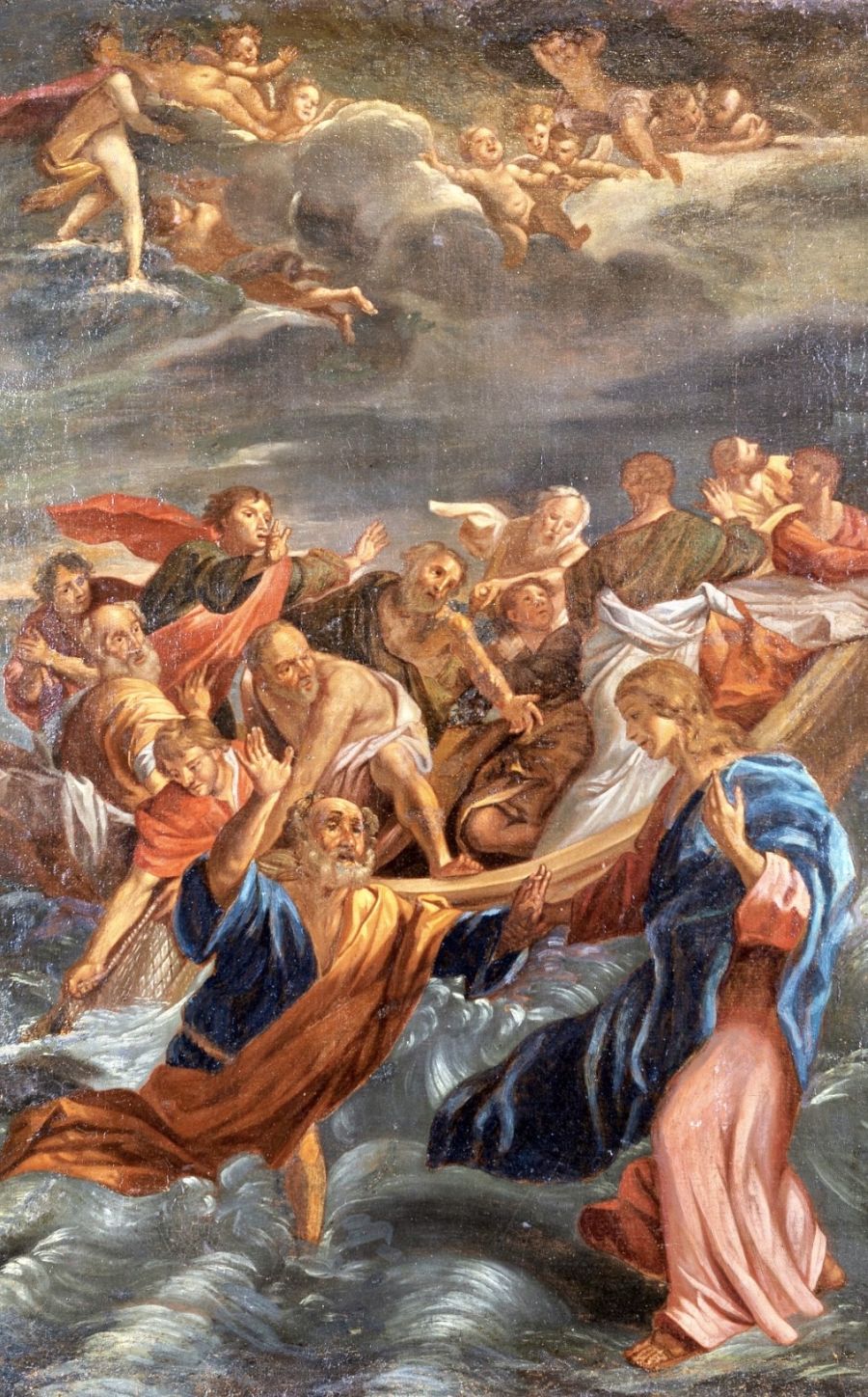
(Mt 14:22-33)


Having reached the ultimate condition (v.23) Jesus does not allow the Apostles to keep the treasures of God for themselves.

He compels his own to the mission to the Gentiles (v.22). But the 'headwinds' were many.

About half a century after the Lord's death, the communities of Galilee and Syria faced a difficult crossing.

The securities of the ancient religion and the sense of rootedness in the customs of the “chosen” people were breaking down. Even small privileges of position were crumbling.

With the increasing entry of pagans into communities, third-generation believers were forced to ask themselves how they could break out of their old cultural isolation and open up to a new way of seeing things.

In addition to the persecutions, internal conflicts intensified: for example, over the position to be taken in relation to the Empire itself.

There was no shortage of heated debates about the figure and history of the Master himself - as well as on the attitude to take towards the tradition of the 'fathers' [which to some seemed a call to turn back].

Even though the situation was fraught with friction, bitterness, and rancour between Judaizers and those from paganism, as well as impetuous dangers, the Glad Tidings of unconditional Salvation could not be kept in an inner circle.


The quotation of the divine Name «I Am» (v.27) refers here to the Exodus story (3:14).

It is a reminder to the disciples. They still seemed to be in the grip of immediate fears about the real power of Life and Deliverance of Christ - so much so that they did not recognize Him (v.26).

Without ceasing, the Risen One still makes himself Present, so that we can open up and move forward; without the burden of opposition or nostalgia. There is a whole new reality waiting.

We are inhabited by the power of God (vv.28-31).

Authentic communities - «flap of his cloak» (v.36) that is of his Person - will still experience the power of the Spirit.

Through evangelization and the new way of living and helping others gratuitously, any storms that may be gathering on the horizon will clear up.

It will be replaced by an ever deeper and more acute experience of the burgeoning diversity of the 'other shore'; of one's neighbour, of oneself, of the life to come, and of God.

But the virtue that dominates the elements cannot be experienced as Peter intended, that is, as an external, immediate, decisive, and final power - but rather as mysterious and inner, animated in time, and of profound relationship.

The “victory” will be the result of Faith alone: trust in the strength that the silent Messiah gives.

Potency far greater than what we already know about ourselves - despite the fact that we often (like Simone) pretend to an easier, quicker, immediately decisive shortcut.


Emotionally relevant situations have their own meaning, they carry a significant appeal; they introduce a different introspection, the decisive change - a new 'genesis'.

Trial in fact activates souls in the most effective way, because it disengages us from the idea of stability, and brings us into contact with dormant energies, initiating the new dialogue with events.

In Him, we are therefore imbued with a different vision of danger.


[19th Sunday in O.T. (year A), August 9, 2026]

79 Last modified on Saturday, 01 August 2026 04:21
don Giuseppe Nespeca

Giuseppe Nespeca è architetto e sacerdote. Cultore della Sacra scrittura è autore della raccolta "Due Fuochi due Vie - Religione e Fede, Vangeli e Tao"; coautore del libro "Dialogo e Solstizio".

The power of faith can move mountains (cf. Mt 17:20): the Lord can illuminate even the deepest darkness [Pope Benedict]
La forza della fede può spostare le montagne (cfr Mt 17,20): il Signore può illuminare anche la tenebra più profonda [Papa Benedetto]
By willingly accepting death, Jesus carries the cross of all human beings and becomes a source of salvation for the whole of humanity. St Cyril of Jerusalem commented: “The glory of the Cross led those who were blind through ignorance into light, loosed all who were held fast by sin and brought redemption to the whole world of mankind” (Catechesis Illuminandorum XIII, 1: de Christo crucifixo et sepulto: PG 33, 772 B) [Pope Benedict]
Accettando volontariamente la morte, Gesù porta la croce di tutti gli uomini e diventa fonte di salvezza per tutta l’umanità. San Cirillo di Gerusalemme commenta: «La croce vittoriosa ha illuminato chi era accecato dall’ignoranza, ha liberato chi era prigioniero del peccato, ha portato la redenzione all’intera umanità» (Catechesis Illuminandorum XIII,1: de Christo crucifixo et sepulto: PG 33, 772 B) [Papa Benedetto]
In the New Testament, it is Christ who constitutes the full manifestation of God's light [Pope Benedict]
Nel Nuovo Testamento è Cristo a costituire la piena manifestazione della luce di Dio [Papa Benedetto]
Faith opens us to knowing and welcoming the real identity of Jesus, his newness and oneness, his word, as a source of life, in order to live a personal relationship with him. Knowledge of the faith grows, it grows with the desire to find the way and in the end it is a gift of God who does not reveal himself to us as an abstract thing without a face or a name, because faith responds to a Person who wants to enter into a relationship of deep love with us and to involve our whole life (Pope Benedict)
La fede ci apre a conoscere e ad accogliere la reale identità di Gesù, la sua novità e unicità, la sua Parola, come fonte di vita, per vivere una relazione personale con Lui. Il conoscere della fede cresce, cresce con il desiderio di trovare la strada, ed è finalmente un dono di Dio, che si rivela a noi non come una cosa astratta senza volto e senza nome, ma la fede risponde a una Persona, che vuole entrare in un rapporto di amore profondo con noi e coinvolgere tutta la nostra vita (Papa Benedetto)
Jesus Christ clearly indicates that even acts of devotion and penance (such as fasting, almsgiving, prayer), which by their religious purpose are primarily 'interior', can succumb to current 'externalism', and can therefore be falsified [John Paul II]
Gesù Cristo indica chiaramente che anche gli atti di devozione e di penitenza (come digiuno, elemosina, preghiera) che per la loro finalità religiosa sono principalmente “interiori”, possono cedere all’“esteriorismo” corrente, e quindi possono essere falsificati [Giovanni Paolo II]
Today’s Gospel reminds us that faith in the Lord and in his Word does not open a way for us where everything is easy and calm; it does not rescue us from life’s storms. Faith gives us the assurance of a Presence (Pope Francis)
He does so in many situations of daily life - He holds his hand out to us. And only if we take the Lord's hand, if we let ourselves be guided by him, will the path we take be right and good [Pope Benedict]
Lo fa in molteplici situazioni della vita quotidiana - Egli ci porge la mano. E soltanto se noi prendiamo la mano del Signore, se ci lasciamo guidare da Lui, la nostra sarà una strada giusta e buona [Papa Benedetto]

Due Fuochi due Vie - Vol. 1 Due Fuochi due Vie - Vol. 2 Due Fuochi due Vie - Vol. 3 Due Fuochi due Vie - Vol. 4 Due Fuochi due Vie - Vol. 5 Dialogo e Solstizio I fiammiferi di Maria

duevie.art

don Giuseppe Nespeca

Tel. 333-1329741


Disclaimer

Questo blog non rappresenta una testata giornalistica in quanto viene aggiornato senza alcuna periodicità. Non può pertanto considerarsi un prodotto editoriale ai sensi della legge N°62 del 07/03/2001.
Le immagini sono tratte da internet, ma se il loro uso violasse diritti d'autore, lo si comunichi all'autore del blog che provvederà alla loro pronta rimozione.
L'autore dichiara di non essere responsabile dei commenti lasciati nei post. Eventuali commenti dei lettori, lesivi dell'immagine o dell'onorabilità di persone terze, il cui contenuto fosse ritenuto non idoneo alla pubblicazione verranno insindacabilmente rimossi.






