Jul 6, 2026 Written by 

The Kingdom has come Close

Emergency large, through small Name

(Mt 10:1-7)


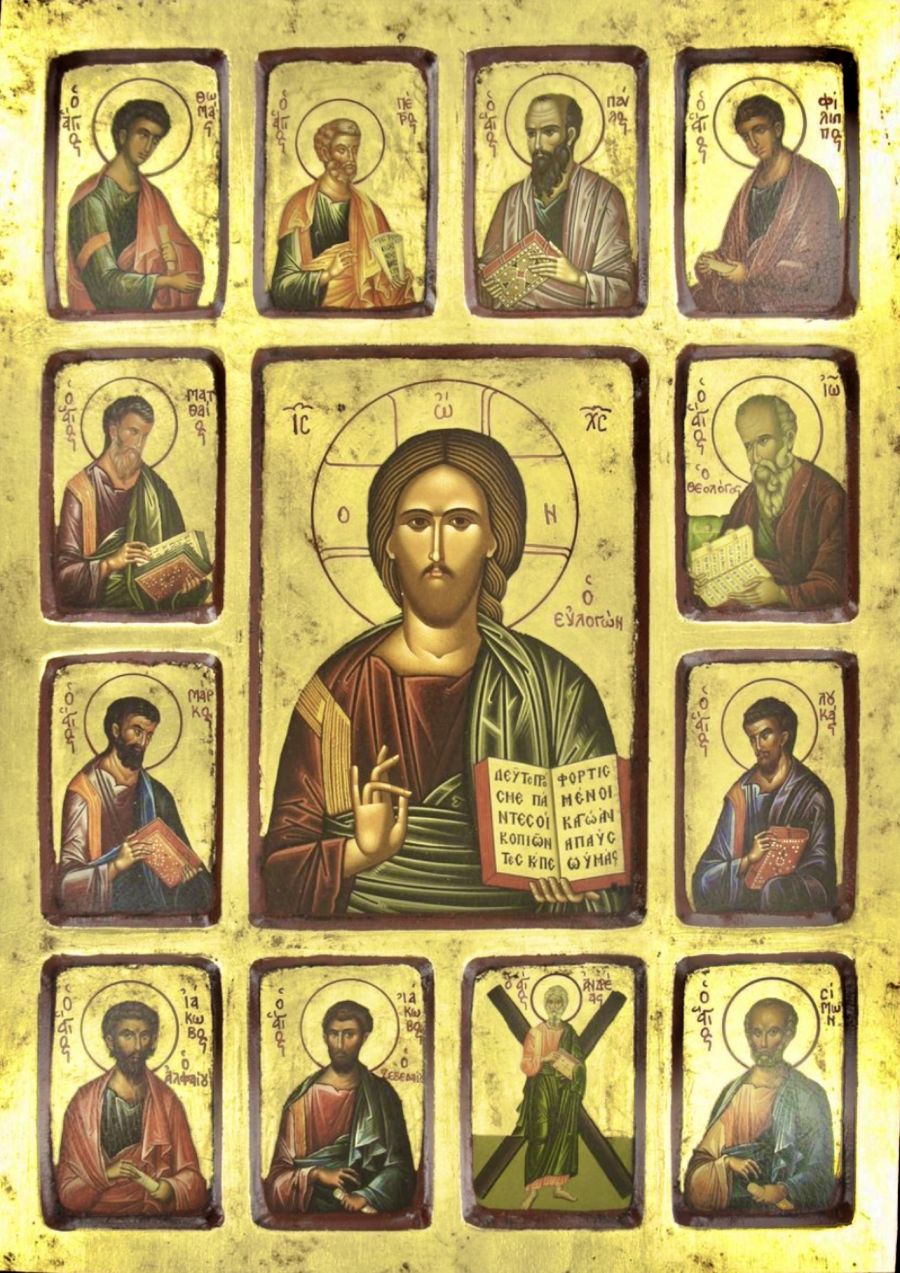
None of the apostles was worthy of the Call; yet he is called upon, and can receive his Mandate - as if he were already perfect!

Most of them have typical names of Judaism, even of the patriarchs’ time - which indicates a cultural and spiritual extraction rooted more in religion than in Faith... not easy to manage.

Peter was eager to step forward, but also often receding (backtracking) until he became for Jesus a «satàn» [in the culture of the ancient East, an official of the great sovereign, sent to be a controller and whistleblower - practically an accuser]. James of Zebedee and John were brothers, heated fundamentalists, and hysterically they wanted the Master only for them. Philip did not appear to be a very practical type, neither quick or trained to grasp the things of God. Andrew seems instead to be doing well: inclusive person. Bartholomew was probably open but perplexed, because the Messiah did not correspond much to him. Thomas was a little inside and a little outside. Matthew a collaborationist, avid accomplice of the oppressive system. Simon the Canaanite a hothead. Judas Iscariot one who destroys himself by trusting the old spiritual guides, imbued with a nationalist ideology, of private interest, opportunism and power. Two others (James son of Alpheus and Judas Thaddeus) perhaps simple disciples of no great importance or initiative.


But the Kingdom is «near» [v.7: «it has become close»]: God is in our history - it was already experienced in the early days, in first community of sons.

In ancient devotion, the idea of a distant God produced separations, pyramidal hierarchies, cultivation of inner circle interests.

The idea of an Eternal leader and avenger left prolific a priestly class that instead of reconciling and integrating people, neglected and abandoned the irrelevant persons.

The fact of believing in a divine Presence linked to material abundance dulled minds and the ability to read the Redemption.

[The idea of advantage and disadvantage, prosperity and scarcity, always originate in us or in the conventional mentality; from opinions].

Therefore, it is crucial to mature first, wherever we live.

Not infrequently there are unnoble reasons to want to reach everyone, run everywhere, spread, increase and do it immediately.

We say so… not to distinguish the moment of the Call from that of Sending.

It is the ‘way of intimate’ that really penetrates the space of the suburbs. In fact, only those who love strength prefer to start from what is very far from themselves.

The only way to peer far is to stick to the reason of things, a principle that we can know if we are not misled by dispersion.

By understanding the nature of themselves and creatures, everyone is inspired to complete.

In short, the Road to Heaven is intertwined with the Way of the Person, not with the journey of excellence; not with the path on the models base - or we will be overfishers common and cheesy.

The Kingdom has become ‘close’ and by Name since the beginning (vv.2-4): there is no more incisive authentic and healing Mission.


[Wednesday 14th wk. in O.T.  July 8, 2026]

82 Last modified on Monday, 06 July 2026 11:01
don Giuseppe Nespeca

Giuseppe Nespeca è architetto e sacerdote. Cultore della Sacra scrittura è autore della raccolta "Due Fuochi due Vie - Religione e Fede, Vangeli e Tao"; coautore del libro "Dialogo e Solstizio".

Christ reveals his identity of Messiah, Israel's bridegroom, who came for the betrothal with his people. Those who recognize and welcome him are celebrating. However, he will have to be rejected and killed precisely by his own; at that moment, during his Passion and death, the hour of mourning and fasting will come (Pope Benedict)
Cristo rivela la sua identità di Messia, Sposo d'Israele, venuto per le nozze con il suo popolo. Quelli che lo riconoscono e lo accolgono con fede sono in festa. Egli però dovrà essere rifiutato e ucciso proprio dai suoi: in quel momento, durante la sua passione e la sua morte, verrà l'ora del lutto e del digiuno (Papa Benedetto)
For the prodigious and instantaneous healing of the paralytic, the apostle St. Matthew is more sober than the other synoptics, St. Mark and St. Luke. These add broader details, including that of the opening of the roof in the environment where Jesus was, to lower the sick man with his lettuce, given the huge crowd that crowded at the entrance. Evident is the hope of the pitiful companions: they almost want to force Jesus to take care of the unexpected guest and to begin a dialogue with him (Pope Paul VI)
Per la prodigiosa ed istantanea guarigione del paralitico, l’apostolo San Matteo è più sobrio degli altri sinottici, San Marco e San Luca. Questi aggiungono più ampi particolari, tra cui quello dell’avvenuta apertura del tetto nell’ambiente ove si trovava Gesù, per calarvi l’infermo col suo lettuccio, data l’enorme folla che faceva ressa all’entrata. Evidente è la speranza dei pietosi accompagnatori: essi vogliono quasi obbligare Gesù ad occuparsi dell’inatteso ospite e ad iniziare un dialogo con lui (Papa Paolo VI)
A life without love and without truth would not be life. The Kingdom of God is precisely the presence of truth and love and thus is healing in the depths of our being. One therefore understands why his preaching and the cures he works always go together: in fact, they form one message of hope and salvation (Pope Benedict)
Una vita senza amore e senza verità non sarebbe vita. Il Regno di Dio è proprio la presenza della verità e dell’amore e così è guarigione nella profondità del nostro essere. Si comprende, pertanto, perché la sua predicazione e le guarigioni che opera siano sempre unite: formano infatti un unico messaggio di speranza e di salvezza (Papa Benedetto)
His slumber causes us to wake up. Because to be disciples of Jesus, it is not enough to believe God is there, that he exists, but we must put ourselves out there with him; we must also raise our voice with him. Hear this: we must cry out to him. Prayer is often a cry: “Lord, save me!” (Pope Francis)
Il suo sonno provoca noi a svegliarci. Perché, per essere discepoli di Gesù, non basta credere che Dio c’è, che esiste, ma bisogna mettersi in gioco con Lui, bisogna anche alzare la voce con Lui. Sentite questo: bisogna gridare a Lui. La preghiera, tante volte, è un grido: “Signore, salvami!” (Papa Francesco)
"May the peace of your kingdom come to us", Dante exclaimed in his paraphrase of the Our Father (Purgatorio, XI, 7). A petition which turns our gaze to Christ's return and nourishes the desire for the final coming of God's kingdom. This desire however does not distract the Church from her mission in this world, but commits her to it more strongly [John Paul II]
‘Vegna vêr noi la pace del tuo regno’, esclama Dante nella sua parafrasi del Padre Nostro (Purgatorio XI,7). Un’invocazione che orienta lo sguardo al ritorno di Cristo e alimenta il desiderio della venuta finale del Regno di Dio. Questo desiderio però non distoglie la Chiesa dalla sua missione in questo mondo, anzi la impegna maggiormente [Giovanni Paolo II]

Due Fuochi due Vie - Vol. 1 Due Fuochi due Vie - Vol. 2 Due Fuochi due Vie - Vol. 3 Due Fuochi due Vie - Vol. 4 Due Fuochi due Vie - Vol. 5 Dialogo e Solstizio I fiammiferi di Maria

duevie.art

don Giuseppe Nespeca

Tel. 333-1329741


Disclaimer

Questo blog non rappresenta una testata giornalistica in quanto viene aggiornato senza alcuna periodicità. Non può pertanto considerarsi un prodotto editoriale ai sensi della legge N°62 del 07/03/2001.
Le immagini sono tratte da internet, ma se il loro uso violasse diritti d'autore, lo si comunichi all'autore del blog che provvederà alla loro pronta rimozione.
L'autore dichiara di non essere responsabile dei commenti lasciati nei post. Eventuali commenti dei lettori, lesivi dell'immagine o dell'onorabilità di persone terze, il cui contenuto fosse ritenuto non idoneo alla pubblicazione verranno insindacabilmente rimossi.






