Apr 12, 2026 Written by 

Mysticism of the Seed and Work-Gift of Faith

(Jn 6:22-29)


Not a few seek Jesus not for the amazement of the Person and his Way, but because He guarantees more satiety than others (v.26).

Then we must get out of the superficiality of short thoughts. To the Master, the "correct" relationship already seems a "finished" Love.

Christ's proposal points to other goals; it is not matched by momentary enthusiasm for a sensational event, nor by quiet selfishness.

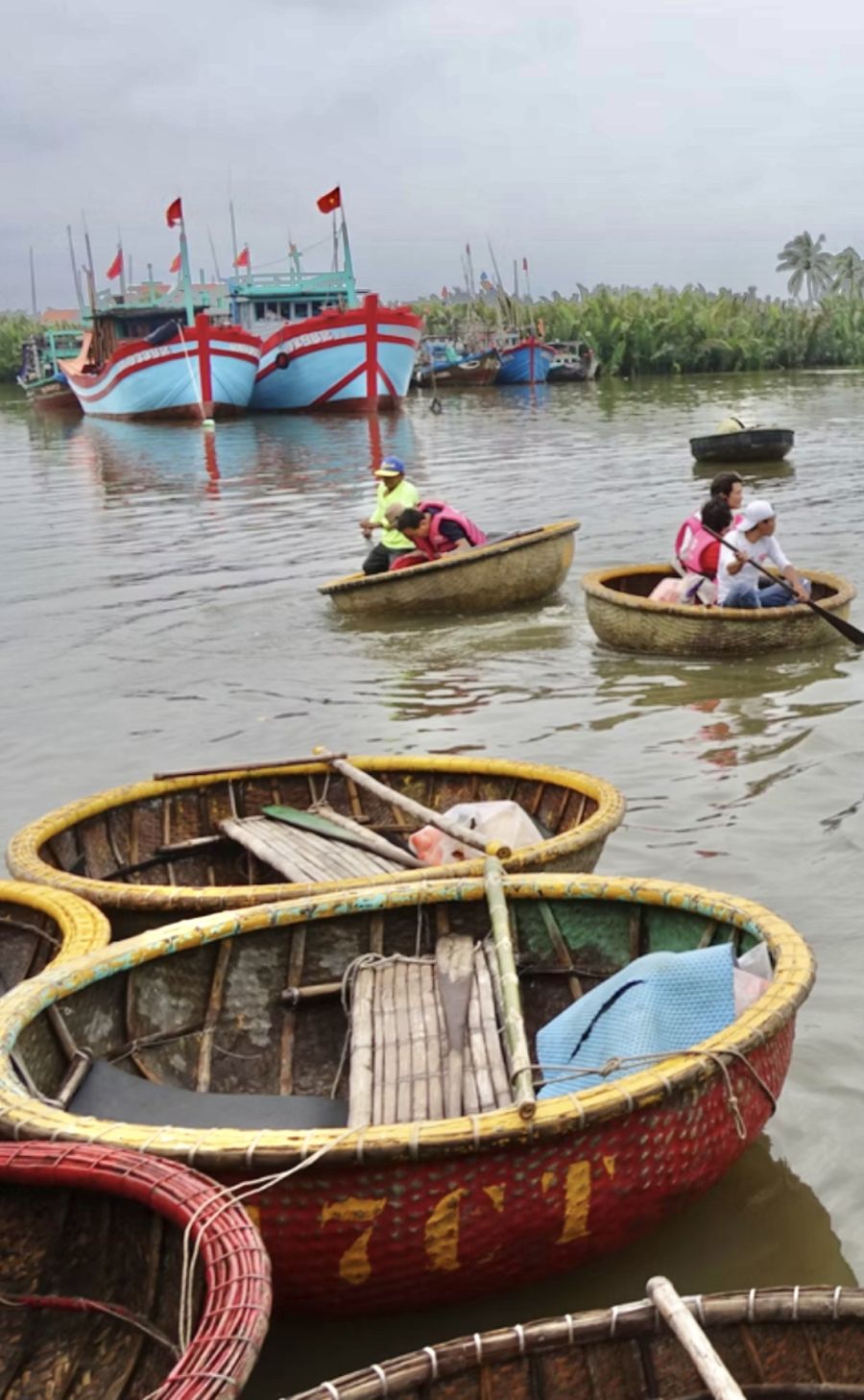
In the Sign that nourishes the new Way [the Exodus of «little boats» (vv.22-24) that follow Christ] lies a Vocation and a Mission.

Beyond where one assumes.

A Mysticism of the donated Seed opens up the meaning of personal existence - to finally set us off  without guardians (v.22).

The «Son of man» is the person endowed with full humanity, depicting man in the divine condition.

He is always surprisingly on the other side (v.25) to make himself that "I do not know what": ‘Perfume’ of the outgoing Church.

Eros-beyond, which overcomes attachments, habits, consolidated equilibriums.


The Lord does not identify spiritual well-being with the extinguishing of the soul’s flame, in the manias even of activism.

Therefore, the required Work is not at all about fulfilling the many prescriptions.

It does not resemble the usual staging, set-up and composition works [the «doing»: v.28], for it is rather singular Action of God [Subject] in us.

Observances must be tediously piled on top of each other.

The divine Initiative that is accomplished in our every gesture is instead a precious Virtue, an unexpected Energy.

A new opportunity to meet ourselves, our brothers, another shore - and to detach ourselves from exteriority.


Jesus reveals himself in the sign of the breaking of Bread.

«Food that endures for the Life of the Eternal» (v. 27), that is, that flows into an experience that already here and now possesses the indestructible quality of God's own intimacy.

In order to receive the well-chopped Food that sustains and becomes a source of complete life in us, the "work" to be done does not belong to the kind that we can ‘prepare’ - not even according to law and devotions.

It can only be a response to the work that the Father himself carries out within each of us; even if it does not immediately appear brilliant and finalized.

And here is the reversal guaranteed by the adventure of Faith:

Religious submission is swept away by Acceptance, which has a far less mortifying (and reductionist) sense; conversely, respectful of attempts. And creative.


The relationship with God changes.

It becomes one of pure welcoming; yet inventive, by Name: unrepeatable and personal.

No more of passive renunciation, reproach, purification, obedience [“yes-sir” appearances].

The founding Eros does not scold us: it is solely Gift. For a healthy Reciprocity, respectful of our character and ascendant.

In this way, the Attraction will not be extinguished. It wants its peaks every day; it is not enough for it to become normal symbiosis, then habit.

Rather, it dreams of a broad Path.

The rest unfortunately remains ineffective or ambiguous sequels; leading the soul always at war with itself and others.

Binary that here and there can only manifest blind, one-sided, forced caricatures of the Eternal’s Image - despite the claims of excellence.


Mechanisms that hurt.


[Monday 3rd wk. in Easter, April 20, 2026]

70 Last modified on Sunday, 12 April 2026 04:54
don Giuseppe Nespeca

Giuseppe Nespeca è architetto e sacerdote. Cultore della Sacra scrittura è autore della raccolta "Due Fuochi due Vie - Religione e Fede, Vangeli e Tao"; coautore del libro "Dialogo e Solstizio".

Jesus, the true bread of life that satisfies our hunger for meaning and for truth, cannot be “earned” with human work; he comes to us only as a gift of God’s love, as a work of God (Pope Benedict)
Gesù, vero pane di vita che sazia la nostra fame di senso, di verità, non si può «guadagnare» con il lavoro umano; viene a noi soltanto come dono dell’amore di Dio, come opera di Dio (Papa Benedetto)
The locality of Emmaus has not been identified with certainty. There are various hypotheses and this one is not without an evocativeness of its own for it allows us to think that Emmaus actually represents every place: the road that leads there is the road every Christian, every person, takes. The Risen Jesus makes himself our travelling companion as we go on our way, to rekindle the warmth of faith and hope in our hearts and to break the bread of eternal life (Pope Benedict)
La località di Emmaus non è stata identificata con certezza. Vi sono diverse ipotesi, e questo non è privo di una sua suggestione, perché ci lascia pensare che Emmaus rappresenti in realtà ogni luogo:  la strada che vi conduce è il cammino di ogni cristiano, anzi, di ogni uomo. Sulle nostre strade Gesù risorto si fa compagno di viaggio, per riaccendere nei nostri cuori il calore della fede e della speranza e spezzare il pane della vita eterna (Papa Benedetto)
Romano Guardini wrote that the Lord “is always close, being at the root of our being. Yet we must experience our relationship with God between the poles of distance and closeness. By closeness we are strengthened, by distance we are put to the test” (Pope Benedict)
Romano Guardini scrive che il Signore “è sempre vicino, essendo alla radice del nostro essere. Tuttavia, dobbiamo sperimentare il nostro rapporto con Dio tra i poli della lontananza e della vicinanza. Dalla vicinanza siamo fortificati, dalla lontananza messi alla prova” (Papa Benedetto)
In recounting the "sign" of bread, the Evangelist emphasizes that Christ, before distributing the food, blessed it with a prayer of thanksgiving (cf. v. 11). The Greek term used is eucharistein and it refers directly to the Last Supper, though, in fact, John refers here not to the institution of the Eucharist but to the washing of the feet. The Eucharist is mentioned here in anticipation of the great symbol of the Bread of Life [Pope Benedict]
Narrando il “segno” dei pani, l’Evangelista sottolinea che Cristo, prima di distribuirli, li benedisse con una preghiera di ringraziamento (cfr v. 11). Il verbo è eucharistein, e rimanda direttamente al racconto dell’Ultima Cena, nel quale, in effetti, Giovanni non riferisce l’istituzione dell’Eucaristia, bensì la lavanda dei piedi. L’Eucaristia è qui come anticipata nel grande segno del pane della vita [Papa Benedetto]
First, the world of the Bible presents us with a new image of God. In surrounding cultures, the image of God and of the gods ultimately remained unclear and contradictory (Deus Caritas est n.9)
Vi è anzitutto la nuova immagine di Dio. Nelle culture che circondano il mondo della Bibbia, l'immagine di dio e degli dei rimane, alla fin fine, poco chiara e in sé contraddittoria (Deus Caritas est n.9)
God loves the world and will love it to the end. The Heart of the Son of God pierced on the Cross and opened is a profound and definitive witness to God’s love. Saint Bonaventure writes: “It was a divine decree that permitted one of the soldiers to open his sacred wide with a lance… The blood and water which poured out at that moment was the price of our salvation” (John Paul II)

Due Fuochi due Vie - Vol. 1 Due Fuochi due Vie - Vol. 2 Due Fuochi due Vie - Vol. 3 Due Fuochi due Vie - Vol. 4 Due Fuochi due Vie - Vol. 5 Dialogo e Solstizio I fiammiferi di Maria

duevie.art

don Giuseppe Nespeca

Tel. 333-1329741


Disclaimer

Questo blog non rappresenta una testata giornalistica in quanto viene aggiornato senza alcuna periodicità. Non può pertanto considerarsi un prodotto editoriale ai sensi della legge N°62 del 07/03/2001.
Le immagini sono tratte da internet, ma se il loro uso violasse diritti d'autore, lo si comunichi all'autore del blog che provvederà alla loro pronta rimozione.
L'autore dichiara di non essere responsabile dei commenti lasciati nei post. Eventuali commenti dei lettori, lesivi dell'immagine o dell'onorabilità di persone terze, il cui contenuto fosse ritenuto non idoneo alla pubblicazione verranno insindacabilmente rimossi.






