Feb 1, 2026 Written by 

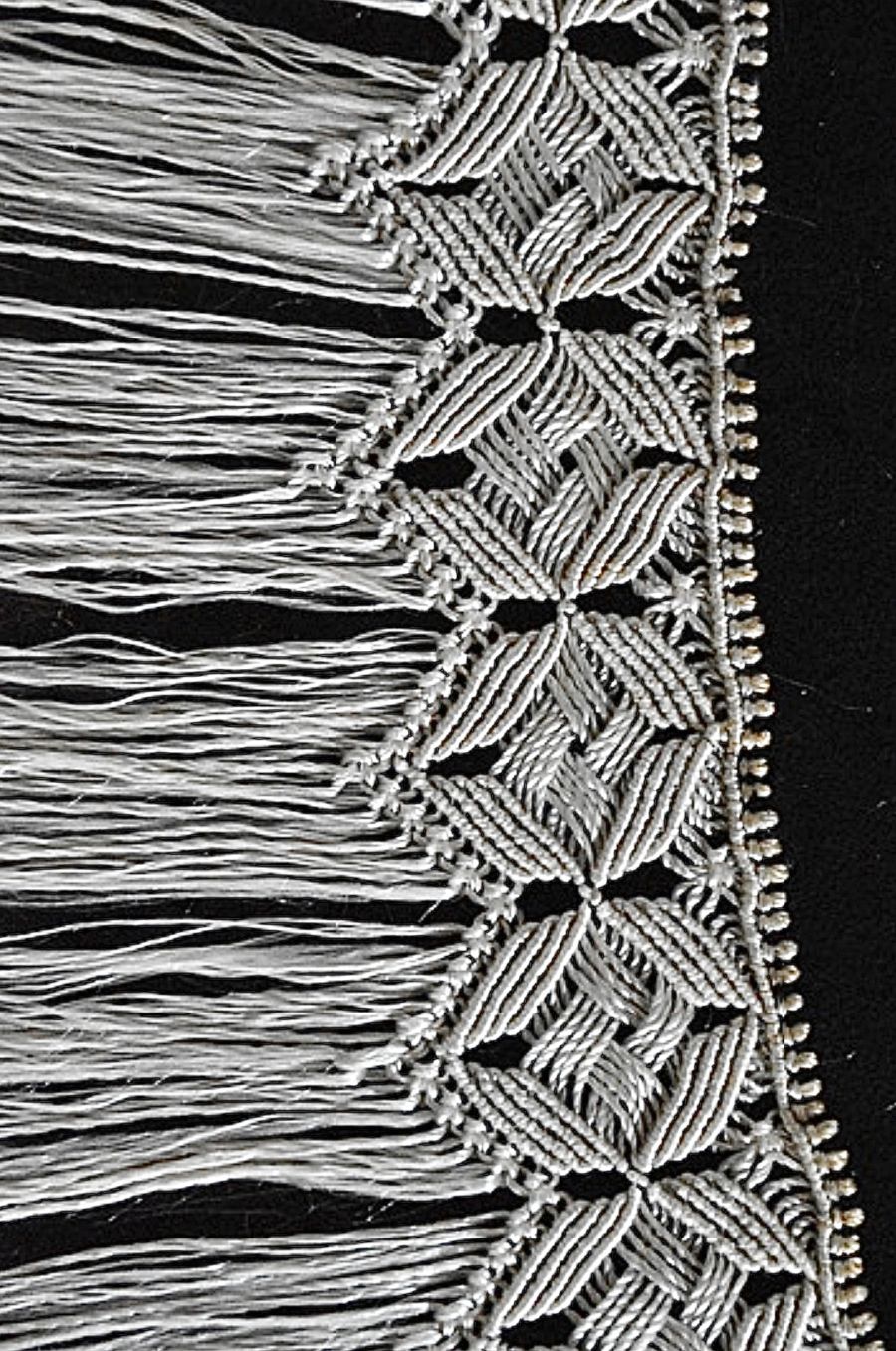
We, the fringe of his cloak

Bread and prodigies of the Christ-ghost

(Mk 6:53-56)


A saved existence requires a transformation from within; another beginning. A different foothold of good.

In fact, the «fringe of the mantle» is its People - and each of us, when we are enabled to perceive and prolong his appeal, his spirit, care, action.

A «touching» that is not mere gesture: it calls total involvement;  personal Faith, a digging in.

The crowds around the Lord and the Church, his primary presence, seek bread and healing... but sometimes they forget the adhesion to the inner Person who gives and cares.

Yet even in these cases the infallible Guide re-proposes its uninterrupted vital wave - with therapies that do not impose themselves by passing through souls as a bolt of lightning would, but in actual existence.

God frees, saves, creates, starting from tensions and defects (including religious ones) because He wants to bring us to awareness.

The Father wishes to make us penetrate the value of the act of love that makes the weak strong; each embodied gesture that re-creates, open to any sense of emptiness.


Nuisances do not happen out of bad luck or punishment: they come to let us flourish again, just beginning from the pains of the soul.

If they persist, no fear: they become more explicit messages, from our own higher Seed.

It means that in our orchestra something is out of tune or overlooked, and must fade or be discovered and put into play.

The symptoms of restlessness also belong to the innate quintessence - which always has power of topicality.

The keystone will therefore not be the look, nor the health, but the very acceptance of the bitterness, of the hardships, which come to clear out the unessential - and release trapped spiritual impulses.


Perhaps not a few would prefer to wait for a miraculous landing of the Master [typified healer] that brings immediate benefit and favours.

Exterior salvation with a magical flavour - transient, although physically palpable.

Total and sacred redemption - truly messianic - is not resounding. It’s accomplished only step by step; thus it remains profound and radical.

Capable of new beginnings, and birth acts of still embryonic energy, precisely starting from the individual precariousness.


We proclaim in words and deeds the authentic Face of the Son, precisely to annihilate the idea of the Christ-phantom of the previous passage (v.49), an evanescent, merely apologetic figure.

His intimates’ People - a presence no longer ineffable and mysterious - works in proximity, because being healed does not mean escaping transience.

A saved existence requires a transformation from within; another beginning. A different foothold and grasp of the good.

Elsewhere from the civilisation of appearance is the ‘improvement’ of our condition and security, from insecurity.

Leapfrogging is not in a simple getting back on our feet; indiscreet and passing ‘gain’.

Phenomenal, but only punctual and inconclusive, or that finally abdicates.


[Monday 5th wk. in O.T.  February 9, 2026]

64 Last modified on Sunday, 01 February 2026 05:56
don Giuseppe Nespeca

Giuseppe Nespeca è architetto e sacerdote. Cultore della Sacra scrittura è autore della raccolta "Due Fuochi due Vie - Religione e Fede, Vangeli e Tao"; coautore del libro "Dialogo e Solstizio".

Salt, in the cultures of the Middle East, calls to mind several values such as the Covenant, solidarity, life and wisdom. Light is the first work of God the Creator and is a source of life; the word of God is compared to light (Pope Benedict)
Il sale, nella cultura mediorientale, evoca diversi valori quali l’alleanza, la solidarietà, la vita e la sapienza. La luce è la prima opera di Dio Creatore ed è fonte della vita; la stessa Parola di Dio è paragonata alla luce (Papa Benedetto)
Even after his failure even in Nazareth (vv.1-6) - his heralds gladly confused the Servant [who was educating them] with the victorious, sighed, respected and glorious Messiah…
Ancora dopo il suo fallimento persino a Nazareth (vv.1-6) - i suoi banditori hanno ben volentieri confuso il Servo [che li stava educando] col Messia vincitore, sospirato, rispettato e glorioso…
During more than 40 years of his reign, Herod Antipas had created a class of functionaries and a system of privileged people who had in their hands the government, the tax authorities, the economy, the justice, every aspect of civil and police life, and his command covered the territory extensively…
Durante più di 40 anni di regno, Erode Antipa aveva creato una classe di funzionari e un sistema di privilegiati che avevano in pugno il governo, il fisco, l’economia, la giustizia, ogni aspetto della vita civile e di polizia, e il suo comando copriva capillarmente il territorio…
Familiarity at the human level makes it difficult to go beyond this in order to be open to the divine dimension. That this son of a carpenter was the Son of God was hard for them to believe. Jesus actually takes as an example the experience of the prophets of Israel, who in their own homeland were an object of contempt, and identifies himself with them (Pope Benedict)
La familiarità sul piano umano rende difficile andare al di là e aprirsi alla dimensione divina. Che questo Figlio di un falegname sia Figlio di Dio è difficile crederlo per loro. Gesù stesso porta come esempio l’esperienza dei profeti d’Israele, che proprio nella loro patria erano stati oggetto di disprezzo, e si identifica con essi (Papa Benedetto)
These two episodes — a healing and a resurrection — share one core: faith. The message is clear, and it can be summed up in one question: do we believe that Jesus can heal us and can raise us from the dead? The entire Gospel is written in the light of this faith: Jesus is risen, He has conquered death, and by his victory we too will rise again. This faith, which for the first Christians was sure, can tarnish and become uncertain… (Pope Francis)
These two episodes — a healing and a resurrection — share one core: faith. The message is clear, and it can be summed up in one question: do we believe that Jesus can heal us and can raise us from the dead? (Pope Francis)
Some medieval theologians explained: first God, the Creator, creates the universe, creates the heavens, the earth, the living. He creates. The work of creation. But creation does not end: He continuously supports what He has created, He works to support what He has created so that it goes forward (Pope Francis)
Alcuni teologi medievali spiegavano: prima Dio, il Creatore, crea l’universo, crea i cieli, la terra, i viventi. Lui crea. Il lavoro di creazione. Però la creazione non finisce: Lui continuamente sostiene quello che ha creato, opera per sostenere quello che ha creato perché vada avanti (Papa Francesco)

Due Fuochi due Vie - Vol. 1 Due Fuochi due Vie - Vol. 2 Due Fuochi due Vie - Vol. 3 Due Fuochi due Vie - Vol. 4 Due Fuochi due Vie - Vol. 5 Dialogo e Solstizio I fiammiferi di Maria

duevie.art

don Giuseppe Nespeca

Tel. 333-1329741


Disclaimer

Questo blog non rappresenta una testata giornalistica in quanto viene aggiornato senza alcuna periodicità. Non può pertanto considerarsi un prodotto editoriale ai sensi della legge N°62 del 07/03/2001.
Le immagini sono tratte da internet, ma se il loro uso violasse diritti d'autore, lo si comunichi all'autore del blog che provvederà alla loro pronta rimozione.
L'autore dichiara di non essere responsabile dei commenti lasciati nei post. Eventuali commenti dei lettori, lesivi dell'immagine o dell'onorabilità di persone terze, il cui contenuto fosse ritenuto non idoneo alla pubblicazione verranno insindacabilmente rimossi.






