Jan 29, 2026 Written by 

The struggle for liberation from the corrupt, and court life

(Mk 6:14-29)


The question «Jesus, Who is he?» grows throughout the Mk’s Gospel, up to the answer of the centurion under the Cross (Mk 15:39).

The assessment of the opinions of the people (vv. 14-16) suggests that even around the first assemblies of believers someone tried to understand Christ starting from what was already known.

Not a few wished to understand his Person on the basis of criteria drawn from the Scriptures or from the Oral Tradition of the Chosen People; from ancient beliefs and suggestions - even superstitious (as in the case of Herod).

But the Herald of God was not a purifier of the Temple, nor was He a simple healer of dated religiosity, of domesticated cultural ideas. Not even one of the many "reformers"... all in all conformists.

He overturns the hopes of the people, thus disturbing any school of thought; in particular, those who hold the exclusivity.


When feel a danger, those who are shrouded in luster and power become brazen and willing to do any violence, even for a false point of honor.

Tyrants always scoff at the isolated, uncomfortable and defenseless.

But leaders and powerful are also cowards: they do not intend to lose face in front of the allies of their immoderate and uncontrolled environment, cloaked in exemptions.

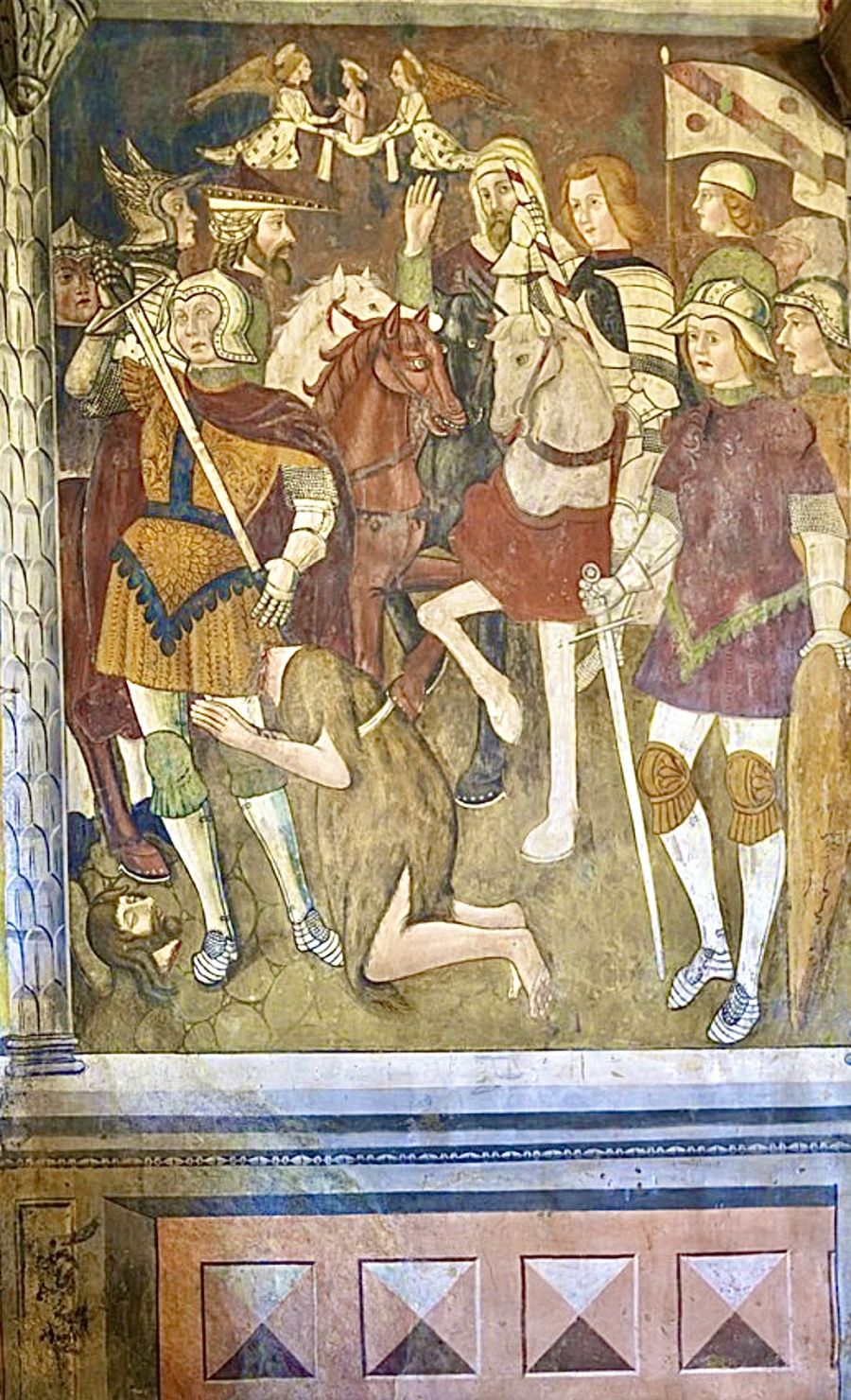
Josephus Flavius reports that John was in prison for fear of a popular uprising - evaluating that it was good for him to act early.

The assassination plot was occasional.


The brave one who denounces abuses is cut off, but the Voice of his martyrdom is no longer silent.

For this reason the episode does not lead Jesus to greater prudence.  Once an Envoy is killed, another greater and more incisive takes over: the last of the Prophets, the Son of God.

It seemed absurd that someone in that society dared to break the conspiratorial wall that guaranteed the troublemakers to consider themselves untouchable.

Faced with the unceremonious blackmail of the privileged who had control of every social and cultural class, it seemed impossible to start a new path, or to say and do anything that was not aligned.

John and Jesus challenge the status quo and attract upon themselves the vengeance of those who try to perpetuate the prerogatives of the ancient hierarchical cosmos, and the anger of those who are exposed in their hypocrisy.

This is the real difficulty encountered in the proclamation of the new Kingdom in the world. His contemptuous refusal and every attempted murder will be a litmus test of our noble critical frankness, the ‘revelation’ of which will run parallel the Two.


The Master stood up in defense of conscience and of the divine law itself, against the opportunist authorities, which he challenged openly.

Even today he asks for courage not to surrender in the face of corruption, evil, the current mentality; to be different in the way of thinking, speaking, choosing and acting.

Not listened to, derided, opposed by many courtiers, the children of God bear witness to the Truth, paying in person: perfect Joy.

Authentic Fullness.


To internalize and live the message:


Who is Jesus according to you and the others?


[Friday 4th wk. in O.T.  February 6, 2026]

20 Last modified on Thursday, 29 January 2026 05:35
don Giuseppe Nespeca

Giuseppe Nespeca è architetto e sacerdote. Cultore della Sacra scrittura è autore della raccolta "Due Fuochi due Vie - Religione e Fede, Vangeli e Tao"; coautore del libro "Dialogo e Solstizio".

During more than 40 years of his reign, Herod Antipas had created a class of functionaries and a system of privileged people who had in their hands the government, the tax authorities, the economy, the justice, every aspect of civil and police life, and his command covered the territory extensively…
Durante più di 40 anni di regno, Erode Antipa aveva creato una classe di funzionari e un sistema di privilegiati che avevano in pugno il governo, il fisco, l’economia, la giustizia, ogni aspetto della vita civile e di polizia, e il suo comando copriva capillarmente il territorio…
Familiarity at the human level makes it difficult to go beyond this in order to be open to the divine dimension. That this son of a carpenter was the Son of God was hard for them to believe. Jesus actually takes as an example the experience of the prophets of Israel, who in their own homeland were an object of contempt, and identifies himself with them (Pope Benedict)
La familiarità sul piano umano rende difficile andare al di là e aprirsi alla dimensione divina. Che questo Figlio di un falegname sia Figlio di Dio è difficile crederlo per loro. Gesù stesso porta come esempio l’esperienza dei profeti d’Israele, che proprio nella loro patria erano stati oggetto di disprezzo, e si identifica con essi (Papa Benedetto)
These two episodes — a healing and a resurrection — share one core: faith. The message is clear, and it can be summed up in one question: do we believe that Jesus can heal us and can raise us from the dead? The entire Gospel is written in the light of this faith: Jesus is risen, He has conquered death, and by his victory we too will rise again. This faith, which for the first Christians was sure, can tarnish and become uncertain… (Pope Francis)
The ability to be amazed at things around us promotes religious experience and makes the encounter with the Lord more fruitful. On the contrary, the inability to marvel makes us indifferent and widens the gap between the journey of faith and daily life (Pope Francis)
La capacità di stupirsi delle cose che ci circondano favorisce l’esperienza religiosa e rende fecondo l’incontro con il Signore. Al contrario, l’incapacità di stupirci rende indifferenti e allarga le distanze tra il cammino di fede e la vita di ogni giorno (Papa Francesco)
An ancient hermit says: “The Beatitudes are gifts of God and we must say a great ‘thank you’ to him for them and for the rewards that derive from them, namely the Kingdom of God in the century to come and consolation here; the fullness of every good and mercy on God’s part … once we have become images of Christ on earth” (Peter of Damascus) [Pope Benedict]
Afferma un antico eremita: «Le Beatitudini sono doni di Dio, e dobbiamo rendergli grandi grazie per esse e per le ricompense che ne derivano, cioè il Regno dei Cieli nel secolo futuro, la consolazione qui, la pienezza di ogni bene e misericordia da parte di Dio … una volta che si sia divenuti immagine del Cristo sulla terra» (Pietro di Damasco) [Papa Benedetto]
And quite often we too, beaten by the trials of life, have cried out to the Lord: “Why do you remain silent and do nothing for me?”. Especially when it seems we are sinking, because love or the project in which we had laid great hopes disappears (Pope Francis)

Due Fuochi due Vie - Vol. 1 Due Fuochi due Vie - Vol. 2 Due Fuochi due Vie - Vol. 3 Due Fuochi due Vie - Vol. 4 Due Fuochi due Vie - Vol. 5 Dialogo e Solstizio I fiammiferi di Maria

duevie.art

don Giuseppe Nespeca

Tel. 333-1329741


Disclaimer

Questo blog non rappresenta una testata giornalistica in quanto viene aggiornato senza alcuna periodicità. Non può pertanto considerarsi un prodotto editoriale ai sensi della legge N°62 del 07/03/2001.
Le immagini sono tratte da internet, ma se il loro uso violasse diritti d'autore, lo si comunichi all'autore del blog che provvederà alla loro pronta rimozione.
L'autore dichiara di non essere responsabile dei commenti lasciati nei post. Eventuali commenti dei lettori, lesivi dell'immagine o dell'onorabilità di persone terze, il cui contenuto fosse ritenuto non idoneo alla pubblicazione verranno insindacabilmente rimossi.






