Jan 29, 2026 Written by 

The struggle for liberation from the corrupt, and court life

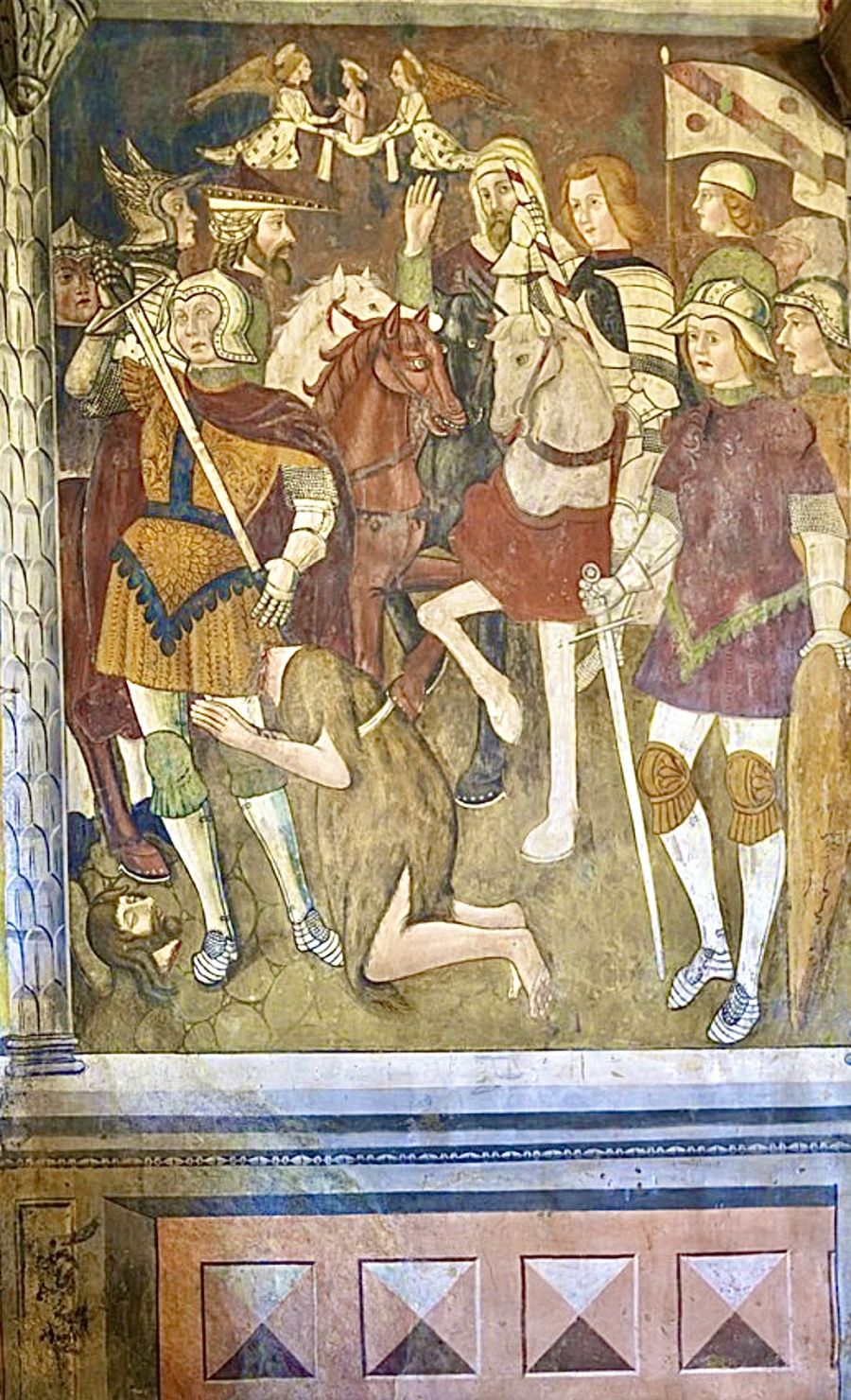
(Mk 6:14-29)


The question «Jesus, Who is he?» grows throughout the Mk’s Gospel, up to the answer of the centurion under the Cross (Mk 15:39).

The assessment of the opinions of the people (vv. 14-16) suggests that even around the first assemblies of believers someone tried to understand Christ starting from what was already known.

Not a few wished to understand his Person on the basis of criteria drawn from the Scriptures or from the Oral Tradition of the Chosen People; from ancient beliefs and suggestions - even superstitious (as in the case of Herod).

But the Herald of God was not a purifier of the Temple, nor was He a simple healer of dated religiosity, of domesticated cultural ideas. Not even one of the many "reformers"... all in all conformists.

He overturns the hopes of the people, thus disturbing any school of thought; in particular, those who hold the exclusivity.


When feel a danger, those who are shrouded in luster and power become brazen and willing to do any violence, even for a false point of honor.

Tyrants always scoff at the isolated, uncomfortable and defenseless.

But leaders and powerful are also cowards: they do not intend to lose face in front of the allies of their immoderate and uncontrolled environment, cloaked in exemptions.

Josephus Flavius reports that John was in prison for fear of a popular uprising - evaluating that it was good for him to act early.

The assassination plot was occasional.


The brave one who denounces abuses is cut off, but the Voice of his martyrdom is no longer silent.

For this reason the episode does not lead Jesus to greater prudence.  Once an Envoy is killed, another greater and more incisive takes over: the last of the Prophets, the Son of God.

It seemed absurd that someone in that society dared to break the conspiratorial wall that guaranteed the troublemakers to consider themselves untouchable.

Faced with the unceremonious blackmail of the privileged who had control of every social and cultural class, it seemed impossible to start a new path, or to say and do anything that was not aligned.

John and Jesus challenge the status quo and attract upon themselves the vengeance of those who try to perpetuate the prerogatives of the ancient hierarchical cosmos, and the anger of those who are exposed in their hypocrisy.

This is the real difficulty encountered in the proclamation of the new Kingdom in the world. His contemptuous refusal and every attempted murder will be a litmus test of our noble critical frankness, the ‘revelation’ of which will run parallel the Two.


The Master stood up in defense of conscience and of the divine law itself, against the opportunist authorities, which he challenged openly.

Even today he asks for courage not to surrender in the face of corruption, evil, the current mentality; to be different in the way of thinking, speaking, choosing and acting.

Not listened to, derided, opposed by many courtiers, the children of God bear witness to the Truth, paying in person: perfect Joy.

Authentic Fullness.


To internalize and live the message:


Who is Jesus according to you and the others?


[Friday 4th wk. in O.T.  February 6, 2026]

266 Last modified on Friday, 06 February 2026 11:59
don Giuseppe Nespeca

Giuseppe Nespeca è architetto e sacerdote. Cultore della Sacra scrittura è autore della raccolta "Due Fuochi due Vie - Religione e Fede, Vangeli e Tao"; coautore del libro "Dialogo e Solstizio".

You ought not, however, to be satisfied merely with knocking and seeking: to understand the things of God, what is absolutely necessary is oratio. For this reason, the Saviour told us not only: ‘Seek and you will find’, and ‘Knock and it shall be opened to you’, but also added, ‘Ask and you shall receive’ [Verbum Domini n.86; cit. Origen, Letter to Gregory]
Non ti devi però accontentare di bussare e di cercare: per comprendere le cose di Dio ti è assolutamente necessaria l’oratio. Proprio per esortarci ad essa il Salvatore ci ha detto non soltanto: “Cercate e troverete”, e “Bussate e vi sarà aperto”, ma ha aggiunto: “Chiedete e riceverete” [Verbum Domini n.86; cit. Origene, Lettera a Gregorio]
In the crucified Jesus, a kind of transformation and concentration of the signs occurs: he himself is the “sign of God” (John Paul II)
In Gesù crocifisso avviene come una trasformazione e concentrazione dei segni: è Lui stesso il "segno di Dio" (Giovanni Paolo II)
Only through Christ can we converse with God the Father as children, otherwise it is not possible, but in communion with the Son we can also say, as he did, “Abba”. In communion with Christ we can know God as our true Father. For this reason Christian prayer consists in looking constantly at Christ and in an ever new way, speaking to him, being with him in silence, listening to him, acting and suffering with him (Pope Benedict)
Solo in Cristo possiamo dialogare con Dio Padre come figli, altrimenti non è possibile, ma in comunione col Figlio possiamo anche dire noi come ha detto Lui: «Abbà». In comunione con Cristo possiamo conoscere Dio come Padre vero. Per questo la preghiera cristiana consiste nel guardare costantemente e in maniera sempre nuova a Cristo, parlare con Lui, stare in silenzio con Lui, ascoltarlo, agire e soffrire con Lui (Papa Benedetto)
In today’s Gospel passage, Jesus identifies himself not only with the king-shepherd, but also with the lost sheep, we can speak of a “double identity”: the king-shepherd, Jesus identifies also with the sheep: that is, with the least and most needy of his brothers and sisters […] And let us return home only with this phrase: “I was present there. Thank you!”. Or: “You forgot about me” (Pope Francis)
Nella pagina evangelica di oggi, Gesù si identifica non solo col re-pastore, ma anche con le pecore perdute. Potremmo parlare come di una “doppia identità”: il re-pastore, Gesù, si identifica anche con le pecore, cioè con i fratelli più piccoli e bisognosi […] E torniamo a casa soltanto con questa frase: “Io ero presente lì. Grazie!” oppure: “Ti sei scordato di me” (Papa Francesco)
Thus, in the figure of Matthew, the Gospels present to us a true and proper paradox: those who seem to be the farthest from holiness can even become a model of the acceptance of God's mercy and offer a glimpse of its marvellous effects in their own lives (Pope Benedict))
To love God is therefore a journeying with one's heart to God. A wonderful journey! When I was a boy, I was thrilled by the journeys described by Jules Verne ("Twenty Thousand Leagues Under The Sea", "From The Earth To The Moon", "Round The World In Eighty Days", etc). But the journeys of love for God are far more interesting. You read them in the lives of the Saints [Pope John Paul I]
Amare Dio è dunque un viaggiare col cuore verso Dio. Viaggio bellissimo. Ragazzo, mi estasiavo nei viaggi descritti da Giulio Verne (« Ventimila leghe sotto i mari », « Dalla terra alla luna », « Il giro del mondo in ottanta giorni », ecc.). Ma i viaggi dell'amore a Dio sono molto più interessanti. Li si legge nella vita dei Santi [Papa Giovanni Paolo I]

Due Fuochi due Vie - Vol. 1 Due Fuochi due Vie - Vol. 2 Due Fuochi due Vie - Vol. 3 Due Fuochi due Vie - Vol. 4 Due Fuochi due Vie - Vol. 5 Dialogo e Solstizio I fiammiferi di Maria

duevie.art

don Giuseppe Nespeca

Tel. 333-1329741


Disclaimer

Questo blog non rappresenta una testata giornalistica in quanto viene aggiornato senza alcuna periodicità. Non può pertanto considerarsi un prodotto editoriale ai sensi della legge N°62 del 07/03/2001.
Le immagini sono tratte da internet, ma se il loro uso violasse diritti d'autore, lo si comunichi all'autore del blog che provvederà alla loro pronta rimozione.
L'autore dichiara di non essere responsabile dei commenti lasciati nei post. Eventuali commenti dei lettori, lesivi dell'immagine o dell'onorabilità di persone terze, il cui contenuto fosse ritenuto non idoneo alla pubblicazione verranno insindacabilmente rimossi.






