Jan 9, 2026 Written by 

But is it permissible for him to participate in worship?

Sitting and keeping eyes on the accounting records, only then rich - nay, ‘sir’

(Mk 2:13-17)


At the time when Mk drafted his Gospel, in the communities of Rome a friction arose over the kind of eligible participation in meetings, and on Breaking the Bread.

Opinions conflict that confronted one against the other the group of converts from paganism and the Judaizers.

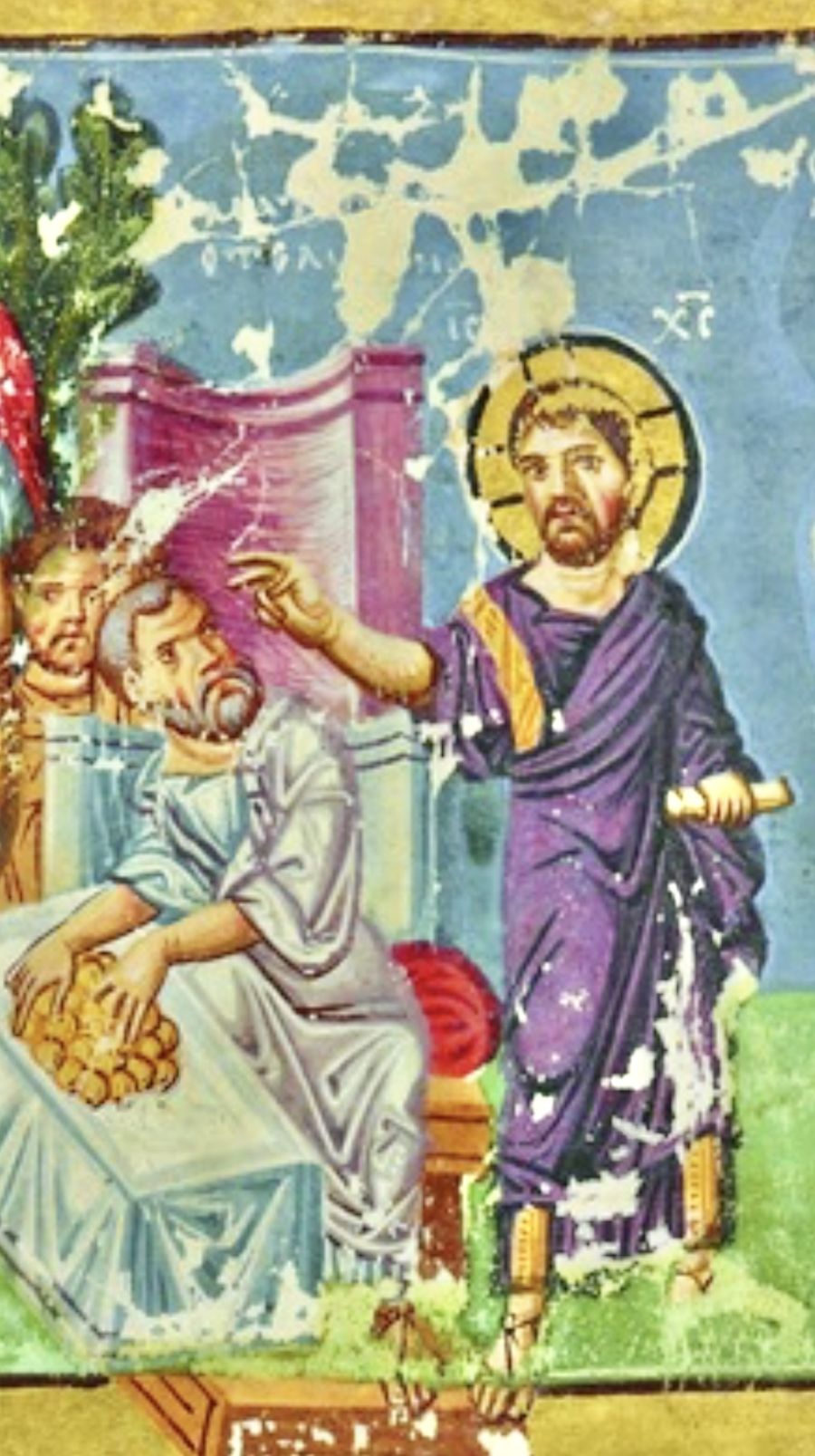
Mk narrates the episode of Levi [avoiding explicitly calling him Matthew] to accentuate his derivation - and in this way describing how Jesus himself had faced the same conflict: without any ritual or sacred attention, except to man.

The evangelist thus intended to help the faithful to understand the leap from common religiosity to Faith in the Person of Christ, and trust in the brethren, without distinction.

To this end, the Gospel passage emphasizes that the apostles themselves (v.15) had not been called by the Lord at all to the rigourous segregation practice typical of ethnic-purist beliefs.

Mk’s Good News is that life of Communion is neither a gratification, nor a recognition.

The Eucharist is not a reward for merits, nor a discrimination in favor of sacral marginalization.

Prohibition must be replaced by friendship. Intransigence must be supplanted by indulgence, hardness by condescension.

The disciples of the Lord must share existence with anyone - even public sinners like the son of Alpheus.

This without first demanding any license, nor long disciplines of the arcane - or practices that celebrate distances [such as ablutions that preceded the meal].

In the parallel text of Mt 9,9-13 the tax collector is explicitly called by name: Matthew, in order to emphasize the identical appeal to the community.

Matathiah means «man of God», «given by God»; precisely «Gift of God» [Matath-Yah].

According to the direct teaching of Jesus himself - even towards one of the apostles - the only impurity is that of not giving space to those who ask for it because they have none.

The Lord wants to share with transgressors, not because of an ideological banality: it is the invitation to recognize themselves. Not to subject ourselves to some demeaning paternalism, but because allowing ourselves to be transformed from poor or rich into 'lords' is an asset.

«And it happens that He lies [at canteen] in His House and many tax collectors and sinners were lying down with Jesus and his disciples, because they were multitudes and they followed him» (v.15).

«They were lying down at canteen»: according to the way of celebrating solemn banquets by ‘free’ men - now all free.

How wonderful, such a ‘monstrance’! A living Body of Christ that smells of concrete Union, conviviality of differences - not of rejections for transgression!

It is such all empathetic and regal the beautiful awareness that paves the way and makes credible the content of the Announcement (v.17) - although it impacts the susceptibility of the official teachers.

But Jesus inaugurates a new kind of relationship, and a New Covenant, of fruitful divergences - even within us.


It is not ‘perfection’ that makes us love the Exodus.


[Saturday 1st wk. in O.T.  January 17, 2026]

62 Last modified on Friday, 09 January 2026 02:34
don Giuseppe Nespeca

Giuseppe Nespeca è architetto e sacerdote. Cultore della Sacra scrittura è autore della raccolta "Due Fuochi due Vie - Religione e Fede, Vangeli e Tao"; coautore del libro "Dialogo e Solstizio".

Being considered strong, capable of commanding, excellent, pristine, magnificent, performing, extraordinary, glorious… harms people. It puts a mask on us, makes us one-sided; takes away understanding. It floats the character we are sitting in, above reality
Essere considerati forti, capaci di comandare, eccellenti, incontaminati, magnifici, performanti, straordinari, gloriosi… danneggia le persone. Ci mette una maschera, rende unilaterali; toglie la comprensione. Fa galleggiare il personaggio in cui siamo seduti, al di sopra della realtà
The paralytic is not a paralytic
Il paralitico non è un paralitico
The Kingdom of God is precisely the presence of truth and love and thus is healing in the depths of our being. One therefore understands why his preaching and the cures he works always go together: in fact, they form one message of hope and salvation (Pope Benedict)
Il Regno di Dio è proprio la presenza della verità e dell’amore e così è guarigione nella profondità del nostro essere. Si comprende, pertanto, perché la sua predicazione e le guarigioni che opera siano sempre unite: formano infatti un unico messaggio di speranza e di salvezza (Papa Benedetto)
To repent and believe in the Gospel are not two different things or in some way only juxtaposed, but express the same reality (Pope Benedict)
Convertirsi e credere al Vangelo non sono due cose diverse o in qualche modo soltanto accostate tra loro, ma esprimono la medesima realtà (Papa Benedetto)
The fire of God's creative and redeeming love burns sin and destroys it and takes possession of the soul, which becomes the home of the Most High! (Pope John Paul II)
Il fuoco dell’amore creatore e redentore di Dio brucia il peccato e lo distrugge e prende possesso dell’anima, che diventa abitazione dell’Altissimo! (Papa Giovanni Paolo II)
«The Spirit of the Lord is upon me, because he has anointed me to preach good news to the poor» (Lk 4:18). Every minister of God has to make his own these words spoken by Jesus in Nazareth [John Paul II]
«Lo Spirito del Signore è sopra di me; per questo mi ha consacrato con l'unzione e mi ha mandato per annunziare un lieto messaggio» (Lc 4, 18). Ogni ministro di Dio deve far sue nella propria vita queste parole pronunciate da Gesù di Nazareth [Giovanni Paolo II]
It is He himself who comes to meet us, who lowers Heaven to stretch out his hand to us and raise us to his heights [Pope Benedict]
È Lui stesso che ci viene incontro, abbassa il cielo per tenderci la mano e portarci alla sua altezza [Papa Benedetto]
As said st. Augustine: «The Word of God which is explained to you every day and in a certain sense "broken" is also daily Bread». Complete food: basic and “compote” food - historical and ideal, in actuality
Come diceva s. Agostino: «La Parola di Dio che ogni giorno viene a voi spiegata e in un certo senso “spezzata” è anch’essa Pane quotidiano». Alimento completo: cibo base e “companatico” - storico e ideale, in atto
What begins as a discovery of Jesus moves to a greater understanding and commitment through a prayerful process of questions and discernment (John Paul II)
Quel che inizia come una scoperta di Gesù conduce a una maggiore comprensione e dedizione attraverso un devoto processo di domande e discernimento (Giovanni Paolo II)
John's Prologue is certainly the key text, in which the truth about Christ's divine sonship finds its full expression (John Paul II)

Due Fuochi due Vie - Vol. 1 Due Fuochi due Vie - Vol. 2 Due Fuochi due Vie - Vol. 3 Due Fuochi due Vie - Vol. 4 Due Fuochi due Vie - Vol. 5 Dialogo e Solstizio I fiammiferi di Maria

duevie.art

don Giuseppe Nespeca

Tel. 333-1329741


Disclaimer

Questo blog non rappresenta una testata giornalistica in quanto viene aggiornato senza alcuna periodicità. Non può pertanto considerarsi un prodotto editoriale ai sensi della legge N°62 del 07/03/2001.
Le immagini sono tratte da internet, ma se il loro uso violasse diritti d'autore, lo si comunichi all'autore del blog che provvederà alla loro pronta rimozione.
L'autore dichiara di non essere responsabile dei commenti lasciati nei post. Eventuali commenti dei lettori, lesivi dell'immagine o dell'onorabilità di persone terze, il cui contenuto fosse ritenuto non idoneo alla pubblicazione verranno insindacabilmente rimossi.






