


don Giuseppe Nespeca
Giuseppe Nespeca è architetto e sacerdote. Cultore della Sacra scrittura è autore della raccolta "Due Fuochi due Vie - Religione e Fede, Vangeli e Tao"; coautore del libro "Dialogo e Solstizio".
THE HAM - (by Francesco Giovannozzi, psychologist and psychotherapist)
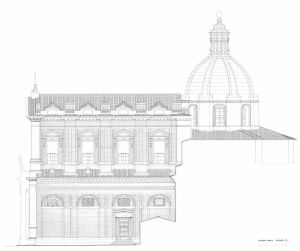
The ham.
The Treccani dictionary defines ‘ham’ as: ‘one who acts in theatrical performances’. In common parlance and in a figurative sense: ‘someone who adopts exaggeratedly theatrical behaviour in life; someone who puts on a show in a blatant and undignified manner’.
Many years ago, when I was still a teenager, Charles Aznavour released a beautiful song containing these words: ‘I am a ham. But genius was born with me […] but theatricality flows within me’.
A song which, if I’m not mistaken, was later covered by Massimo Ranieri some time later.
Perhaps those of us who are a bit older will also remember the original version.
A few days ago, I bumped into a young man with a VIP-like air about him, whom I’ve known since he was born.
He stopped, greeted me warmly and began telling me about his life, his work in the world of politics and his travels.
He said that one of his goals is to visit the wonders of the world and that he’d just returned from one such destination. He solemnly declared that he’d already visited several of them.
All this without me having asked anything, partly because he didn’t give me the chance.
He was too caught up in his soliloquy and I was merely a spectator.
At the end of his speech, he tells me that he has completed dental treatment for a tooth that had been causing him a great deal of trouble and that he is still in pain […] he lists the medicines he is taking. Then he looks at me and ironically reiterates that when doctors encounter difficulties in their work, they always say it’s down to the mind.
And here came a thunderous laugh, coupled with all the ‘pathos’ with which he’d woven his narrative.
The only thing missing was the final round of applause, which didn’t come. Just a cordial ‘goodbye’. My professional bias kicked in as I reflected on what had happened.
There are people who, rather than simply connecting with others, need to put on a show and seek the approval of others.
This is something we all do to a certain extent, within acceptable limits, and it gives us pleasure. Such people sometimes go in search of an ‘audience’ where they can express and display their feelings and experiences, without worrying about building a relationship or a genuine connection – and once they have communicated their emotions, they leave quickly, often in search of another ‘audience’.
They must always be the centre of attention and often express their emotions in a theatrical manner. Everything they achieve is something grand; all their actions are ‘a triumph’.
Behind this behaviour, there is usually an enormous fear of being alone, of being abandoned. Of course, we all have these fears to some extent, but we do not resort to compensatory mechanisms of that sort.
Sometimes we are afraid of certain emotions we feel, as if we feared that what we are feeling is unhealthy.
We must always bear in mind that what happens within our psyche is not entirely random or pathological, but purposeful and constructive. There are not only demons; there are angels too.
I can’t recall whether I’ve already expressed this idea, but I’ll reiterate it because I consider it important and because I think we’ll be less frightened if we realise we’re experiencing certain feelings.
Without referring to psychological manuals or classifications… we’ve all probably experienced feelings like those described above at certain times in our lives.
People with these characteristics are ‘theatrical’ and express their experiences in an exaggerated manner.
They can be seductive or even provocative.
They use their physical appearance in an exaggerated way to get noticed and appear interesting.
They rely more on emotion than on reflection, and tend towards superficiality and banality.
They are also easily influenced and idealise the people they admire; sometimes to the point of imitating them.
They dream of ideal love, but often become involved in unsuitable and unattainable relationships.
They exaggerate every physical sensation, even when there is no actual physical pain.
In severe cases, many people channel and project these emotions onto parts of the body that are psychologically significant to the individual and their personal history.
And so, as the young VIP mentioned above humorously put it, the psyche comes into play.
I do not wish to bore readers or come across as melodramatic myself, but many individuals have often expressed their unease through their bodies.
Some do so more visibly, others in a more subtle way – though perhaps more interesting and fascinating to an ‘insider’.
The literature often refers to ‘hysterical blindness’.
These people are unable to see properly – to a greater or lesser degree. I recall a teenager with visual problems being referred to our department’s psychological assessment (sent by the ophthalmology department).
However, it is not always accepted that objective problems may have an ‘internal’ cause, and so often either the psychological assessment – deemed offensive – is abandoned, or other solutions are sought that may give the illusion of a way out.
It also happens that some individuals, having been referred for an ‘internal’ assessment by leading Italian centres of excellence, but subsequently rejecting what was suggested to them, turn to private practitioners who offer solutions that are, unfortunately, sometimes harmful.
Dr Francesco Giovannozzi, Psychologist and Psychotherapist.
12th Sunday in O.T.

12th Sunday in Ordinary Time (year A) [21 June 2026]
First reading from the Book of the Prophet Jeremiah (20:10–13)
This passage is one of what are known as the ‘Confessions of Jeremiah’; we might also call them the ‘Confidences of Jeremiah’. Here the prophet reveals what lies deepest in his heart, and today’s few lines sum up his feelings well. His life is a constant paradox: that which constitutes his deepest joy, his reason for living, his security, is also the source of all his suffering. It is the Word of God. It is not explicitly named in this text, but it is clearly implied. It is because he proclaims the Word of God “in season and out of season” (as St Paul would say) that he is persecuted; yet it is precisely this same Word that gives him the strength to carry on. It is often said that no one is a prophet in his own land, and this applies perfectly to Jeremiah. He was a great prophet, but this was only realised after his death. During his lifetime, his message proved too uncomfortable. He himself specifies the period of his preaching: from the thirteenth year of Josiah’s reign until the deportation from Jerusalem, that is, from 627 to 587 BC. Forty years during which he saw several kings succeed one another in Jerusalem, but very few listened to him. What was he reproached for? Simply the courage to speak the truth. And the truth was by no means reassuring: from the top to the bottom of the social ladder, breaches of the Covenant were multiplying in every sphere. Here is an example of his preaching: “They are all adulterers, a band of traitors” (Jer 9:1)… “From the least to the greatest, all are greedy for gain; from the prophet to the priest, all practise deceit” (Jer 8:10). In other words, corruption and the love of money had corroded the whole of society, and religion was nothing more than a façade. For this reason, he spent much of his life crying out, provoking, and denouncing. At times he even performed unusual acts to warn the king, the court, the priests and all those in authority who were leading the people to ruin. On a political level, he sought to open the eyes of his compatriots and dared to announce what was by now evident: Nebuchadnezzar would soon overrun Jerusalem. To make himself better understood, he performed a spectacular act: he publicly smashed a brand-new jug fresh from the potter’s hands, to announce the fate awaiting Jerusalem, which would be reduced to shards (Jer 19:1–11). But instead of listening to him, they accused him of being an accomplice of the enemy because, as the saying goes, there is none so deaf as those who will not hear.
Nevertheless, nothing and no one could divert him from his mission, and his secret lay simply in the awareness that he had been sent by God. His second secret was knowing that he was too small for the task entrusted to him and therefore did not seek strength in himself, but in God. And he experienced God’s presence at the heart of all his trials. In this regard, his prayer remains striking: “Lord, let me see the vengeance you will take upon them, for to you I have entrusted my cause.” An expression that suggests three observations. First of all, the desire for revenge is deeply human, and the prophet remains a man; his particular mission makes him neither insensitive nor a superman. Secondly, he does not seek revenge, but entrusts everything to God. Finally, beyond personal retribution, what Jeremiah ardently desires is the triumph of truth. Like every true prophet, he already knows that God’s love will be stronger than anything and that one day it will succeed in eliminating all evil from the earth. This is what he calls God’s vengeance: God’s eternal triumph over the forces of evil.
Responsorial Psalm (68/69)
This psalm arises from the cry of a believer persecuted because of his faithfulness to God. The psalmist suffers humiliation, insults and perhaps even imprisonment, yet he continues to trust in the Lord, certain that God hears the humble and does not abandon those who belong to him. His suffering stems precisely from his love for God: “My love for your house consumes me”, and the insults directed at God also fall upon him. This experience recalls the story of the prophets of Israel, often persecuted by their own people. Among them stands out Jeremiah, who, like all true prophets, had the courage to proclaim God’s truth even when it was inconvenient. The prophet is, in fact, the voice of God in the world and, since God’s thoughts do not coincide with those of men, he inevitably goes against the tide. His word calls for justice, holiness, brotherhood and conversion, bringing to light what many would prefer to hide. For this reason, prophets often experience rejection and discouragement. Moses, Elijah and, above all, Jeremiah went through moments of profound suffering. Jeremiah even went so far as to curse the day of his birth, overwhelmed by persecution and humiliation. His experience recalls that of Job and, in a broader sense, that of the entire people of Israel in times of trial. The psalmist describes his condition as that of a man who is drowning: the waters overwhelm him, the mud drags him down, and there seems to be no hope left. Yet, even in the darkest hour, he continues to pray. The very Word of God that causes him suffering is the source of his strength. The imagery of the psalm recalls the story of Jeremiah, thrown into a cistern for denouncing the religious corruption of the people and the Temple. In the same way, Jesus will take up this prophetic tradition when he drives the merchants out of the Temple; and on that occasion, the evangelist John will apply the words of the psalm to Christ: ‘Zeal for your house will consume me’. The psalm concludes, finally, on a note of trust and thanksgiving. In biblical tradition, supplication and thanksgiving are closely linked: the believer praises God even before seeing deliverance realised, because he is certain of God’s faithfulness. For this reason, the psalmist already proclaims God’s victory, the salvation of the poor and the joy of those who seek the Lord. Thus, lamentation is transformed into hope, and the suffering of the righteous becomes a testimony to the certainty that God never abandons his faithful.
Second Reading from the Letter of Saint Paul the Apostle to the Romans (5:12–15)
St Paul contrasts Adam and Jesus Christ, not as two historical figures to be compared, but as two opposing ways of life. Adam represents humanity seeking happiness, power and fulfilment far from God, relying on its own strength. Jesus Christ, on the other hand, represents the man who lives in full communion with God, welcoming his love and his life. According to the account in Genesis, God created man to share in his own life. The ‘breath of life’ received from God indicates that human beings truly live only when they remain united with him. The desire for greatness, happiness and the infinite that dwells in the human heart is therefore good and corresponds to God’s plan. The serpent’s error lies in leading Adam and Eve to believe that they can become “like God” without God, through disobedience. In doing so, they voluntarily sever the vital bond with the Creator and fall into spiritual death. Paul, in fact, speaks of death and life primarily in a spiritual, not a biological, sense.
Adam thus symbolises original sin: the man who seeks to appropriate what belongs to God and ends up turning away from the source of life. Jesus Christ, on the contrary, does not seek to seize equality with God, but lives in total acceptance of the Father’s love. For this reason, He is without sin, ‘full of grace and truth’. Thanks to Christ, humanity can be restored to communion with God. In Him, the bond between God and man is perfectly realised: He draws all to Himself and enables people to receive divine life once more.
Paul thus presents two fundamental choices: to live like Christ, welcoming God’s breath and love, and growing in the spiritual life; Or to live like Adam, seeking happiness independently of God, with the result of spiritual death. Grace is not an object one possesses, but the loving relationship between God and humanity. Jesus Christ has restored this vital relationship, for which we were created. As St Augustine says: ‘You have made us for Yourself, Lord, and our hearts are restless until they rest in You.’ Similarly, for St John, eternal life consists in knowing and loving God and Jesus Christ. True life and true joy are found only in union with God; to seek them elsewhere is an illusion that leads to spiritual death
From the Gospel according to Matthew (10:26–33)
Jesus warns his disciples that the mission of proclaiming the Gospel will not be easy. He sends them “like sheep among wolves” and foretells persecutions, trials, floggings and even the hatred of all because of his Name. For this reason he repeats several times: Do not be afraid. The reason for this encouragement is that the truth of God cannot be stopped. All that was hidden will be revealed, and what Jesus has entrusted to his disciples must be proclaimed openly. In Christ, God’s plan of love is fully revealed, a plan that in the Old Testament had been revealed only gradually through prophets and sages. The disciples, having seen and heard Christ, cannot remain silent about what they have experienced. When Matthew writes his Gospel, Christians are already suffering persecution, especially from certain Jewish circles. This teaching therefore serves to strengthen their faithfulness. If the Church exists today, it is also because those first believers overcame their fear and remained steadfast in the faith. Nothing can separate us from the love of God. Jesus distinguishes between two kinds of danger: physical death, which the disciples may suffer as a result of persecution; and spiritual death, which is far more serious, consisting in separation from God. This is why he says: “Do not fear those who kill the body” but rather those who can cause a person to lose their communion with God. The true fear must be that of abandoning the mission by yielding to the temptation of unfaithfulness. To reassure his disciples, Jesus reminds them that they are constantly under the Father’s protection: not a single sparrow falls to the ground without God knowing it, and even the hairs on their heads are counted. God knows and watches over each one personally. Jesus also promises that whoever acknowledges him before men will be acknowledged by him before the Father. To be a Christian therefore means to declare oneself united to Christ not only in words, but through one’s life, for through Baptism we are grafted into him and share in his relationship with the Father. This is why St Paul can affirm that nothing can separate us from the love of God manifested in Christ. When Jesus says: ‘Whoever denies me before men, I too will deny him before the Father’, he is not pronouncing a definitive condemnation, but reminding us of human freedom. Like Peter, who denied Jesus during the Passion, even those who stray can always return. And Christ, as He did with Peter after the Resurrection, continues to ask but one question: Do you love me? The disciple of Christ may encounter hostility and persecution, but must not fear. The real threat is not losing one’s earthly life, but turning away from God. Those who remain faithful to Christ live in the certainty that nothing can separate them from His love.
+Giovanni D’Ercole
Going against the grain? Believe in that Little Thing inside you
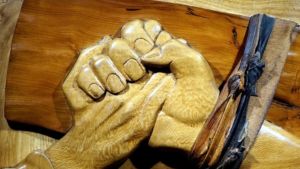
The discovery of ourselves outside ourselves

Two masters: what outlet for what we carry inside
(Mt 6:24-34)
How to avoid selling oneself for an idol, and not commit suicide by subjecting the breath of the soul to something ephemeral, instantaneous and partial?
Identifications, calculation of interests and artificial material goods empty the Core of being and do not show the solution.
The experience of Fatherhood in Faith is the sacred place that recovers the meaning of the original life; the vital intuition, of nature, that illuminates what is appropriate to pursue in order to overturn the doubtful or shrunken existence.
Awareness of agreement with the natural order grafts more lymph.
Cosmic vision helps to direct the forces that emerge, revolutionizes hopes, nourishes boldness, suggests the orientation of events in uniqueness, and sublimates the same quality of coexistence.
The «son» who notices others and does not accumulate, does not lose anything - but acquires another march: he experiences a Father who takes care of his own history, and expands life by building even on the dark sides.
The believer aware of being accompanied always manages to take another step.
He knows that nature spontaneously fills the voids, and it does so with a mysterious and supreme wisdom of balances.
Only on this new territory do we become solicitous of the great themes, but without the anxiety that bewilders us.
We gladly accept even the precariousness and situations of weakness: nourished by God’s ‘rest’ - and as in His «rural rhythm» - we know that needs and defects hide the most beautiful surprises of the journey.
The scene of the examples Jesus draws from nature is an echo of the conciliatory life dreamt for us by the Father.
It introduces the quintessence of Happiness from within. Joy that makes one aware of existing in all personal reality.
A paradoxical intuition of fullness of being, in the limit that belongs to us - which then overcomes the fear of not living up to it.
In fact, the Gospel passage shows the value of genuine, silent, inconspicuous things, which however live in us - they are not "shadows". And we perceive them without effort or brain commitment.
We often ask whether God really participates in our doubts, expectations and torments, or vice versa indifferent.
Sometimes even the Psalms seem to make blasphemous accusations to the Eternal, which impute Him of little attention to the events of the righteous.
Even great saintly figures experienced serious upheavals; anxieties and trepidations that were long hidden, because [in a framework of conformist serenity] they were considered unedifying.
Instead it is quite normal - indeed, healthy and profitable - to feel the old hopes waver, and welcome in full the failures, negative emotions or other surrounding clouds.
The problem is that from an early age we are accompanied by the instinct of the search for security, and unfortunately in many cases we try to have the same attitude even in the path believer.
On the contrary, life in the Spirit detach itself - flowing into the more of the Faith and the Mystery, which ‘work’.
The Way proposed by Jesus has a non-moralistic tone, devoid of complexes, in view of the dedication to Today’s missionary life and the harmonious growth of belonging to the Faith at various levels (all to be discovered).
In its quiet power, here is the astonishment that does not kill the soul. And the natural world has the keyword.
[Saturday 11th wk. in O.T. June 20, 2026]
The discovery of ourselves outside ourselves
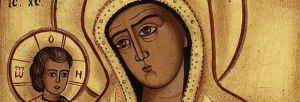
Two masters: what outlet for what we carry inside
(Mt 6:24-34)
We often wonder whether God is really a participant in our doubts, expectations and torments, or conversely indifferent.
Sometimes even the Psalms seem to address blasphemous accusations to the Eternal One, accusing Him of lacking attention to the affairs of the righteous.
Even great saintly figures have experienced serious turmoil; turmoil that was long hidden from us, because it was considered unedifying (in a picture of conformist serenity).
Instead, it is quite normal - indeed, healthy and beneficial - to feel old hopes wavering, and to fully embrace failures, negative emotions or other clouds that surround us.
The problem is that from an early age the instinct of seeking security accompanies us, and unfortunately in many cases we try to have the same attitude on the believing path as well.
Instead, life in the Spirit detaches itself from the vacuous institutional religious spiritual affair of the masses (which promises much and delivers nothing)... in the more of Faith and Mystery, which operate.
The point of reference is not the chronicle of homo faber ipsius fortunae - which is not by chance a pagan motto.
The soul does not willingly remain in a world characterised by petty antagonism, which demands to rush into the temporal action-reaction mechanism.
Frictions must be welcomed and reworked, for in them lies an intimate secret of growth.
[Thus, for example, he who wants to fight us will do us the greatest favour in life. Welcome it. It will be an opportunity to disengage from the immediate, and develop alternative - preparatory - energies of our unthinkable developments].
In this sense, let us accept the Father, who relentlessly compels us to shift our gaze - so that we spread our wings and arrive elsewhere, at the point we did not know before.
Otherwise, in the cloak of haste to adjust and reaffirm, we might trust other impulses - the ones that offer (illusory) security and block the flow of life, making it swampy and predictable.
The certainties of food, or roles, of gain and sense of power, even the slave mentality of holidays (...) then like any idol, demand everything: one becomes a lackey of a master who demands attention.
The attachment or even the adoration of mammon [Aramaic mamônâ, from 'aman - to support, to make foundation] gratifies, certainly; but on the spur of the moment.
Even to the point of deluding oneself that accumulation can make one experience divine intoxication. At most, however, by granting some alms.
The coryphaei of material opulence promptly say: "Trust me, the important thing is to keep for oneself and to be in the practical tally" - also because in today's Gospel passage, Jesus seems naive.
Yet Christ insists on proposing a non-servile relationship with goods. In terms of the fullness of being, one gains immensely more in welcoming the providential power of the Life that Comes.
In the rural imagery, the Lord alludes to the experience of wandering Israel.
In the Exodus, God had educated the people so that they could conquer the land of freedom and abandon the land of slavery - reassuring, not humanising.
In the wilderness, one could not accumulate property, nor pitch a permanent tent; not even hoard lasting food. Nothing was to enchant the people but the destination itself.
Certainly, the affliction of the poor is not that of the rich.
However, money does not eliminate anxieties - rather it artificially drives one to a monstrous expenditure of energy (always denying one's deep, dreamy being).
First the sacrifices to achieve positions, then those to defend them; and in the meantime, the frustration at not having advanced further.
That is, the anguish in measuring the difference between real goals and soul desires - both in the sense of totality and specific vocation.
Jesus suggests that we face reality with a new heart, respectful of the natural character. Otherwise, we would become ill.
We are serene in the eminent self that belongs to us - not in combing the lower self.
That is why we allow ourselves to be guided by non-artificial inclinations: radical, innate, germinal - which spontaneously contact the deep layers of the essence and destiny that belongs to us.
We do this not because we are gullible, but out of deep instinct, and because we have already experienced the cycle of 'death and resurrection': the dynamism of Love that has projected us somewhat out of time.
Here the negative and limit experiences have been able to activate harmonising (not subjective but propulsive) overall energies, cosmic outside and acutely divine within us. They will do so again.
Providence is the infallible Guide of the inner, natural, genuine world: the rhythm of being, the powerful [but spontaneous] step of the process of Faith must take over.
How, then, is it possible to avoid selling oneself for an idol, and not committing suicide by enslaving the soul's breath to something ephemeral and partial?Identifications, calculations of interests and artificial material goods empty the Core of being and do not make us see the authentic solution.
The experience of Paternity in Faith is the sacred place that recovers the sense of the original life; the vital intuition, of nature, that illuminates what should be pursued to overturn the doubtful or shrunken existence.
All this, in the feeling that creation, personal innate vocation and human society are closely united in deep meaning and growth. Here the awareness of agreement with the natural order grafts more lymph.
Cosmic vision and personal character help us direct the forces that emerge, revolutionising expectations, nurturing boldness, suggesting the direction of events, in oneness.
Thus, truly sublimating the same quality of living and personhood.
The son who takes notice of others and does not accumulate, loses nothing - but rather gains another gear: he experiences a Father who takes care of his own history, and expands his life by building even on the dark sides.
The believer who is aware of being accompanied always manages to take another step. He knows that nature spontaneously fills in the gaps, and does so with a mysterious and supreme wisdom of balance.
It is only on this new territory that links the chronicle to history that we become solicitous of the great issues, but without the hassle that goes astray.
We willingly accept even precariousness and situations of weakness: nourished by God's rest - and as in his rural rhythm - we know that our needs and faults hide the most beautiful surprises of the journey.
The Way proposed by Jesus has a non-moralistic tone, devoid of complexes, in view of dedication to the missionary today and the harmonious growth of belonging in the Faith at various levels (all to be discovered).
In its quiet power, here is the astonishment that does not kill the soul. And the natural world has the key word.
"Man has lived in a state of bewilderment and fear until he discovered the stability of the laws of nature: until then the world remained foreign to him. The laws discovered are nothing other than the perception of the reigning harmony between reason, proper to the human soul, and the phenomena of the world. This is the bond by which man is united with the world in which he lives, and he feels great joy when he discovers this, for then he sees and understands himself in the things that surround him. To understand something is to find something of our own in it, and it is this discovery of ourselves outside ourselves that fills us with joy' (Rabindranath Tagore).
To internalise and live the message:
Who is your Lord or master? What totally occupies your horizon? Do you feel it is something that matches or sells your humanity?
Conclusion Spontaneous inclusion
The scene of examples that Jesus draws from nature - an echo of the conciliatory life dreamt for us by the Father - also introduces us to the Happiness that makes one aware of existing in all personal reality.
Indeed, the Gospel passage shows the value of genuine, silent, unremarkable things, which nevertheless inhabit us - they are not 'shadows'. And we perceive them without effort or cerebral commitment.
In the time of epochal choices, of the emergency that seems to checkmate us - but wants to make us less artificial - such awareness can overturn our judgement of substance, of the small and the great.
Indeed, for the adventure of love there is no accounting or clamour.
It is in God and in reality the 'place' for each of us without lacerations.
The hereafter is not imprecise.
One does not have to distort oneself for consent... least of all for the 'Heaven' that conquers death.
The destiny of oneness does not go to ruin: it is precious and dear, as it is in nature.
One must glimpse its Beauty, future and already present.
Once immediate gain has been marginalised - or any social guarantee that does not devour the value of littleness - there will no longer be any need to identify with the skeletons of established or disembodied, sophisticated, and fashionable thought and manners.
Nor will it matter to place oneself above or in front: rather in the background, already rich and perfect, in the intimate sense of the fullness of being.
Thus we will not have to trample on each other (cf. e.g. Lk 12:1)... even to meet Jesus.
"We are absolutely lost if we lack this particular individuality, the only thing we can truly call our own - and whose loss is also a loss for the whole world. It is most precious also because it is not universal' (Rabindranath Tagore).
"If globalisation claims to make everyone equal, as if it were a sphere, this globalisation destroys the distinctiveness of each person and each people".[78] This false universalist dream ends up depriving the world of the variety of its colours, its beauty and ultimately its humanity. Because 'the future is not "monochromatic", but, if we have the courage, it is possible to look at it in the variety and diversity of the contributions that each person can make. How much our human family needs to learn to live together in harmony and peace without us all being equal!" [Fratelli Tutti n.100].
To internalise and live the message:
Did a persecution happen to you that - while you would have preferred other near goals - brought out the very originality of your vocational physiognomy?
Feet not firmly planted on the ground?

This invitation to trust in God’s steadfast love is juxtaposed with the equally evocative passage from the Gospel of Matthew in which Jesus urges his disciples to trust in the Providence of the heavenly Father, who feeds the birds of the air and clothes the lilies of the field and knows all our needs (cf. 6:24-34).
This is what the Teacher says: “Therefore do not be anxious, saying ‘what shall we eat?’ or ‘what shall we wear?’. For the Gentiles seek all these things and your heavenly Father knows that you need them all”.
In the face of the situations of so many people, near and far, who live in wretchedness, Jesus’ discourse might appear hardly realistic, if not evasive. In fact, the Lord wants to make people understand clearly that it is impossible to serve two masters: God and mammon [riches]. Whoever believes in God, the Father full of love for his children, puts first the search for his Kingdom and his will. And this is precisely the opposite of fatalism or ingenuous irenics. Faith in Providence does not in fact dispense us from the difficult struggle for a dignified life but frees us from the yearning for things and from fear of the future.
It is clear that although Jesus’ teaching remains ever true and applicable for all it is practised in different ways according to the different vocations: a Franciscan friar will be able to follow it more radically while a father of a family must bear in mind his proper duties to his wife and children. In every case, however, Christians are distinguished by their absolute trust in the heavenly Father, as was Jesus. It was precisely Christ’s relationship with God the Father that gave meaning to the whole of his life, to his words, to his acts of salvation until his Passion, death and Resurrection. Jesus showed us what it means to live with our feet firmly planted on the ground, attentive to the concrete situations of our neighbour yet at the same time keeping our heart in Heaven, immersed in God’s mercy.
Dear friends, in the light of the word of God of this Sunday I ask you to invoke the Virgin Mary with the title “Mother of divine Providence”. To her let us entrust our life, the journey of the Church and the events of history. In particular, let us invoke her intercession so that we may all learn to live in accordance with a simpler and more modest style, in daily hard work and with respect for creation, which God has entrusted to us for safekeeping.
[Pope Benedict, Angelus 27 February 2011]
Governs Provides Customises
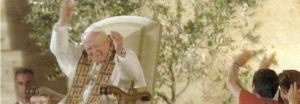
7. These notions of divine providence offered to us by the biblical tradition of the Old Testament are confirmed and enriched by the New. Of all the words of Jesus that it records on this subject, particularly poignant are those recorded by the evangelists Matthew and Luke: "Therefore do not be troubled, saying, What shall we eat? What shall we drink? For your heavenly Father knows that you have need of all these things; seek ye first the kingdom of God and his righteousness, and all these things shall be given you besides" (Matthew 6: 31-33; cf. also Luke 12: 29-31).
"Will not two sparrows be sold for a penny? Yet not one of them will fall to the ground without your Father's bidding. As for you, even the hairs of your head are all counted; therefore have no fear: you are worth more than many sparrows!" (Mt 10:29-31; cf. Lk 21:18). "Look at the birds of the air: they neither sow, nor reap, nor gather into barns; yet your heavenly Father feeds them. Count ye not more than they? . . . And why do you toil for clothing? Observe how the lilies of the field grow: they neither toil nor spin. Yet I tell you that not even Solomon, with all his glory, dressed like one of them. Now if God so clothes the grass of the field, which is here today and tomorrow will be thrown into the oven, will he not do much more for you, people of little faith?" (Mt 6:26-30; cf. Lk 12:24-28).
8. With such words, the Lord Jesus not only confirms the teaching on divine providence contained in the Old Testament, but he takes the discourse further in what concerns man, every single man, treated by God with the exquisite delicacy of a father.
Undoubtedly, the stanzas of the psalms extolling the Most High as man's refuge, protection and comfort were magnificent: thus, for example, in Psalm 90: "You who dwell in the shelter of the Most High and dwell in the shadow of the Almighty, say to the Lord: 'My refuge and my fortress, my God, in whom I trust' . . . For thy refuge is the Lord, and thou hast made the Most High thy dwelling place . . I will save him, because he has put his trust in me; I will exalt him, because he has known my name. He shall call upon me and I will answer him; with him I will be in misfortune" (Ps 90:1-2. 9. 14-15)
9. Very beautiful expressions; but Christ's words attain an even greater fullness of meaning. In fact, the Son pronounces them, who "scrutinising" all that has been said on the subject of Providence, bears perfect witness to the mystery of his Father: a mystery of Providence and paternal care, which embraces every creature, even the most insignificant, like the grass of the field or the sparrows. How much more man, then! This is what Christ wants to emphasise above all. If divine Providence shows itself so generous towards creatures so inferior to man, how much more will it care for him! In this Gospel page on Providence we find the truth about the hierarchy of values that is present from the beginning in the Book of Genesis, in the description of creation: man has primacy over things. He has it in his nature and spirit, he has it in the care and attention of Providence, he has it in the heart of God!
10. Jesus also insistently proclaims that man, so privileged by his Creator, has a duty to cooperate with the gift received from Providence. He cannot, therefore, be content with the values of sense, matter and utility alone. He must seek above all "the kingdom of God and his righteousness" because "all these things (earthly goods) will be given to you as an addition" (cf. Mt 6:33).
Christ's words direct our attention to this particular dimension of Providence, at the centre of which is man, the rational and free being.
[Pope John Paul II, General Audience 14 May 1986]
Abstract, illusory words?
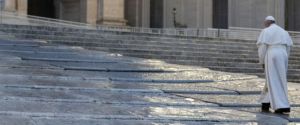
At the centre of this Sunday’s Liturgy we find one of the most reassuring truths: Divine Providence. The Prophet Isaiah presents it as the image of maternal love full of tenderness, and thus says: “Can a woman forget her sucking child, that she should have no compassion on the son of her womb? Even these may forget, yet I will not forget you” (49:15). How beautiful is this! God does not forget us, not one of us! Everyone by name and surname. He loves us and doesn’t forget. What a beautiful thought.... This invitation to trust in God finds a parallel on a page of Matthew’s Gospel: “Look at the birds of the air”, Jesus says, “they neither sow nor reap nor gather into barns, and yet your heavenly Father feeds them.... Consider the lilies of the field, how they grow: they neither toil nor spin; yet I tell you, even Solomon in all his glory was not arrayed like one of these” (Mt 6:26, 28-29).
However, thinking of the many people who live in precarious conditions, or even in a poverty offensive to their dignity, these words of Jesus could seem abstract, if not illusory. But actually they are relevant, now more than ever! They remind us that you cannot serve two masters: God and wealth. As long as everyone seeks to accumulate for themselves, there will never be justice. We must take heed of this! As long as everyone seeks to accumulate for themselves, there will be no justice. Instead, by entrusting ourselves to God’s providence, and seeking his Kingdom together, no one will lack the necessary means to live with dignity.
A heart troubled by the desire for possessions is a heart full of desire for possessions, but empty of God. That is why Jesus frequently warned the rich, because they greatly risk placing their security in the goods of this world, and security, the final security, is in God. In a heart possessed by wealth, there isn’t much room for faith: everything is involved with wealth, there is no room for faith. If, however, one gives God his rightful place, that is first place, then his love leads one to share even one’s wealth, to set it at the service of projects of solidarity and development, as so many examples demonstrate, even recent ones, in the history of the Church. And like this God’s Providence comes through our service to others, our sharing with others. If each of us accumulates not for ourselves alone but for the service of others, in this case, in this act of solidarity, the Providence of God is made visible. If, however, one accumulates only for oneself, what will happen when one is called by God? No one can take his riches with him, because — as you know — the shroud has no pockets! It is better to share, for we can take with us to Heaven only what we have shared with others.
The road that Jesus points out can seem a little unrealistic with respect to the common mindset and to problems due to the economic crisis; but, if we think about it, this road leads us back to the right scale of values. He says: “Is not life more than food, and the body more than clothing?” (Mt 6:25). In order to ensure that no one lacks bread, water, clothing, a home, work, health, we need to recognize that all people are children of the Father who is in Heaven and, therefore, brothers among us, and that we must act accordingly. I recalled this in the Message for Peace of 1 January this year: the way to peace is fraternity — this going together, sharing things with one another.
In the light of this Sunday’s Word of God, let us invoke the Virgin Mary as Mother of Divine Providence. To her we entrust our lives, the journey of the Church and all humanity. In particular, let us invoke her intercession that we may all strive to live in a simple and sober manner, keeping in mind the needs of those brothers who are most in need.
[Pope Francis, Angelus 2 March 2014]
11th Sunday in O.T.
11th Sunday in Ordinary Time (year A) [14 June 2026]
First Reading from the Book of Exodus (19:2–6a)
This passage from Exodus describes the moment when God is about to establish the Covenant with Israel on Mount Sinai. Before giving the commandments, God reminds the people of what he has already done for them: he has freed them from Egypt and has always guided them with love and care. The image of the eagle carrying its young on its wings aptly expresses the way in which God accompanies his people: not to make them dependent, but to teach them freedom, like a parent who teaches their children to walk on their own. Deuteronomy, too, presents God as an eagle that protects, sustains and instructs its young. The Covenant is founded on this experience of love and liberation: the people’s trust arises from the fact that God has already demonstrated his faithfulness. For this reason, in the Bible, liberation always precedes the commandments. God promises Israel: ‘You shall be my special possession among all peoples, for the whole earth belongs to me; you shall be for me a kingdom of priests and a holy nation.’ The election of Israel is therefore not a privilege to boast of, but a mission received in order to learn to love. Israel was chosen not because it was stronger or more numerous, but because it was loved by God. Over time, the people would come to understand more fully that God is not merely the God of Israel, but the Lord of the earth. Israel’s vocation is therefore universal: to be a sign of God’s presence for all peoples. The expression ‘a kingdom of priests, a holy nation’ indicates that the whole people is consecrated to God. This idea will be taken up by Christianity: according to the Apostle Peter, all the baptised share in a ‘royal priesthood’ and are called to proclaim the wonders of God. The central message is that God liberates, educates for freedom and calls his people to live a relationship of trust with him, not as an exclusive privilege, but as service and witness for the good of all.
Responsorial Psalm (99/100)
This Psalm was composed to accompany a thanksgiving sacrifice in the Temple of Jerusalem. A liturgical atmosphere emerges from its very words: the people are invited to praise God, serve him with joy and enter his presence to give him thanks. The central theme of the Psalm is therefore the Covenant between God and Israel. Each verse recalls the memory of the deliverance from Egypt and the faithful love with which God chose and guided his people. For Israel, giving thanks means first and foremost remembering that God delivered them when they were slaves in Egypt and made them a people. He then entered into a covenant of communion with this people. The invocation “Praise the Lord, all you of the earth” proclaims that God is the true King and anticipates the day when all humanity will recognise his lordship. Israel thus understands that its election is not an exclusive privilege, but a mission in the service of all peoples. The expression “Serve the Lord with gladness” thus takes on a special meaning: after having been slaves in Egypt, the Israelites learn that service to God is not slavery, but a free response of love. When the Psalm states “He has made us, and we are his”, it does not refer primarily to the creation of man, but to the birth of Israel as the people of the Covenant. God has given identity and freedom to those who were slaves and scattered. The words “We are his people” recall the fundamental promise of the Covenant: “You shall be my people and I shall be your God”. The Psalm concludes by celebrating two essential characteristics of God: his eternal love and his unfailing faithfulness. In the Bible, in fact, “love and truth or faithfulness” are the expressions that best describe God’s relationship with his people. The believer is called to acknowledge the Lord as the one and only God, remembering with gratitude his work of liberation and trusting in his love and faithfulness that endure forever.
Second Reading from the Letter of Saint Paul the Apostle to the Romans (5:6–11)
For Saint Paul, the coming of Jesus Christ marks a decisive turning point in human history. Before Christ, humanity, enslaved by sin, was unable to find the way back to God on its own and drifted ever further from Him. The great news of the Gospel is that Christ has set us back on the right path. Paul affirms that we have been justified and reconciled with God not because of our own merits, but by pure grace. It is a free gift: God takes the initiative and offers salvation to all through Jesus Christ. The expression ‘Christ died for us’ does not mean that God willed or demanded the violent death of His Son as compensation for humanity’s sins. God is love and does not act according to a logic of debts and payments. Jesus’ death must be understood as the consequence of His total fidelity to the mission He received: to proclaim God’s love, forgiveness, non-violence and mercy. Like a man who risks his life to save others, Jesus accepted the risk of being rejected. He was killed by men, a victim of hatred and violence, not by God’s will. Until the very end, however, he continued to bear witness to forgiveness. Looking at the cross, we then discover the true face of God: not an angry God seeking vengeance, but a God of love and mercy. In Jesus, who forgives even his persecutors, the goodness of the Father is fully revealed. The reconciliation of which Paul speaks consists precisely in overcoming mistrust towards God, that very mistrust represented by Adam. Thanks to the Holy Spirit, humanity can finally live at peace with God and receive his love. This is why Paul affirms that God’s love has been poured into our hearts: through Christ we are once again brought into communion with God and become his children. Salvation, therefore, is a free gift from God. Christ’s death is not a price demanded by God, but the supreme testimony of his love and forgiveness, which reconcile us with the Father and open up a new life for us.
From the Gospel according to Matthew (9:36–10:8)
The people of the Old Testament had already discovered that God is merciful, that is, he bends down to human suffering. Whilst Jesus in the Gospel shows the same compassion, he does not limit himself to feeling pity, but intervenes concretely to heal and set free. This is why the mission of Jesus and his apostles is first and foremost a mission of healing. Jesus proclaims the Kingdom of God and, at the same time, offers visible signs of it: he heals the sick, frees people from evil spirits and restores life and hope. When he sends out his disciples, he entrusts them with the same task: proclaim that the Kingdom is near and fight evil in all its forms. Jesus is moved by compassion not only for individual suffering, but also for the whole people, whom he sees ‘as sheep without a shepherd’. In him are fulfilled the Old Testament promises concerning the Messiah-shepherd who would gather and guide his people. When Jesus asks the apostles to turn first to the lost sheep of the house of Israel, he does not exclude other peoples, but recalls Israel’s particular mission: to be the first recipient of salvation and then to bring it to all nations. “Freely you have received, freely give”: this expression sums up the life of the believer. Everything we receive from God is, in fact, free. His grace cannot be bought or earned; it is a gift of love. Yet we often struggle to accept this gratuitousness and think we must “earn” God’s favour. Just as God gives freely, so too are we called to give freely. This means helping, serving, loving and forgiving without seeking rewards, recognition or personal gain. Indeed, Jesus invites his disciples to love even their enemies unconditionally and not to wait for others to deserve our help. Those who have experienced God’s free forgiveness are called in turn to become instruments of forgiveness and mercy. Finally, Jesus teaches trust: he chose apostles who were very different from one another and entrusted them with a great mission without demanding guarantees. So too today, God continues to call fragile people to collaborate in his work. Ultimately, we understand that the Kingdom of God is realised in spite of our frailties and, at times, our betrayals. It is also manifested through healing, compassion and, above all, in the victory over evil. Those who have received God’s love freely are called to give it to others with the same generosity, trust and mercy, in the certainty that God is the author of all things and we are merely instruments in his hands.
+Giovanni D’Ercole
Where is the ecclesial Heart?

(Mt 6:19-23)
«Where your Treasure is, your heart will be there» (v.21). It is not a tasteless personal or institutional problem; on the contrary, it is indispensable for to find again yourself.
Ignoring it means giving additional breath to it, making grow out of proportion; making it even more out of time and difficult to read - and identify its therapies.
In order to understand and activate different resources, each community must go through the moments of the most severe verification - overcoming the stumbling block ‘forward’, "outgoing".
In the form of Relationship, everything opens up intense life - which integrates and goes beyond self-love, the thirst for domination.
This frees us from the "old", that is, it closes a cycle of paths already developed - to make us return as newborns.
Hope that has weight dismantles the inessential; it expels the noise of thoughts that are no longer in tune with our growth, and introduces dreamy energies, a wealth of possibilities.
There will be initial resistance, but development is predisposed.
Hope sacrifices ballasts and activates us according to the ‘inner divine’. It opens the doors wide to a new phase, brighter and corresponding.
The earth’s treasures quickly blind; likewise they pass: suddenly. The age of global crisis slams it in our face.
Yet, it is a necessary pain.
We understand: the new paths are not traced by goods, but by the Void that acts as a cavity.
The religiosity good for all seasons gives way to the unprecedent life of Faith.
Here lies the Art of discernment and pastoral care: it should be able to introduce new competitive, different energies - cosmic and personal - that prepare unpublished, open and free synthesises.
We know this; and yet in some intriguing circles and business connections, the lust for possession does not allow them to see clearly.
The dulling of eyes sick with robbery prevailed. First here and there, gradually occupying the soul.
As if to say: there is another experience of the "divine", indifferent.
And the litmus test is precisely that of the petty scrutinizing (vv.22-23) that holds back. With the gaze that closes the horizon of existence.
Instead, in the attempts and paths of Faith that are not satisfied, life becomes bright with creative Love that blooms again, and puts everyone at ease.
Even the old can re-emerge in this new spirit, this time perennial. Because there are other Heights. Because what makes intimate to God is nothing external.
The authentic Church aroused by clear ‘visions’ always reveals something portentous: fruitfulness from nullity, life from its effusion, birth from apparent sterility.
A river of unthinkable harmonies will reconnect the reading of events and the action of believers to the work of the Spirit, without barriers.
Because when someone surrenders their normalized thinking, and settles getting down, the new advances.
The choice is now inexorable: between death and life; between greed and «darkness» (v.23), or Happiness.
The first step is to admit that you have to make a journey.
To internalize and live the message:
Where is your Treasure? Is your heart and eye simple?
Have you ever experienced sides that others judge to be inconclusive [from a material point of view] and instead have prepared your new paths?
[Friday 11th wk. in O.T. June 19, 2026]
Our commitment does not consist exclusively of activities or programmes of promotion and assistance; what the Holy Spirit mobilizes is not an unruly activism, but above all an attentiveness that considers the other in a certain sense as one with ourselves (Pope Francis)
Il nostro impegno non consiste esclusivamente in azioni o in programmi di promozione e assistenza; quello che lo Spirito mette in moto non è un eccesso di attivismo, ma prima di tutto un’attenzione rivolta all’altro considerandolo come un’unica cosa con se stesso (Papa Francesco)
The drama of prayer is fully revealed to us in the Word who became flesh and dwells among us. To seek to understand his prayer through what his witnesses proclaim to us in the Gospel is to approach the holy Lord Jesus as Moses approached the burning bush: first to contemplate him in prayer, then to hear how he teaches us to pray, in order to know how he hears our prayer (Catechism of the Catholic Church n.2598)
L’evento della preghiera ci viene pienamente rivelato nel Verbo che si è fatto carne e dimora in mezzo a noi. Cercare di comprendere la sua preghiera, attraverso ciò che i suoi testimoni ci dicono di essa nel Vangelo, è avvicinarci al santo Signore Gesù come al roveto ardente: dapprima contemplarlo mentre prega, poi ascoltare come ci insegna a pregare, infine conoscere come egli esaudisce la nostra preghiera (Catechismo della Chiesa Cattolica n.2598)
“Love is an excellent thing”, we read in the book the Imitation of Christ. “It makes every difficulty easy, and bears all wrongs with equanimity…. Love tends upward; it will not be held down by anything low… love is born of God and cannot rest except in God” (III, V, 3) [Pope Benedict]
«Grande cosa è l’amore – leggiamo nel libro dell’Imitazione di Cristo –, un bene che rende leggera ogni cosa pesante e sopporta tranquillamente ogni cosa difficile. L’amore aspira a salire in alto, senza essere trattenuto da alcunché di terreno. Nasce da Dio e soltanto in Dio può trovare riposo» (III, V, 3) [Papa Benedetto]
For Christians, non-violence is not merely tactical behaviour but a person's way of being (Pope Benedict)
La nonviolenza per i cristiani non è un mero comportamento tattico, bensì un modo di essere (Papa Benedetto)
The Angel does not enter our room visibly, but the Lord has a plan for each of us, he calls each one of us by name (Pope Benedict)
Nella nostra camera l’Angelo non entra in modo visibile, ma con ciascuno di noi il Signore ha un suo progetto, ciascuno viene da Lui chiamato per nome (Papa Benedetto)
A mysterious love, which in the texts of the New Testament is revealed to us as God’s boundless and passionate love for mankind. God does not lose heart in the face of ingratitude (Pope Benedict)
Un amore misterioso, che nei testi del Nuovo Testamento ci viene rivelato come incommensurabile passione di Dio per l'uomo. Egli non si arrende dinanzi all'ingratitudine (Papa Benedetto)
The road that Jesus points out can seem a little unrealistic with respect to the common mindset and to problems due to the economic crisis; but, if we think about it, this road leads us back to the right scale of values (Pope Francis)
La strada che Gesù indica può sembrare poco realistica rispetto alla mentalità comune e ai problemi della crisi economica; ma, se ci si pensa bene, ci riporta alla giusta scala di valori (Papa Francesco)








duevie.art
don Giuseppe Nespeca
Tel. 333-1329741
Disclaimer
Questo blog non rappresenta una testata giornalistica in quanto viene aggiornato senza alcuna periodicità. Non può pertanto considerarsi un prodotto editoriale ai sensi della legge N°62 del 07/03/2001.
Le immagini sono tratte da internet, ma se il loro uso violasse diritti d'autore, lo si comunichi all'autore del blog che provvederà alla loro pronta rimozione.
L'autore dichiara di non essere responsabile dei commenti lasciati nei post. Eventuali commenti dei lettori, lesivi dell'immagine o dell'onorabilità di persone terze, il cui contenuto fosse ritenuto non idoneo alla pubblicazione verranno insindacabilmente rimossi.