Dec 15, 2025 Written by 

In what image and likeness?

Our gaze goes to Giulio Romano's painting above the high altar of this church: it shows the Holy Family, with John the Baptist still a child, the Apostle James and the Evangelist Mark, the latter already adults.

The Baptist briskly points with his left hand to the Child Jesus, depicted in his infantile weakness. To the question of the relatives and neighbours of Elizabeth and Zechariah: "What is to become of this child?" the painting seems to give us this answer: John the Baptist points with all his attitude to Jesus to the visitor James who is close to him; he bows deeply in the awareness of his littleness: I am not worthy to untie the strap of the sandal to him who comes after me, but who is before me. This word has nothing to do with false humility. The Baptist is too upright, too sober for that. He certainly recognised human helplessness better than most men.

The preacher of penitence who questions men in their innermost being, who shakes them out of their certainties and transforms them, who snatches them from the superficiality of a purely earthly materialistic attitude, still belongs to the Old Covenant, he is just the one who points the way to the Kingdom of God; and this Kingdom of God is near, one hears the voice of the one who calls in the wilderness. The Baptist's humility is authentic. But God exalted the littleness of the Baptist with the greatness of the task entrusted to him; indeed, he had already exalted him in his mother's womb: before he was even born, he was in fact already 'reborn' by the Spirit of Christ. Human greatness is nothing compared to the smallness that is called to participate in the greatness and holiness of God.

For us priests, John is a model. He seeks nothing for himself, but everything for the one he now points to. The child already represents in a certain way the word transmitted to us in the fourth Gospel: "He must increase and I must decrease" (John 3: 30). John was to lead men to Jesus and bear witness [...].

John and the story of his life are like a slide on which a name and a truth are indicated. It remains dark until a source of light is lit behind it. Thus says the Gospel of John: 'He was not the light, but he was to bear witness to the light' (John 1: 8). The light of God is decisive in his life and mission. By its light we become seers, to recognise God's will. This is often contrary to our desires and our own will. When it came to naming the newborn John at his circumcision, tradition was decisive: he would receive his father's name. But Elisabeth decided otherwise. She knew God's will and gave the child the name 'John', which means 'God is merciful'.

Why should it have been so only then?

We can all experience the power and goodness of God in our lives when we trust in him and strive earnestly to do his will. But this requires from us humility and the realisation that man does not possess the measure of all things. We cannot see ourselves as the yardstick of every thought, every morality and every right. We too easily succumb to the belief that everything can be made, heaven as well as earth, indeed man himself, according to our own image and likeness.

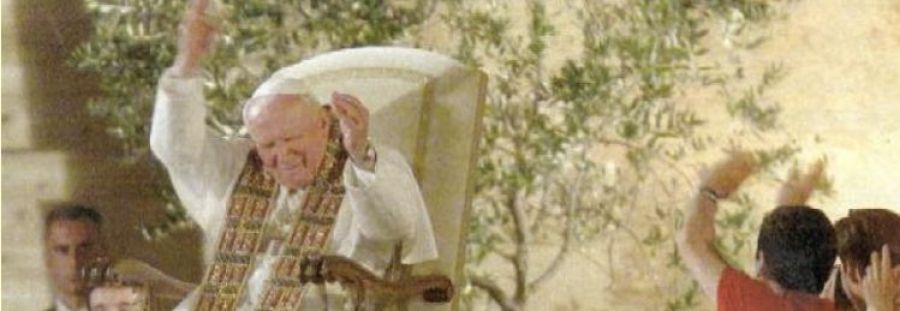
[Pope John Paul II, S. Maria dell'Anima homily 24 June 1990]

6 Last modified on Monday, 15 December 2025 05:46
don Giuseppe Nespeca

Giuseppe Nespeca è architetto e sacerdote. Cultore della Sacra scrittura è autore della raccolta "Due Fuochi due Vie - Religione e Fede, Vangeli e Tao"; coautore del libro "Dialogo e Solstizio".

Email This email address is being protected from spambots. You need JavaScript enabled to view it.
The new Creation announced in the suburbs invests the ancient territory, which still hesitates. We too, accepting different horizons than expected, allow the divine soul of the history of salvation to visit us
La nuova Creazione annunciata in periferia investe il territorio antico, che ancora tergiversa. Anche noi, accettando orizzonti differenti dal previsto, consentiamo all’anima divina della storia della salvezza di farci visita
Luke the Evangelist of the Poor celebrates the reversals of the situation: pharisee and tax collector, prodigal son and firstborn, samaritan and priest-levite, Lazarus and rich man, first and last place, Beatitudes and “woe to you”... so in the anthem of the Magnificat
Luca evangelista dei poveri celebra i ribaltamenti di situazione: fariseo e pubblicano, figlio prodigo e primogenito, samaritano e sacerdote-levita, Lazzaro e ricco epulone, primo e ultimo posto, Beatitudini e “guai”... così nell’inno del Magnificat
In these words we find the core of biblical truth about St. Joseph; they refer to that moment in his life to which the Fathers of the Church make special reference (Redemtoris Custos n.2)
In queste parole è racchiuso il nucleo centrale della verità biblica su san Giuseppe, il momento della sua esistenza a cui in particolare si riferiscono i padri della Chiesa (Redemtoris Custos n.2)
The ancient priest stagnates, and evaluates based on categories of possibilities; reluctant to the Spirit who moves situations
Il sacerdote antico ristagna, e valuta basando su categorie di possibilità; riluttante allo Spirito che smuove le situazioni
«Even through Joseph’s fears, God’s will, his history and his plan were at work. Joseph, then, teaches us that faith in God includes believing that he can work even through our fears, our frailties and our weaknesses. He also teaches us that amid the tempests of life, we must never be afraid to let the Lord steer our course. At times, we want to be in complete control, yet God always sees the bigger picture» (Patris Corde, n.2)
«Anche attraverso l’angustia di Giuseppe passa la volontà di Dio, la sua storia, il suo progetto. Giuseppe ci insegna così che avere fede in Dio comprende pure il credere che Egli può operare anche attraverso le nostre paure, le nostre fragilità, la nostra debolezza. E ci insegna che, in mezzo alle tempeste della vita, non dobbiamo temere di lasciare a Dio il timone della nostra barca. A volte noi vorremmo controllare tutto, ma Lui ha sempre uno sguardo più grande» (Patris Corde, n.2)
Man is the surname of God: the Lord in fact takes his name from each of us - whether we are saints or sinners - to make him our surname (Pope Francis). God's fidelity to the Promise is realized not only through men, but with them (Pope Benedict).
L’uomo è il cognome di Dio: il Signore infatti prende il nome da ognuno di noi — sia che siamo santi, sia che siamo peccatori — per farlo diventare il proprio cognome (Papa Francesco). La fedeltà di Dio alla Promessa si attua non soltanto mediante gli uomini, ma con loro (Papa Benedetto)
In the communities of Galilee and Syria the pagans quickly became a majority - elevated to the rank of sons. They did not submit to nerve-wracking processes, but spontaneously were recognizing the Lord
Nelle comunità di Galilea e Siria i pagani diventavano rapidamente maggioranza - elevati al rango di figli. Essi non si sottoponevano a trafile snervanti, ma spontaneamente riconoscevano il Signore

Due Fuochi due Vie - Vol. 1 Due Fuochi due Vie - Vol. 2 Due Fuochi due Vie - Vol. 3 Due Fuochi due Vie - Vol. 4 Due Fuochi due Vie - Vol. 5 Dialogo e Solstizio I fiammiferi di Maria

duevie.art

don Giuseppe Nespeca

Tel. 333-1329741


Disclaimer

Questo blog non rappresenta una testata giornalistica in quanto viene aggiornato senza alcuna periodicità. Non può pertanto considerarsi un prodotto editoriale ai sensi della legge N°62 del 07/03/2001.
Le immagini sono tratte da internet, ma se il loro uso violasse diritti d'autore, lo si comunichi all'autore del blog che provvederà alla loro pronta rimozione.
L'autore dichiara di non essere responsabile dei commenti lasciati nei post. Eventuali commenti dei lettori, lesivi dell'immagine o dell'onorabilità di persone terze, il cui contenuto fosse ritenuto non idoneo alla pubblicazione verranno insindacabilmente rimossi.






