Apr 22, 2026 Written by 

Master and disciple united by the same Way

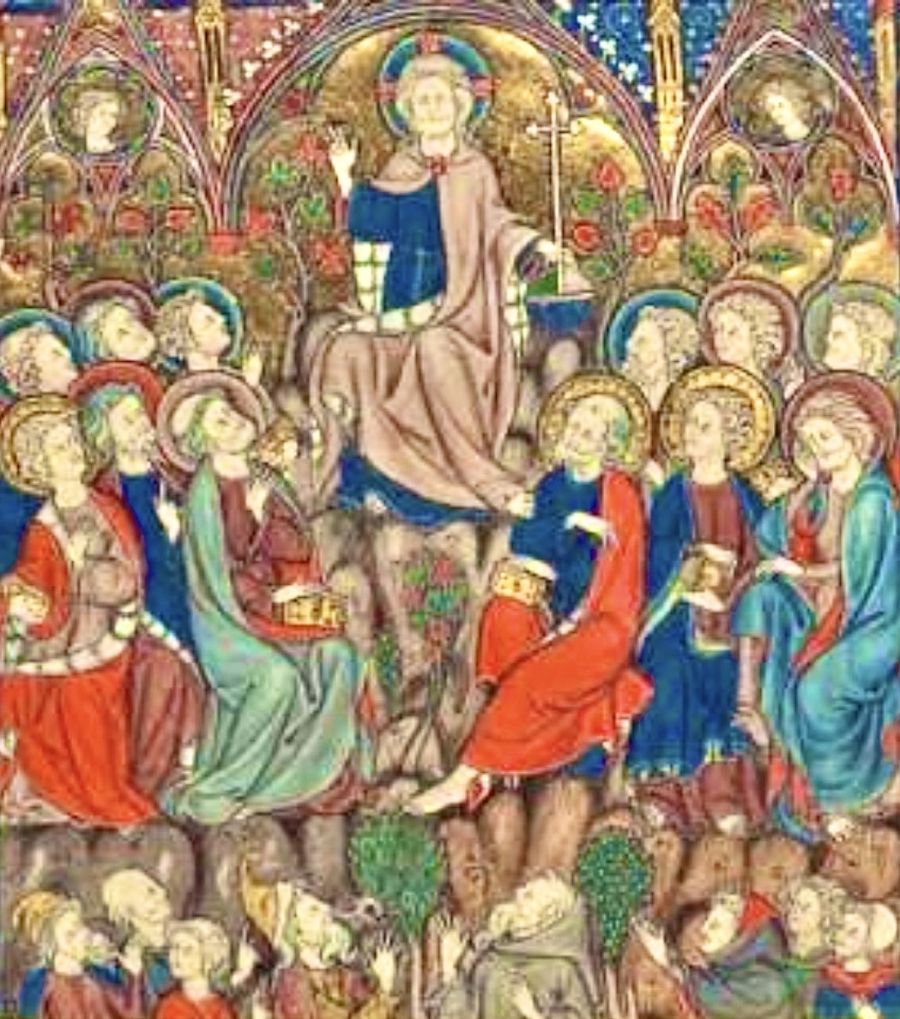
«He who receives him whom I send, receives me; but he who receives me, receives him who sent me» (Jn 13:20).

Jesus, at the Last Supper, after having washed the feet of his disciples invites them to do the same, reminding them that a sent one is not greater than the one who sent him.

At the same time he reminds them that to receive the one God sends is to receive the Lord himself.


Francis knew, by grace, that to receive is the infinitive of the verb unveil.

The Lord manifests himself to the one who hosts with love the one sent by the Father of mercies.

The Poor Man and his sons knew the special welcome of the Assisian bishop, as is narrated in the Legend of the Three Companions:

"When they arrived in Rome, they found the Bishop of Assisi there, who received them with great joy.

He nourished an affectionate esteem for Francis and all the friars; but, ignorant of the reason for their coming, he was seized with anxiety: he feared that they might want to leave Assisi, where the Lord had begun through them to do wonders of good.

He was proud and happy to have such zealous men in his diocese, on whose exemplary life he relied greatly.

However, when he heard the purpose of the journey and understood their plans, he was reassured and promised to advise and help them' (FF 1456).

But there were also those who reacted differently with the brothers sent:

"Many took them for charlatans or simpletons, and did not want to receive them at home, for fear that they would commit theft.

In several places, after receiving a heap of insults, they found nowhere to take refuge except under the porches of churches or houses.

One day, two friars arrived in Florence. They went around the whole city begging, but could not find anyone to take them in.

When they arrived at a house that had a porch in front of it, under which there was an oven, they said to each other:

«We can rest here».

They begged the landlady to receive them into the house, but she refused.

Then they humbly proposed that she at least allow them to take refuge that night near the oven. The woman agreed [...].

That night they slept uneasily until dawn by the oven, warmed by divine love alone and protected by Our Lady Poverty's blanket.

They rose to go to the nearest church, to participate in the morning liturgy' (FF 1442).

In recognising the one Christ sends is inherent the revelation of the authentic and personal encounter with Jesus.

Moreover, Francis and his followers were clearly aware that if they had rejected the Master, the path of the disciple could not have been different.

Hence the acceptance of everything, dwelling in Love.

The Sources recall that in this lies Perfect Lettership, as Francis taught Brother Leo:

"«Behold, I return from Perugia and, deep in the night, I come here, and it is a muddy winter and so harsh that, at the end of my cassock, icicles of frozen water form [...] I come to the door and, after long beating and calling, a friar comes and asks:

«Who is it?»

I answer:

«Brother Francis» [...]

the other replies:

«Go away, you are simple and an idiot, you cannot come here anymore [...]».

And I always remain in front of the door and say:

«For God's sake, accept me for this night» [...].

«Well, if I have been patient and not disturbed, I say to you that here is true happiness and here is true virtue and salvation of the soul» " (FF 278).


Thursday of the 4th wk. in Easter   (Jn 13:16-20)

220 Last modified on Wednesday, 22 April 2026 03:56
Teresa Girolami

Teresa Girolami è laureata in Materie letterarie e Teologia. Ha pubblicato vari testi, fra cui: "Pellegrinaggio del cuore" (Ed. Piemme); "I Fiammiferi di Maria - La Madre di Dio in prosa e poesia"; "Tenerezza Scalza - Natura di donna"; co-autrice di "Dialogo e Solstizio".

Email This email address is being protected from spambots. You need JavaScript enabled to view it.
A mysterious love, which in the texts of the New Testament is revealed to us as God’s boundless and passionate love for mankind. God does not lose heart in the face of ingratitude (Pope Benedict)
Un amore misterioso, che nei testi del Nuovo Testamento ci viene rivelato come incommensurabile passione di Dio per l'uomo. Egli non si arrende dinanzi all'ingratitudine (Papa Benedetto)
Jesus showed us with a new clarity the unifying centre of the divine laws revealed on Sinai […]  Indeed, in his life and in his Paschal Mystery Jesus brought the entire law to completion.  Uniting himself with us through the gift of the Holy Spirit, he carries with us and in us the “yoke” of the law, which thereby becomes a “light burden” (Pope Benedict)
Gesù ci ha mostrato con una nuova chiarezza il centro unificante delle leggi divine rivelate sul Sinai […] Anzi, Gesù nella sua vita e nel suo mistero pasquale ha portato a compimento tutta la legge. Unendosi con noi mediante il dono dello Spirito Santo, porta con noi e in noi il "giogo" della legge, che così diventa un "carico leggero" (Papa Benedetto)
An ancient hermit says: “The Beatitudes are gifts of God and we must say a great ‘thank you’ to him for them and for the rewards that derive from them, namely the Kingdom of God in the century to come and consolation here; the fullness of every good and mercy on God’s part … once we have become images of Christ on earth” (Peter of Damascus) [Pope Benedict]
Afferma un antico eremita: «Le Beatitudini sono doni di Dio, e dobbiamo rendergli grandi grazie per esse e per le ricompense che ne derivano, cioè il Regno dei Cieli nel secolo futuro, la consolazione qui, la pienezza di ogni bene e misericordia da parte di Dio … una volta che si sia divenuti immagine del Cristo sulla terra» (Pietro di Damasco) [Papa Benedetto]
"How will we be able to live without him?". In these words of St Ignatius we hear echoing the affirmation of the martyrs of Abitene: "Sine dominico non possumus" [Pope Benedict]
"Come potremmo vivere senza di Lui?". Sentiamo echeggiare in queste parole di Sant’Ignazio l’affermazione dei martiri di Abitene: "Sine dominico non possumus" [Papa Benedetto]
The kingdom of Christ is manifested, as the Council teaches, in the 'kingship' of man [John Paul II]
Il regno di Cristo si manifesta, come insegna il Concilio, nella “regalità” dell’uomo [Giovanni Paolo II]
In the middle of the dense forest of rules and regulations — to the legalisms of past and present — Jesus makes an opening through which one can catch a glimpse of two faces: the face of the Father and the face of the brother. He does not give us two formulas or two precepts: there are no precepts nor formulas. He gives us two faces [Pope Francis]
In mezzo alla fitta selva di precetti e prescrizioni – ai legalismi di ieri e di oggi – Gesù opera uno squarcio che permette di scorgere due volti: il volto del Padre e quello del fratello. Non ci consegna due formule o due precetti: non sono precetti e formule; ci consegna due volti [Papa Francesco]
Whoever is inscribed in God's name participates in God's life, and lives. Therefore to believe is to be inscribed in the name of God. Thus we are alive. Whoever has a share in God's name is not dead but rather belongs to the living God. In this sense we should be able to understand the dynamism of faith, which entails enrolling our names in the name of God and in this way entering into life [Pope Benedict]

Due Fuochi due Vie - Vol. 1 Due Fuochi due Vie - Vol. 2 Due Fuochi due Vie - Vol. 3 Due Fuochi due Vie - Vol. 4 Due Fuochi due Vie - Vol. 5 Dialogo e Solstizio I fiammiferi di Maria

duevie.art

don Giuseppe Nespeca

Tel. 333-1329741


Disclaimer

Questo blog non rappresenta una testata giornalistica in quanto viene aggiornato senza alcuna periodicità. Non può pertanto considerarsi un prodotto editoriale ai sensi della legge N°62 del 07/03/2001.
Le immagini sono tratte da internet, ma se il loro uso violasse diritti d'autore, lo si comunichi all'autore del blog che provvederà alla loro pronta rimozione.
L'autore dichiara di non essere responsabile dei commenti lasciati nei post. Eventuali commenti dei lettori, lesivi dell'immagine o dell'onorabilità di persone terze, il cui contenuto fosse ritenuto non idoneo alla pubblicazione verranno insindacabilmente rimossi.






