Mar 31, 2026 Written by 

Seeing and believing on a pilgrimage

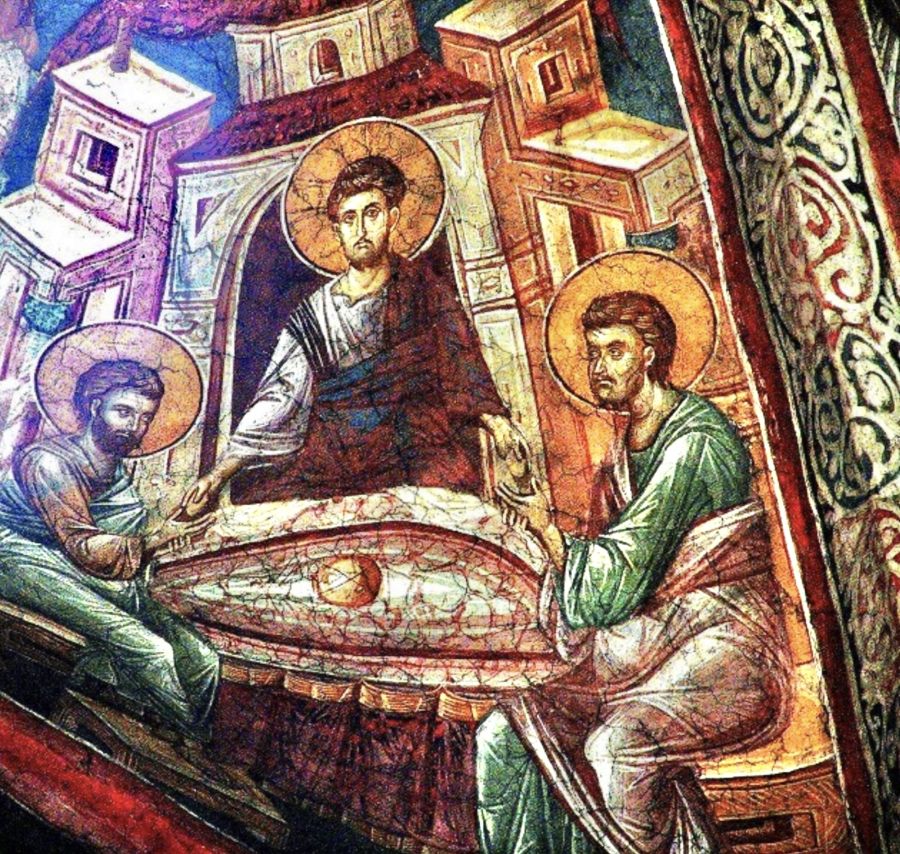
The Risen Jesus came alongside the disciples of Emmaus who were conversing with Him about what had happened in Jerusalem. He put them to the test.

The body of Christ was now in a new, glorious condition while retaining its identity. To recognise Him required the faith and freedom of God's children.


For Francis, poverty and freedom of spirit combined with faith were the fundamental framework of his existential parable as a "minor".

Asking for alms, for example, even at Easter time, living the condition of a wayfarer on a journey, was for him an admirable exercise of the aforementioned values.

Leafing through the Sources, in the Major Legend, we read:

"Once, on the holy day of Easter, since he was in a hermitage very far from the town and there was no possibility of going begging, mindful of the One who on that same day appeared to the disciples on the road to Emmaus, in the figure of a pilgrim, he asked for alms, as a pilgrim and poor man, from his own brothers.

As he received it, he taught them with holy discourses to continually celebrate the Passover of the Lord, passing through the desert of the world in poverty of spirit and as pilgrims and strangers and as true Jews.

For in begging alms he was not driven by the lust for gain, but by the freedom of the Spirit. God, the father of the poor, showed a special solicitude for him" (FF 1129).

And it was that inner freedom together with faith that became the door of recognition of the Risen Christ at the breaking of the bread, as at Emmaus.

Francis had three-dimensional eyes, enabling him to go beyond appearances, grasping the substance of the message before him.

Indeed, in the Admonitions, he expresses himself thus:

«Behold, every day he humbles himself, as when from the royal seat he descended into the Virgin's womb; every day he himself comes to us in humble appearance [...].

And as he showed himself to the holy apostles in the true flesh, so also now he shows himself to us in the consecrated bread.

And just as they with the eyes of their body saw only the flesh of him, but contemplating him with the eyes of the spirit, they believed that he was the same God, so we too, seeing the bread and wine with the eyes of the body, must see and firmly believe that this is his most holy body and blood, living and true» (FF 144).

The Poor Man had acquired, by grace, the interior capacity to decipher the footsteps of the Lord in the ordinary of days, with true concreteness.


«And it came to pass that when he was set at table with them, he took bread, pronounced the blessing, and broke it, and gave it to them. Now their eyes were opened and they recognised him» (Lk 24:30-31)


Wednesday between the Easter octave  (Lk 24:13-35)

92 Last modified on Tuesday, 31 March 2026 05:21
Teresa Girolami

Teresa Girolami è laureata in Materie letterarie e Teologia. Ha pubblicato vari testi, fra cui: "Pellegrinaggio del cuore" (Ed. Piemme); "I Fiammiferi di Maria - La Madre di Dio in prosa e poesia"; "Tenerezza Scalza - Natura di donna"; co-autrice di "Dialogo e Solstizio".

Email This email address is being protected from spambots. You need JavaScript enabled to view it.
There is the path of those who, like those two on the outbound journey, allow themselves to be paralysed by life’s disappointments and proceed sadly; and there is the path of those who do not put themselves and their problems first, but rather Jesus who visits us, and the brothers who await his visit (Pope Francis)
C’è la via di chi, come quei due all’andata, si lascia paralizzare dalle delusioni della vita e va avanti triste; e c’è la via di chi non mette al primo posto se stesso e i suoi problemi, ma Gesù che ci visita, e i fratelli che attendono la sua visita (Papa Francesco)
So that Christians may properly carry out this mandate entrusted to them, it is indispensable that they have a personal encounter with Christ, crucified and risen, and let the power of his love transform them. When this happens, sadness changes to joy and fear gives way to missionary enthusiasm (John Paul II)
Perché i cristiani possano compiere appieno questo mandato loro affidato, è indispensabile che incontrino personalmente il Crocifisso risorto, e si lascino trasformare dalla potenza del suo amore. Quando questo avviene, la tristezza si muta in gioia, il timore cede il passo all’ardore missionario (Giovanni Paolo II)
This is the message that Christians are called to spread to the very ends of the earth. The Christian faith, as we know, is not born from the acceptance of a doctrine but from an encounter with a Person (Pope Benedict)
È questo il messaggio che i cristiani sono chiamati a diffondere sino agli estremi confini del mondo. La fede cristiana come sappiamo nasce non dall'accoglienza di una dottrina, ma dall'incontro con una Persona (Papa Benedetto)
From ancient times the liturgy of Easter day has begun with the words: Resurrexi et adhuc tecum sum – I arose, and am still with you; you have set your hand upon me. The liturgy sees these as the first words spoken by the Son to the Father after his resurrection, after his return from the night of death into the world of the living. The hand of the Father upheld him even on that night, and thus he could rise again (Pope Benedict)
Dai tempi più antichi la liturgia del giorno di Pasqua comincia con le parole: Resurrexi et adhuc tecum sum – sono risorto e sono sempre con te; tu hai posto su di me la tua mano. La liturgia vi vede la prima parola del Figlio rivolta al Padre dopo la risurrezione, dopo il ritorno dalla notte della morte nel mondo dei viventi. La mano del Padre lo ha sorretto anche in questa notte, e così Egli ha potuto rialzarsi, risorgere (Papa Benedetto)
The Church keeps watch. And the world keeps watch. The hour of Christ's victory over death is the greatest hour in history (John Paul II)
Veglia la Chiesa. E veglia il mondo. L’ora della vittoria di Cristo sulla morte è l’ora più grande della storia (Giovanni Paolo II)
Before the Cross of Jesus, we apprehend in a way that we can almost touch with our hands how much we are eternally loved; before the Cross we feel that we are “children” and not “things” or “objects” [Pope Francis, via Crucis at the Colosseum 2014]
Di fronte alla Croce di Gesù, vediamo quasi fino a toccare con le mani quanto siamo amati eternamente; di fronte alla Croce ci sentiamo “figli” e non “cose” o “oggetti” [Papa Francesco, via Crucis al Colosseo 2014]
The devotional and external purifications purify man ritually but leave him as he is replaced by a new bathing (Pope Benedict)

Due Fuochi due Vie - Vol. 1 Due Fuochi due Vie - Vol. 2 Due Fuochi due Vie - Vol. 3 Due Fuochi due Vie - Vol. 4 Due Fuochi due Vie - Vol. 5 Dialogo e Solstizio I fiammiferi di Maria

duevie.art

don Giuseppe Nespeca

Tel. 333-1329741


Disclaimer

Questo blog non rappresenta una testata giornalistica in quanto viene aggiornato senza alcuna periodicità. Non può pertanto considerarsi un prodotto editoriale ai sensi della legge N°62 del 07/03/2001.
Le immagini sono tratte da internet, ma se il loro uso violasse diritti d'autore, lo si comunichi all'autore del blog che provvederà alla loro pronta rimozione.
L'autore dichiara di non essere responsabile dei commenti lasciati nei post. Eventuali commenti dei lettori, lesivi dell'immagine o dell'onorabilità di persone terze, il cui contenuto fosse ritenuto non idoneo alla pubblicazione verranno insindacabilmente rimossi.






