Jan 20, 2026 Written by 

Sower and Soil

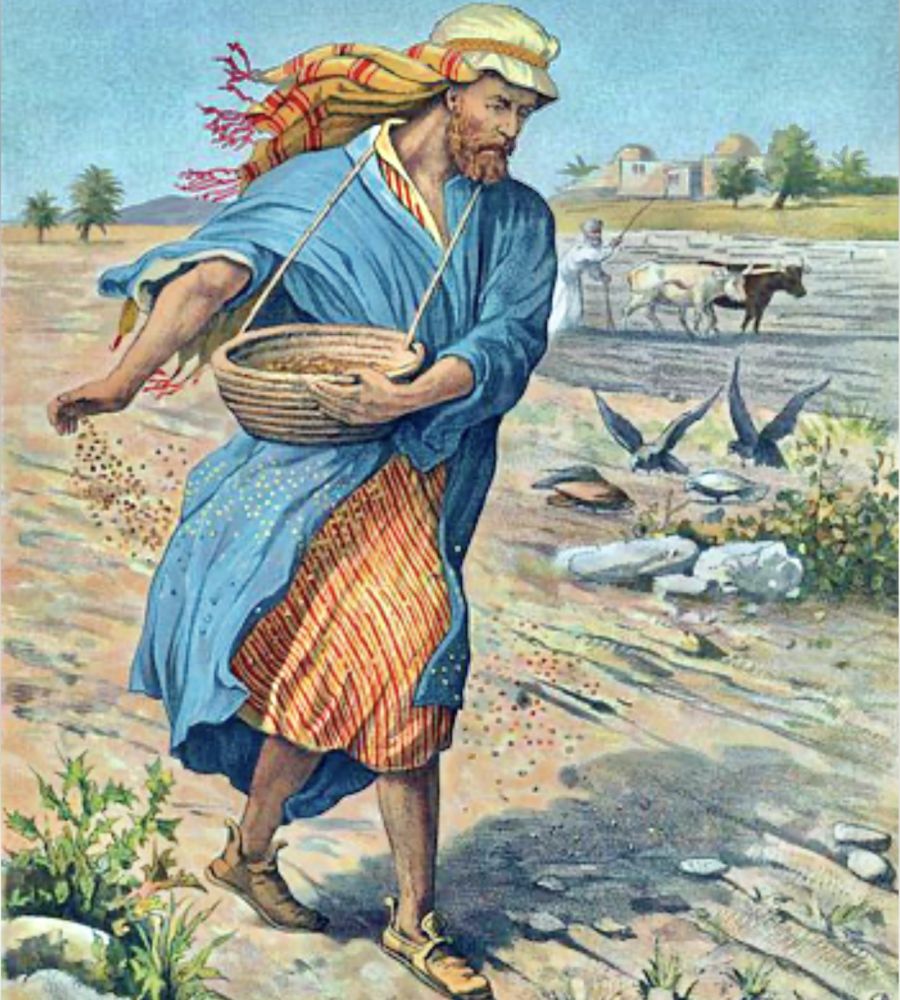
In the Parable of the Sower, Jesus emphasises the different reception and assimilation of the Word of God, and consequently the different fruit, depending on the suitability of the soil.


The new Evangelist of the latter time, Francis, was in love with the Word of God and listened to it constantly, so much so that it was imprinted in his memory.

It was good soil that produced one hundred per cent.

The Sources inform us:

"Irradiated by the splendours of the eternal Light, he scrutinised the depths of the Scriptures with a clear and acute intellect.

His intellect, pure from all stain, penetrated the secret of the mysteries [...].

He read from time to time the sacred books and kept tenaciously imprinted in his memory what he had once assimilated: for he continually ruminated with affectionate devotion what he had listened to with an attentive mind" (FF 1188).

"With equal care and devotion he committed himself to the other teachings he had heard.

For he had never been a deaf hearer of the Gospel, but, entrusting everything he heard to a commendable memory, he sought with all diligence to carry it out to the letter' (FF 357).

As Celano calls him, in the Vita prima - "river of Paradise" - Francis, "the new evangelist of this last age spread the waters of the Gospel with loving care throughout the whole world, and by his works he pointed out the way and the true doctrine of the Son of God" (FF 475).

In the Regola non bollata (1221):

"Let us therefore hold fast to the words, life, doctrine and Holy Gospel of Him who deigned to pray for us to the Father" (FF 62).

And "let us beware of being the ground along the road, or the stony ground, or the ground overrun with thorns according to what the Lord says in the Gospel:

«The seed is the Word of God [...] the seed entrusted to the good soil, are those who, hearing the word with good, indeed excellent dispositions, understand and guard it and bear fruit with perseverance»" (FF 58).

The little Poor was, for his time, a concrete and fruitful incarnation of the Gospel.


«And other seeds fell on the good earth and bore fruit by rising and growing and bearing one thirty and one sixty and one hundred» (Mk 4:8)


Wednesday 3rd wk. in O.T.  (Mk 4,1-20)

114 Last modified on Tuesday, 20 January 2026 05:25
Teresa Girolami

Teresa Girolami è laureata in Materie letterarie e Teologia. Ha pubblicato vari testi, fra cui: "Pellegrinaggio del cuore" (Ed. Piemme); "I Fiammiferi di Maria - La Madre di Dio in prosa e poesia"; "Tenerezza Scalza - Natura di donna"; co-autrice di "Dialogo e Solstizio".

Email This email address is being protected from spambots. You need JavaScript enabled to view it.
St John Chrysostom urged: “Embellish your house with modesty and humility with the practice of prayer. Make your dwelling place shine with the light of justice; adorn its walls with good works, like a lustre of pure gold, and replace walls and precious stones with faith and supernatural magnanimity, putting prayer above all other things, high up in the gables, to give the whole complex decorum. You will thus prepare a worthy dwelling place for the Lord, you will welcome him in a splendid palace. He will grant you to transform your soul into a temple of his presence” (Pope Benedict)
San Giovanni Crisostomo esorta: “Abbellisci la tua casa di modestia e umiltà con la pratica della preghiera. Rendi splendida la tua abitazione con la luce della giustizia; orna le sue pareti con le opere buone come di una patina di oro puro e al posto dei muri e delle pietre preziose colloca la fede e la soprannaturale magnanimità, ponendo sopra ogni cosa, in alto sul fastigio, la preghiera a decoro di tutto il complesso. Così prepari per il Signore una degna dimora, così lo accogli in splendida reggia. Egli ti concederà di trasformare la tua anima in tempio della sua presenza” (Papa Benedetto)
And He continues: «Think of salvation, of what God has done for us, and choose well!». But the disciples "did not understand why the heart was hardened by this passion, by this wickedness of arguing among themselves and seeing who was guilty of that forgetfulness of the bread" (Pope Francis)
E continua: «Pensate alla salvezza, a quello che anche Dio ha fatto per noi, e scegliete bene!». Ma i discepoli «non capivano perché il cuore era indurito per questa passione, per questa malvagità di discutere fra loro e vedere chi era il colpevole di quella dimenticanza del pane» (Papa Francesco)
[Faith] is the lifelong companion that makes it possible to perceive, ever anew, the marvels that God works for us. Intent on gathering the signs of the times in the present of history […] (Pope Benedict, Porta Fidei n.15)
[La Fede] è compagna di vita che permette di percepire con sguardo sempre nuovo le meraviglie che Dio compie per noi. Intenta a cogliere i segni dei tempi nell’oggi della storia […] (Papa Benedetto, Porta Fidei n.15)
But what do this “fullness” of Christ’s Law and this “superior” justice that he demands consist in? Jesus explains it with a series of antitheses between the old commandments and his new way of propounding them (Pope Benedict)
Ma in che cosa consiste questa “pienezza” della Legge di Cristo, e questa “superiore” giustizia che Egli esige? Gesù lo spiega mediante una serie di antitesi tra i comandamenti antichi e il suo modo di riproporli (Papa Benedetto)
The Cross is the sign of the deepest humiliation of Christ. In the eyes of the people of that time it was the sign of an infamous death. Free men could not be punished with such a death, only slaves, Christ willingly accepts this death, death on the Cross. Yet this death becomes the beginning of the Resurrection. In the Resurrection the crucified Servant of Yahweh is lifted up: he is lifted up before the whole of creation (Pope John Paul II)
La croce è il segno della più profonda umiliazione di Cristo. Agli occhi del popolo di quel tempo costituiva il segno di una morte infamante. Solo gli schiavi potevano essere puniti con una morte simile, non gli uomini liberi. Cristo, invece, accetta volentieri questa morte, la morte sulla croce. Eppure questa morte diviene il principio della risurrezione. Nella risurrezione il servo crocifisso di Jahvè viene innalzato: egli viene innalzato su tutto il creato (Papa Giovanni Paolo II)

Due Fuochi due Vie - Vol. 1 Due Fuochi due Vie - Vol. 2 Due Fuochi due Vie - Vol. 3 Due Fuochi due Vie - Vol. 4 Due Fuochi due Vie - Vol. 5 Dialogo e Solstizio I fiammiferi di Maria

duevie.art

don Giuseppe Nespeca

Tel. 333-1329741


Disclaimer

Questo blog non rappresenta una testata giornalistica in quanto viene aggiornato senza alcuna periodicità. Non può pertanto considerarsi un prodotto editoriale ai sensi della legge N°62 del 07/03/2001.
Le immagini sono tratte da internet, ma se il loro uso violasse diritti d'autore, lo si comunichi all'autore del blog che provvederà alla loro pronta rimozione.
L'autore dichiara di non essere responsabile dei commenti lasciati nei post. Eventuali commenti dei lettori, lesivi dell'immagine o dell'onorabilità di persone terze, il cui contenuto fosse ritenuto non idoneo alla pubblicazione verranno insindacabilmente rimossi.






