Dec 17, 2025 Written by 

Even the animals had to 'celebrate'

«Do not be afraid: behold, I announce to you a great joy, which will be to all the people, today [...] a Saviour has been born to you, who is Christ the Lord» (Lk 2:10).

Francis' joy was so great at the thought of the Birth of Jesus that, on that day, even the animals had to 'celebrate' such an Event:

"Francis had more devotion for the Lord's Christmas than for any other feast of the year.

Indeed, although the Lord worked our salvation on the other feasts, the Saint said that it was from the day of his birth that he undertook to save us.

And he wanted every Christian at Christmas to rejoice in the Lord and for love of him, who gave us all of himself, to be joyfully generous not only with the needy, but also with animals and birds" (FF 1669).

"Above all solemnities, he celebrated with ineffable solemnity the Christmas of the Child Jesus, and called the day on which God, made a little infant, had sucked at a human breast a feast of feasts.

He kissed with an eager heart the images of those infant limbs, and the compassion of the Child, pouring into his heart, also made him stammer words of sweetness in the manner of children" (FF 787).

Three years before his death, we owe to Francis the first original and authentic live representation of the Lord's Christmas, at Greccio (the night of 25 December 1223), with papal authorisation, and the collaboration of a faithful and pious friend.

He had told the latter to procure a small child "to see with the eyes of the body the discomforts in which he found himself for lack of things necessary to an infant, how he was laid in a crib and how he lay on the hay [...]" (FF 468).

The Sources wonderfully recount:

"And the day of gladness came, the time of rejoicing!

For the occasion many friars from various parts are summoned here; men and women arrive festive from the cottages of the region, each one bringing, according to his possibilities, candles and torches to illuminate that night, in which the Star that illuminated all days and times blazed forth splendidly in the sky.

Francis arrived at the end and saw that everything was arranged according to his desire, and he was radiant with joy.

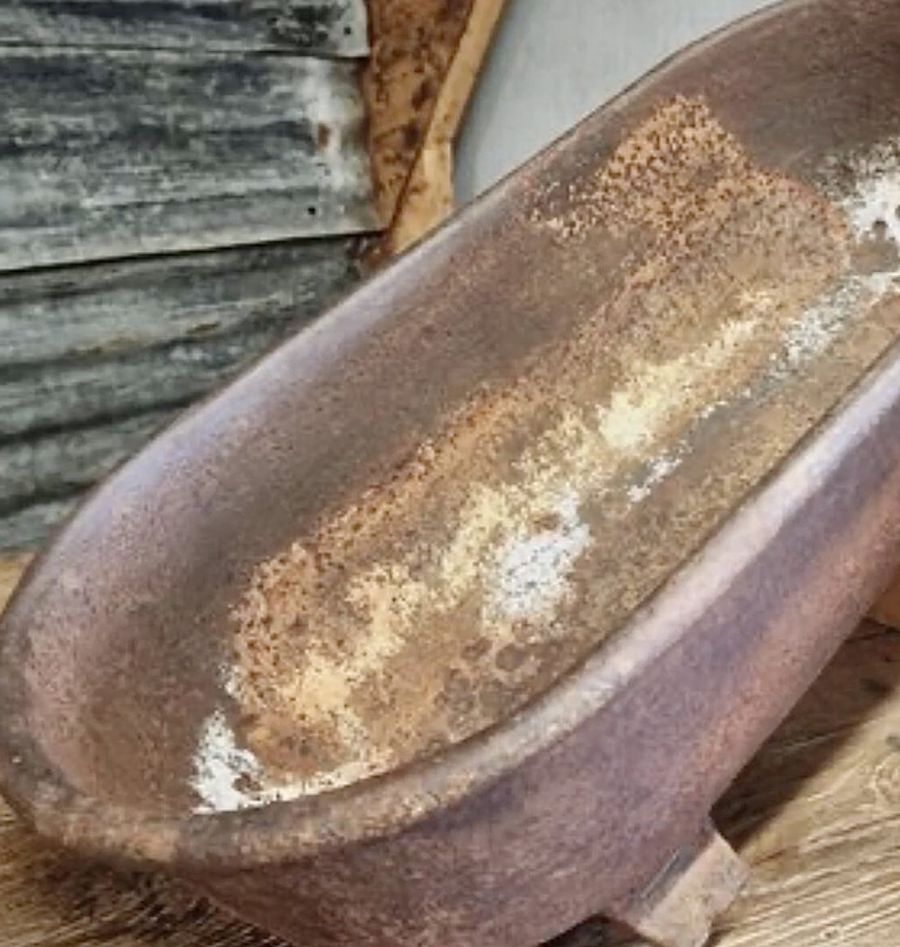
Now the crib is set up, the hay is placed there, and the ox and donkey are introduced.

In that moving scene, evangelical simplicity shines out, poverty is praised, humility is recommended.

Greccio has become the new Bethlehem.

This night is as clear as day and sweet to men and animals!

People flock and rejoice with a joy they have never tasted before, before the new mystery.

The forest resounds with voices and the imposing cliffs echo with festive choirs.

The friars sing choice praises to the Lord, and the night seems all aflutter with joy.

The Saint stands there before the Crib, full of sighs, his spirit vibrating with compunction and ineffable joy.

Then the priest solemnly celebrates the Eucharist over the crib and he himself savours a consolation he has never tasted before.

Francis put on the diaconal vestments, for he was a deacon, and sings the holy Gospel with a sonorous voice: that strong, sweet, clear voice ravishes all in heavenly longings.

Then he speaks to the people, and in the sweetest of words he evokes the poor newborn King and the small town of Bethlehem.

Often, when he wished to name Christ Jesus, inflamed with heavenly love he called him «the Child of Bethlehem», and that name «Bethlehem» he pronounced by filling his mouth with his voice and even more with tender affection, producing a sound like bleating sheep.

And every time he said 'Child of Bethlehem' or 'Jesus', he passed his tongue over his lips, as if to taste and retain all the sweetness of those words [...].

When that solemn vigil was over, each one returned to his home full of ineffable joy" (FF 468 - 470).


[Christmas of the Lord]

172 Last modified on Wednesday, 17 December 2025 04:31
Teresa Girolami

Teresa Girolami è laureata in Materie letterarie e Teologia. Ha pubblicato vari testi, fra cui: "Pellegrinaggio del cuore" (Ed. Piemme); "I Fiammiferi di Maria - La Madre di Dio in prosa e poesia"; "Tenerezza Scalza - Natura di donna"; co-autrice di "Dialogo e Solstizio".

Email This email address is being protected from spambots. You need JavaScript enabled to view it.
These two episodes — a healing and a resurrection — share one core: faith. The message is clear, and it can be summed up in one question: do we believe that Jesus can heal us and can raise us from the dead? The entire Gospel is written in the light of this faith: Jesus is risen, He has conquered death, and by his victory we too will rise again. This faith, which for the first Christians was sure, can tarnish and become uncertain… (Pope Francis)
The ability to be amazed at things around us promotes religious experience and makes the encounter with the Lord more fruitful. On the contrary, the inability to marvel makes us indifferent and widens the gap between the journey of faith and daily life (Pope Francis)
La capacità di stupirsi delle cose che ci circondano favorisce l’esperienza religiosa e rende fecondo l’incontro con il Signore. Al contrario, l’incapacità di stupirci rende indifferenti e allarga le distanze tra il cammino di fede e la vita di ogni giorno (Papa Francesco)
An ancient hermit says: “The Beatitudes are gifts of God and we must say a great ‘thank you’ to him for them and for the rewards that derive from them, namely the Kingdom of God in the century to come and consolation here; the fullness of every good and mercy on God’s part … once we have become images of Christ on earth” (Peter of Damascus) [Pope Benedict]
Afferma un antico eremita: «Le Beatitudini sono doni di Dio, e dobbiamo rendergli grandi grazie per esse e per le ricompense che ne derivano, cioè il Regno dei Cieli nel secolo futuro, la consolazione qui, la pienezza di ogni bene e misericordia da parte di Dio … una volta che si sia divenuti immagine del Cristo sulla terra» (Pietro di Damasco) [Papa Benedetto]
And quite often we too, beaten by the trials of life, have cried out to the Lord: “Why do you remain silent and do nothing for me?”. Especially when it seems we are sinking, because love or the project in which we had laid great hopes disappears (Pope Francis)
E tante volte anche noi, assaliti dalle prove della vita, abbiamo gridato al Signore: “Perché resti in silenzio e non fai nulla per me?”. Soprattutto quando ci sembra di affondare, perché l’amore o il progetto nel quale avevamo riposto grandi speranze svanisce (Papa Francesco)
The Kingdom of God grows here on earth, in the history of humanity, by virtue of an initial sowing, that is, of a foundation, which comes from God, and of a mysterious work of God himself, which continues to cultivate the Church down the centuries. The scythe of sacrifice is also present in God's action with regard to the Kingdom: the development of the Kingdom cannot be achieved without suffering (John Paul II)
Il Regno di Dio cresce qui sulla terra, nella storia dell’umanità, in virtù di una semina iniziale, cioè di una fondazione, che viene da Dio, e di un misterioso operare di Dio stesso, che continua a coltivare la Chiesa lungo i secoli. Nell’azione di Dio in ordine al Regno è presente anche la falce del sacrificio: lo sviluppo del Regno non si realizza senza sofferenza (Giovanni Paolo II)

Due Fuochi due Vie - Vol. 1 Due Fuochi due Vie - Vol. 2 Due Fuochi due Vie - Vol. 3 Due Fuochi due Vie - Vol. 4 Due Fuochi due Vie - Vol. 5 Dialogo e Solstizio I fiammiferi di Maria

duevie.art

don Giuseppe Nespeca

Tel. 333-1329741


Disclaimer

Questo blog non rappresenta una testata giornalistica in quanto viene aggiornato senza alcuna periodicità. Non può pertanto considerarsi un prodotto editoriale ai sensi della legge N°62 del 07/03/2001.
Le immagini sono tratte da internet, ma se il loro uso violasse diritti d'autore, lo si comunichi all'autore del blog che provvederà alla loro pronta rimozione.
L'autore dichiara di non essere responsabile dei commenti lasciati nei post. Eventuali commenti dei lettori, lesivi dell'immagine o dell'onorabilità di persone terze, il cui contenuto fosse ritenuto non idoneo alla pubblicazione verranno insindacabilmente rimossi.






