Dec 19, 2025 Written by 

Love comes first, Unheard of

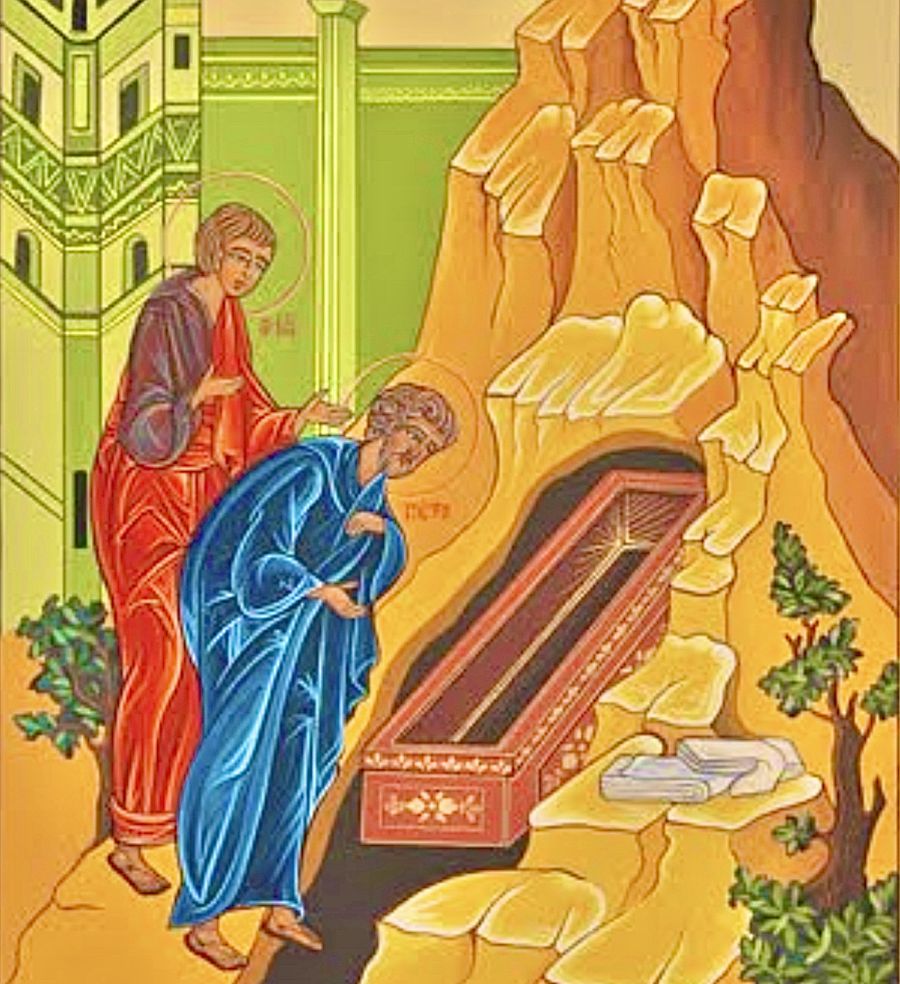
In the context of Christmas, to remember St John the Apostle is to put contemplation of the Mystery first. He who, like a sack of myrrh on his breast, reclined his head on that of Christ and, because of the Love that animated him, arrived first at the tomb of his Friend.

«But the other disciple ran faster than Peter and reached the tomb first» (Jn 20:4).


Francis is the one who, out of the Love that inflamed him, was the first to run to the Crib; he was the first to see the signs and welcome them into his heart.

Without giving way to aleatory contemplation, the Poor Man of Assisi first, in Greccio, wanted to tangibly see the hardships, the hardships, the penury of the Lord from the very beginning of his human parable descending from Heaven.

The mysticism that informed him was the fruit of intimate union with Jesus, with the Child of Bethlehem.

The Sources remind us:

"Having by intimate prayer and frequent contemplation attained an extraordinary familiarity with God, he longed to know what of him and in him could be most pleasing to the eternal King" (FF 479).

Says Celano, his well-known biographer:

"He was not so much a praying man as he himself was transformed into living prayer" (FF 682).

Already... the same prayer, transferred into the spirit that had animated the living, palpitating representation of Greccio.


The Beauty that traverses the events narrated by the Sources gives us evidence of this:

"Above all solemnities, he celebrated the Christmas of the Child Jesus with ineffable solicitude and called the day on which God, made a little infant, had sucked at a human breast a feast of feasts [...].

This Name was as sweet to him as a honeycomb of honey in his mouth.

One day the friars were discussing together whether the obligation not to eat meat remained, since Christmas that year fell on a Friday.

Francis replied to Brother Morico:

"You sin, brother, in calling Friday the day on which the Child was born for us.

I want that on a day like this even the walls eat meat, and if this is not possible, at least be smeared with it'" (FF 787).

"He wanted the poor and beggars to be fed on this day by the rich, and oxen and donkeys to receive a larger ration of food and hay than usual.

"If I can speak to the emperor," he said, "I will beg him to issue a general edict, so that all those who are able, should scatter wheat and grain in the streets, so that on a day of such solemnity the birds and especially the larks may have plenty" (FF 788).

Love made Francis capable of going beyond the usual, and able to translate the novelty that crossed the boundaries of the already known.

Because Love arrives first, is in a hurry, brings with it sister solicitude and gives birth to the Unheard of.


«Now the two ran together, and the other disciple ran ahead sooner than Peter and came first to the tomb, and bending down he saw the linen cloths folded apart; yet he did not go in» (Jn 20:4-5)


Octave of Christmas, St. John ap. ev.  (Jn 20:2-8)

43 Last modified on Friday, 19 December 2025 04:28
Teresa Girolami

Teresa Girolami è laureata in Materie letterarie e Teologia. Ha pubblicato vari testi, fra cui: "Pellegrinaggio del cuore" (Ed. Piemme); "I Fiammiferi di Maria - La Madre di Dio in prosa e poesia"; "Tenerezza Scalza - Natura di donna"; co-autrice di "Dialogo e Solstizio".

Email This email address is being protected from spambots. You need JavaScript enabled to view it.
John is the origin of our loftiest spirituality. Like him, ‘the silent ones' experience that mysterious exchange of hearts, pray for John's presence, and their hearts are set on fire (Athinagoras)
Giovanni è all'origine della nostra più alta spiritualità. Come lui, i ‘silenziosi’ conoscono quel misterioso scambio dei cuori, invocano la presenza di Giovanni e il loro cuore si infiamma (Atenagora)
Stephen's story tells us many things: for example, that charitable social commitment must never be separated from the courageous proclamation of the faith. He was one of the seven made responsible above all for charity. But it was impossible to separate charity and faith. Thus, with charity, he proclaimed the crucified Christ, to the point of accepting even martyrdom. This is the first lesson we can learn from the figure of St Stephen: charity and the proclamation of faith always go hand in hand (Pope Benedict)
La storia di Stefano dice a noi molte cose. Per esempio, ci insegna che non bisogna mai disgiungere l'impegno sociale della carità dall'annuncio coraggioso della fede. Era uno dei sette incaricato soprattutto della carità. Ma non era possibile disgiungere carità e annuncio. Così, con la carità, annuncia Cristo crocifisso, fino al punto di accettare anche il martirio. Questa è la prima lezione che possiamo imparare dalla figura di santo Stefano: carità e annuncio vanno sempre insieme (Papa Benedetto)
“They found”: this word indicates the Search. This is the truth about man. It cannot be falsified. It cannot even be destroyed. It must be left to man because it defines him (John Paul II)
“Trovarono”: questa parola indica la Ricerca. Questa è la verità sull’uomo. Non la si può falsificare. Non la si può nemmeno distruggere. La si deve lasciare all’uomo perché essa lo definisce (Giovanni Paolo II)
Thousands of Christians throughout the world begin the day by singing: “Blessed be the Lord” and end it by proclaiming “the greatness of the Lord, for he has looked with favour on his lowly servant” (Pope Francis)
Migliaia di cristiani in tutto il mondo cominciano la giornata cantando: “Benedetto il Signore” e la concludono “proclamando la sua grandezza perché ha guardato con bontà l’umiltà della sua serva” (Papa Francesco)
The new Creation announced in the suburbs invests the ancient territory, which still hesitates. We too, accepting different horizons than expected, allow the divine soul of the history of salvation to visit us
La nuova Creazione annunciata in periferia investe il territorio antico, che ancora tergiversa. Anche noi, accettando orizzonti differenti dal previsto, consentiamo all’anima divina della storia della salvezza di farci visita
Luke the Evangelist of the Poor celebrates the reversals of the situation: pharisee and tax collector, prodigal son and firstborn, samaritan and priest-levite, Lazarus and rich man, first and last place, Beatitudes and “woe to you”... so in the anthem of the Magnificat
Luca evangelista dei poveri celebra i ribaltamenti di situazione: fariseo e pubblicano, figlio prodigo e primogenito, samaritano e sacerdote-levita, Lazzaro e ricco epulone, primo e ultimo posto, Beatitudini e “guai”... così nell’inno del Magnificat
In these words we find the core of biblical truth about St. Joseph; they refer to that moment in his life to which the Fathers of the Church make special reference (Redemtoris Custos n.2)
In queste parole è racchiuso il nucleo centrale della verità biblica su san Giuseppe, il momento della sua esistenza a cui in particolare si riferiscono i padri della Chiesa (Redemtoris Custos n.2)

Due Fuochi due Vie - Vol. 1 Due Fuochi due Vie - Vol. 2 Due Fuochi due Vie - Vol. 3 Due Fuochi due Vie - Vol. 4 Due Fuochi due Vie - Vol. 5 Dialogo e Solstizio I fiammiferi di Maria

duevie.art

don Giuseppe Nespeca

Tel. 333-1329741


Disclaimer

Questo blog non rappresenta una testata giornalistica in quanto viene aggiornato senza alcuna periodicità. Non può pertanto considerarsi un prodotto editoriale ai sensi della legge N°62 del 07/03/2001.
Le immagini sono tratte da internet, ma se il loro uso violasse diritti d'autore, lo si comunichi all'autore del blog che provvederà alla loro pronta rimozione.
L'autore dichiara di non essere responsabile dei commenti lasciati nei post. Eventuali commenti dei lettori, lesivi dell'immagine o dell'onorabilità di persone terze, il cui contenuto fosse ritenuto non idoneo alla pubblicazione verranno insindacabilmente rimossi.






