Oct 18, 2026 Written by 

Elements of humanity

39. To suffer with the other and for others; to suffer for the sake of truth and justice; to suffer out of love and in order to become a person who truly loves—these are fundamental elements of humanity, and to abandon them would destroy man himself. Yet once again the question arises: are we capable of this? Is the other important enough to warrant my becoming, on his account, a person who suffers? Does truth matter to me enough to make suffering worthwhile? Is the promise of love so great that it justifies the gift of myself? In the history of humanity, it was the Christian faith that had the particular merit of bringing forth within man a new and deeper capacity for these kinds of suffering that are decisive for his humanity. The Christian faith has shown us that truth, justice and love are not simply ideals, but enormously weighty realities. It has shown us that God —Truth and Love in person—desired to suffer for us and with us. Bernard of Clairvaux coined the marvellous expression: Impassibilis est Deus, sed non incompassibilis[29]—God cannot suffer, but he can suffer with. Man is worth so much to God that he himself became man in order to suffer with man in an utterly real way—in flesh and blood—as is revealed to us in the account of Jesus's Passion. Hence in all human suffering we are joined by one who experiences and carries that suffering with us; hence con-solatio is present in all suffering, the consolation of God's compassionate love—and so the star of hope rises. Certainly, in our many different sufferings and trials we always need the lesser and greater hopes too—a kind visit, the healing of internal and external wounds, a favourable resolution of a crisis, and so on. In our lesser trials these kinds of hope may even be sufficient. But in truly great trials, where I must make a definitive decision to place the truth before my own welfare, career and possessions, I need the certitude of that true, great hope of which we have spoken here. For this too we need witnesses—martyrs—who have given themselves totally, so as to show us the way—day after day. We need them if we are to prefer goodness to comfort, even in the little choices we face each day—knowing that this is how we live life to the full. Let us say it once again: the capacity to suffer for the sake of the truth is the measure of humanity. Yet this capacity to suffer depends on the type and extent of the hope that we bear within us and build upon. The saints were able to make the great journey of human existence in the way that Christ had done before them, because they were brimming with great hope. 

40. I would like to add here another brief comment with some relevance for everyday living. There used to be a form of devotion—perhaps less practised today but quite widespread not long ago—that included the idea of “offering up” the minor daily hardships that continually strike at us like irritating “jabs”, thereby giving them a meaning. Of course, there were some exaggerations and perhaps unhealthy applications of this devotion, but we need to ask ourselves whether there may not after all have been something essential and helpful contained within it. What does it mean to offer something up? Those who did so were convinced that they could insert these little annoyances into Christ's great “com-passion” so that they somehow became part of the treasury of compassion so greatly needed by the human race. In this way, even the small inconveniences of daily life could acquire meaning and contribute to the economy of good and of human love. Maybe we should consider whether it might be judicious to revive this practice ourselves.

[Pope Benedict, Spe Salvi]

127 Last modified on Sunday, 18 October 2026 03:02
don Giuseppe Nespeca

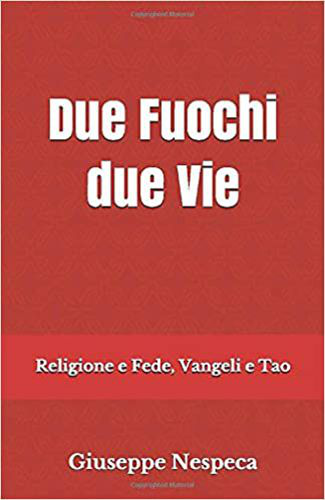
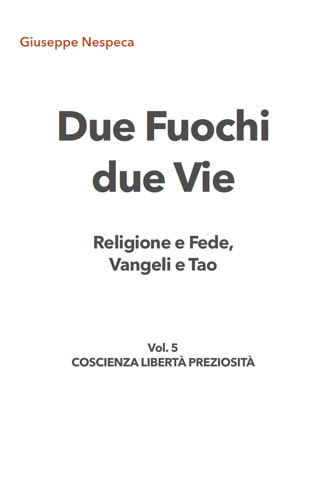
Giuseppe Nespeca è architetto e sacerdote. Cultore della Sacra scrittura è autore della raccolta "Due Fuochi due Vie - Religione e Fede, Vangeli e Tao"; coautore del libro "Dialogo e Solstizio".

Email This email address is being protected from spambots. You need JavaScript enabled to view it.
Deus dilexit mundum! God observes the depths of the human heart, which, even under the surface of sin and disorder, still possesses a wonderful richness of love; Jesus with his gaze draws it out, makes it overflow from the oppressed soul. To Jesus, therefore, nothing escapes of what is in men, of their total reality, in which good and evil are (Pope Paul VI)
Deus dilexit mundum! Iddio osserva le profondità del cuore umano, che, anche sotto la superficie del peccato e del disordine, possiede ancora una ricchezza meravigliosa di amore; Gesù col suo sguardo la trae fuori, la fa straripare dall’anima oppressa. A Gesù, dunque, nulla sfugge di quanto è negli uomini, della loro totale realtà, in cui sono il bene e il male (Papa Paolo VI)
The "talent" was an ancient Roman coin, of great value, and precisely because of this parable's popularity it became synonymous with personal gifts, which everyone is called to develop. In fact […] (Pope Benedict)
Il "talento" era un’antica moneta romana, di grande valore, e proprio a causa della popolarità di questa parabola è diventata sinonimo di dote personale, che ciascuno è chiamato a far fruttificare. In realtà […] (Papa Benedetto)
O Lord, let my faith be full, without reservations, and let penetrate into my thought, in my way of judging divine things and human things (Pope Paul VI)
O Signore, fa’ che la mia fede sia piena, senza riserve, e che essa penetri nel mio pensiero, nel mio modo di giudicare le cose divine e le cose umane (Papa Paolo VI)
The Judgment surprises and makes friends with the journey of each one who notices
Il Giudizio sorprende e fa amicizia con il viaggio di ciascuno che si accorge
This is where the challenge for your life lies! It is here that you can manifest your faith, your hope and your love! [John Paul II at the Tala Leprosarium, Manila]
È qui la sfida per la vostra vita! È qui che potete manifestare la vostra fede, la vostra speranza e il vostro amore! [Giovanni Paolo II al Lebbrosario di Tala, Manila]
The more we do for others, the more we understand and can appropriate the words of Christ: “We are useless servants” (Lk 17:10). We recognize that we are not acting on the basis of any superiority or greater personal efficiency, but because the Lord has graciously enabled us to do so [Pope Benedict, Deus Caritas est n.35]
Quanto più uno s'adopera per gli altri, tanto più capirà e farà sua la parola di Cristo: « Siamo servi inutili » (Lc 17, 10). Egli riconosce infatti di agire non in base ad una superiorità o maggior efficienza personale, ma perché il Signore gliene fa dono [Papa Benedetto, Deus Caritas est n.35]
Each time we celebrate the dedication of a church, an essential truth is recalled: the physical temple made of brick and mortar is a sign of the living Church serving in history (Pope Francis)
Ogni volta che celebriamo la dedicazione di una chiesa, ci viene richiamata una verità essenziale: il tempio materiale fatto di mattoni è segno della Chiesa viva e operante nella storia (Papa Francesco)
It is a happy image with which, however, Jesus teaches a truth that calls us into question […] If we remove God, we remove Christ and the world falls back into emptiness and darkness (Pope Benedict)
E’ un’immagine felice, con cui però Gesù insegna una verità che ci mette in discussione […] Se togliamo Dio, se togliamo Cristo, il mondo ripiomba nel vuoto e nel buio (Papa Benedetto)

Due Fuochi due Vie - Vol. 1 Due Fuochi due Vie - Vol. 2 Due Fuochi due Vie - Vol. 3 Due Fuochi due Vie - Vol. 4 Due Fuochi due Vie - Vol. 5 Dialogo e Solstizio I fiammiferi di Maria

duevie.art

don Giuseppe Nespeca

Tel. 333-1329741


Disclaimer

Questo blog non rappresenta una testata giornalistica in quanto viene aggiornato senza alcuna periodicità. Non può pertanto considerarsi un prodotto editoriale ai sensi della legge N°62 del 07/03/2001.
Le immagini sono tratte da internet, ma se il loro uso violasse diritti d'autore, lo si comunichi all'autore del blog che provvederà alla loro pronta rimozione.
L'autore dichiara di non essere responsabile dei commenti lasciati nei post. Eventuali commenti dei lettori, lesivi dell'immagine o dell'onorabilità di persone terze, il cui contenuto fosse ritenuto non idoneo alla pubblicazione verranno insindacabilmente rimossi.