Nov 8, 2026 Written by 

Movement of the Priesthood of Christ

Our blindness, between religious sense and Faith

(Lk 18:35-43)


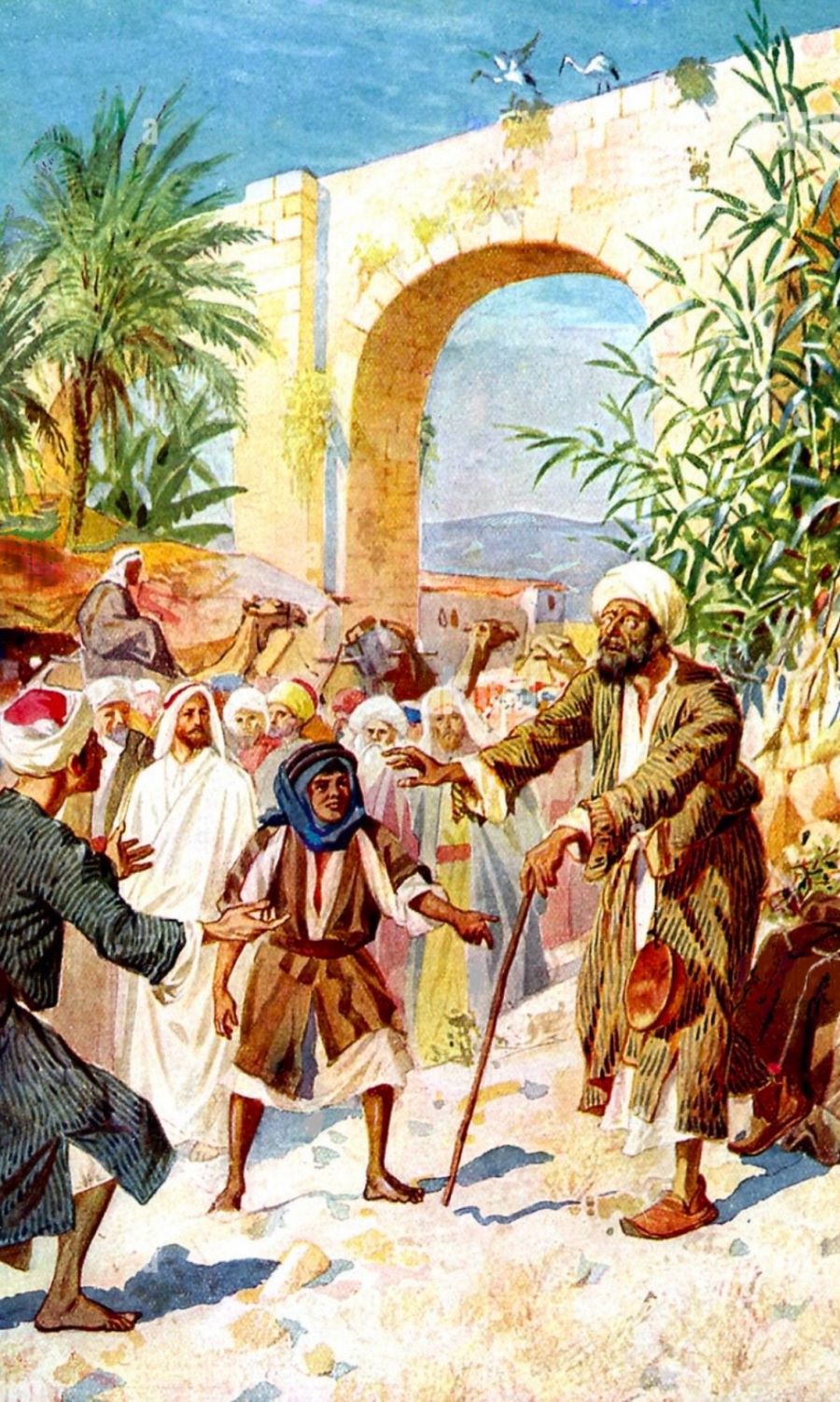
The blind man without a name and crouched at the edges represents us: he is not biologically blind, but one who adjust himself at random.

He cannot «look up» [the key verb to vv.41-43 is «aná-blèpein»] because he does not cultivate ideals; he is satisfied with what gives the contour, which anesthetizes him.

Consequence: the victims of an indolent ideology can confuse the Son of God who donates all of himself and transmits vitality, with the «son of David» (vv.38-39) - who does not convey, but rather takes away life.

The misunderstanding has serious consequences.

Initially every seeker of God risks exchanging the Lord for a phenomenal superman and captain who blesses and favors friends e.g. in their expectations of tranquility, lack of concern and mediocre stasis.

It is a huge defect of sight, because the criteria of wise and solid existence are reversed at all - risking to stick life in a puddle; at most, dragging it to the ground.

If you find yourself at this level of short-sightedness, it is best to «lift up the view» from your navel-gazing, driven by petty concerns for short-term gain.

Who does not "see well" becomes a man of habit, every day is accompanied to the same places by the same people.

He stands still, «sitting» (v.35) at the edge of a road where people proceed and does not limit as much as him to survive resigned, without snaps.

Such clumsy ones [by choice] - everything expect from the recognition of others; they only live of that. And all they do is repeating identical words and gestures.

Their horizon at hand does not allow them to enter the flow of the Way, where people get busy: building, evolving, expressing themselves, providing for less fortunate sisters and brothers.

An existence dragged to the margins of any interest that is not one’s own money pouch.

These persons live on the movement of others; they are full of small benevolences and opinions bartered by those who pass, for listlessness never re-examined and made their own.

The Word of the Nazarene [in the language of the Gospels the epithet "being of Nazareth" meant "revolutionary, hot-headed, subversive"] triggers the listless.

Personal contact with Jesus corrected his gaze, made him recover the ideal optics - transmitting a diametrically opposite model of a successful man.

In short, Jesus corrects the inert myopia of those who are fond of their ‘place’.

Religiosity or personal Faith: it is a decisive choice. To start away (from there), reinvent life, abandon the mantle [cf. Mc 10,50] on which common comments and offerings were collected.

Opening the eyes and «rising them up», as an already divine man would do. Pocketing nothing but pearls of light, instead of alms.

In such wise, the Gospel invites a perspective view, which does not fit.

«Fratelli Tutti» encyclical also proposes visual angles that provoke decision and action: new, invigorating, visionary, daring eyes, filled with 'passage' and Hope.


On muddy roads you can get dirty and you are uncertain, but there we all can proceed in wisdom: on the way that belongs to us; in the movement of the Priesthood of Christ.

With healthy ‘perception’.


[Monday 33rd wk. in O.T.  November 16, 2026]

88 Last modified on Sunday, 08 November 2026 19:57
don Giuseppe Nespeca

Giuseppe Nespeca è architetto e sacerdote. Cultore della Sacra scrittura è autore della raccolta "Due Fuochi due Vie - Religione e Fede, Vangeli e Tao"; coautore del libro "Dialogo e Solstizio".

Deus dilexit mundum! God observes the depths of the human heart, which, even under the surface of sin and disorder, still possesses a wonderful richness of love; Jesus with his gaze draws it out, makes it overflow from the oppressed soul. To Jesus, therefore, nothing escapes of what is in men, of their total reality, in which good and evil are (Pope Paul VI)
Deus dilexit mundum! Iddio osserva le profondità del cuore umano, che, anche sotto la superficie del peccato e del disordine, possiede ancora una ricchezza meravigliosa di amore; Gesù col suo sguardo la trae fuori, la fa straripare dall’anima oppressa. A Gesù, dunque, nulla sfugge di quanto è negli uomini, della loro totale realtà, in cui sono il bene e il male (Papa Paolo VI)
The "talent" was an ancient Roman coin, of great value, and precisely because of this parable's popularity it became synonymous with personal gifts, which everyone is called to develop. In fact […] (Pope Benedict)
Il "talento" era un’antica moneta romana, di grande valore, e proprio a causa della popolarità di questa parabola è diventata sinonimo di dote personale, che ciascuno è chiamato a far fruttificare. In realtà […] (Papa Benedetto)
O Lord, let my faith be full, without reservations, and let penetrate into my thought, in my way of judging divine things and human things (Pope Paul VI)
O Signore, fa’ che la mia fede sia piena, senza riserve, e che essa penetri nel mio pensiero, nel mio modo di giudicare le cose divine e le cose umane (Papa Paolo VI)
The Judgment surprises and makes friends with the journey of each one who notices
Il Giudizio sorprende e fa amicizia con il viaggio di ciascuno che si accorge
This is where the challenge for your life lies! It is here that you can manifest your faith, your hope and your love! [John Paul II at the Tala Leprosarium, Manila]
È qui la sfida per la vostra vita! È qui che potete manifestare la vostra fede, la vostra speranza e il vostro amore! [Giovanni Paolo II al Lebbrosario di Tala, Manila]
The more we do for others, the more we understand and can appropriate the words of Christ: “We are useless servants” (Lk 17:10). We recognize that we are not acting on the basis of any superiority or greater personal efficiency, but because the Lord has graciously enabled us to do so [Pope Benedict, Deus Caritas est n.35]
Quanto più uno s'adopera per gli altri, tanto più capirà e farà sua la parola di Cristo: « Siamo servi inutili » (Lc 17, 10). Egli riconosce infatti di agire non in base ad una superiorità o maggior efficienza personale, ma perché il Signore gliene fa dono [Papa Benedetto, Deus Caritas est n.35]
Each time we celebrate the dedication of a church, an essential truth is recalled: the physical temple made of brick and mortar is a sign of the living Church serving in history (Pope Francis)
Ogni volta che celebriamo la dedicazione di una chiesa, ci viene richiamata una verità essenziale: il tempio materiale fatto di mattoni è segno della Chiesa viva e operante nella storia (Papa Francesco)
It is a happy image with which, however, Jesus teaches a truth that calls us into question […] If we remove God, we remove Christ and the world falls back into emptiness and darkness (Pope Benedict)
E’ un’immagine felice, con cui però Gesù insegna una verità che ci mette in discussione […] Se togliamo Dio, se togliamo Cristo, il mondo ripiomba nel vuoto e nel buio (Papa Benedetto)

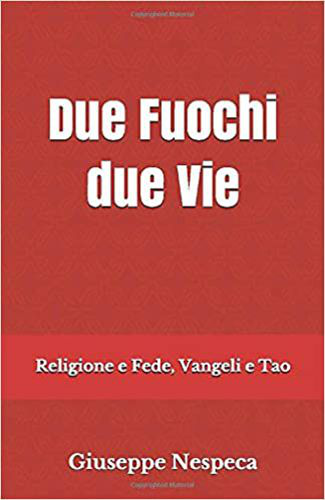
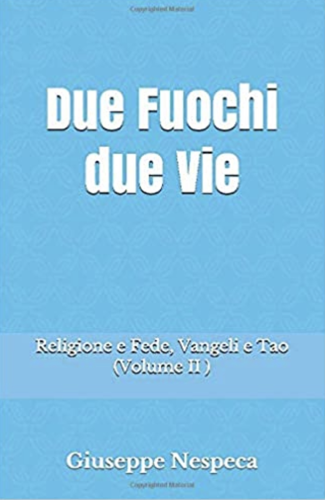
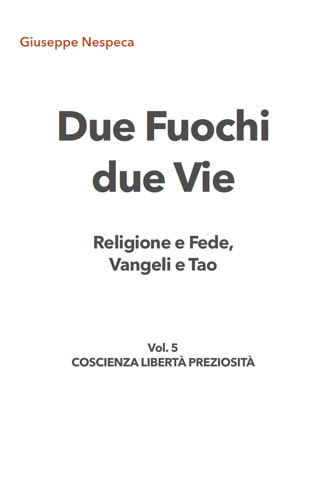
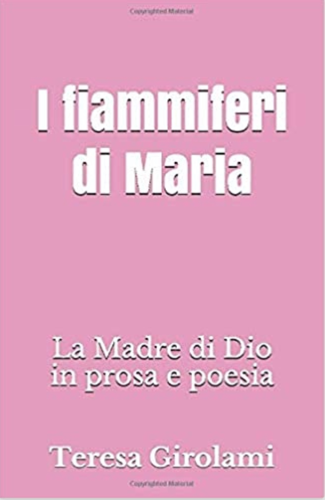
Due Fuochi due Vie - Vol. 1 Due Fuochi due Vie - Vol. 2 Due Fuochi due Vie - Vol. 3 Due Fuochi due Vie - Vol. 4 Due Fuochi due Vie - Vol. 5 Dialogo e Solstizio I fiammiferi di Maria

duevie.art

don Giuseppe Nespeca

Tel. 333-1329741


Disclaimer

Questo blog non rappresenta una testata giornalistica in quanto viene aggiornato senza alcuna periodicità. Non può pertanto considerarsi un prodotto editoriale ai sensi della legge N°62 del 07/03/2001.
Le immagini sono tratte da internet, ma se il loro uso violasse diritti d'autore, lo si comunichi all'autore del blog che provvederà alla loro pronta rimozione.
L'autore dichiara di non essere responsabile dei commenti lasciati nei post. Eventuali commenti dei lettori, lesivi dell'immagine o dell'onorabilità di persone terze, il cui contenuto fosse ritenuto non idoneo alla pubblicazione verranno insindacabilmente rimossi.