Oct 13, 2026 Written by 

Let us enter into the truth and the freedom that comes from the truth

The first characteristic which the Lord requires of his servant is fidelity. He has been entrusted with a great good that does not belong to him. The Church is not our Church but his Church, the Church of God. The servant must account for how he has managed the good that has been entrusted to him. We do not bind people to us; we do not seek power, prestige or esteem for ourselves. We lead men and women toward Jesus Christ, hence toward the living God. In so doing, we introduce them into truth and into freedom, which derives from truth. Fidelity is altruism and, in this very way, liberating for the minister himself and for all who are entrusted to him. We know how in civil society and often also in the Church things suffer because many people on whom responsibility has been conferred work for themselves rather than for the community, for the common good. With a few strokes the Lord sketches an image of the wicked servant, who begins by grovelling and beating the workers, thereby betraying the essence of his responsibility. In Greek, the word for "fidelity" coincides with the word for "faith". The fidelity of the servant of Jesus Christ also consists precisely in the fact that he does not attempt to adapt faith to the fashions of the times. Christ alone has the words of eternal life and we must bring these words to the people. They are the most precious good that has been entrusted to us. There is nothing sterile or static about such fidelity; it is creative. The master rebuked the servant who, attempting to avoid all risk, had buried the money given to him in the ground. With this apparent fidelity, the servant had in reality set aside the good of his master to dedicate himself exclusively to his own affairs. Fidelity is not fear but rather is inspired by love and by its dynamism. The master praises the servant who has invested his goods profitably. Faith demands to be passed on: it was not given to us merely for ourselves, for the personal salvation of our own souls, but for others, for this world and for our time. We must bring faith into this world so that it may become in it a living force; in order to increase God's presence in the world.

[Pope Benedict, homily for episcopal ordination 12 September 2009]

7 Last modified on Tuesday, 13 October 2026 05:24
don Giuseppe Nespeca

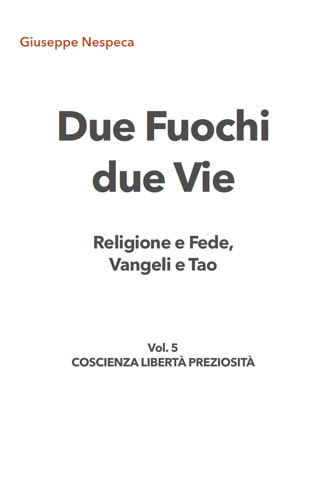
Giuseppe Nespeca è architetto e sacerdote. Cultore della Sacra scrittura è autore della raccolta "Due Fuochi due Vie - Religione e Fede, Vangeli e Tao"; coautore del libro "Dialogo e Solstizio".

Email This email address is being protected from spambots. You need JavaScript enabled to view it.
Jesus reminds us today that the expectation of the eternal beatitude does not relieve us of the duty to render the world more just and more liveable (Pope Francis)
Gesù oggi ci ricorda che l’attesa della beatitudine eterna non ci dispensa dall’impegno di rendere più giusto e più abitabile il mondo (Papa Francesco)
Those who open to Him will be blessed, because they will have a great reward: indeed, the Lord will make himself a servant to his servants — it is a beautiful reward — in the great banquet of his Kingdom He himself will serve them [Pope Francis]
E sarà beato chi gli aprirà, perché avrà una grande ricompensa: infatti il Signore stesso si farà servo dei suoi servi - è una bella ricompensa - nel grande banchetto del suo Regno passerà Lui stesso a servirli [Papa Francesco]
The fool in the Bible, the one who does not want to learn from the experience of visible things, that nothing lasts for ever but that all things pass away, youth and physical strength, amenities and important roles. Making one's life depend on such an ephemeral reality is therefore foolishness (Pope Benedict)
L’uomo stolto nella Bibbia è colui che non vuole rendersi conto, dall’esperienza delle cose visibili, che nulla dura per sempre, ma tutto passa: la giovinezza come la forza fisica, le comodità come i ruoli di potere. Far dipendere la propria vita da realtà così passeggere è, dunque, stoltezza (Papa Benedetto)
As sometimes happens in the Gospel, faced with the trap set by his enemies, Jesus, with his response, rises above the contingent controversy and goes far beyond the particular and mutually divergent positions (Pope John Paul II)
Come talora accade nel Vangelo, di fronte al tranello mossogli dai suoi nemici, Gesù, con la sua risposta, s’innalza al di sopra della polemica contingente e va ben oltre le posizioni particolari e tra loro divergenti (Papa Giovanni Paolo II)
And blasphemy, the sin against the Holy Spirit, is the one unforgivable sin — as Jesus said — because it comes from closing the heart to God’s mercy which acts in Jesus (Pope Francis)
E la bestemmia, il peccato contro lo Spirito Santo, è l’unico peccato imperdonabile – così dice Gesù –, perché parte da una chiusura del cuore alla misericordia di Dio che agisce in Gesù (Papa Francesco)
The great thinker Romano Guardini wrote that the Lord “is always close, being at the root of our being. Yet we must experience our relationship with God between the poles of distance and closeness. By closeness we are strengthened, by distance we are put to the test” (Pope Benedict)
Il grande pensatore Romano Guardini scrive che il Signore “è sempre vicino, essendo alla radice del nostro essere. Tuttavia, dobbiamo sperimentare il nostro rapporto con Dio tra i poli della lontananza e della vicinanza. Dalla vicinanza siamo fortificati, dalla lontananza messi alla prova” (Papa Benedetto)
The present-day mentality, more perhaps than that of people in the past, seems opposed to a God of mercy, and in fact tends to exclude from life and to remove from the human heart the very idea of mercy (Pope John Paul II)
La mentalità contemporanea, forse più di quella dell'uomo del passato, sembra opporsi al Dio di misericordia e tende altresì ad emarginare dalla vita e a distogliere dal cuore umano l'idea stessa della misericordia (Papa Giovanni Paolo II)
«Religion of appearance» or «road of humility»? (Pope Francis)
«Religione dell’apparire» o «strada dell’umiltà»? (Papa Francesco)

Due Fuochi due Vie - Vol. 1 Due Fuochi due Vie - Vol. 2 Due Fuochi due Vie - Vol. 3 Due Fuochi due Vie - Vol. 4 Due Fuochi due Vie - Vol. 5 Dialogo e Solstizio I fiammiferi di Maria

duevie.art

don Giuseppe Nespeca

Tel. 333-1329741


Disclaimer

Questo blog non rappresenta una testata giornalistica in quanto viene aggiornato senza alcuna periodicità. Non può pertanto considerarsi un prodotto editoriale ai sensi della legge N°62 del 07/03/2001.
Le immagini sono tratte da internet, ma se il loro uso violasse diritti d'autore, lo si comunichi all'autore del blog che provvederà alla loro pronta rimozione.
L'autore dichiara di non essere responsabile dei commenti lasciati nei post. Eventuali commenti dei lettori, lesivi dell'immagine o dell'onorabilità di persone terze, il cui contenuto fosse ritenuto non idoneo alla pubblicazione verranno insindacabilmente rimossi.