Apr 23, 2026 Written by 

Evangelical Boldness

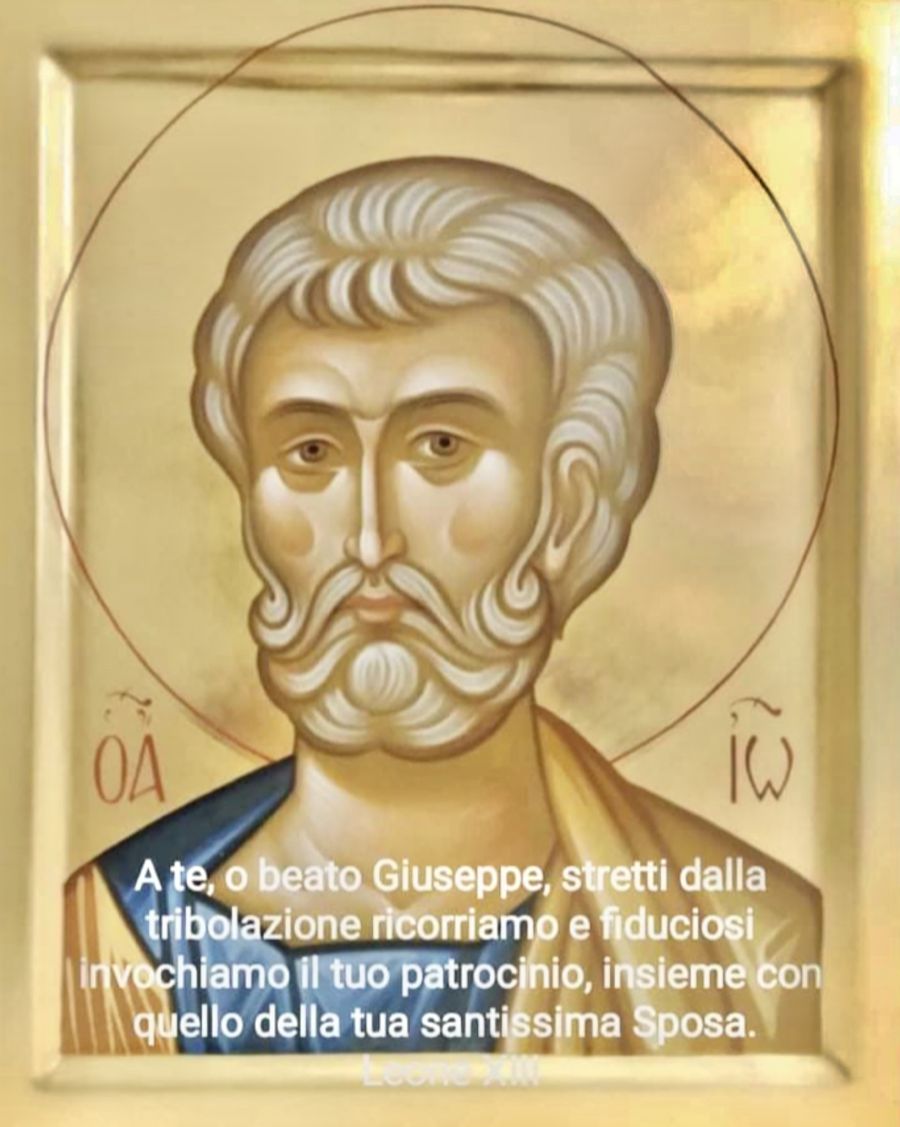
In the memory of St Joseph the Worker, the liturgy uses a passage from the Gospel of Matthew.

In it, the rejection of Jesus by the inhabitants of Nazareth is highlighted, so much so that the Lord cannot work any wonders there because of their surprising incredulity.


Francis faced adversity with courage, knowing that it is inevitable for those who love the Kingdom.

The Poor Man met them everywhere, but he related to the trials by singing, because Jesus had triumphed over them.

The Sources tell of an episode that occurred near Caprignone:

"Dressed in rags, he who once adorned himself with purple garments, went out into a thicket, singing the praises of God in French.

Suddenly, some ruffians rush in on him, brutally asking him who he is.

The man of God responded fearlessly and confidently:

«I am the herald of the great King; does this interest you?».

They beat him and threw him into a pit full of snow, saying:

«Stand there, ye herald of God!»

But he, turning this way and that, shaking off the snow, as soon as the robbers are gone, leaps out of the ditch and, all joyful, resumes singing loudly, filling the forest with praises to the Creator of all things" (FF 346).

Example of courage and trust in the Lord!

Francis, whose name comes from the ancient German and means 'free', just freely continued on his way through the storms of the world.

The courage to which Jesus called, he asked for in prayer.

In the Major Legend it is narrated:

(FF 346) "The fellow citizens, seeing him bleak in the face and changed in mind, believing him to be out of his mind, threw mud and stones from the streets at him, and, shouting and clamouring, insulted him as a madman, a demented person.

But the servant of God, without becoming discouraged or upset by the insults, passed through the midst of them, as if he were deaf" (FF 1041).


«A prophet is not despised except in his own country and in his own house» (Mt 13:57)


S. Joseph the Worker  (Mt 13:54-58)

110 Last modified on Thursday, 23 April 2026 13:48
Teresa Girolami

Teresa Girolami è laureata in Materie letterarie e Teologia. Ha pubblicato vari testi, fra cui: "Pellegrinaggio del cuore" (Ed. Piemme); "I Fiammiferi di Maria - La Madre di Dio in prosa e poesia"; "Tenerezza Scalza - Natura di donna"; co-autrice di "Dialogo e Solstizio".

Email This email address is being protected from spambots. You need JavaScript enabled to view it.
Work is part of God’s loving plan, we are called to cultivate and care for all the goods of creation and in this way share in the work of creation! Work is fundamental to the dignity of a person. Work, to use a metaphor, “anoints” us with dignity, fills us with dignity, makes us similar to God, who has worked and still works, who always acts (cf. Jn 5:17); it gives one the ability to maintain oneself, one’s family, to contribute to the growth of one’s own nation [Pope Francis]
Il lavoro fa parte del piano di amore di Dio; noi siamo chiamati a coltivare e custodire tutti i beni della creazione e in questo modo partecipiamo all’opera della creazione! Il lavoro è un elemento fondamentale per la dignità di una persona. Il lavoro, per usare un’immagine, ci “unge” di dignità, ci riempie di dignità; ci rende simili a Dio, che ha lavorato e lavora, agisce sempre (cfr Gv 5,17); dà la capacità di mantenere se stessi, la propria famiglia, di contribuire alla crescita della propria Nazione [Papa Francesco]
Dear friends, the mission of the Church bears fruit because Christ is truly present among us in a quite special way in the Holy Eucharist. His is a dynamic presence which grasps us in order to make us his, to liken us to him. Christ draws us to himself, he brings us out of ourselves to make us all one with him. In this way he also inserts us into the community of brothers and sisters: communion with the Lord is always also communion with others (Pope Benedict)
Cari amici, la missione della Chiesa porta frutto perché Cristo è realmente presente tra noi, in modo del tutto particolare nella Santa Eucaristia. La sua è una presenza dinamica, che ci afferra per farci suoi, per assimilarci a Sé. Cristo ci attira a Sé, ci fa uscire da noi stessi per fare di noi tutti una cosa sola con Lui. In questo modo Egli ci inserisce anche nella comunità dei fratelli: la comunione con il Signore è sempre anche comunione con gli altri (Papa Benedetto)
«Doctrina eius (scilicet Catharinae) non acquisita fuit; prius magistra visa est quam discipula» [Pope Pius II, Canonization Edict]
«Doctrina eius (scilicet Catharinae) non acquisita fuit; prius magistra visa est quam discipula» [Papa Pio II, Bolla di Canonizzazione]
In this passage, the Lord tells us three things about the true shepherd:  he gives his own life for his sheep; he knows them and they know him; he is at the service of unity [Pope Benedict]
In questo brano il Signore ci dice tre cose sul vero pastore: egli dà la propria vita per le pecore; le conosce ed esse lo conoscono; sta a servizio dell'unità [Papa Benedetto]
Let us permit St Augustine to speak once more: "If only good shepherds be not lacking! Far be it from us that they should be lacking, and far be it from divine mercy not to call them forth and establish them. It is certain that if there are good sheep, there are also good shepherds: in fact it is from good sheep that good shepherds are derived." (Sermones ad populum, Sermo XLIV, XIII, 30) [John Paul II]
Lasciamo ancora una volta parlare Sant’Agostino: “Purché non vengano a mancare buoni pastori! Lungi da noi che manchino, e lungi dalla misericordia divina il non farli sorgere e stabilirli. Certo è che se ci sono buone pecore, ci sono anche buoni pastori: infatti è dalle buone pecore che derivano i buoni pastori” (S. Agostino, Sermones ad populum, I, Sermo XLIV, XIII, 30) [Giovanni Paolo II]
Jesus, Good Shepherd and door of the sheep, is a leader whose authority is expressed in service, a leader who, in order to command, gives his life and does not ask others to sacrifice theirs. One can trust in a leader like this (Pope Francis)

Due Fuochi due Vie - Vol. 1 Due Fuochi due Vie - Vol. 2 Due Fuochi due Vie - Vol. 3 Due Fuochi due Vie - Vol. 4 Due Fuochi due Vie - Vol. 5 Dialogo e Solstizio I fiammiferi di Maria

duevie.art

don Giuseppe Nespeca

Tel. 333-1329741


Disclaimer

Questo blog non rappresenta una testata giornalistica in quanto viene aggiornato senza alcuna periodicità. Non può pertanto considerarsi un prodotto editoriale ai sensi della legge N°62 del 07/03/2001.
Le immagini sono tratte da internet, ma se il loro uso violasse diritti d'autore, lo si comunichi all'autore del blog che provvederà alla loro pronta rimozione.
L'autore dichiara di non essere responsabile dei commenti lasciati nei post. Eventuali commenti dei lettori, lesivi dell'immagine o dell'onorabilità di persone terze, il cui contenuto fosse ritenuto non idoneo alla pubblicazione verranno insindacabilmente rimossi.






