Jan 23, 2026 Written by 

«Who is this Person?»

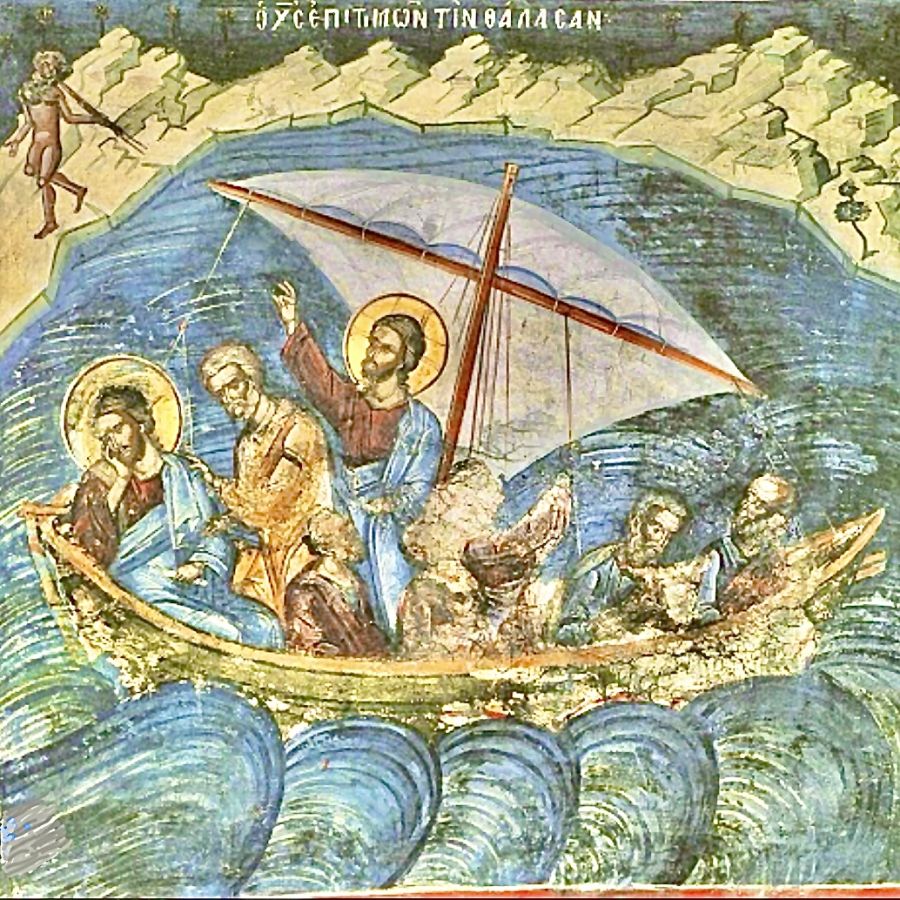
In this passage from the Gospel of Mark, the episode of the storm calmed by the Lord of history and glory is narrated.

Jesus commands the winds and says to the sea: «Shut up, be quiet!» (Mk 4:39) and, faced with the fear of his own, he calls their faith into question.

Francis, the Herald of the Gospel, a few years after his conversion, guided by the Spirit that pushes the sail of human existence, wished to die for Christ in the proclamation of the Word, overseas.

His encounter with Jesus had made him courageous and tenacious, so much so that he urged his own brothers to abandon all fear as they sailed through the storms of the world.

It is interesting to stop and meditate on a passage from the Sources that portrays Francis in the experience of headwinds.

"Six years after his conversion, inflamed by the desire for martyrdom, he decided to cross the sea and go to the parts of Syria to preach the Christian faith and penance to the Saracens and other infidels.

But the ship on which he had embarked, in order to reach that country, was forced by contrary winds to disembark in the parts of Schiavonia.

He remained there for some time; but then, not being able to find a ship to go to the overseas countries, defrauded in his desire, he begged some sailors, bound for Ancona, to take him with them, for the love of God. He was flatly refused, because he did not have the necessary money.

Then the man of God, putting all his trust in the goodness of the Lord, secretly boarded the ship anyway, with his companion.

A fellow came along - certainly sent by God to help his poor fellow - bringing with him the necessary food.

He called one of the sailors, who had the fear of God, and spoke to him as follows: "Keep all this stuff for the poor brothers who are hiding on the ship: you will give it to them when they need it".

Except that, it happened that, because of the violence, the sailors could not disembark for many days and so consumed all the provisions.

All that was left was the food offered in alms, from above, to poor Francis.

It was very scarce, in truth; but the divine power multiplied it in such a way that it was enough to fully satisfy the needs of all, for all those stormy days, until they could reach the port of Ancona.

The sailors, seeing that they had escaped death many times through the merits of the servant of God, gave thanks to Almighty God, who always shows himself admirable and loving in his friends and servants.

With good reason, for they had experienced at first hand the dreadful dangers of the sea and had seen the admirable works of God in the deep waters" (FF 1170).

We read again of the Poverello:

"Having left the sea, he began to wander the earth, sowing there the seed of salvation and reaping an abundant harvest of good fruits" (FF 1171).

"Comforting himself in the Lord, he prayed confidently and repeated singing that word of the prophet: for even if I should walk in the midst of the shadow of death, I will fear no evil, for you are with me" (FF 1172).

His faith in Christ made him overcome all fears, sleeping in the stern of unfortunate situations, knowing in Whom he had placed all hope.


«Why are you fearful? Have you no faith yet?»


Saturday 3rd wk. in O.T.  (Mk 4:35-41)

171 Last modified on Friday, 23 January 2026 05:03
Teresa Girolami

Teresa Girolami è laureata in Materie letterarie e Teologia. Ha pubblicato vari testi, fra cui: "Pellegrinaggio del cuore" (Ed. Piemme); "I Fiammiferi di Maria - La Madre di Dio in prosa e poesia"; "Tenerezza Scalza - Natura di donna"; co-autrice di "Dialogo e Solstizio".

Email This email address is being protected from spambots. You need JavaScript enabled to view it.
Doing a good deed almost instinctively gives rise to the desire to be esteemed and admired for the good action, in other words to gain a reward. And on the one hand this closes us in on ourselves and on the other, it brings us out of ourselves because we live oriented to what others think of us or admire in us (Pope Benedict)
Quando si compie qualcosa di buono, quasi istintivamente nasce il desiderio di essere stimati e ammirati per la buona azione, di avere cioè una soddisfazione. E questo, da una parte rinchiude in se stessi, dall’altra porta fuori da se stessi, perché si vive proiettati verso quello che gli altri pensano di noi e ammirano in noi (Papa Benedetto)
Since God has first loved us (cf. 1 Jn 4:10), love is now no longer a mere “command”; it is the response to the gift of love with which God draws near to us [Pope Benedict]
Siccome Dio ci ha amati per primo (cfr 1 Gv 4, 10), l'amore adesso non è più solo un « comandamento », ma è la risposta al dono dell'amore, col quale Dio ci viene incontro [Papa Benedetto]
Another aspect of Lenten spirituality is what we could describe as "combative" […] where the "weapons" of penance and the "battle" against evil are mentioned. Every day, but particularly in Lent, Christians must face a struggle […] (Pope Benedict)
Un altro aspetto della spiritualità quaresimale è quello che potremmo definire "agonistico" […] là dove si parla di "armi" della penitenza e di "combattimento" contro lo spirito del male. Ogni giorno, ma particolarmente in Quaresima, il cristiano deve affrontare una lotta […] (Papa Benedetto)
Jesus wants to help his listeners take the right approach to the prescriptions of the Commandments given to Moses, urging them to be open to God who teaches  us true freedom and responsibility through the Law. It is a matter of living it as an instrument of freedom (Pope Francis)
Gesù vuole aiutare i suoi ascoltatori ad avere un approccio giusto alle prescrizioni dei Comandamenti dati a Mosè, esortando ad essere disponibili a Dio che ci educa alla vera libertà e responsabilità mediante la Legge. Si tratta di viverla come uno strumento di libertà (Papa Francesco)
In the divine attitude justice is pervaded with mercy, whereas the human attitude is limited to justice. Jesus exhorts us to open ourselves with courage to the strength of forgiveness, because in life not everything can be resolved with justice. We know this (Pope Francis)
Nell’atteggiamento divino la giustizia è pervasa dalla misericordia, mentre l’atteggiamento umano si limita alla giustizia. Gesù ci esorta ad aprirci con coraggio alla forza del perdono, perché nella vita non tutto si risolve con la giustizia; lo sappiamo (Papa Francesco)
The true prophet does not obey others as he does God, and puts himself at the service of the truth, ready to pay in person. It is true that Jesus was a prophet of love, but love has a truth of its own. Indeed, love and truth are two names of the same reality, two names of God (Pope Benedict)
Il vero profeta non obbedisce ad altri che a Dio e si mette al servizio della verità, pronto a pagare di persona. E’ vero che Gesù è il profeta dell’amore, ma l’amore ha la sua verità. Anzi, amore e verità sono due nomi della stessa realtà, due nomi di Dio (Papa Benedetto)
“Give me a drink” (v. 7). Breaking every barrier, he begins a dialogue in which he reveals to the woman the mystery of living water, that is, of the Holy Spirit, God’s gift [Pope Francis]

Due Fuochi due Vie - Vol. 1 Due Fuochi due Vie - Vol. 2 Due Fuochi due Vie - Vol. 3 Due Fuochi due Vie - Vol. 4 Due Fuochi due Vie - Vol. 5 Dialogo e Solstizio I fiammiferi di Maria

duevie.art

don Giuseppe Nespeca

Tel. 333-1329741


Disclaimer

Questo blog non rappresenta una testata giornalistica in quanto viene aggiornato senza alcuna periodicità. Non può pertanto considerarsi un prodotto editoriale ai sensi della legge N°62 del 07/03/2001.
Le immagini sono tratte da internet, ma se il loro uso violasse diritti d'autore, lo si comunichi all'autore del blog che provvederà alla loro pronta rimozione.
L'autore dichiara di non essere responsabile dei commenti lasciati nei post. Eventuali commenti dei lettori, lesivi dell'immagine o dell'onorabilità di persone terze, il cui contenuto fosse ritenuto non idoneo alla pubblicazione verranno insindacabilmente rimossi.






