Mar 6, 2026 Written by 

Like the seed in the earth. Mother humility overcomes all contempt

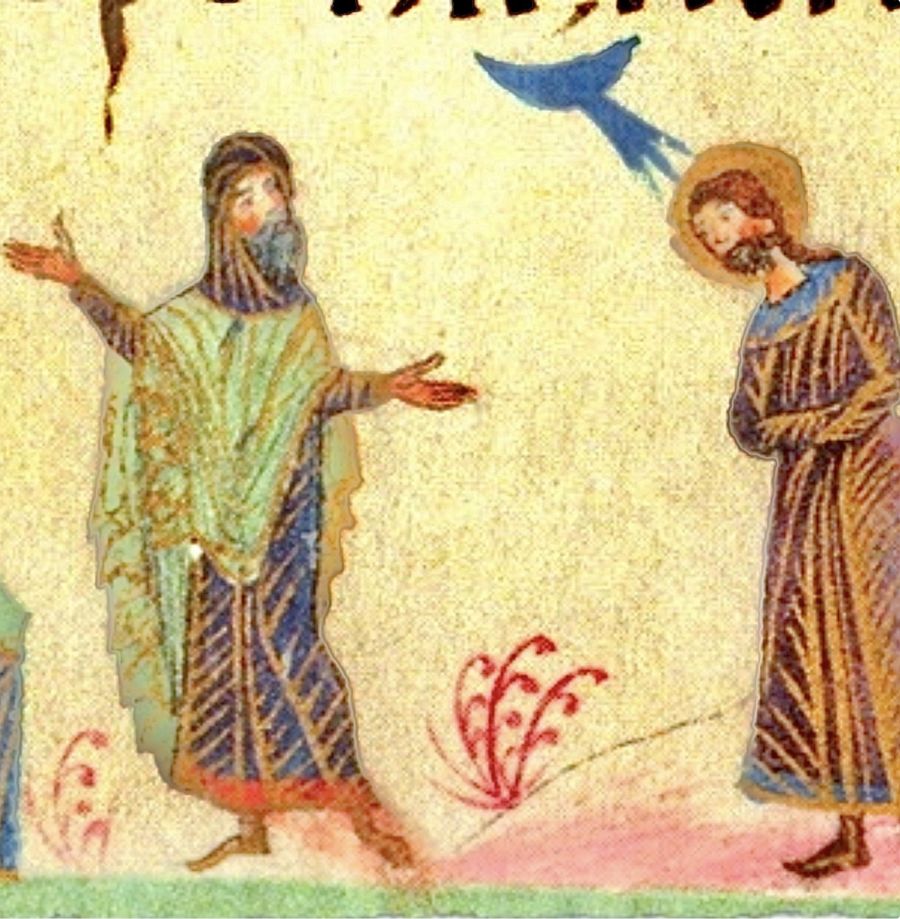
In the parable of the Pharisee and publican, Jesus evangelises those who presumed to be righteous, despising others.

Francis always felt himself to be nothing before God, sinking into his humility like the seed in the earth.

He feared pride like the plague and detested it deeply.

To appear, to show off, to surpass, were verbs with which he never wanted to have any connection: he abhorred them.

We read in Celano's Vita prima:

"One day, full of admiration for the Lord's mercy in all the benefits bestowed on him, he wished to know [...] what would become of his life and that of his brothers.

To this end he withdrew, as he often did, to a suitable place for prayer.

There he remained for a long time, invoking with fear and trembling the Ruler of all the earth, thinking back with bitterness on the years that had passed badly and repeating:

«O God, be merciful to me a sinner!» (FF 363).

He feared all forms of boasting and ostentation of works; he abhorred feeling good and all kinds of pride.

In the Regola bollata (1223) to his brothers he said:

"I admonish, then, and exhort in the Lord Jesus Christ, that the brothers beware of all pride, vainglory, envy, avarice, cares and cares of this world, of detraction and murmuring" (FF 103).

In the Rule of Clare, in paragraph 2809 of the Sources, we find the same statement - as if to highlight the same concern: to keep a distance from all forms of vainglory.

Francis (and Clare too) perceived himself to be a great sinner, like the publican in the Gospel, who dared not even look up to heaven.

His humility and awareness of his own penury led him to assume a very low profile, without glorying in anything, neither before God nor before men.

Indeed, in his Admonitions, we read:

"Blessed is that servant who does not glory in the good that the Lord says and works through him, more in the good that he says and works through another. Blessed is the man who wants to receive from his neighbour more than he wants to give of himself to the Lord God" (FF 166).

And again:

"By this sign one can recognise the servant of God, if he has the Spirit of the Lord: if, when the Lord accomplishes something good through him, his 'flesh' does not take pride in it - since 'flesh' is always contrary to all good - but rather still considers himself vile in his own eyes and esteems himself smaller than all other men" (FF 161).


«O God, be gracious to me a sinner [...] for whoever lifts himself up will be brought low, but whoever lowers himself will be lifted up» (Lk 18:13-14)


Saturday 3rd wk. in Lent  (Lk 18:9-14)

610 Last modified on Friday, 06 March 2026 02:59
Teresa Girolami

Teresa Girolami è laureata in Materie letterarie e Teologia. Ha pubblicato vari testi, fra cui: "Pellegrinaggio del cuore" (Ed. Piemme); "I Fiammiferi di Maria - La Madre di Dio in prosa e poesia"; "Tenerezza Scalza - Natura di donna"; co-autrice di "Dialogo e Solstizio".

Email This email address is being protected from spambots. You need JavaScript enabled to view it.
From ancient times the liturgy of Easter day has begun with the words: Resurrexi et adhuc tecum sum – I arose, and am still with you; you have set your hand upon me. The liturgy sees these as the first words spoken by the Son to the Father after his resurrection, after his return from the night of death into the world of the living. The hand of the Father upheld him even on that night, and thus he could rise again (Pope Benedict)
Dai tempi più antichi la liturgia del giorno di Pasqua comincia con le parole: Resurrexi et adhuc tecum sum – sono risorto e sono sempre con te; tu hai posto su di me la tua mano. La liturgia vi vede la prima parola del Figlio rivolta al Padre dopo la risurrezione, dopo il ritorno dalla notte della morte nel mondo dei viventi. La mano del Padre lo ha sorretto anche in questa notte, e così Egli ha potuto rialzarsi, risorgere (Papa Benedetto)
The Church keeps watch. And the world keeps watch. The hour of Christ's victory over death is the greatest hour in history (John Paul II)
Veglia la Chiesa. E veglia il mondo. L’ora della vittoria di Cristo sulla morte è l’ora più grande della storia (Giovanni Paolo II)
Before the Cross of Jesus, we apprehend in a way that we can almost touch with our hands how much we are eternally loved; before the Cross we feel that we are “children” and not “things” or “objects” [Pope Francis, via Crucis at the Colosseum 2014]
Di fronte alla Croce di Gesù, vediamo quasi fino a toccare con le mani quanto siamo amati eternamente; di fronte alla Croce ci sentiamo “figli” e non “cose” o “oggetti” [Papa Francesco, via Crucis al Colosseo 2014]
The devotional and external purifications purify man ritually but leave him as he is replaced by a new bathing (Pope Benedict)
Al posto delle purificazioni cultuali ed esterne, che purificano l’uomo ritualmente, lasciandolo tuttavia così com’è, subentra il bagno nuovo (Papa Benedetto)
If, on the one hand, the liturgy of these days makes us offer a hymn of thanksgiving to the Lord, conqueror of death, at the same time it asks us to eliminate from our lives all that prevents us from conforming ourselves to him (John Paul II)
La liturgia di questi giorni, se da un lato ci fa elevare al Signore, vincitore della morte, un inno di ringraziamento, ci chiede, al tempo stesso, di eliminare dalla nostra vita tutto ciò che ci impedisce di conformarci a lui (Giovanni Paolo II)
The school of faith is not a triumphal march but a journey marked daily by suffering and love, trials and faithfulness. Peter, who promised absolute fidelity, knew the bitterness and humiliation of denial:  the arrogant man learns the costly lesson of humility (Pope Benedict)
La scuola della fede non è una marcia trionfale, ma un cammino cosparso di sofferenze e di amore, di prove e di fedeltà da rinnovare ogni giorno. Pietro che aveva promesso fedeltà assoluta, conosce l’amarezza e l’umiliazione del rinnegamento: lo spavaldo apprende a sue spese l’umiltà (Papa Benedetto)
If, in his prophecy about the shepherd, Ezekiel was aiming to restore unity among the dispersed tribes of Israel (cf. Ez 34: 22-24), here it is a question not only of the unification of a dispersed Israel but of the unification of all the children of God, of humanity - of the Church of Jews and of pagans [Pope Benedict]
Se Ezechiele nella sua profezia sul pastore aveva di mira il ripristino dell'unità tra le tribù disperse d'Israele (cfr Ez 34, 22-24), si tratta ora non solo più dell'unificazione dell'Israele disperso, ma dell'unificazione di tutti i figli di Dio, dell'umanità - della Chiesa di giudei e di pagani [Papa Benedetto]

Due Fuochi due Vie - Vol. 1 Due Fuochi due Vie - Vol. 2 Due Fuochi due Vie - Vol. 3 Due Fuochi due Vie - Vol. 4 Due Fuochi due Vie - Vol. 5 Dialogo e Solstizio I fiammiferi di Maria

duevie.art

don Giuseppe Nespeca

Tel. 333-1329741


Disclaimer

Questo blog non rappresenta una testata giornalistica in quanto viene aggiornato senza alcuna periodicità. Non può pertanto considerarsi un prodotto editoriale ai sensi della legge N°62 del 07/03/2001.
Le immagini sono tratte da internet, ma se il loro uso violasse diritti d'autore, lo si comunichi all'autore del blog che provvederà alla loro pronta rimozione.
L'autore dichiara di non essere responsabile dei commenti lasciati nei post. Eventuali commenti dei lettori, lesivi dell'immagine o dell'onorabilità di persone terze, il cui contenuto fosse ritenuto non idoneo alla pubblicazione verranno insindacabilmente rimossi.






