Dec 8, 2025 Written by 

«Who are you, Lord, and who am I?»

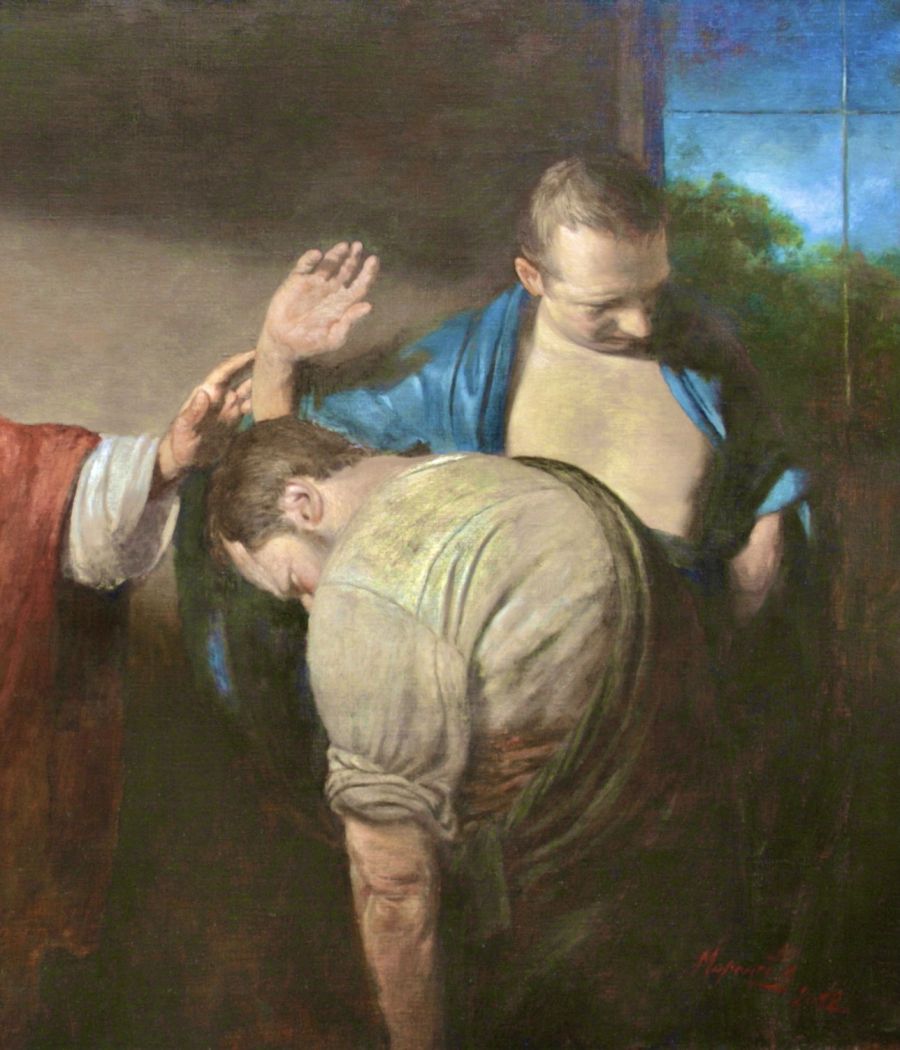
Francis, a man of God deeply rooted in humility and wholly devoted to proclaiming the Good News, asked God every day in prayer, «Who are you, Lord, and who am I?»

Jesus answered him through the healings He performed, even through His servant.

In fact, the Sources inform us:

"A woman from Coccorano, who was unable to use any of her limbs except her tongue, was carried on a mat stretcher to the saint's tomb. After a brief pause, she rose up completely healed.

Another citizen of Gubbio also brought his young son in a basket to the tomb of the Saint. 

He was so deformed that his tibias were completely atrophied and folded over his femurs. 

He was completely healed" (FF 551).

And again: "A certain Albertino of Narni had completely lost his sight and his eyelids drooped down to his cheekbones. As soon as he made a vow to Blessed Francis, he was promptly healed" (FF 553).


Jesus lets the world know that he continues to heal through his faithful servants, because «you will do greater things than these», he reminds us.

To those who ask him if he is the One awaited by the people, he responds with the eloquence of events and, over time, says to anyone who asks questions:

«Go and report [...] the blind regain their sight, the lame walk, lepers are cleansed» (Lk 7:22).

And Francis, who once (before his conversion) believed in words but now that he has encountered the Living One, believes more in deeds and the concreteness of life, continues the work of the Master by announcing:

«Go and tell that...»

The Good News of the Kingdom makes its way, and through the prophets of all times, it never fails to instruct and convince.

The deeds are a «go and tell» so that all may have life and have it in abundance, beginning in Bethlehem.


Wednesday, 3rd wk. in Advent  (Lk 7:19-23)
194 Last modified on Monday, 08 December 2025 05:57
Teresa Girolami

Teresa Girolami è laureata in Materie letterarie e Teologia. Ha pubblicato vari testi, fra cui: "Pellegrinaggio del cuore" (Ed. Piemme); "I Fiammiferi di Maria - La Madre di Dio in prosa e poesia"; "Tenerezza Scalza - Natura di donna"; co-autrice di "Dialogo e Solstizio".

Email This email address is being protected from spambots. You need JavaScript enabled to view it.
Christ compares himself to the sower and explains that the seed is the word (cf. Mk 4: 14); those who hear it, accept it and bear fruit (cf. Mk 4: 20) take part in the Kingdom of God, that is, they live under his lordship. They remain in the world, but are no longer of the world. They bear within them a seed of eternity a principle of transformation [Pope Benedict]
Cristo si paragona al seminatore e spiega che il seme è la Parola (cfr Mc 4,14): coloro che l’ascoltano, l’accolgono e portano frutto (cfr Mc 4,20) fanno parte del Regno di Dio, cioè vivono sotto la sua signoria; rimangono nel mondo, ma non sono più del mondo; portano in sé un germe di eternità, un principio di trasformazione [Papa Benedetto]
In one of his most celebrated sermons, Saint Bernard of Clairvaux “recreates”, as it were, the scene where God and humanity wait for Mary to say “yes”. Turning to her he begs: “[…] Arise, run, open up! Arise with faith, run with your devotion, open up with your consent!” [Pope Benedict]
San Bernardo di Chiaravalle, in uno dei suoi Sermoni più celebri, quasi «rappresenta» l’attesa da parte di Dio e dell’umanità del «sì» di Maria, rivolgendosi a lei con una supplica: «[…] Alzati, corri, apri! Alzati con la fede, affrettati con la tua offerta, apri con la tua adesione!» [Papa Benedetto]
«The "blasphemy" [in question] does not really consist in offending the Holy Spirit with words; it consists, instead, in the refusal to accept the salvation that God offers to man through the Holy Spirit, and which works by virtue of the sacrifice of the cross [It] does not allow man to get out of his self-imprisonment and to open himself to the divine sources of purification» (John Paul II, General Audience July 25, 1990)
«La “bestemmia” [di cui si tratta] non consiste propriamente nell’offendere con le parole lo Spirito Santo; consiste, invece, nel rifiuto di accettare la salvezza che Dio offre all’uomo mediante lo Spirito Santo, e che opera in virtù del sacrificio della croce [Esso] non permette all’uomo di uscire dalla sua autoprigionia e di aprirsi alle fonti divine della purificazione» (Giovanni Paolo II, Udienza Generale 25 luglio 1990)
Seen from the capital Jerusalem, that land is geographically peripheral and religiously impure because it was full of pagans, having mixed with those who did not belong to Israel. Great things were not expected from Galilee for the history of salvation. Instead, right from there — precisely from there — radiated that “light” on which we meditated in recent Sundays: the light of Christ. It radiated right from the periphery (Pope Francis)
Vista dalla capitale Gerusalemme, quella terra è geograficamente periferica e religiosamente impura perché era piena di pagani, per la mescolanza con quanti non appartenevano a Israele. Dalla Galilea non si attendevano certo grandi cose per la storia della salvezza. Invece proprio da lì - proprio da lì - si diffonde quella “luce” sulla quale abbiamo meditato nelle scorse domeniche: la luce di Cristo. Si diffonde proprio dalla periferia (Papa Francesco)
Christ and his intimates tried to strengthen the sense of sharing, returning to the profound spirit of what once the clan, the family, the community were - expressions of God's love that manifests itself...
Cristo e i suoi intimi tentavano di rafforzare il senso di condivisione, tornando allo spirito profondo di ciò che un tempo erano appunto il clan, la famiglia, la comunità - espressioni dell’amore di Dio che si manifesta…
The Church was built on the foundation of the Apostles as a community of faith, hope and charity. Through the Apostles, we come to Jesus himself (Pope Benedict)

Due Fuochi due Vie - Vol. 1 Due Fuochi due Vie - Vol. 2 Due Fuochi due Vie - Vol. 3 Due Fuochi due Vie - Vol. 4 Due Fuochi due Vie - Vol. 5 Dialogo e Solstizio I fiammiferi di Maria

duevie.art

don Giuseppe Nespeca

Tel. 333-1329741


Disclaimer

Questo blog non rappresenta una testata giornalistica in quanto viene aggiornato senza alcuna periodicità. Non può pertanto considerarsi un prodotto editoriale ai sensi della legge N°62 del 07/03/2001.
Le immagini sono tratte da internet, ma se il loro uso violasse diritti d'autore, lo si comunichi all'autore del blog che provvederà alla loro pronta rimozione.
L'autore dichiara di non essere responsabile dei commenti lasciati nei post. Eventuali commenti dei lettori, lesivi dell'immagine o dell'onorabilità di persone terze, il cui contenuto fosse ritenuto non idoneo alla pubblicazione verranno insindacabilmente rimossi.






