


don Giuseppe Nespeca
Giuseppe Nespeca è architetto e sacerdote. Cultore della Sacra scrittura è autore della raccolta "Due Fuochi due Vie - Religione e Fede, Vangeli e Tao"; coautore del libro "Dialogo e Solstizio".
Speak to Him directly, even without the performance of sensational works
Dear Brothers and Sisters,
In the series on the Apostles called by Jesus during his earthly life, today it is the Apostle Bartholomew who attracts our attention. In the ancient lists of the Twelve he always comes before Matthew, whereas the name of the Apostle who precedes him varies; it may be Philip (cf. Mt 10: 3; Mk 3: 18; Lk 6: 14) or Thomas (cf. Acts 1: 13).
His name is clearly a patronymic, since it is formulated with an explicit reference to his father's name. Indeed, it is probably a name with an Aramaic stamp, bar Talmay, which means precisely: "son of Talmay".
We have no special information about Bartholomew; indeed, his name always and only appears in the lists of the Twelve mentioned above and is therefore never central to any narrative.
However, it has traditionally been identified with Nathanael: a name that means "God has given".
This Nathanael came from Cana (cf. Jn 21: 2) and he may therefore have witnessed the great "sign" that Jesus worked in that place (cf. Jn 2: 1-11). It is likely that the identification of the two figures stems from the fact that Nathanael is placed in the scene of his calling, recounted in John's Gospel, next to Philip, in other words, the place that Bartholomew occupies in the lists of the Apostles mentioned in the other Gospels.
Philip told this Nathanael that he had found "him of whom Moses in the law and also the prophets wrote, Jesus of Nazareth, the son of Joseph" (Jn 1: 45). As we know, Nathanael's retort was rather strongly prejudiced: "Can anything good come out of Nazareth?" (Jn 1: 46). In its own way, this form of protestation is important for us. Indeed, it makes us see that according to Judaic expectations the Messiah could not come from such an obscure village as, precisely, Nazareth (see also Jn 7: 42).
But at the same time Nathanael's protest highlights God's freedom, which baffles our expectations by causing him to be found in the very place where we least expect him. Moreover, we actually know that Jesus was not exclusively "from Nazareth" but was born in Bethlehem (cf. Mt 2: 1; Lk 2: 4) and came ultimately from Heaven, from the Father who is in Heaven.
Nathanael's reaction suggests another thought to us: in our relationship with Jesus we must not be satisfied with words alone. In his answer, Philip offers Nathanael a meaningful invitation: "Come and see!" (Jn 1: 46). Our knowledge of Jesus needs above all a first-hand experience: someone else's testimony is of course important, for normally the whole of our Christian life begins with the proclamation handed down to us by one or more witnesses.
However, we ourselves must then be personally involved in a close and deep relationship with Jesus; in a similar way, when the Samaritans had heard the testimony of their fellow citizen whom Jesus had met at Jacob's well, they wanted to talk to him directly, and after this conversation they told the woman: "It is no longer because of your words that we believe, for we have heard for ourselves, and we know that this is indeed the Saviour of the world" (Jn 4: 42).
Returning to the scene of Nathanael's vocation, the Evangelist tells us that when Jesus sees Nathanael approaching, he exclaims: "Behold, an Israelite indeed, in whom there is no guile!" (Jn 1: 47). This is praise reminiscent of the text of a Psalm: "Blessed is the man... in whose spirit there is no deceit" (32[31]: 2), but provokes the curiosity of Nathanael who answers in amazement: "How do you know me?" (Jn 1: 48).
Jesus' reply cannot immediately be understood. He says: "Before Philip called you, when you were under the fig tree, I saw you" (Jn 1: 48). We do not know what had happened under this fig tree. It is obvious that it had to do with a decisive moment in Nathanael's life.
His heart is moved by Jesus' words, he feels understood and he understands: "This man knows everything about me, he knows and is familiar with the road of life; I can truly trust this man". And so he answers with a clear and beautiful confession of faith: "Rabbi, you are the Son of God! You are the King of Israel!" (Jn 1: 49). In this confession is conveyed a first important step in the journey of attachment to Jesus.
Nathanael's words shed light on a twofold, complementary aspect of Jesus' identity: he is recognized both in his special relationship with God the Father, of whom he is the Only-begotten Son, and in his relationship with the People of Israel, of whom he is the declared King, precisely the description of the awaited Messiah. We must never lose sight of either of these two elements because if we only proclaim Jesus' heavenly dimension, we risk making him an ethereal and evanescent being; and if, on the contrary, we recognize only his concrete place in history, we end by neglecting the divine dimension that properly qualifies him.
We have no precise information about Bartholomew-Nathanael's subsequent apostolic activity. According to information handed down by Eusebius, the fourth-century historian, a certain Pantaenus is supposed to have discovered traces of Bartholomew's presence even in India (cf. Hist. eccl. V, 10, 3).
In later tradition, as from the Middle Ages, the account of his death by flaying became very popular. Only think of the famous scene of the Last Judgment in the Sistine Chapel in which Michelangelo painted St Bartholomew, who is holding his own skin in his left hand, on which the artist left his self-portrait.
St Bartholomew's relics are venerated here in Rome in the Church dedicated to him on the Tiber Island, where they are said to have been brought by the German Emperor Otto III in the year 983.
To conclude, we can say that despite the scarcity of information about him, St Bartholomew stands before us to tell us that attachment to Jesus can also be lived and witnessed to without performing sensational deeds. Jesus himself, to whom each one of us is called to dedicate his or her own life and death, is and remains extraordinary.
[Pope Benedict, General Audience 4 October 2006]
The first thing Andrew did after meeting Jesus was to seek out his brother Simon and tell him: "We have found the Messiah!". Later Philip, in the same way, sought out Nathanael and told him: "We have found him of whom Moses in the Law and the Prophets wrote, Jesus, the son of Joseph of Nazareth" (cf. Jn 1:35-51).
After the initial discovery, there follows a dialogue through prayer, a dialogue between Jesus and the one who received the call, a dialogue that goes beyond words and expresses itself in love.
Questions are an important part of such a dialogue. For example, in the Gospel account of the disciples' call, we are told that "when Jesus had turned around and seen them following him, he asked them, "What are you looking for?" They answered him, "Rabbi (which means teacher), where do you live?". 'Come and see,' he answered" (Jn 1:38-39).
What begins as a discovery of Jesus leads to greater understanding and dedication through a devoted process of questioning and discernment. In the course of that process, our reasons are purified. We are confronted with burning questions such as, "What are you looking for?" And we even find ourselves asking the questions of Jesus, as Nathanael did: "How do you know me?" (John 1:48). Only after reflecting sincerely and honestly in the silence of our hearts do we begin to convince ourselves that the Lord is really calling us.
Even then, however, the process of discernment is not finished. Jesus says to us what he also said to Nathanael: "You will see greater things than these!" (John 1:50). Throughout the course of life, after we have made a sacred and unchanging promise and begun to actively serve the Lord, we still need the dialogue of prayer that will constantly deepen our knowledge and love for our Lord Jesus Christ.
[Pope John Paul II, Address to American seminarians 13 September 1987]
Francis recalled the story of Nathanael who "goes to see him whom they tell him is the messiah, a little sceptical. To him Jesus says: "I saw you under the fig tree". Therefore, "always God loves first". This is also recalled in the parable of the prodigal son: "When the son, who had spent all the money of his father's inheritance on a life of vices, returns home, he finds that his father is waiting for him. God always waits for us first. Before us, always. And when the other son doesn't want to come to the party, because he doesn't understand daddy's attitude, daddy goes looking for him. And so God does with us: he loves us first, always'.
Thus, the Pope relaunched, "we can see in the Gospel how God loves: when we have something in our heart and we want to ask the Lord for forgiveness, it is he who is waiting for us to give forgiveness".
This year of mercy, Francis affirmed, "is also a bit of this: that we know that the Lord is waiting for us, each one of us" And he is waiting for us "to embrace us, nothing more, to say: 'Son, daughter, I love you. I let them crucify my Son for you; this is the price of my love; this is the gift of love'".
The Pope suggested always thinking of this truth: 'The Lord is waiting for me, the Lord wants me to open the door of my heart, because he is there waiting for me to enter. Without conditions.
Of course, someone might say: "But, Father, no, I would like to, but I have so many bad things inside!". In this regard, Francis' answer is clear: "It's better! Better! Because he waits for you, as you are, not as they tell you 'you must do'. You must be as you are. He loves you like this, to embrace you, kiss you, forgive you'.
Here, then, is the Pope's concluding exhortation to go without delay to the Lord and say: 'But you know Lord that I love you'. Or, if I really "do not feel like it, to say: 'You know Lord that I would like to love you, but I am such a sinner, such a sinner'". With the certainty that he will do as the father did "with the prodigal son who spent all his money on vices. He will not let you finish your speech, with an embrace he will silence you: the embrace of God's love".
[Pope Francis, St Martha, in L'Osservatore Romano 09/01/2016]
20th Sunday in Ordinary Time (year A) [16 August 2026]
First Reading from the Book of the Prophet Isaiah (56:1, 6–7)
This passage, attributed to the so-called ‘Third Isaiah’, dates from after the return from the Babylonian exile, between the end of the 6th and the beginning of the 5th century BC. Upon their return to Jerusalem, the Jews found the city occupied by foreigners, some of whom had begun to take part in religious life. A conflict arose: some advocated the strict preservation of their own identity, whilst others favoured greater openness. The prophet, speaking in the name of God, declares that the sincerely devout foreigner must not be excluded; those who love the Lord and honour his covenant may enter the community. Foreigners are integrated if they observe the Sabbath, honour the covenant, practise justice and live according to the Torah. This marks a step towards accepting the idea that salvation is not reserved for Israel alone because, says the Lord, ‘my house shall be called a house of prayer for all peoples.’ Amidst the tension between identity and openness (exclusion and inclusion), the ongoing challenge lies in safeguarding the demands of fidelity to the Covenant with God without closing oneself off from others; a delicate balance that concerns all religions. With Isaiah, a decisive step is taken in Israel towards a more inclusive faith, with foreigners integrated into the Jewish religion, who are called ‘proselytes’.
Responsorial Psalm (66/67)
The Psalm reflects on God’s blessing, which is a wish for happiness, and on the universal mission of the people of Israel. We are in the midst of a great celebration in the Temple of Jerusalem, whilst the priests bless the people with words taken from the Book of Numbers: ‘May the Lord bless you and keep you; may he make his face shine upon you and grant you peace.’ An important truth emerges here: God does not begin to bless when the priest asks him to, but does so constantly; therefore, when we say ‘May God bless you’, the wish does not concern God, but our own readiness to receive his blessing. God has no other plan than the good of his creatures; therefore, to bless literally means to place his Name upon someone, and since the name denotes the person, to be blessed means to live under God’s protection, to enter into his presence and to allow oneself to be enlightened by his love. The blessing establishes a living relationship with God, to which the faithful always respond ‘Amen’, expressing their consent to receive this divine gift. The blessing is also for all peoples: ‘May the peoples praise you, O God; may all the peoples praise you’; therefore, the chosen and blessed people must become an instrument of God’s blessing for all humanity.
Second Reading from the Letter of Saint Paul the Apostle to the Romans (11:13–15, 29–32)
Saint Paul moves from evangelising the Jews to the Gentiles. Before his conversion on the road to Damascus, Saint Paul divided humanity into two groups: the Jewish people and the Gentiles. After his encounter with the risen Christ, he realised that Israel’s mission was to bring the Messiah to all nations. For this reason, his plan was simple: to proclaim Jesus to the Jews and, through Israel, to bring the Gospel to all nations. In Antioch of Pisidia, Paul and Barnabas began to preach in the synagogue and were listened to with interest. The following week, some Jews accepted the message; others rejected it with hostility; many Gentiles, however, showed interest. Faced with the rejection of the majority of the Jews, Paul declared: ‘Since you reject the Word of God, we turn to the Gentiles.’ This choice would be repeated in other cities during his missionary journeys. According to Paul, this openness towards the Gentiles arose from the fact that many Jews did not recognise Jesus as the Messiah. Paradoxically, it was precisely this rejection that facilitated the spread of the Gospel amongst the nations. Therefore, Christians who have come from a pagan background must not feel superior to the Jews, because their conversion is linked to the history and mission of Israel. Has God, then, abandoned Israel? This is the central question of Paul’s reflection. His answer is clear: no. God does not revoke his promises, for God’s gifts and calling are irrevocable. The Covenant God made with Israel remains valid for ever, and Paul reaches a very bold conclusion: God allows people to experience their own rejection and their own mistakes, and he knows how to transform even negative situations for the sake of salvation. The Gentiles have received God’s mercy, and Israel, too, will one day recognise that same mercy, for God’s ultimate plan concerns everyone. His Covenant with Israel remains valid, and his mercy is intended for both Jews and Gentiles.
From the Gospel according to Matthew (15:21–28)
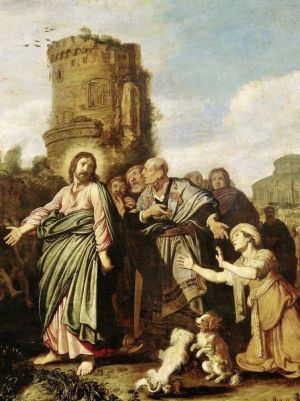
The Gospel account of the Canaanite woman’s persistence comes immediately after a teaching by Jesus on ritual purity. In the Jewish world, purity does not mean the absence of sin, but rather the fitness to draw near to God, and the Pharisees attached great importance to the rules of ritual purity in order to be worthy to pray and enter the Temple. Jesus, on the other hand, says that purity is first and foremost a matter of the heart and of intention, and asserts that it is what comes out of the mouth and originates in the heart that defiles a person. For it is from the heart that evil thoughts come… but eating without washing one’s hands does not defile a person (Mt 15:18–20). Immediately after this controversy, Jesus goes into ‘unclean’ pagan territory because the rules of the Torah are not observed there. It is there that a Canaanite woman asks him to heal her daughter, but Jesus pays her no heed, so much so that the disciples intervene to send her away (Lk 11:5–8). However, as she continues to insist, Jesus replies: ‘I was sent only to the lost sheep of the house of Israel’ (Mt 15:24). In the history of salvation, the first stage concerns Israel, as Jesus also points out to the apostles: do not go amongst the Gentiles and do not enter the towns of the Samaritans; rather, go to the lost sheep of the house of Israel (Mt 10:5–6). And this is precisely what Saint Paul did. He turned first to the Jews, and after failing to reach the majority of them, he devoted himself to the Gentiles, as we read in this Sunday’s second reading. Here too, Jesus proclaims that salvation is now for everyone, Jews and Gentiles alike, and the only condition is faith – a trust like that of the Canaanite woman who persists in trusting him. Is faith not, in fact, precisely believing in Jesus, trusting him completely and entrusting oneself to him? Jesus does not ask the Canaanite woman to practise any aspect of the Jewish religion, but only for faith; and his attitude towards her serves as the model for welcoming the Gentiles. The Canaanite woman, ‘persistent’ in her request, becomes the model of faith for us and our communities.
+Giovanni D’Ercole
(Mt 16:13-20)
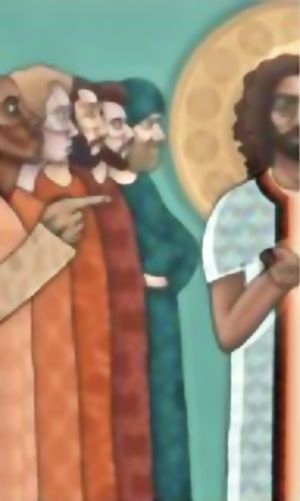
Over half of his public life, Jesus has not yet given formulas, but He raises a demanding question - which claims to ask us much more than the usual expressions with a legal structure.
The crowd may have approached Him to eminent characters such as the Baptist [the one who proved to be alien to courtiers] or Elijah [for his activity of denouncing idols] or Jeremiah [the opponent of the blessings’ sale].
But He did not come - like ancient prophets - to improve the situation or to regret and mend devotions, nor to purify the Temple, but to replace it!
The images of tradition depict Christ in many ways (for atheists a philanthropist), the most widespread of which is still that of an ancient Lord, guarantor of conventional behavior.
Instead - to make us reflect - He takes the disciples to a construction site environment [north of Palestine, Caesarea Philippi was under construction], far from the interested nomenclature of the "holy" City.
Common mentality evaluated the life’ success - and the truth of a religion - on the basis of glory, domination, enrichment, and security in general.
The question that Jesus rises his disciples leaks a novelty that supplants the whole system: the Call is addressed to every single person.
It is a border proposal, like the symbolic geographical place of the capital of the reign of Philip, one of the three heir sons of Herod the Great: in Palestine, the farthest point from the center of conformist religiosity.
The Face of the «Son of man» is recognizable only by placing maximum distance from political and veterans schemes - otherwise we too would not be able to perceive His personal ‘light’.
In the community of Mt, an increasingly large participation of pagans was being experienced, who previously felt excluded and gradually integrated.
For our mentality, the house keys are used to close and tighten the door, to prevent the attackers from entering.
In the Semitic one, they were rather an icon of the door’s opening.
In Perugino’s famous masterpiece on the north wall of the Sistine Chapel, Jesus gives the head of the Church two keys: the golden one of Paradise and the silver of Purgatory.
But the meaning of the passage is not the Afterlife - on the contrary, it is not even institutional. In Hebrew the term ‘key’ is derived from the verb ‘to open’!
The greatest missionary task of community leaders is to keep the Kingdom of Heaven wide open, that is, to ensure a welcoming Church!
Peter must not trace the type of arrogant monarch, image of authority; emperor’ substitute.
Simon must take first responsibility for the acceptance of those who are outside.
It seems strange for any ancient proposal, where God was supposed to be afraid of becoming impure in contact with the world.
The Father is the One who dares the most.
This is the reason why Jesus strictly imposes a total messianic silence (v.20) on the lips and the ancient brain of the Apostles.
Peter and the disciples wanted to return to the usual idea of «the» Messiah [cf. Greek text] expected by everyone.
An all too normal canvas, incapable of regenerating us.
[21st Sunday in O.T. (year A), August 23, 2026]
Who Am I to you, and the Keys to the open community
(Mt 16:13–23)
More than halfway through his public life, Jesus has not yet offered any set formulas, but poses a challenging question – one that demands far more of us than the usual legalistic expressions.
Broadly speaking, the crowd may have likened him to eminent figures such as John the Baptist (who proved himself to be a stranger to courtly flattery) or Elijah (for his denunciation of idols) or Jeremiah (the opponent of the buying and selling of blessings).
But He did not come – like the ancient prophets – to improve the situation or patch up devotional practices, nor to purify the Temple, but rather to replace it!
Traditional imagery depicts Christ in many ways (to atheists, a philanthropist), the most widespread of which is still that of an ancient Lord, the guarantor of conventional behaviour.
He, on the other hand – to make us reflect – takes his disciples to a building site (in northern Palestine, Caesarea Philippi was under construction), far from the self-serving rhetoric of the ‘holy’ City.
The common mindset judged the success of life – and the truth of a religion – on the basis of success, dominance, wealth and security in general.
The question Jesus poses to his disciples reveals a novelty that overturns the entire system: the Call is addressed to every single person.
It is a proposal that pushes boundaries, much like the symbolic geographical location of the capital of Philip’s kingdom (one of the three sons and heirs of Herod the Great): in Palestine, the point furthest from the centre of conformist religiosity.
The Face of the ‘Son of Man’ can only be recognised by placing oneself as far as possible from political schemes and the established order – otherwise we too would be unable to perceive his personal light.
In the community described in Matthew, there was indeed an experience of an ever-increasing participation of Gentiles, who had previously felt excluded (and were gradually becoming integrated).
In our way of thinking, house keys serve to lock and bolt the front door, to keep out those with ill intent. In the Semitic mindset, however, they were rather a symbol of opening the door.
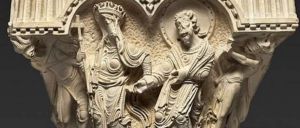
In Perugino’s famous masterpiece on the north wall of the Sistine Chapel, Jesus hands the head of the Church two keys: the golden key to Paradise and the silver key to Purgatory.
But the meaning of the passage is not about the afterlife – indeed, it is not even institutional in nature (as the sumptuous architecture of the triumphal arches and the temple in the background of the fresco might suggest).
In Hebrew, the word ‘key’ is derived from the verb ‘to open’!
The primary missionary task of community leaders is to keep the Kingdom of Heaven wide open – that is, to ensure a welcoming Church!
Peter must not embody the archetype of the arrogant monarch, an image of authority (acting as a substitute for the emperor).
Simon must take primary responsibility for welcoming those who are outside.
This seems strange by the standards of any ancient tradition, where it was assumed that God feared becoming defiled through contact with the world.
The Father is the One who dares the most.
Faith is not a safety net (as if it were merely ‘doctrinal belief’) but a loving relationship that does not cloud the mind and enables us to embrace the enriching flow of life.
Creative Providence – all-encompassing and boundless, and today particularly disruptive to every habitual way of life – is the true expression and authentic Revelation of the Mystery.
This is why Jesus strictly imposes total messianic silence [v.20] upon the lips and the traditional mindset of the Apostles.
Peter and the disciples wanted to return to the familiar idea of ‘the’ Messiah [cf. Greek text] awaited by all.
A script that is far too ordinary, incapable of renewing us.
But who do you say that I am? Peter’s Faith
Distancing oneself from what one hopes for
Jesus leads his followers away from the realm of the ideology of power and from the sacred centre of the official religious institution – Judea.
The Lord wants his closest followers to distance themselves from limitations and preconceptions.
The relative success achieved by the Master in Galilee had, in fact, rekindled the apostles’ hopes of (one-sided) glory.
The region of Caesarea Philippi, in the far north of Palestine, was enchanting; renowned for its fertility and lush pastures. An area famous for the beauty of its surroundings and the abundance of its flocks and herds.
Even the disciples were captivated by the landscape and the comfortable lifestyle of the region’s inhabitants; not to mention the magnificence of the palaces.
The reference to the setting alludes to the comforts generally offered by pagan religion; excessive prosperity that enchanted the Twelve.
Christ asks the apostles – in effect – what the people expected of Him. In this way, He wants them to realise the harmful effects of their own preaching.
A ‘proclamation’ that readily conflated material and spiritual blessings.
Whilst the gods demonstrate their ability to shower their devotees with riches – and a lavish court life that (precisely) captivated everyone – what does Christ offer?
The Master realises that the disciples were still heavily influenced by the propaganda of the political and religious authorities [vv. 6, 11], which promised prosperity [vv. 5–12; cf. Mt 15:32–38].
And Jesus instructs them once more, so that at least his emissaries might overcome the blindness and the crisis brought about by his Cross (v. 21), and by the commitment required in the spirit of self-giving.
He is not merely a follower of the Baptist’s uncompromising stance, never inclined to compromise with the courts or opulence; nor is he one of the many restorers of the Law of Moses, with the zeal of Elijah.
Nor did he wish merely to purify religion of spurious elements, but rather to take the place of the Temple [Mt 21:12–17, 18–19, 42; 23:2, 37–39; 24:30] – the place of encounter between the Father and his children.
On this issue, at that time, the rifts were particularly acute, not only with regard to paganism, but also in the conflicts between Jews who had converted to the Lord and those who observed the tradition.
Indeed, the sacred texts of late Judaism spoke of great figures who had left their mark on the history of Israel and were expected to reappear to usher in the messianic age.
Even within the persecuted communities of Galilee and Syria, Matthew notes a lack of understanding and the great difficulty in embracing the new proposal – one which offered no guarantee of success or recognition, nor any immediate rewards.
(From the very first generations, it was realised that Faith does not easily align with our most basic human impulses: indeed, it is disconcerting, given our obvious perspectives and instincts).
Thus the Master contradicts Peter himself [vv. 20, 23], whose view remained tied to the conformist and populist idea of ‘the’ [vv. 16, 20: ‘that’] expected Messiah.
In short, the leader of the apostles – so weak in the Faith – must stop pointing out to Christ which path to take ‘behind’ him [v. 23], leading him astray!
Simon must start afresh as a disciple; he must stop charting out recognised and opportunistic paths for everyone, hijacking God in God’s own name.
The Lord is the One who dares the most.
A special note on the subject of the Name:
Whilst in our culture it is often merely a label, amongst Eastern peoples the name is one and the same as the person, and designates them in a special way.
As can be seen, for example, in the ‘second’ commandment, the power of the Name carries great weight: it is a matter of knowing the (divine) Subject in essence and in the meaning of action; almost a taking hold of His power.
Even in our own tradition of prayer, spirituality and mysticism, the proper Name (e.g. Jesus) has often been regarded as almost an auditory icon of the person, embodying their virtues; evocative of their presence and power.
In ancient cultures, uttering a name meant being able to grasp the seed, the meaningful and all-encompassing core of the figure in question.
Not infrequently, even in our own way of thinking, it has been intended to express an omen, a mandate, a wish, a blessing, a vocation, a destiny, a task, a calling, a mission [nomen (est) omen].
But this is where the difference between a sacred mindset and Faith becomes apparent. In religions, the proper name that the master or founder bestows upon the disciple is a sort of signpost: anyone lacking the insight, fortune, strength or courage to fulfil it would diminish in dignity.
Christ, on the other hand, through his titles, calls us to follow a path – certainly – but one that is deeply commensurate with our essence.
He urges us to set out on a journey – not according to set models – because first He leads the person back into themselves. So that we may all commit ourselves deeply and to the full extent that is required.
First step: to encounter ourselves in our entirety; in our various facets, even the surprising, unexpressed or unknown ones – generally, traits that are unimaginable according to rules and classifications.
Even our eccentric, ambiguous, hidden or even personally rejected ways of being: along the Way, these will reveal the best sides of ourselves.
Only on this multifaceted path do we find the way to an adventure rich in meaning; not mechanical, nor repetitive – but rather like life itself: always new and authentic.
Not starting from superficial appearances or calculated pretences: there is an Author’s signature that precedes us, in the building up of ourselves and of the world.
Passing through the various building sites in the city of Philip, Jesus instead chose to compare Simon to the inert, piled-up materials (even in a rather haphazard manner) that lay before him.
That situation struck at the very root of the apostles’ expectations!
The disciples had not yet made room within themselves for the Mystery, for the idea of a secret salvation that bursts forth with its own innate energy; one that transcends ordinary dreams.
‘Cefa’ is in fact derived from the Aramaic ‘Kefas’: a building stone; something hard: in practical terms, a stubborn man like so many others; nothing special, quite the contrary. Jesus gives Simon a derogatory nickname!
In fact, the Greek term ‘petros’ [v.18] is not a proper name: it refers to a stone (picked up from the ground) which can indeed be useful for building – provided, of course, it is shaped to fit. And which not only supports, but is supported; which not only brings together, but is brought together.
Note: the Greek term ‘petra’ [v.18] is not the feminine form of ‘petros’: it means ‘rock’, and refers to the Person of Christ, our sole security (together with faith in Him).
A name that unpredictably transforms an entire life. For it is only the inner Friend who draws from our [even flawed] baggage the unexpected that wells up.
Each of us is chiselled by the Lord according to the name Peter, in the sense of a unique piece, an individual and special element.
Placed in a singular way yet within a great mosaic: that of the history of salvation, where each of us is simultaneously ourselves and in a constant state of regeneration.
The sole sense of belonging shared by the many building stones (all living): the conviviality of differences, the communion of disparate fraternal members within the ministerial Church.
None of them forever, but everywhere (ceaselessly) pulsating nuclei of a humble institution, entirely gathered from the earth… Freed without cost.
Dear Young People,
In this celebration of the Eucharist we have reached the high point of this World Youth Day. Seeing you here, gathered in such great numbers from all parts of the world, fills my heart with joy. I think of the special love with which Jesus is looking upon you. Yes, the Lord loves you and calls you his friends (cf. Jn 15:15). He goes out to meet you and he wants to accompany you on your journey, to open the door to a life of fulfilment and to give you a share in his own closeness to the Father. For our part, we have come to know the immensity of his love and we want to respond generously to his love by sharing with others the joy we have received. Certainly, there are many people today who feel attracted by the figure of Christ and want to know him better. They realize that he is the answer to so many of our deepest concerns. But who is he really? How can someone who lived on this earth so long ago have anything in common with me today?
The Gospel we have just heard (cf. Mt 16:13-20) suggests two different ways of knowing Christ. The first is an impersonal knowledge, one based on current opinion. When Jesus asks: “Who do people say that the Son of Man is?”, the disciples answer: “Some say John the Baptist, but others Elijah, and still others Jeremiah or one of the prophets”. In other words, Christ is seen as yet another religious figure, like those who came before him. Then Jesus turns to the disciples and asks them: “But who do you say that I am?” Peter responds with what is the first confession of faith: “You are the Messiah, the Son of the living God”. Faith is more than just empirical or historical facts; it is an ability to grasp the mystery of Christ’s person in all its depth.
Yet faith is not the result of human effort, of human reasoning, but rather a gift of God: “Blessed are you, Simon son of Jonah! For flesh and blood has not revealed this to you, but my Father in heaven”. Faith starts with God, who opens his heart to us and invites us to share in his own divine life. Faith does not simply provide information about who Christ is; rather, it entails a personal relationship with Christ, a surrender of our whole person, with all our understanding, will and feelings, to God’s self-revelation. So Jesus’ question: “But who do you say that I am?”, is ultimately a challenge to the disciples to make a personal decision in his regard. Faith in Christ and discipleship are strictly interconnected.
And, since faith involves following the Master, it must become constantly stronger, deeper and more mature, to the extent that it leads to a closer and more intense relationship with Jesus. Peter and the other disciples also had to grow in this way, until their encounter with the Risen Lord opened their eyes to the fullness of faith.
Dear young people, today Christ is asking you the same question which he asked the Apostles: “Who do you say that I am?” Respond to him with generosity and courage, as befits young hearts like your own. Say to him: “Jesus, I know that you are the Son of God, who have given your life for me. I want to follow you faithfully and to be led by your word. You know me and you love me. I place my trust in you and I put my whole life into your hands. I want you to be the power that strengthens me and the joy which never leaves me”.
Jesus’ responds to Peter’s confession by speaking of the Church: “And I tell you, you are Peter, and on this rock I will build my Church”. What do these words mean? Jesus builds the Church on the rock of the faith of Peter, who confesses that Christ is God.
The Church, then, is not simply a human institution, like any other. Rather, she is closely joined to God. Christ himself speaks of her as “his” Church. Christ cannot be separated from the Church any more than the head can be separated from the body (cf. 1 Cor 12:12). The Church does not draw her life from herself, but from the Lord.
Dear young friends, as the Successor of Peter, let me urge you to strengthen this faith which has been handed down to us from the time of the Apostles. Make Christ, the Son of God, the centre of your life. But let me also remind you that following Jesus in faith means walking at his side in the communion of the Church. We cannot follow Jesus on our own. Anyone who would be tempted to do so “on his own”, or to approach the life of faith with that kind of individualism so prevalent today, will risk never truly encountering Jesus, or will end up following a counterfeit Jesus.
Having faith means drawing support from the faith of your brothers and sisters, even as your own faith serves as a support for the faith of others. I ask you, dear friends, to love the Church which brought you to birth in the faith, which helped you to grow in the knowledge of Christ and which led you to discover the beauty of his love. Growing in friendship with Christ necessarily means recognizing the importance of joyful participation in the life of your parishes, communities and movements, as well as the celebration of Sunday Mass, frequent reception of the sacrament of Reconciliation, and the cultivation of personal prayer and meditation on God’s word.
Friendship with Jesus will also lead you to bear witness to the faith wherever you are, even when it meets with rejection or indifference. We cannot encounter Christ and not want to make him known to others. So do not keep Christ to yourselves! Share with others the joy of your faith. The world needs the witness of your faith, it surely needs God. I think that the presence here of so many young people, coming from all over the world, is a wonderful proof of the fruitfulness of Christ’s command to the Church: “Go into all the world and proclaim the Gospel to the whole creation” (Mk 16:15). You too have been given the extraordinary task of being disciples and missionaries of Christ in other lands and countries filled with young people who are looking for something greater and, because their heart tells them that more authentic values do exist, they do not let themselves be seduced by the empty promises of a lifestyle which has no room for God.
Dear young people, I pray for you with heartfelt affection. I commend all of you to the Virgin Mary and I ask her to accompany you always by her maternal intercession and to teach you how to remain faithful to God’s word. I ask you to pray for the Pope, so that, as the Successor of Peter, he may always confirm his brothers and sisters in the faith. May all of us in the Church, pastors and faithful alike, draw closer to the Lord each day. May we grow in holiness of life and be effective witnesses to the truth that Jesus Christ is indeed the Son of God, the Saviour of all mankind and the living source of our hope. Amen.
[Pope Benedict, homily in Madrid, 21 August 2011]
1. "Who do you say that I am?" (Mt 16: 15).
Jesus asks the disciples this question about his identity while he is with them in upper Galilee. It often happened that they would ask Jesus questions; now it is he who questions them. His is a precise question that awaits an answer. Simon Peter speaks for them all: "You are the Christ, the Son of the living God" (Mt 16: 16).
The answer is extraordinarily clear. The Church's faith is perfectly reflected in it. We are reflected in it too. The Bishop of Rome, his unworthy successor by divine will, is particularly reflected in Peter's words. Around him and with him you are reflected in these words, dear Metropolitan Archbishops, who have come here from many parts of the world to receive the pallium on the Solemnity of Sts Peter and Paul.
I offer my cordial greetings to each of you, a greeting which I gladly extend to those who have accompanied you to Rome and to your communities who are spiritually united with us on this solemn occasion.
2. "You are the Christ!". Jesus replies to Peter's confession: "Blessed are you, Simon Bar-Jona! For flesh and blood has not revealed this to you, but my Father who is in heaven" (Mt 16: 17).
Blessed are you, Peter! Blessed because you could not have humanly recognized this truth, which is central to the Church's faith, except by God's action. "No one", Jesus said, "knows the Son except the Father, and no one knows the Father except the Son and any one to whom the Son chooses to reveal him" (Mt 11: 27).
We are reflecting on this extraordinarily rich Gospel passage: the incarnate Word had revealed the Father to his disciples; now is the moment when the Father himself reveals his only Only-begotten Son to them. Peter receives inner enlightenment and courageously proclaims: "You are the Christ, the Son of the living God!".
These words on Peter's lips come from the depths of God's mystery. They reveal the intimate truth, the very life of God. And Peter, under the action of the divine Spirit, becomes a witness and confessor of this superhuman truth. His profession of faith thus forms the firm basis of the Church's faith: "On this rock I will build my Church" (Mt 16: 18). The Church of Christ is built on Peter's faith and fidelity.
[Pope John Paul II, homily, 29 June 2000]
This Sunday’s Gospel reading (cf. Mt 16:13-20) presents the moment in which Peter professes his faith in Jesus as Messiah and Son of God. This Apostle’s confession is provoked by Jesus himself, who wishes to lead his disciples to take the decisive step in their relationship with him. Indeed, Jesus’ entire journey with those who follow him, especially with the Twelve, is a journey of educating their faith. First of all, he asks: “Who do men say that the Son of man is?” (v. 13). The Apostles liked to talk about people, as we all do. We like to gossip. Speaking about others is not so demanding; this is why we like it; even ‘flaying’ others. In this case the perspective of faith rather than gossip is already required, and so he asks, ‘What do the people say that I am?’. And the disciples seem to compete in reporting the different opinions, which perhaps, to a large extent, they themselves shared. They too shared them. In essence, Jesus of Nazareth was considered a prophet (v. 14).
With the second question, Jesus touches them to the core: “But who do you say that I am?” (v. 15). At this point, we seem to perceive a moment of silence, as each one of those present is called to put themselves on the line, manifesting the reason why they follow Jesus; therefore a certain hesitation is more than legitimate. Even if I were to ask you now, ‘For you, who is Jesus?’, there would be a little hesitation. Simon takes them off the hook by declaring forthrightly, “You are the Christ, the Son of the living God” (v. 16). This answer, so complete and luminous, does not come from an impulse of his own, however generous — Peter was generous — but rather it is the fruit of a particular grace of the heavenly Father. Indeed, Jesus himself says to him: “flesh and blood has not revealed this to you” — that is, culture, what you have studied, no, this has not revealed it to you. It was revealed to you by “my Father who is in heaven” (v. 17). To confess Jesus is a grace of the Father. To say that Jesus is the Son of the living God, that he is the Redeemer, is a grace that we must ask for: “Father, give me the grace to confess Jesus”.
At the same time, the Lord acknowledges Simon’s prompt response to the inspiration of grace and therefore adds, in a solemn tone, “you are Peter, and on this rock I will build my church, and the powers of death shall not prevail against it” (v. 18). With this affirmation, Jesus makes Simon understand the meaning of the new name He has given him, ‘Peter’: the faith he has just shown is the unshakeable ‘rock’ on which the Son of God wishes to build his Church, that is, the Community. And the Church goes forward always on the basis of Peter’s faith, that faith that Jesus recognizes [in Peter] and which makes him the head of the Church.
Today, we hear Jesus’ question directed to each one of us: ‘And you, who do you say I am?’. To each one of us. And each one of us must give not a theoretical answer, but one that involves faith, that is, life, because faith is life! ‘For me you are …’ and then to confess Jesus. An answer that demands from us too, as from the first disciples, inward listening to the voice of the Father and consonance with what the Church, gathered around Peter, continues to proclaim. It is a matter of understanding who Christ is for us: whether he is the centre of our life, whether he is the goal of our commitment in the Church, of our commitment in society. Who is Jesus Christ for me? Who is Jesus Christ for you, for you, for you …? An answer that we should give every day.
But beware: it is indispensable and praiseworthy that the pastoral care of our communities be open to the many forms of poverty and plights that are everywhere. Charity is always the high road of the journey of faith, of the perfection of faith. But it is necessary that works of solidarity, the works of charity that we carry out, not divert us from contact with the Lord Jesus. Christian charity is not simple philanthropy but, on the one hand, it is looking at others through the very eyes of Jesus and, on the other hand, it is seeing Jesus in the face of the poor. This is the true path of Christian charity, with Jesus at the centre, always. May Mary Most Holy, blessed because she believed, be our guide and model on the path of faith in Christ, and make us aware that trust in him gives full meaning to our charity and to all our existence.
[Pope Francis, Angelus, 23 August 2020]
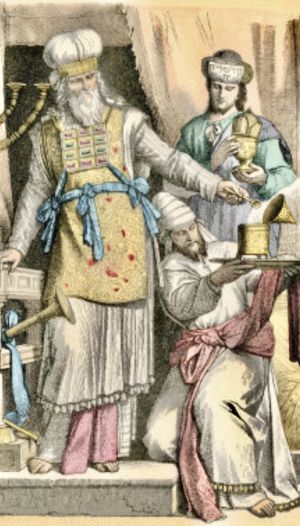
Being present to oneself: do not replace love with flakes and bows
(Mt 23:1-12)
New Relationship between God and man could not be contained within the detailed rules of the First Covenant and its heavy customs.
At the time of Jesus, such sick obsessions of snooty verticism dominated, therefore only epidermal; incapable of providing breath, freedom, propulsive motivation.
The pyramidal conception of the world and the exterior idea of the plot of the spiritual life do not correspond to Revelation.
Our reality is interwoven with opposing states, which innervate and complete; even making move forward. Sometime turning into a torrent in flood.
Rejection, abandonment, failure, limitations, illness, and the contempt of others – even a crisis – can bring us back to the dormant energies of life and give birth to a new Person.
How to contact our new ways of being? What precautions should be taken to enter a regeneration dynamism that helps to develop a lively climate - and where to start?
Jesus proposes Faith: a founding Relationship, that is, a new way of placing oneself before the Father and the world... with a trusting, spousal and creative attitude; in the initiative of another point of view.
Multifaceted love, Eros coming to us in a palpable dialogue - not without inner struggles.
This in the time of a path (singular, not at all traced or external). Even on the spur of the moment, annoying, because it goes against the tide.
The religious authorities, on the other hand, sought their security in the rigorous and conspicuous observance of the written and oral Law.
Without risk or mind-boggling customizations.
Faced with such an accommodating mentality, free from vertigo, the young Master insists on the practice of Friendship [much stronger than willpower] which relativizes the obligations.
He thus gives its true sense to the profound Tradition, rediscovering the authentic meaning of the Torah and the rules of behavior.
After all, it was precisely the spiritual leaders of the official religion who were the first to disbelieve what they preached to others... or felt exempt from it, because they were used to thinking of themselves as elective, recognised, selected, chosen models - almost cast from above.
Exaggerated spirit of control is a false attitude in itself – it causes excessive strain and is deaf to the inner core.
But it is also detrimental to the building of a family atmosphere, or a culture of encounter; to the synodal journey, even... and so on.
On the other hand, by insisting on the attitude [which is indeed infallible] of mutual service, there will be no time left to be caught up in vanity, disputes over precedence, superficial discussions, friction, or even the gap between saying and doing.
Where can the theatre of indifference, which depresses rather than invigorates God's people, start again?
From the everlasting scribes and pharisees (v.2). Self-proclaimed superiors, with limited and reductive criteria of judgement.
Well, according to the Gospels, those who take on ecclesiastical leadership roles are not entitled to any “ribbon”: they are simply «deacons» (v. 11) of their sisters and brothers.
They have no positions, but tasks. They have no titles, but duties. They have no rank; rather, they have a mission and many obligations.
To internalize and live the message:
Do you like ribbons? What does your soul say about peacocks?
[Saturday 20th wk. in O.T. August 22, 2026]
We see this great figure, this force in the Passion, in resistance to the powerful. We wonder: what gave birth to this life, to this interiority so strong, so upright, so consistent, spent so totally for God in preparing the way for Jesus? The answer is simple: it was born from the relationship with God (Pope Benedict)
Noi vediamo questa grande figura, questa forza nella passione, nella resistenza contro i potenti. Domandiamo: da dove nasce questa vita, questa interiorità così forte, così retta, così coerente, spesa in modo così totale per Dio e preparare la strada a Gesù? La risposta è semplice: dal rapporto con Dio (Papa Benedetto)
The lamp is a symbol of the faith that illuminates our life, while the oil is a symbol of the charity that nourishes the light of faith, making it fruitful and credible (Pope Francis)
La lampada è il simbolo della fede che illumina la nostra vita, mentre l’olio è il simbolo della carità che alimenta, rende feconda e credibile la luce della fede (Papa Francesco)
Jesus wants our existence to be laborious, that we never lower our guard, so as to welcome with gratitude and wonder each new day given to us by God. Every morning is a blank page on which a Christian begins to write with good works (Pope Francis)
Gesù vuole che la nostra esistenza sia laboriosa, che non abbassiamo mai la guardia, per accogliere con gratitudine e stupore ogni nuovo giorno donatoci da Dio. Ogni mattina è una pagina bianca che il cristiano comincia a scrivere con le opere di bene (Papa Francesco)
And this is the problem: when the People put down roots in the land and are the depository of the Law, they are tempted to place their security and joy in something that is no longer the Word of God (Pope Benedict)
Ed ecco il problema: quando il popolo si stabilisce nella terra, ed è depositario della Legge, è tentato di riporre la sua sicurezza e la sua gioia in qualcosa che non è più la Parola del Signore (Papa Benedetto)
Despite the scarcity of information about him, St Bartholomew stands before us to tell us that attachment to Jesus can also be lived and witnessed to without performing sensational deeds. Jesus himself, to whom each one of us is called to dedicate his or her own life and death, is and remains extraordinary (Pope Benedict)
La figura di san Bartolomeo, pur nella scarsità delle informazioni che lo riguardano, resta comunque davanti a noi per dirci che l'adesione a Gesù può essere vissuta e testimoniata anche senza il compimento di opere sensazionali. Straordinario è e resta Gesù stesso, a cui ciascuno di noi è chiamato a consacrare la propria vita e la propria morte (Papa Benedetto)
Faith is more than just empirical or historical facts; it is an ability to grasp the mystery of Christ’s person in all its depth [Pope Benedict]
La fede va al di là dei semplici dati empirici o storici, ed è capace di cogliere il mistero della persona di Cristo nella sua profondità [Papa Benedetto]
More than 600 precepts are mentioned in the Law of Moses. How should the great commandment be distinguished among these? (Pope Francis)
Nella Legge di Mosè sono menzionati oltre seicento precetti. Come distinguere, tra tutti questi, il grande comandamento? (Papa Francesco)
The invitation has three characteristics: freely offered, breadth and universality. Many people were invited, but something surprising happened: none of the intended guests came to take part in the feast, saying they had other things to do; indeed, some were even indifferent, impertinent, even annoyed (Pope Francis)








duevie.art
don Giuseppe Nespeca
Tel. 333-1329741
Disclaimer
Questo blog non rappresenta una testata giornalistica in quanto viene aggiornato senza alcuna periodicità. Non può pertanto considerarsi un prodotto editoriale ai sensi della legge N°62 del 07/03/2001.
Le immagini sono tratte da internet, ma se il loro uso violasse diritti d'autore, lo si comunichi all'autore del blog che provvederà alla loro pronta rimozione.
L'autore dichiara di non essere responsabile dei commenti lasciati nei post. Eventuali commenti dei lettori, lesivi dell'immagine o dell'onorabilità di persone terze, il cui contenuto fosse ritenuto non idoneo alla pubblicazione verranno insindacabilmente rimossi.