


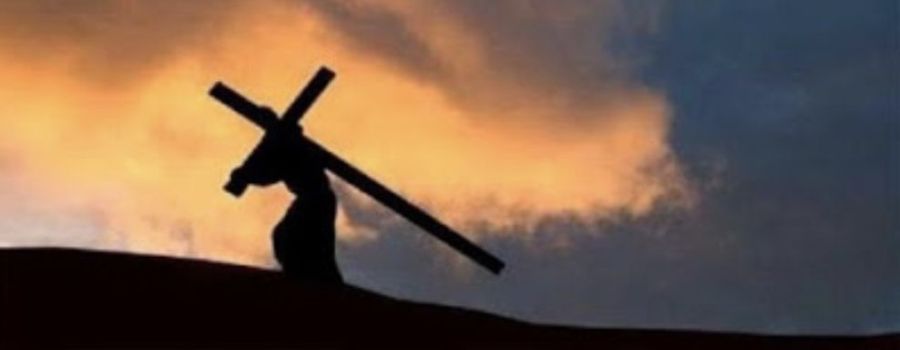
(Jn 15:18-21)
He who is a master of love, who liked to speak of love, speaks of hate. But he liked to call things by the proper name they have [Pope Francis].
Culture today reflects a 'tension', which sometimes takes the form of 'conflict', between the present and tradition. The dynamic of society absolutizes the present, detaching it from the cultural heritage of the past and without the intention of delineating a future [...] In fact, a people, which ceases to know what its own truth is, ends up lost in the labyrinths of time and history, lacking clearly defined values and without clearly stated great goals [Pope Benedict].
In the preceding section Jesus denotes the character of the love between Him and the disciples and the mutual love between believers. Now he introduces the contrast with the world: the opposite of love.
In Jn the term 'world' designates the structure of sin resulting from the union of religion power interest.
Tradition that is organised from ambitious individuals and entanglements; networks of amateurs, circumstantial tunes, cliques.
From the earliest times, the converse became conversely constitutive of sons! In this way, the configuration of the Kingdom was an alternative, a reversal.
Well-established and praised models did not distract the brethren of Faith. The new assemblies educated to gain security in the personal Vocation.
Their experience, even their mystical experience, had another distinction from the hosannas and leashed quietism of empire and religions.
In the Fourth Gospel the 'Church' [in Jn the specific term Εκκλησία is never used] is in watermark the opposite of the 'world'.
The worldly spirit of official religiosity already hated the friends that Christ had drawn "from" those polluted waters:
"If you were of the world [...] For you are not of the world, but I have chosen you out of the world, therefore the world hates you" (v.19).
The first experience of the Johannine communities in Asia Minor was persecution.
In episode after episode, the oppression suffered became normal for the believer, because that world there loved only 'its own': 'the world would love its own' (v.19 Greek text), that is, that and those in whom it recognises itself.
Instead, by their living Faith the friends of Christ remained 'intimate'; strangers to every apparatus.
In their choices and conduct, they reflected a unique convivial lifestyle - humanising far more than any normal, cowardly belief.
By their action derived from inner strength alone, they prefigured a germ of a non-conformist society. This compared with the ideology of power - and its having-appeared.
Thus the Lord's friends bore witness against "the sin of the world" (cf. Jn 1:29) just as the Lamb of God had done.
Though destined for defeat, the true believers operated eccentrically; never servile.
The detachment was with the official devout structures, always deferential, cowardly; well disposed to the sacralisation of established roles.
In short, the disciples of all times 'know' the Son and the Father; the world disowns them (v.21).
Thus "there is no greater servant than his Lord" (v.20).
The believer drinks from the same cup, proclaims the same truths: he cannot have a better fate.
The intensification of evil-doing is inevitable.
"All these things will they do against you because of my Name" (v.21).
Jesus lived amidst denunciations, contrasts, animosity, persecutions, and died as a rebel punished and shamed. This is the reality of the 'Name'.
What can one expect differently from the heirs of his Word, from the bearers of the same Appeal that led the Master to be destroyed by the official authorities?
Yet the simple of the earth have never rejected it.
And now more than ever it is necessary for the vital seed of that quiet and dramatic witness to continue.
John helps the communities of Asia Minor to understand their own identity and destiny as a mocker, without, however, stopping at the subject of persecution.
Our Way runs parallel to the Master's not only because it is disinterested in visible results and punctuated by wounds.
In the panorama of the various creeds according to worldly currents, it is to be taken into account that the proposal of Jesus creates divisions, antipathy; because it seems an absurdity compared to the ordinary path.
Not only is the witness of the Crucified not reducible to platitudes of lordship, turnabout and social theatre.
Evangelisers make a difference from the abbecedarian of 'spiritual' obviousness as a paradigm.
Precisely, the world does not know the Father (v.21): it loves and understands only what is its own (v.19).
It is impossible to grasp the idea that only those who risk understand God; that only depth, reciprocity and equal dignity make Him Present.
As for the specifics of the humanising proposal, in the Spirit:
It seems absurd that one can be "in the presence" of the Mystery not starting from perfection, but from Grace. Not from the optimal condition, but from the borderline situation. Not by the obligation that is fulfilled (and equal for all) but by the eccentric Calling by Name.
In the life of Communion with Heaven and our neighbour, we do not spring from upstream judgements, procedures, or already solid platforms, but from our accepted neediness.
Proposal that neither abolishes nor ignores what is divinising and human.
It is a bombshell, of course. For sole servants - and without reward.
Forget the [detestable] 'world' with its quietism on a leash: it likes to self-define what is e.g. 'respectable', 'justice', 'spirit', 'relaxation'... and even 'beauty'!
Emptiness - a kind of 'woke' situationism - that does not regenerate the deep nature of souls, nor the world.
To internalise and live the message:
Do you lock yourself into theatrics where the mask eclipses yourself?
Do you opt for the wide and familiar road?
Do you prefer paths of easy self-righteousness or the Way of Faith in the Crucified One, the Way of Love's snub and imbalance?








