Oct 21, 2026 Written by 

The foxes, the little hen, and the Prophet

End of a "sacred" order

(Lk 13:31-35)


The context in which Jesus lived was threatening: even in the outlying provinces of the Empire, power was absolute and those in authority were accountable to no one for the small-scale running of affairs.

But the building up of the Kingdom of God does not depend on any authorization of rapacious rulers on the territory of the provinces.

Those who want to fulfil their mission cannot satisfy the «foxes» who usurp power.

They are small and harmful situation’s parasites, but quick - even if they are not big roaring fairs as in the roman and senatorial court.

With his cunning attitude, king Herod (astute collaborationist) had managed to secure dominance for several decades, and a life without big jolts.

Each village in Palestine was manned by officials and delators of the sovereign, as well as practitioners and subordinates of the official popular religion [including the Pharisees, which Jesus sends back to the sender: v.32].


Antipas – like a puppet [fox] – always managed to stay afloat in any situation and keep to himself. 

But after having deluded himself of having settled the Baptist and his school with him, here the king is again alarmed by the rise of a greater danger.

The young Rabbi spread deep confidence not in the strong, but in the weak. In this way, he was working deeply in consciences, and seemed to be able to outclass even the Prophets.

If the inspectors had rushed from the centre of power over the territory (v.31), Jesus must have made it really big. Thus demonstrating total freedom from conditioning.

Therefore, the success of his thought could have provoked disorder in the structure of the system.

But God’s messengers do not flee from risk.

They do this not out of duty, but out of fidelity to themselves, and because they are attracted by a Vision that belongs to everyone: they manage to grasp and sense that the pains of childbirth will generate new Births.


In short, Jesus and his close friends live an existence marked by a kind of attraction of the Cross - out of Love that goes to the end, all the way, and does not disdain comparisons.

Jerusalem was the center of the people of God’ sons, "chosen" [only] to unfold the face of the Father.

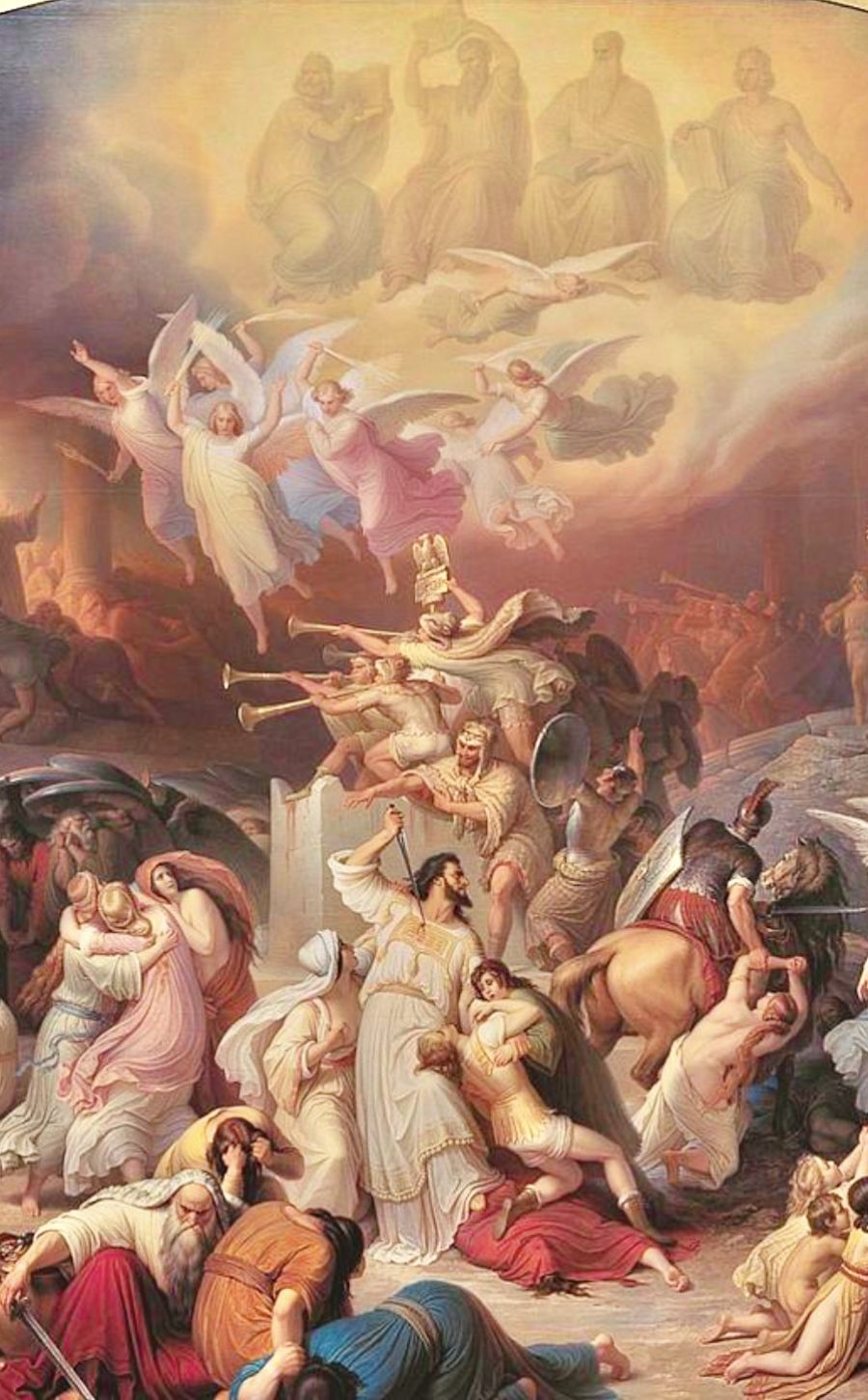
Vocation of the holy city was not to surrender to a fox (v.32) but to become a brooding hen [v.34: properly, «hen»] that does not close but spreads wings for its little ones, gathering all the innocent.

Of course, their feeling for the fate of a homeland that lets itself go to vanities, to the ideology of power and its "advantage", embarking on the path of self-destruction, makes us weep with pain.

However - although defenestrated from his House in the ‘holy city’, as well as from the heart of those who demand only quietism - in Christ the authentic People of friends will propose themselves again (v.35) also on the path of failure.

Not colonizing the features, but in a simple way (not unilateral): inclusive; expanding the horizon and detaching from the tinsel and trappings.

My turning away from Herod’s cunning and the conformist subservience of all «foxes» (v. 32).


[Thursday 30th wk. in O.T.  October 29, 2026]

321 Last modified on Thursday, 29 October 2026 11:59
don Giuseppe Nespeca

Giuseppe Nespeca è architetto e sacerdote. Cultore della Sacra scrittura è autore della raccolta "Due Fuochi due Vie - Religione e Fede, Vangeli e Tao"; coautore del libro "Dialogo e Solstizio".

Today, as yesterday, the Church needs you and turns to you. The Church tells you with our voice: don’t let such a fruitful alliance break! Do not refuse to put your talents at the service of divine truth! Do not close your spirit to the breath of the Holy Spirit! (Pope Paul VI)
Oggi come ieri la Chiesa ha bisogno di voi e si rivolge a voi. Essa vi dice con la nostra voce: non lasciate che si rompa un’alleanza tanto feconda! Non rifiutate di mettere il vostro talento al servizio della verità divina! Non chiudete il vostro spirito al soffio dello Spirito Santo! (Papa Paolo VI)
Sometimes we try to correct or convert a sinner by scolding him, by pointing out his mistakes and wrongful behaviour. Jesus’ attitude toward Zacchaeus shows us another way: that of showing those who err their value, the value that God continues to see in spite of everything (Pope Francis)
A volte noi cerchiamo di correggere o convertire un peccatore rimproverandolo, rinfacciandogli i suoi sbagli e il suo comportamento ingiusto. L’atteggiamento di Gesù con Zaccheo ci indica un’altra strada: quella di mostrare a chi sbaglia il suo valore, quel valore che Dio continua a vedere malgrado tutto (Papa Francesco)
Deus dilexit mundum! God observes the depths of the human heart, which, even under the surface of sin and disorder, still possesses a wonderful richness of love; Jesus with his gaze draws it out, makes it overflow from the oppressed soul. To Jesus, therefore, nothing escapes of what is in men, of their total reality, in which good and evil are (Pope Paul VI)
Deus dilexit mundum! Iddio osserva le profondità del cuore umano, che, anche sotto la superficie del peccato e del disordine, possiede ancora una ricchezza meravigliosa di amore; Gesù col suo sguardo la trae fuori, la fa straripare dall’anima oppressa. A Gesù, dunque, nulla sfugge di quanto è negli uomini, della loro totale realtà, in cui sono il bene e il male (Papa Paolo VI)
The "talent" was an ancient Roman coin, of great value, and precisely because of this parable's popularity it became synonymous with personal gifts, which everyone is called to develop. In fact […] (Pope Benedict)
Il "talento" era un’antica moneta romana, di grande valore, e proprio a causa della popolarità di questa parabola è diventata sinonimo di dote personale, che ciascuno è chiamato a far fruttificare. In realtà […] (Papa Benedetto)
O Lord, let my faith be full, without reservations, and let penetrate into my thought, in my way of judging divine things and human things (Pope Paul VI)
O Signore, fa’ che la mia fede sia piena, senza riserve, e che essa penetri nel mio pensiero, nel mio modo di giudicare le cose divine e le cose umane (Papa Paolo VI)
The Judgment surprises and makes friends with the journey of each one who notices
Il Giudizio sorprende e fa amicizia con il viaggio di ciascuno che si accorge
This is where the challenge for your life lies! It is here that you can manifest your faith, your hope and your love! [John Paul II at the Tala Leprosarium, Manila]
È qui la sfida per la vostra vita! È qui che potete manifestare la vostra fede, la vostra speranza e il vostro amore! [Giovanni Paolo II al Lebbrosario di Tala, Manila]
Jesus makes memory and remembers the whole history of the people, of his people. And he recalls the rejection of his people to the love of the Father (Pope Francis)
Gesù fa memoria e ricorda tutta la storia del popolo, del suo popolo. E ricorda il rifiuto del suo popolo all’amore del Padre (Papa Francesco)

Due Fuochi due Vie - Vol. 1 Due Fuochi due Vie - Vol. 2 Due Fuochi due Vie - Vol. 3 Due Fuochi due Vie - Vol. 4 Due Fuochi due Vie - Vol. 5 Dialogo e Solstizio I fiammiferi di Maria

duevie.art

don Giuseppe Nespeca

Tel. 333-1329741


Disclaimer

Questo blog non rappresenta una testata giornalistica in quanto viene aggiornato senza alcuna periodicità. Non può pertanto considerarsi un prodotto editoriale ai sensi della legge N°62 del 07/03/2001.
Le immagini sono tratte da internet, ma se il loro uso violasse diritti d'autore, lo si comunichi all'autore del blog che provvederà alla loro pronta rimozione.
L'autore dichiara di non essere responsabile dei commenti lasciati nei post. Eventuali commenti dei lettori, lesivi dell'immagine o dell'onorabilità di persone terze, il cui contenuto fosse ritenuto non idoneo alla pubblicazione verranno insindacabilmente rimossi.