Sep 22, 2026 Written by 

Faith, caricatures and Footsteps of the Son

(Lc 9,57-62)


For Semites, parental figures indicate the link with ethnicity, tradition, past and cultural environment.

Jesus seems to exclude the correlation to such figures, although he addresses his own intimates in an exclusive and singular way.

He never speaks of fathers, but about the Father - who is not a repeater.

Therefore he imposes on everyone a horizontal cut with the customs that could delay or condition his Call, the profound discovery of the meaning of events, the rise of a new mentality, the Dishipleship.

He diversifies Vocations, to make everyone understand the intimate character, by Name, of the relationship of Covenant in the Faith - which he does not depersonalize.

Symbiosis with the surrounding mentality or intellectual knowledge itself can paradoxically obscure precisely the intelligence of the unrepeatable inclinations that in our interior manifest the incomparable signature of the Creator.

The authentic Appeal grasps woman and man in an exclusive, penetrating way, in the uniqueness of their experience.

Sometimes the best thing to do for yourself and your neighbor is to cut an umbilical cord, and take a step back from the expectations of people you usually attend.

Always attending the same conformist environments, we identify ourselves in roles, labels, characters and situations: the center of expectations and dreams is blocked.

The doors of other worlds, of another kingdom, are not opened.

Personality wants its space of autonomy, because life in fullness is experiencing a fresh cascade of rebirth in Christ - celebrating together, but standing on one’s own legs.

Jesus is peremptory, because the choice is decisive.

Those who remain with their heads down or backwards - or in confrontation - cannot experience the adventure of Faith. They does not live, but drag along the religion of the dead.

Who is only in the future and has no sense of reality, experiences illusions. But those who stay in the past or with models, are with the skeletons and do not perceive the sense of change.

Behind the main lines of the personality of each is hidden a Pearl, which in order to make significant contributions according to the Lord’s Plan must manifest its very unique nuances.

Over time, compromise becomes a habitus that makes natural trends lose: but the chromosomes of the Vocation are nested in them.

The suggestion of the forms to be perpetuated or overcome at all costs, the snare of narrow judgments, the bonds of circles, can take away from us the hidden wealth.

Self-referential configurations wich steal the present, and future: this is the real mistake to avoid!

What matters is not to restore the situation, copy the ancients or the acclaimed and strongs à la page, identify yourself to be sure and not make mistakes, but renew yourself to evolve, grow, expand, amaze.

Otherwise our clumsy problems will always be identical and there will be no exuberant Way nor Promised Land, but only a vicious circle of regrets or false reassurances.

To live the Faith of the real moment one cannot be repeating schoolchildren of the place or fashions, of the time or the day before.


[Wednesday 26th wk. in O.T.  September 30, 2026]

254 Last modified on Wednesday, 30 September 2026 12:00
don Giuseppe Nespeca

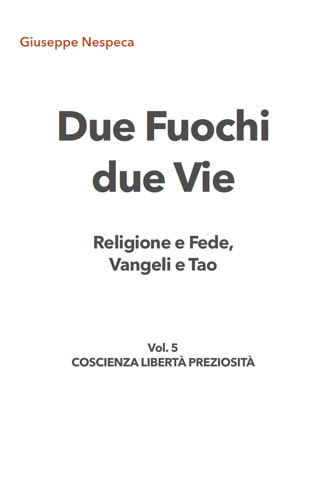
Giuseppe Nespeca è architetto e sacerdote. Cultore della Sacra scrittura è autore della raccolta "Due Fuochi due Vie - Religione e Fede, Vangeli e Tao"; coautore del libro "Dialogo e Solstizio".

The Church, having before her eyes the picture of the generation to which we belong, shares the uneasiness of so many of the people of our time (Dives in Misericordia n.12)
Avendo davanti agli occhi l'immagine della generazione a cui apparteniamo, la Chiesa condivide l'inquietudine di tanti uomini contemporanei (Dives in Misericordia n.12)
Addressing this state of mind, the Church testifies to her hope, based on the conviction that evil, the mysterium iniquitatis, does not have the final word in human affairs (Pope John Paul II)
Di fronte a questi stati d'animo la Chiesa desidera testimoniare la sua speranza, basata sulla convinzione che il male, il mysterium iniquitatis, non ha l'ultima parola nelle vicende umane (Papa Giovanni Paolo II)
Jesus reminds us today that the expectation of the eternal beatitude does not relieve us of the duty to render the world more just and more liveable (Pope Francis)
Gesù oggi ci ricorda che l’attesa della beatitudine eterna non ci dispensa dall’impegno di rendere più giusto e più abitabile il mondo (Papa Francesco)
Those who open to Him will be blessed, because they will have a great reward: indeed, the Lord will make himself a servant to his servants — it is a beautiful reward — in the great banquet of his Kingdom He himself will serve them [Pope Francis]
E sarà beato chi gli aprirà, perché avrà una grande ricompensa: infatti il Signore stesso si farà servo dei suoi servi - è una bella ricompensa - nel grande banchetto del suo Regno passerà Lui stesso a servirli [Papa Francesco]
The fool in the Bible, the one who does not want to learn from the experience of visible things, that nothing lasts for ever but that all things pass away, youth and physical strength, amenities and important roles. Making one's life depend on such an ephemeral reality is therefore foolishness (Pope Benedict)
L’uomo stolto nella Bibbia è colui che non vuole rendersi conto, dall’esperienza delle cose visibili, che nulla dura per sempre, ma tutto passa: la giovinezza come la forza fisica, le comodità come i ruoli di potere. Far dipendere la propria vita da realtà così passeggere è, dunque, stoltezza (Papa Benedetto)
As sometimes happens in the Gospel, faced with the trap set by his enemies, Jesus, with his response, rises above the contingent controversy and goes far beyond the particular and mutually divergent positions (Pope John Paul II)
Come talora accade nel Vangelo, di fronte al tranello mossogli dai suoi nemici, Gesù, con la sua risposta, s’innalza al di sopra della polemica contingente e va ben oltre le posizioni particolari e tra loro divergenti (Papa Giovanni Paolo II)
And blasphemy, the sin against the Holy Spirit, is the one unforgivable sin — as Jesus said — because it comes from closing the heart to God’s mercy which acts in Jesus (Pope Francis)
The great thinker Romano Guardini wrote that the Lord “is always close, being at the root of our being. Yet we must experience our relationship with God between the poles of distance and closeness. By closeness we are strengthened, by distance we are put to the test” (Pope Benedict)
Il grande pensatore Romano Guardini scrive che il Signore “è sempre vicino, essendo alla radice del nostro essere. Tuttavia, dobbiamo sperimentare il nostro rapporto con Dio tra i poli della lontananza e della vicinanza. Dalla vicinanza siamo fortificati, dalla lontananza messi alla prova” (Papa Benedetto)

Due Fuochi due Vie - Vol. 1 Due Fuochi due Vie - Vol. 2 Due Fuochi due Vie - Vol. 3 Due Fuochi due Vie - Vol. 4 Due Fuochi due Vie - Vol. 5 Dialogo e Solstizio I fiammiferi di Maria

duevie.art

don Giuseppe Nespeca

Tel. 333-1329741


Disclaimer

Questo blog non rappresenta una testata giornalistica in quanto viene aggiornato senza alcuna periodicità. Non può pertanto considerarsi un prodotto editoriale ai sensi della legge N°62 del 07/03/2001.
Le immagini sono tratte da internet, ma se il loro uso violasse diritti d'autore, lo si comunichi all'autore del blog che provvederà alla loro pronta rimozione.
L'autore dichiara di non essere responsabile dei commenti lasciati nei post. Eventuali commenti dei lettori, lesivi dell'immagine o dell'onorabilità di persone terze, il cui contenuto fosse ritenuto non idoneo alla pubblicazione verranno insindacabilmente rimossi.