Nov 4, 2026 Written by 

«In the Midst»: Family Style

The Coming of the Kingdom neither above nor in front

(Lk 17:20-25)


The theme of the Son of Man coming is pre-Christian, and all the data of the text already appear in the Jewish apocalyptic literature. But in it the Eternal «will come» and "will show up" at the end of time.

And yet, the Father does not rule over his sons by issuing decrees as a sovereign might, but by imparting his own Life, which is indestructible.

Therefore He does not ask for obedience - like a king. He desires ‘similarity’.

It is the Gift, and the know-how to read inside things, then our quality and relational commitment, that realize or decelerate the establishment of a new world, continually strengthened.

Nothing to do with predictions (v.20): it is in the field the unexpected wisdom of the Gift, and the opposite "power" of God. Not of strength, not aggressive.

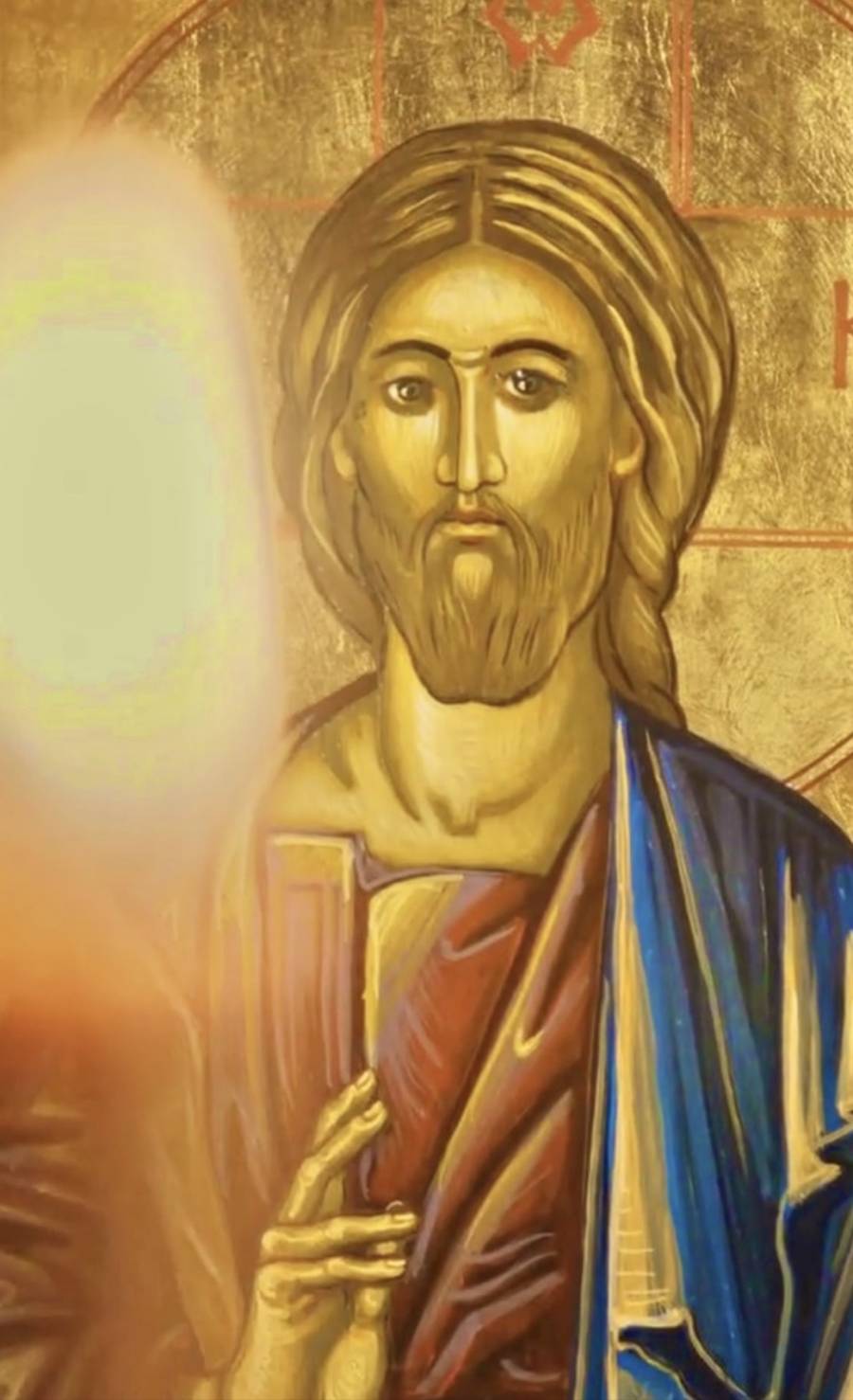
He himself stands not in front or above, but «in the middle». Nothing peremptory, overflowing, gigantic. Family Style.

«In the midst»: to enlighten all circumstances. To cohabit, to prepare, to take root in the hearts in a lovable, intimate, convincing way.

We will not be able to marvel at the coming of his Kingdom as if it were a show. 

The Presence of Fraternities in the world is woven with real life, not roles or vague narratives, sophisticated representations, or illusions.

Thus the Church will not be an anonymous and hostile society that astutely draws the maximum of "render".

The coming Community should not be part of the mundane situation, but should escape all predictability and limitation. 

The alternative Kingdom is of human condition, yet... ‘form’ that does not accept finitude as the only fate, nor is it adapted to our small measure of determinations and reassurances.

The Kingdom «in Persona Christi» shines a lucid and dreamy Energy, close and projective, which does not impose itself: animates the entire afflatus of creatures that put themselves in play.

Outside his ordinary circuits, the Lord does not ask for any glorious manifestation.

«The Kingdom of God does not come in such a way that it can be observed, nor will it be said: Here or there» [vv.20b-21a].

This is not a question about the end of the world, but about the end of a certain model of a successful humanity – one that is now… intimately linked to the «Son of Man» (vv. 22.24).

And the opportunity to overturn the concatenations [ancient or fashionable] presents itself at any moment; it flickers immediately (v.24).

All this brings the faithful into contact with the inner nature of the Kingdom. And in this guidance, they come to understand its wisdom – the hidden workings that draw forth fruitfulness from the chaotic edges.

Different veins, flowing of Spirit.

Otherwise it may even seem that God loses control of history.

And we, discouraged, put ourselves on one side of the road, watching intimidated, perhaps surrendered; hoping for the arrival of other things, external.

Instead, step by step his humanization project is realized - here - in all those who welcome the proposal to accentuate their lives, giving themselves.


No Domain.


To internalize and live the message:


How do you embody the prophecy of the ‘Coming’ Messiah without ceasing? Do you personally respond or do you run after striking events?


[Thursday 32nd wk. in O.T.  November 12, 2026]

74 Last modified on Wednesday, 04 November 2026 03:46
don Giuseppe Nespeca

Giuseppe Nespeca è architetto e sacerdote. Cultore della Sacra scrittura è autore della raccolta "Due Fuochi due Vie - Religione e Fede, Vangeli e Tao"; coautore del libro "Dialogo e Solstizio".

This is where the challenge for your life lies! It is here that you can manifest your faith, your hope and your love! [John Paul II at the Tala Leprosarium, Manila]
È qui la sfida per la vostra vita! È qui che potete manifestare la vostra fede, la vostra speranza e il vostro amore! [Giovanni Paolo II al Lebbrosario di Tala, Manila]
The more we do for others, the more we understand and can appropriate the words of Christ: “We are useless servants” (Lk 17:10). We recognize that we are not acting on the basis of any superiority or greater personal efficiency, but because the Lord has graciously enabled us to do so [Pope Benedict, Deus Caritas est n.35]
Quanto più uno s'adopera per gli altri, tanto più capirà e farà sua la parola di Cristo: « Siamo servi inutili » (Lc 17, 10). Egli riconosce infatti di agire non in base ad una superiorità o maggior efficienza personale, ma perché il Signore gliene fa dono [Papa Benedetto, Deus Caritas est n.35]
Each time we celebrate the dedication of a church, an essential truth is recalled: the physical temple made of brick and mortar is a sign of the living Church serving in history (Pope Francis)
Ogni volta che celebriamo la dedicazione di una chiesa, ci viene richiamata una verità essenziale: il tempio materiale fatto di mattoni è segno della Chiesa viva e operante nella storia (Papa Francesco)
It is a happy image with which, however, Jesus teaches a truth that calls us into question […] If we remove God, we remove Christ and the world falls back into emptiness and darkness (Pope Benedict)
E’ un’immagine felice, con cui però Gesù insegna una verità che ci mette in discussione […] Se togliamo Dio, se togliamo Cristo, il mondo ripiomba nel vuoto e nel buio (Papa Benedetto)
We would also like to set an example ourself, even if the smallness of our means might prevent anyone from appreciating the practical and quantitative significance of it. We want to see our own charitable institutions undergo a new development in the struggle against hunger and toward meeting the main needs of the world. This is the way and the only way to build peace (Pope Paul VI)
Vorremmo anche Noi dare l'esempio, sebbene l'esiguità dei Nostri mezzi ci impedisca di farne apprezzare la rilevanza pratica e quantitativa: Noi vogliamo dare alle Nostre istituzioni caritative un nuovo sviluppo in favore della fame e dei bisogni del mondo: è in questo modo, e non altrimenti, che si costruisce la pace (Papa Paolo VI)
As St. Ambrose put it: You are not making a gift of what is yours to the poor man, but you are giving him back what is his (Pope Paul VI, Populorum Progressio n.23)
Non è del tuo avere, afferma sant’Ambrogio, che tu fai dono al povero; tu non fai che rendergli ciò che gli appartiene (Papa Paolo VI, Populorum Progressio n.23)
Here is the entire Gospel! Here! The whole Gospel, all of Christianity, is here! But make sure that it is not sentiment, it is not being a “do-gooder”! (Pope Francis)
Qui c’è tutto il Vangelo! Qui! Qui c’è tutto il Vangelo, c’è tutto il Cristianesimo! Ma guardate che non è sentimento, non è “buonismo”! (Papa Francesco)
The Kingdom of God is neither spectacular nor reassuring: it is revealed in the Spirit of the Exodus, from hiddenness
Il Regno di Dio non è eclatante né rassicurante: si svela nello Spirito di esodo, dal nascondimento

Due Fuochi due Vie - Vol. 1 Due Fuochi due Vie - Vol. 2 Due Fuochi due Vie - Vol. 3 Due Fuochi due Vie - Vol. 4 Due Fuochi due Vie - Vol. 5 Dialogo e Solstizio I fiammiferi di Maria

duevie.art

don Giuseppe Nespeca

Tel. 333-1329741


Disclaimer

Questo blog non rappresenta una testata giornalistica in quanto viene aggiornato senza alcuna periodicità. Non può pertanto considerarsi un prodotto editoriale ai sensi della legge N°62 del 07/03/2001.
Le immagini sono tratte da internet, ma se il loro uso violasse diritti d'autore, lo si comunichi all'autore del blog che provvederà alla loro pronta rimozione.
L'autore dichiara di non essere responsabile dei commenti lasciati nei post. Eventuali commenti dei lettori, lesivi dell'immagine o dell'onorabilità di persone terze, il cui contenuto fosse ritenuto non idoneo alla pubblicazione verranno insindacabilmente rimossi.