Sep 11, 2026 Written by 

A new God, without planning: perhaps a deluded one?

In the difference between common religiosity and Faith

(Lk 8:4-15)


The parables compare the lived reality and the world of the Spirit:

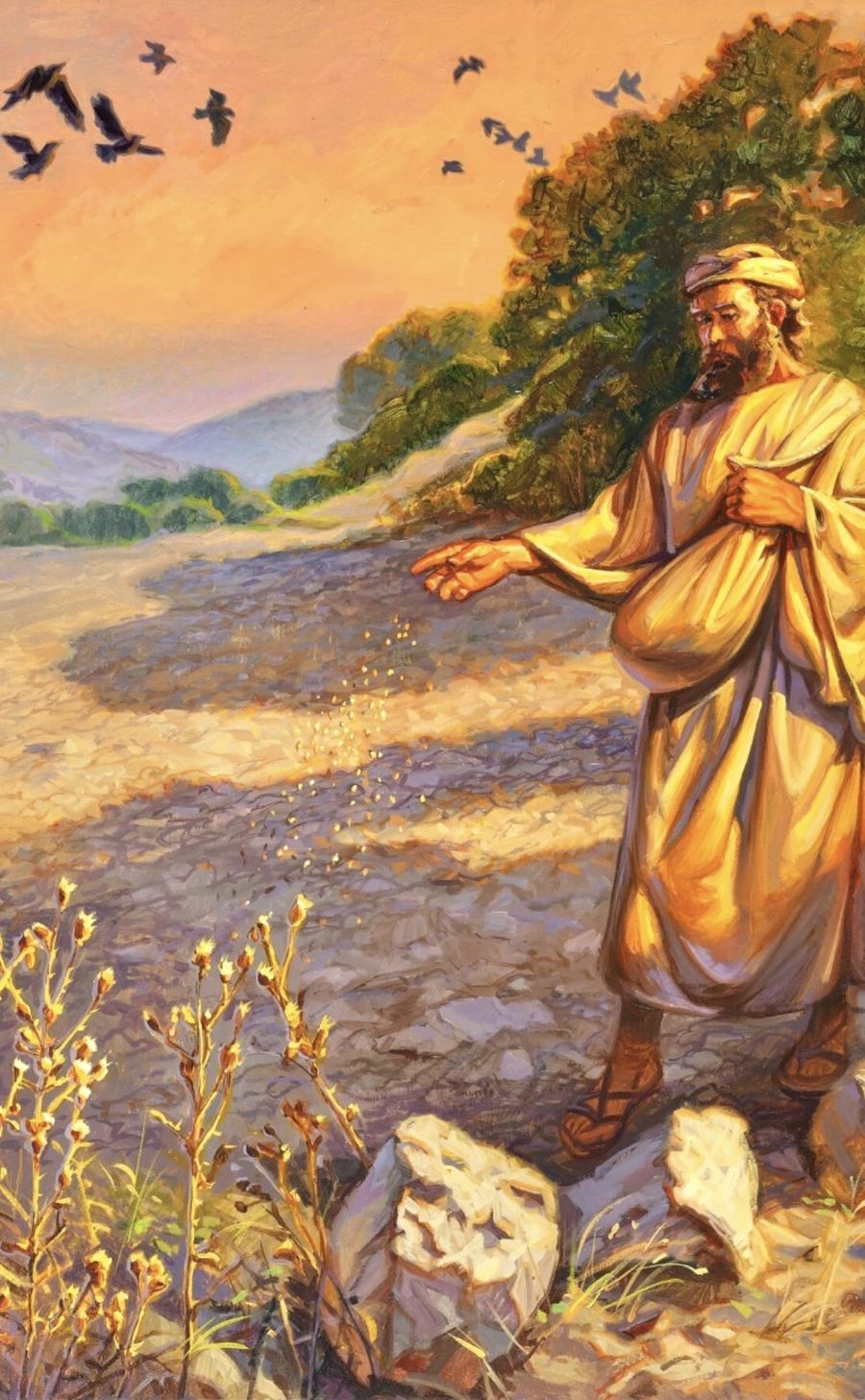
«And another part fell on the earth the beautiful one, and sprouted it bore fruit a hundredfold» (v.8).

Palestine’ stony terrain and scorching climate did not make it easy for the workers who lived on agriculture.

The lack of rain and the intrusion into the fields of those who wanted to shorten the path, destroyed the plants.

Tiring action and few tangible results.

Despite the enormous difficulties, every year the peasant threw grains with a wide hand, generously - and ploughed, animated by confidence in the inner life force of the seed and in the bounty of nature.

Ploughing was after sowing, to avoid that the soils turned over dried immediately under the powerful heat, and did not allow the grains to take root thanks to a minimum of moisture.

So the sower did not select the different types of ground prematurely.


The Seed already works: the new ‘Kingdom that Comes’ is not glorious, but here and there it takes root and produces - even where you do not expect.

According to the ancient religious mentality it seems a madness, but the divine Farmer does not choose the type of "land", nor discriminates on the basis of the percentage of production - although it would seem easy to predict.

The Sower even accepts that his ‘grain’ fallen on the ground «beautiful», fruits in differently: one hundred, sixty, thirty for one [Mt 13:8.23; Mk 4:8.20; the text of Lk does not speak of percentages].

The term «beautiful» (in the Eastern sense) means the full and fruitful land [the soul and work of the most intimate, even anonymous ones].


The Lord means that a wise commitment to evangelization cannot be measured with fussiness.

His Word remains as a Beginning thrown into the human heart by the One who is neither stingy nor exclusive - but magnanimous.

In this way, the Church, his new People, is a small alternative world to both the Empire and selective religions.

The new Rabbi did not intend to carve out better disciples than others - isolated from the reality of the human family.

He was proposing a new lifestyle, cohabiting.

In short, God does not force the growth of the ‘seed’ in each of us, in an abstract way; He waits patiently.

Even accepts that it is born badly or that it does not arise at all. He knows where to go.


Since overflowingly spreads on all kinds of hearts (even on asphalt), He foresees already that will be accused of being unwise.

But He does not worry about the quantity, nor about the immediate outward fruits of His ‘grain’.

He does not care that the work is "effective in departure"!

Such is the amiable, humanizing and divine (parental) Tolerance that saves. Loveableness that does not kidnap us every moment, to plan.

Rather, all this is to make us understand that He is not a calculating and miserly God, external, tight and biased; but a munificent and conciliatory Father.

Lord of the Kingdom who does not wait first for our little ‘perfections’.


The metaphor that follows the initial parable is intended to emphasize that any lack of result is not to be attributed to the lack of vitality of the Seed, nor to the divine Work, but to man’s freedom; to his condition of limit or incoherence.


Unfortunately, from the earliest generations of believers, the positive Call of Jesus has been reinterpreted somewhat backwards: with moralistic and individualistic overtones (vv.11-15) that have undermined its genuineness.

In this way, the initial proposal of personal Faith became contaminated with the customary purist and fall-back [guilt-ridden] outlook typical of the surrounding philosophies and religions, as well as common thought.

Certain configurations of ecclesial order subsequently normalized the same exceptional power of the Message; so unprecedented. In particular, the new sense of adequacy, confidence and self-esteem that the Son of God intended to communicate to His friends, and to the world of the least.


[Saturday 24th wk. in O.T.  September 19, 2026]

252 Last modified on Saturday, 19 September 2026 11:59
don Giuseppe Nespeca

Giuseppe Nespeca è architetto e sacerdote. Cultore della Sacra scrittura è autore della raccolta "Due Fuochi due Vie - Religione e Fede, Vangeli e Tao"; coautore del libro "Dialogo e Solstizio".

Faith in God opens before us the horizon of a sure hope, one which does not disappoint; it indicates a solid foundation on which to base one’s life without fear; it demands a faith-filled surrender into the hands of the Love which sustains the world (Pope Benedict)
La fede in Dio apre all’uomo l’orizzonte di una speranza certa che non delude; indica un solido fondamento sul quale poggiare, senza paura, la propria vita; richiede l’abbandono, pieno di fiducia, nelle mani dell’Amore che sostiene il mondo (Papa Benedetto)
The "new evangelization" faces this challenge. It must work to ensure that people recover the awareness that in Christ evil can be conquered with good (Pope John Paul II)
La “nuova evangelizzazione” affronta questa sfida. Essa deve impegnarsi perché tutti gli uomini recuperino la consapevolezza che in Cristo è possibile vincere il male con il bene (Papa Giovanni Paolo II)
Many saints experienced the night of faith and God’s silence — when we knock and God does not respond — and these saints were persevering (Pope Francis)
Tanti santi e sante hanno sperimentato la notte della fede e il silenzio di Dio – quando noi bussiamo e Dio non risponde – e questi santi sono stati perseveranti (Papa Francesco)
In some passages of Scripture it seems to be first and foremost Jesus’ prayer, his intimacy with the Father, that governs everything (Pope Francis)
In qualche pagina della Scrittura sembra essere anzitutto la preghiera di Gesù, la sua intimità con il Padre, a governare tutto (Papa Francesco)
It is necessary to know how to be silent, to create spaces of solitude or, better still, of meeting reserved for intimacy with the Lord. It is necessary to know how to contemplate. Today's man feels a great need not to limit himself to pure material concerns, and instead to supplement his technical culture with superior and detoxifying inputs from the world of the spirit [John Paul II]
Occorre saper fare silenzio, creare spazi di solitudine o, meglio, di incontro riservato ad un’intimità col Signore. Occorre saper contemplare. L’uomo d’oggi sente molto il bisogno di non limitarsi alle pure preoccupazioni materiali, e di integrare invece la propria cultura tecnica con superiori e disintossicanti apporti provenienti dal mondo dello spirito [Giovanni Paolo II]
This can only take place on the basis of an intimate encounter with God, an encounter which has become a communion of will, even affecting my feelings (Pope Benedict)
Questo può realizzarsi solo a partire dall'intimo incontro con Dio, un incontro che è diventato comunione di volontà arrivando fino a toccare il sentimento (Papa Benedetto)
He is “the very stone which the builders rejected” (cf. Mt 21:42), because they judged him to be hostile to the law and a danger to public order [Pope Benedict]
Egli è “la pietra che i costruttori hanno scartato” (cfr Mt 21,42), perché l’hanno giudicato nemico della legge e pericoloso per l’ordine pubblico [Papa Benedetto]
"His" in a very literal sense: the One whom only the Son knows as Father, and by whom alone He is mutually known. We are now on the same ground, from which the prologue of the Gospel of John will later arise (Pope John Paul II)
“Suo” in senso quanto mai letterale: Colui che solo il Figlio conosce come Padre, e dal quale soltanto è reciprocamente conosciuto. Ci troviamo ormai sullo stesso terreno, dal quale più tardi sorgerà il prologo del Vangelo di Giovanni (Papa Giovanni Paolo II)

Due Fuochi due Vie - Vol. 1 Due Fuochi due Vie - Vol. 2 Due Fuochi due Vie - Vol. 3 Due Fuochi due Vie - Vol. 4 Due Fuochi due Vie - Vol. 5 Dialogo e Solstizio I fiammiferi di Maria

duevie.art

don Giuseppe Nespeca

Tel. 333-1329741


Disclaimer

Questo blog non rappresenta una testata giornalistica in quanto viene aggiornato senza alcuna periodicità. Non può pertanto considerarsi un prodotto editoriale ai sensi della legge N°62 del 07/03/2001.
Le immagini sono tratte da internet, ma se il loro uso violasse diritti d'autore, lo si comunichi all'autore del blog che provvederà alla loro pronta rimozione.
L'autore dichiara di non essere responsabile dei commenti lasciati nei post. Eventuali commenti dei lettori, lesivi dell'immagine o dell'onorabilità di persone terze, il cui contenuto fosse ritenuto non idoneo alla pubblicazione verranno insindacabilmente rimossi.






