Sep 9, 2026 Written by 

Intruder Love, in Simon's respectable House

And the Feet of Jesus, kissed by the unexpected and censored guest

(Lk 7:36-50)


It is Love that path of perfection desired by God to make us grow, and to our benefit - not a formalism sterilised by strict censors.

What unites us seriously in beliefs comes from within, from our Core; it does not depend on the outside.

Love is not planned at a desk or on the basis of models. It expresses the heart with sincerity.

It is not a reality that is subject to distances that deem others to be nosy.

So empathy and loving-kindness do not appear or disappear on command, according to code or season.

They belong to the deep side of being women and men of all times.


It is passion that can lead one's existence in the Spirit in a valuable way, not a ritual landscape.

Love with all our heart is triggered when we need to make the decisive Encounter: that opportunity we feel will open the door to resources, skills, talents, energies, otherwise unexpressed or stifled.


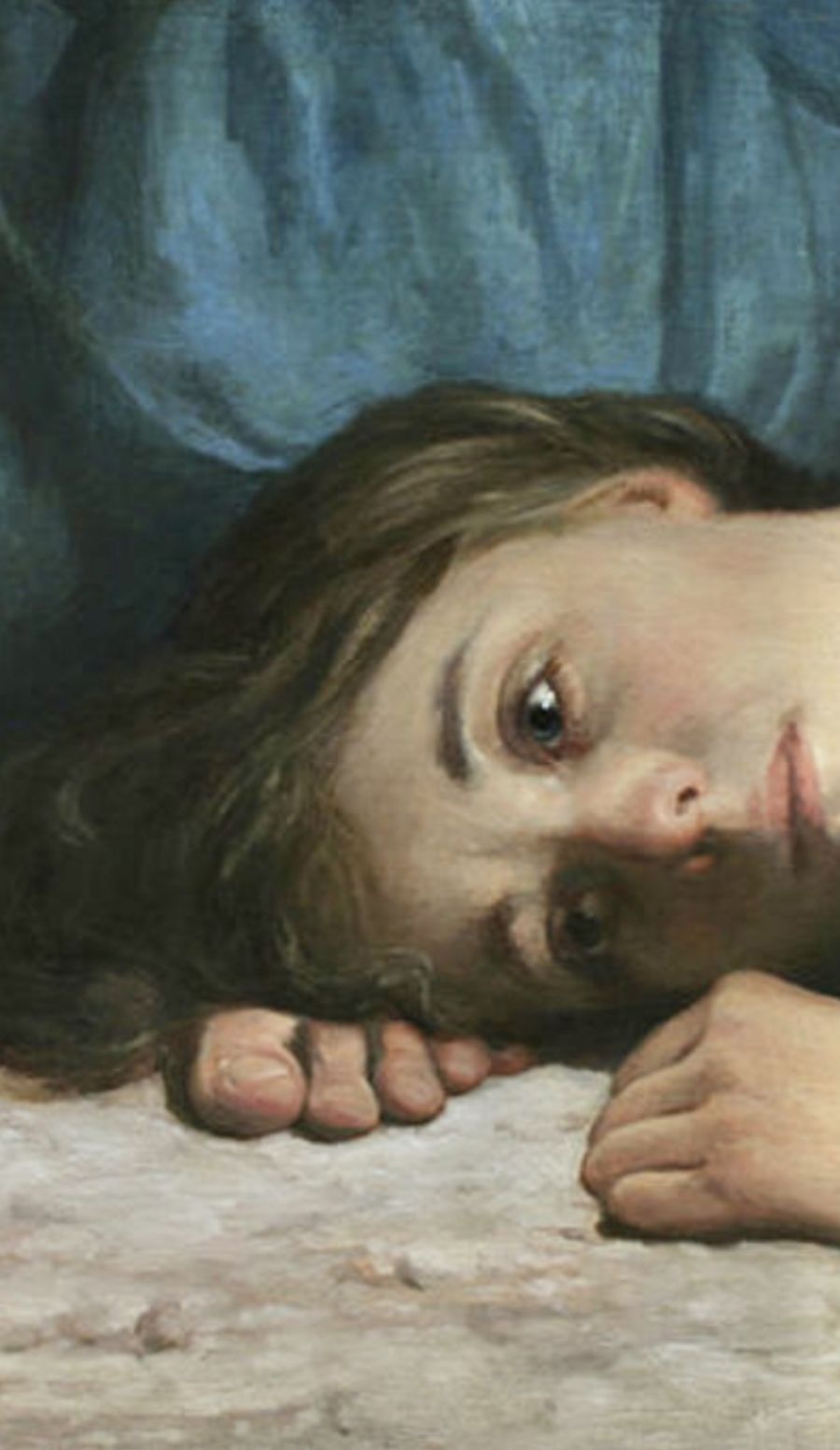
Dissolving her hair in public, the 'sinner woman' almost seems to be a figure of the 'lesser boat' that offers no resistance but only support to the protagonist one (Lk 5.2.7.11).

It is a spurious and second community, compared to the official church of the apostles who are always “close” - and of mixed cultural extraction, unlike the first community which was still Judaizing.

She comes to the You-for-you with a gesture of independence: she needs a more spontaneous and personal relationship with the Lord, the only one who looks at her in a non-superficial way.

Relationship impeded precisely by those who crowd around Him, but do not appreciate the favour received, although they have been partaking of the [Eucharistic] banquet for a long time.


The ‘safety’ of mechanisms and ideas laced with prejudice prevents one from experiencing the Gratis. Here is the link between tears and Forgiveness.

He who pushes away the unpredictable does not unleash any new inner strength. He fears any jolt that might shatter his habitual, plastered world.

Habituals block any emancipation or discovery. They dislike people who need to free themselves from the straits of life.

They are not worshippers of the great Master's Way [cf. the constant reference to his «Feet»].


Total intimate adherence comes before anything we can fulfil or think.

The all-human transport without curtains is that which would not make us overburdened with arrogance and unable to recognise his Gifts.

He who is convinced that he gives something to God, certainly does not love him.

And the choice that concerns us is between negligible details or getting to the heart of the authentic Relationship.

On this floor, the Home master is immediately dizzy.

Simon is frightened by the very idea of the Master attempting to bring him into a new logic: «I suppose...» (v.43).


The Gospel passage is meant to make us reflect on who is most willing to grow and love.

Let us ask ourselves: are they the ones who [like Simon] can set up respectable screens, or the small souls who spontaneously approach their 'source' - devoid of social masks?


In short, Redemption is the fruit of moved personal immediacy, even already achieved without works of law.


[Thursday 24th wk. in O.T.  September 17, 2026]

312 Last modified on Thursday, 17 September 2026 11:59
don Giuseppe Nespeca

Giuseppe Nespeca è architetto e sacerdote. Cultore della Sacra scrittura è autore della raccolta "Due Fuochi due Vie - Religione e Fede, Vangeli e Tao"; coautore del libro "Dialogo e Solstizio".

Man rightly fears falling victim to an oppression that will deprive him of his interior freedom, of the possibility of expressing the truth of which he is convinced, of the faith that he professes, of the ability to obey the voice of conscience that tells him the right path to follow [Dives in Misericordia, n.11]
L'uomo ha giustamente paura di restar vittima di una oppressione che lo privi della libertà interiore, della possibilità di esternare la verità di cui è convinto, della fede che professa, della facoltà di obbedire alla voce della coscienza che gli indica la retta via da seguire [Dives in Misericordia, n.11]
We find ourselves, so to speak, roped to Jesus Christ together with him on the ascent towards God's heights (Pope Benedict)
Ci troviamo, per così dire, in una cordata con Gesù Cristo – insieme con Lui nella salita verso le altezze di Dio (Papa Benedetto)
There are also serious, dangerous omissions and we have to recognize with healthy realism that in this way things are not all right, it is not all right when errors are made. However, we must also be certain at the same time that if, here and there, the Church is dying because of the sins of men and women, because of their non-belief, at the same time she is reborn (Pope Benedict)
Ci sono anche cadute gravi, pericolose, e dobbiamo riconoscere con sano realismo che così non va, non va dove si fanno cose sbagliate. Ma anche essere sicuri, allo stesso tempo, che se qua e là la Chiesa muore a causa dei peccati degli uomini, a causa della loro non credenza, nello stesso tempo, nasce di nuovo (Papa Benedetto)
The question makes apparent the concern, present in ancient Jewish tradition, over finding a unifying principle in the various formulations of God's will […] Emphasis is placed on the totality of this dedication to God, listing the three faculties that define man in his deep psychological structures: heart, soul and mind. The word mind, diánoia, contains the rational element (Pope Benedict)
La domanda lascia trasparire la preoccupazione, presente nell’antica tradizione giudaica, di trovare un principio unificatore delle varie formulazioni della volontà di Dio […] L’accento è posto sulla totalità di questa dedizione a Dio, elencando le tre facoltà che definiscono l’uomo nelle sue strutture psicologiche profonde: cuore, anima e mente. Il termine mente, diánoia, contiene l’elemento razionale (Papa Benedetto)
A “year” of grace: the period of Christ’s ministry, the time of the Church before his glorious return, an interval of our life (Pope Francis)
Un “anno” di grazia: il tempo del ministero di Cristo, il tempo della Chiesa prima del suo ritorno glorioso, il tempo della nostra vita (Papa Francesco)
The Church, having before her eyes the picture of the generation to which we belong, shares the uneasiness of so many of the people of our time (Dives in Misericordia n.12)
Avendo davanti agli occhi l'immagine della generazione a cui apparteniamo, la Chiesa condivide l'inquietudine di tanti uomini contemporanei (Dives in Misericordia n.12)
Nec quisquam sumit sibi honorem, sed qui vocatur a Deo, there is no one who assumes this dignity for himself, if he is not called by God (Heb 5:4) [Pope Paul VI]
Nec quisquam sumit sibi honorem, sed qui vocatur a Deo, non vi è alcuno che assuma da sé questa dignità, se non è chiamato da Dio (He 5,4) [Papa Paolo VI]

Due Fuochi due Vie - Vol. 1 Due Fuochi due Vie - Vol. 2 Due Fuochi due Vie - Vol. 3 Due Fuochi due Vie - Vol. 4 Due Fuochi due Vie - Vol. 5 Dialogo e Solstizio I fiammiferi di Maria

duevie.art

don Giuseppe Nespeca

Tel. 333-1329741


Disclaimer

Questo blog non rappresenta una testata giornalistica in quanto viene aggiornato senza alcuna periodicità. Non può pertanto considerarsi un prodotto editoriale ai sensi della legge N°62 del 07/03/2001.
Le immagini sono tratte da internet, ma se il loro uso violasse diritti d'autore, lo si comunichi all'autore del blog che provvederà alla loro pronta rimozione.
L'autore dichiara di non essere responsabile dei commenti lasciati nei post. Eventuali commenti dei lettori, lesivi dell'immagine o dell'onorabilità di persone terze, il cui contenuto fosse ritenuto non idoneo alla pubblicazione verranno insindacabilmente rimossi.