Jul 24, 2026 Written by 

The struggle for Liberation from the corrupt

Prophecy, Revelation

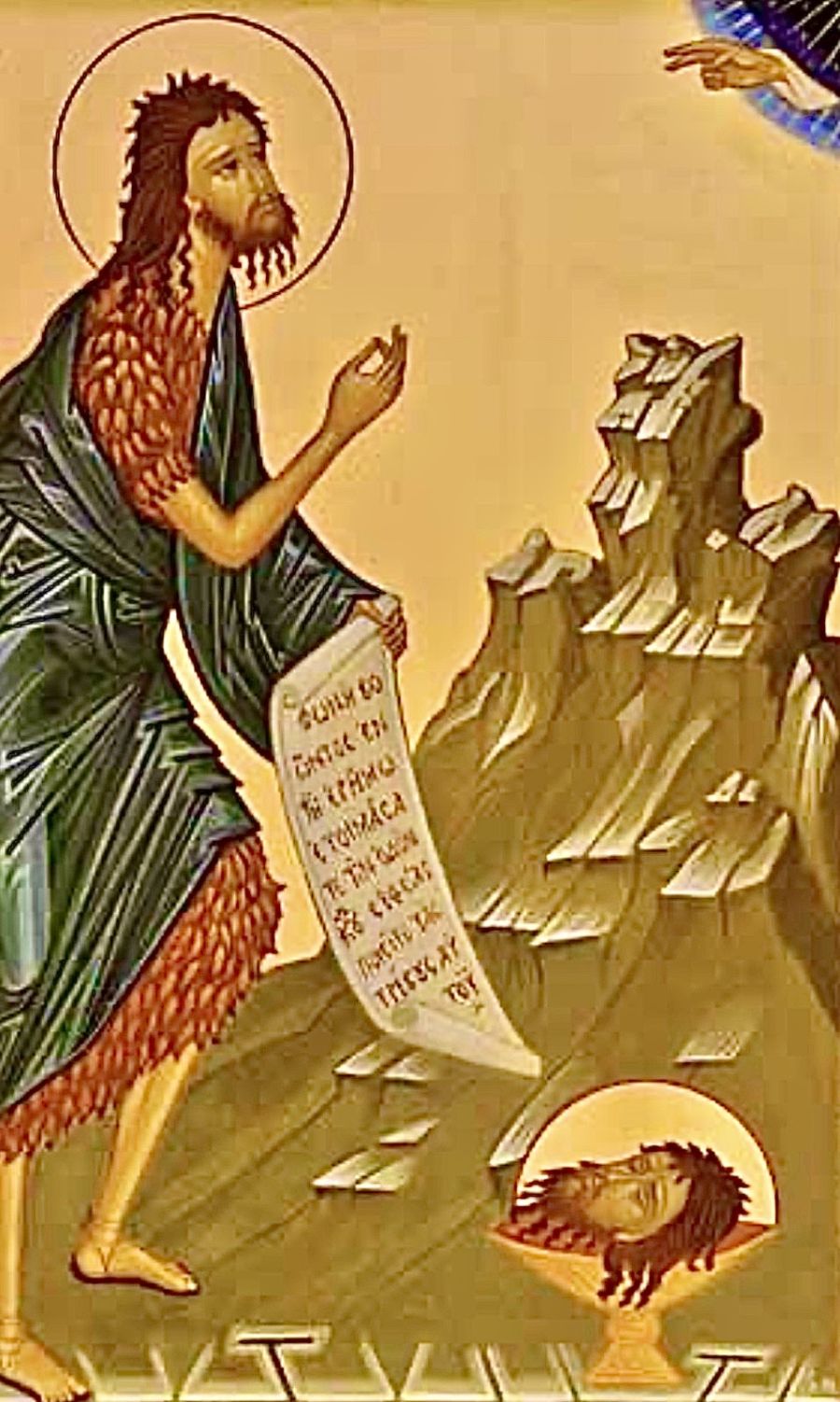
(Mt 14:1-12)


Those who are cloaked in luster and power become ambitious, bold and willing to any violence for a false point of honor.

The courageous who denounces abuse is cut off, but the voice of his martyrdom will no longer be silent. That is why the episode does not induce Jesus to greater prudence.

Tyrants mock the isolated, uncomfortable and defenceless, but leaders and powerful are also cowards: they do not intend to alienate popular fame from themselves.

Besides being spineless, here Herod Antipas appears superstitious, even influenced by Hellenistic beliefs about the reappearance of the dead.

In addition, he thought of the men of God as doers of “miracles” - an ambiguous term, which some new translations avoid (cf. v.2).

Jesus never attended the new Herodian capital, Tiberias, the city of court palaces, built in diplomatic homage to the Roman emperor - after Sepphoris, where Jesus also worked.


Generic and confusing religiosity can adapt to every season and be made their own even by those who think that the others’ lives are worth nothing, but a Prophet does not settle on the whim of corrupt systems.

In the Palestinian villages the life of the people was harassed by taxes and abuses of landowners [who did not even reside on the spot] and controlled by the perfect combination of interests between civil and religious power.

The leaders of the popular faith, orthodox, subordinate and “befitting”, were at leash of the authorities on the territory. They considered themselves definitive, and found strength in the coalition.

It seemed absurd that in that society someone dared to break through the omertous wall that guaranteed the troublemakers - the guides, the bullies even of the lowest level - to consider themselves untouchable.

Faced with the blackmail (without too many compliments) of the privileged who had control of every social and cultural class, it seemed impossible to start a new path, or say and do anything not aligned.


The question of "Jesus, Who is he?» grows throughout the Gospels.

The statement of people's opinions (e.g. Mt 14:1-2; Mk 6:14-16; Lk 9:7-9) suggests that even around the first assemblies of believers there was an attempt to understand Christ from what was already known [from the criteria of Scripture and tradition, from ancient - even superstitious - beliefs and suggestions].

But the man of God is not simply a purifier of the Temple, nor a patchworker of conformist religiosity. He overturns popular, emotional or standard hopes.

In this way, each Prophet troubles all the “rank and file” characters, who hold the exclusiveness.


John and Jesus challenge and attract upon themselves the revenge of those who try to perpetuate the prerogatives of the old cosmos, and the wrath of those who are exposed in their hypocrisies.

It is the real difficulty that the Proclamation of the New Kingdom in the world encounters. 

His contemptuous refusal and each assassination attempt will be a litmus test of our singular and renewed testimony, the revelation of which will run parallel to the Two.


[Saturday 17th wk. in O.T.  August 1st, 2026]

245 Last modified on Saturday, 01 August 2026 12:00
don Giuseppe Nespeca

Giuseppe Nespeca è architetto e sacerdote. Cultore della Sacra scrittura è autore della raccolta "Due Fuochi due Vie - Religione e Fede, Vangeli e Tao"; coautore del libro "Dialogo e Solstizio".

Faith is more than just empirical or historical facts; it is an ability to grasp the mystery of Christ’s person in all its depth [Pope Benedict]
La fede va al di là dei semplici dati empirici o storici, ed è capace di cogliere il mistero della persona di Cristo nella sua profondità [Papa Benedetto]
More than 600 precepts are mentioned in the Law of Moses. How should the great commandment be distinguished among these? (Pope Francis)
Nella Legge di Mosè sono menzionati oltre seicento precetti. Come distinguere, tra tutti questi, il grande comandamento? (Papa Francesco)
The invitation has three characteristics: freely offered, breadth and universality. Many people were invited, but something surprising happened: none of the intended guests came to take part in the feast, saying they had other things to do; indeed, some were even indifferent, impertinent, even annoyed (Pope Francis)
L’invito ha tre caratteristiche: la gratuità, la larghezza, l’universalità. Gli invitati sono tanti, ma avviene qualcosa di sorprendente: nessuno dei prescelti accetta di prendere parte alla festa, dicono che hanno altro da fare; anzi alcuni mostrano indifferenza, estraneità, perfino fastidio (Papa Francesco)
Those who are considered the "last", if they accept, become the "first", whereas the "first" can risk becoming the "last" (Pope Benedict)
Proprio quelli che sono considerati "ultimi", se lo accettano, diventano "primi", mentre i "primi" possono rischiare di finire "ultimi" (Papa Benedetto)
The dialogue of Jesus with the rich young man, related in the nineteenth chapter of Saint Matthew's Gospel, can serve as a useful guide for listening once more in a lively and direct way to his moral teaching [Veritatis Splendor n.6]
Il dialogo di Gesù con il giovane ricco, riferito nel capitolo 19 del Vangelo di san Matteo, può costituire un'utile traccia per riascoltare in modo vivo e incisivo il suo insegnamento morale [Veritatis Splendor n.6]
St Augustine rightly commented: “Christ showed himself indifferent to her, not in order to refuse her his mercy but rather to inflame her desire for it” (Sermo 77, 1: PL 38, 483) [Pope Benedict]
Sant’Agostino commenta giustamente: “Cristo si mostrava indifferente verso di lei, non per rifiutarle la misericordia, ma per infiammarne il desiderio” (Sermo 77, 1: PL 38, 483) [Papa Benedetto]
In the divine attitude justice is pervaded with mercy, whereas the human attitude is limited to justice. Jesus exhorts us to open ourselves with courage to the strength of forgiveness, because in life not everything can be resolved with justice. We know this (Pope Francis)
Nell’atteggiamento divino la giustizia è pervasa dalla misericordia, mentre l’atteggiamento umano si limita alla giustizia. Gesù ci esorta ad aprirci con coraggio alla forza del perdono, perché nella vita non tutto si risolve con la giustizia; lo sappiamo (Papa Francesco)
The Second Vatican Council's Constitution on the Sacred Liturgy refers precisely to this Gospel passage to indicate one of the ways that Christ is present:  "He is present when the Church prays and sings, for he has promised "where two or three are gathered together in my name there am I in the midst of them' (Mt 18: 20)" [Sacrosanctum Concilium, n. 7]
The Lord Jesus presented himself to the world as a servant, completely stripping himself and lowering himself to give on the Cross the most eloquent lesson of humility and love (Pope Benedict)

Due Fuochi due Vie - Vol. 1 Due Fuochi due Vie - Vol. 2 Due Fuochi due Vie - Vol. 3 Due Fuochi due Vie - Vol. 4 Due Fuochi due Vie - Vol. 5 Dialogo e Solstizio I fiammiferi di Maria

duevie.art

don Giuseppe Nespeca

Tel. 333-1329741


Disclaimer

Questo blog non rappresenta una testata giornalistica in quanto viene aggiornato senza alcuna periodicità. Non può pertanto considerarsi un prodotto editoriale ai sensi della legge N°62 del 07/03/2001.
Le immagini sono tratte da internet, ma se il loro uso violasse diritti d'autore, lo si comunichi all'autore del blog che provvederà alla loro pronta rimozione.
L'autore dichiara di non essere responsabile dei commenti lasciati nei post. Eventuali commenti dei lettori, lesivi dell'immagine o dell'onorabilità di persone terze, il cui contenuto fosse ritenuto non idoneo alla pubblicazione verranno insindacabilmente rimossi.






