Jul 15, 2026 Written by 

Law or hunger: conflicts of conscience

Incarnation, or emptiness of humanity

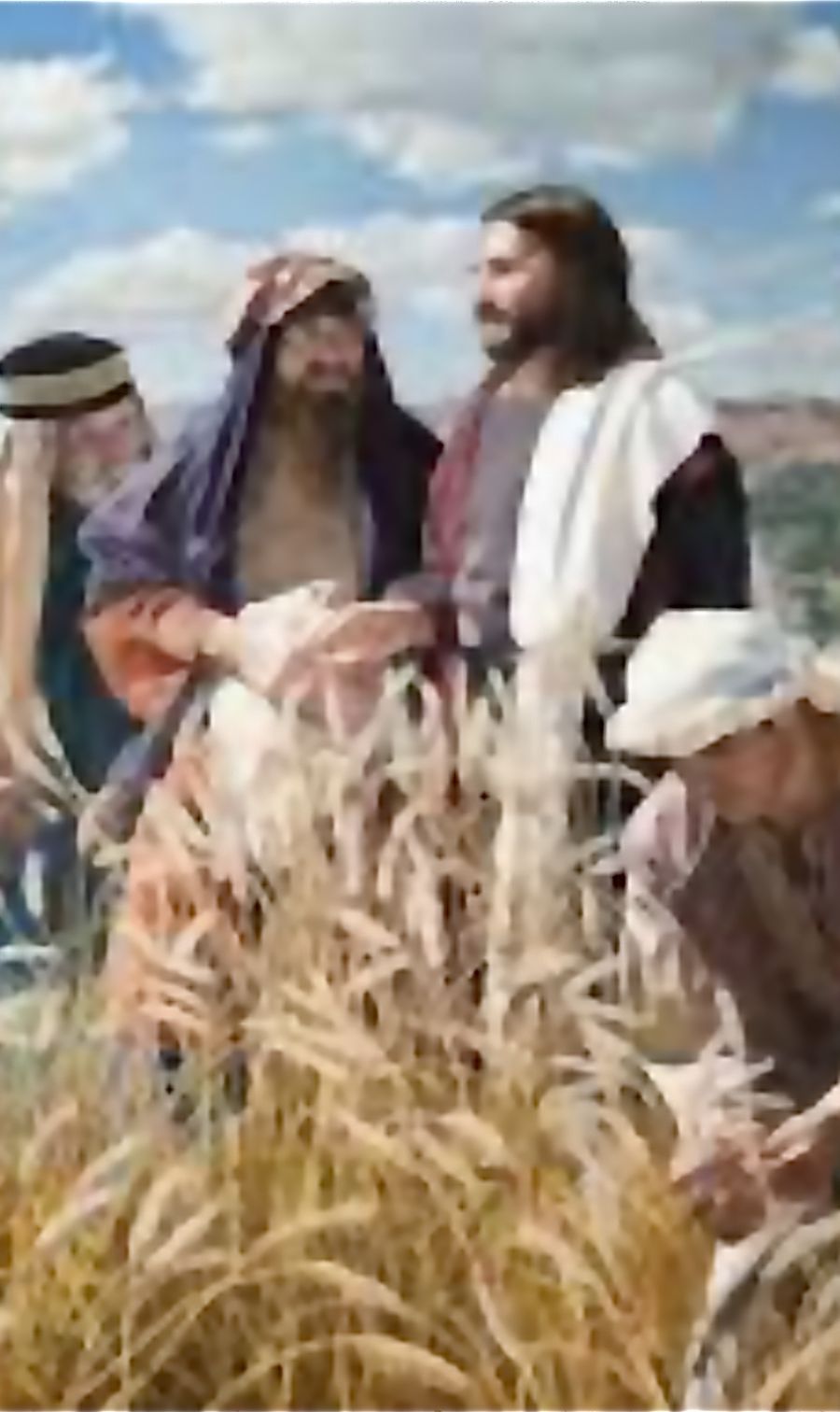
(Mt 12:1-8)


On the conversion journey, conflicts of conscience are not parentheses or accidents of the path, but crucial knots.

The genuineness of believing then generates implicative strenght and new expressive abilities.

The alternative is between Intimacy and practice of Faith, or religion that condemns people without fault (v.7):


According to ordinary religious assessments, the legislation was worth more than hunger... but God’s experience in the life overturns ideas elaborated by experts.

To be honest, observance of the Sabbath had become a central law not because of theological subtleties, very well because in the period of the Exile the weekly rest had allowed believers to gather, share hopes, encourage each other, maintain the identity of the people.

But legalism ended up stifling the spirit of the day of worship, once a sign of a freedom in the service of people faith and happiness.

Thus where Jesus arrives, every spiritual module empty of humanity crumbles, and the Incarnation takes hold: the place where God and man  seriously ‘rest’ [other than the saturday!].

Therefore the Lord quotes the prophet Hosea, a man with a raw experience, but who clearly defines the summit of intimacy with God: an authentic Rite is to realize the needs of our neighbour and to have the heart in the others’ hopes.


The archaic «sacrifice» [«sacrum-facere», making sacred] reflected an idea of cutting, separation and distance between the perfect world of "heaven" and the profane existence of people.

But after the coming of the «Son of Man» (v.8) the new consecrated persons will not live far from the day-to-day existence.

Rather, they will be the first to welcome and relieve those in need.

Sign of the Covenant with God, and Encounter [authentic sanctification] is an ‘adherence’ that continues in the plot of days.


After the Messianic Hymn of Jubilation and the «Gladness of the Simple» that supplants the «yoke» of the ancient religion (Mt 11:25-30), the Master presents himself to the Pharisees in the (stand-in) regal guise of David, who sets out to conquer the alternative Kingdom, even with a small handful of followers.

To the slavery of customs, Christ opposes a looseness that makes the encounter between God and his people more agile, more spontaneous, richer and more personal.

A trail of light - even for us - in the face of the current pastoral collapse (despite the plethora of structures on the ground!).

In the time of the global crisis that seems to mortgage the future [and there is still an attempt to calculate it by directing it a priori, according to selective interests] the challenge is more open than ever.


To internalize and live the message:


How did you perceive that you were reliving Christ in the fluency of the norms?


[Friday 15th wk. in O.T.  July 17, 2026]

255 Last modified on Friday, 17 July 2026 12:00
don Giuseppe Nespeca

Giuseppe Nespeca è architetto e sacerdote. Cultore della Sacra scrittura è autore della raccolta "Due Fuochi due Vie - Religione e Fede, Vangeli e Tao"; coautore del libro "Dialogo e Solstizio".

The grain of wheat that "falls to the ground and dies" becomes the promise of bread (Pope John Paul II)
Il chicco di grano che “cade in terra e muore” diventa la promessa del pane (Papa Giovanni Paolo II)
The power of faith can move mountains (cf. Mt 17:20): the Lord can illuminate even the deepest darkness [Pope Benedict]
La forza della fede può spostare le montagne (cfr Mt 17,20): il Signore può illuminare anche la tenebra più profonda [Papa Benedetto]
By willingly accepting death, Jesus carries the cross of all human beings and becomes a source of salvation for the whole of humanity. St Cyril of Jerusalem commented: “The glory of the Cross led those who were blind through ignorance into light, loosed all who were held fast by sin and brought redemption to the whole world of mankind” (Catechesis Illuminandorum XIII, 1: de Christo crucifixo et sepulto: PG 33, 772 B) [Pope Benedict]
Accettando volontariamente la morte, Gesù porta la croce di tutti gli uomini e diventa fonte di salvezza per tutta l’umanità. San Cirillo di Gerusalemme commenta: «La croce vittoriosa ha illuminato chi era accecato dall’ignoranza, ha liberato chi era prigioniero del peccato, ha portato la redenzione all’intera umanità» (Catechesis Illuminandorum XIII,1: de Christo crucifixo et sepulto: PG 33, 772 B) [Papa Benedetto]
In the New Testament, it is Christ who constitutes the full manifestation of God's light [Pope Benedict]
Nel Nuovo Testamento è Cristo a costituire la piena manifestazione della luce di Dio [Papa Benedetto]
Faith opens us to knowing and welcoming the real identity of Jesus, his newness and oneness, his word, as a source of life, in order to live a personal relationship with him. Knowledge of the faith grows, it grows with the desire to find the way and in the end it is a gift of God who does not reveal himself to us as an abstract thing without a face or a name, because faith responds to a Person who wants to enter into a relationship of deep love with us and to involve our whole life (Pope Benedict)
La fede ci apre a conoscere e ad accogliere la reale identità di Gesù, la sua novità e unicità, la sua Parola, come fonte di vita, per vivere una relazione personale con Lui. Il conoscere della fede cresce, cresce con il desiderio di trovare la strada, ed è finalmente un dono di Dio, che si rivela a noi non come una cosa astratta senza volto e senza nome, ma la fede risponde a una Persona, che vuole entrare in un rapporto di amore profondo con noi e coinvolgere tutta la nostra vita (Papa Benedetto)
Jesus Christ clearly indicates that even acts of devotion and penance (such as fasting, almsgiving, prayer), which by their religious purpose are primarily 'interior', can succumb to current 'externalism', and can therefore be falsified [John Paul II]
Gesù Cristo indica chiaramente che anche gli atti di devozione e di penitenza (come digiuno, elemosina, preghiera) che per la loro finalità religiosa sono principalmente “interiori”, possono cedere all’“esteriorismo” corrente, e quindi possono essere falsificati [Giovanni Paolo II]
Today’s Gospel reminds us that faith in the Lord and in his Word does not open a way for us where everything is easy and calm; it does not rescue us from life’s storms. Faith gives us the assurance of a Presence (Pope Francis)
He does so in many situations of daily life - He holds his hand out to us. And only if we take the Lord's hand, if we let ourselves be guided by him, will the path we take be right and good [Pope Benedict]

Due Fuochi due Vie - Vol. 1 Due Fuochi due Vie - Vol. 2 Due Fuochi due Vie - Vol. 3 Due Fuochi due Vie - Vol. 4 Due Fuochi due Vie - Vol. 5 Dialogo e Solstizio I fiammiferi di Maria

duevie.art

don Giuseppe Nespeca

Tel. 333-1329741


Disclaimer

Questo blog non rappresenta una testata giornalistica in quanto viene aggiornato senza alcuna periodicità. Non può pertanto considerarsi un prodotto editoriale ai sensi della legge N°62 del 07/03/2001.
Le immagini sono tratte da internet, ma se il loro uso violasse diritti d'autore, lo si comunichi all'autore del blog che provvederà alla loro pronta rimozione.
L'autore dichiara di non essere responsabile dei commenti lasciati nei post. Eventuali commenti dei lettori, lesivi dell'immagine o dell'onorabilità di persone terze, il cui contenuto fosse ritenuto non idoneo alla pubblicazione verranno insindacabilmente rimossi.






