Aug 23, 2026 Written by 

The platform that makes the breakthrough

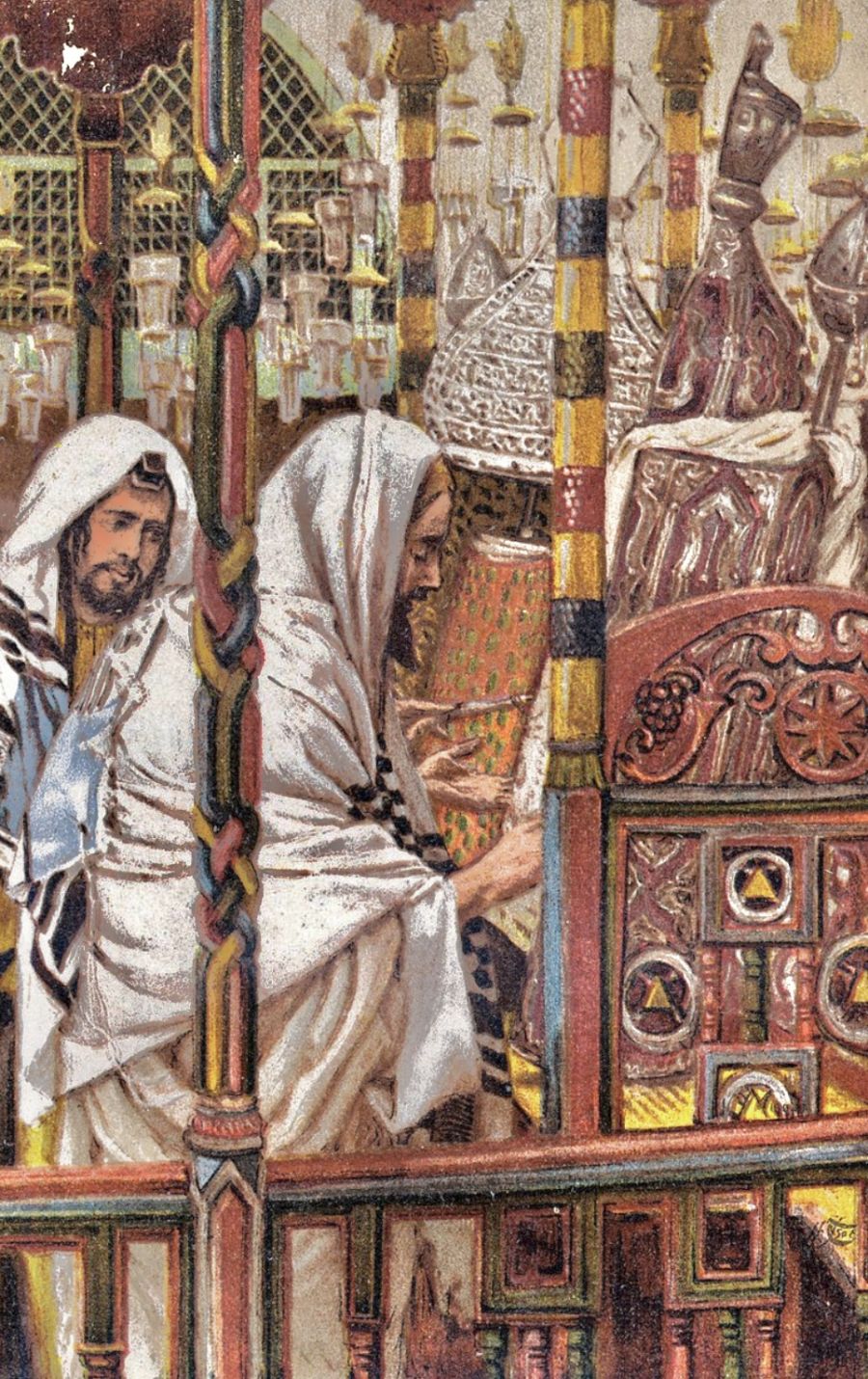
In the Synagogue and from the precipice

(Lc 4:16-30)


In ancient Israel, the patriarchal family, clan and community were the basis of social coexistence.

They ensured the transmission of the nation identity and provided protection for the afflicted.

But at the time of Jesus, Galilee was subject to the segregation dictated by Herod's policies, and suffered from the oppression of official religiosity.

The political and economic situation forced people to retreat into material and individual problems or those of small family.

A situation that was leading the least protected sections of the population to collapse.

Instead, Jesus wants to return to the Father's Dream: the ineradicable one of Fraternity, the only seal to salvation history.

Thus, according to Lk the first time Jesus enters a synagogue he makes a mess.

He does not go to pray, but to Teach what the Grace of God is [the one not weakened by chicanery or false instructions] in the real existence of people.

He chose a passage that reflected the situation of his people, oppressed by the power of the rulers, who were making the weak suffer confusion and poverty.

But his First Reading disregards the liturgical calendar.

He then dares to preach in his own way and personalizes the passage from Isaiah, from which he allows himself to censor the verse announcing God's “vengeance”.

So neither does He proclaim the expected passage of the Law.

Moreover, for the Son of God, the Spirit is not revealed in the extraordinary phenomena of the cosmos, but in the Year of Grace [«a year acceptable to the Lord»: v.19].


Is it possible that the divine likeness could manifest itself in a man who is considerate towards the less fortunate, who disregards official customs, does not believe in retaliation, and displays forms of uncontrolled spontaneity?

It is a reminder to us.

Like the Master, instead of reasoning with induced thoughts and being sequestered by the heaviness of rejections and fears, in Him we begin to think with the empathic codes of our Calling, which breaks through.

The unrepeatable and wide-ranging Vision-Relation (v.18a) - without reduction - then becomes strategic, because it possesses within itself the appeal of the radical essence, and all the resources to solve the real problems.

To listen to the proclamation of the Gospels (v.18b) is to listen to the echo of oneself and the people considered insignificant: intimate and fraternal choice.

And to be in it without the dead leaves of one-sidedness - by wandering freely in that same Appeal; not neglecting precious parts of oneself, nor amputating eccentricities, or the intuition proper to the subaltern classes.

In this way, we remain in the instinct to be and do happy, without ever allowing ourselves to be imprisoned by the craving for security on the side: a stagnant quest.


The Kingdom in the Spirit (cf. vv.14.18) knows what we need. It has ceased to be a goal of mere future.

It is the surprise that Christ arouses in us through his Dream, around his proposal with an extra gear.

The Lord does not neglect us: He extinguishes accusatory brooding and creatively redesigns.

He gives birth again and motivates, recovers dispersions and reinforces the plot.


It is divine because it is personal and social, the new Energy, empowered to create the authentic man.

This is the platform that works the breakthrough.


[Monday 22nd wk. in O.T.  August 31st, 2026]

78 Last modified on Sunday, 23 August 2026 04:22
don Giuseppe Nespeca

Giuseppe Nespeca è architetto e sacerdote. Cultore della Sacra scrittura è autore della raccolta "Due Fuochi due Vie - Religione e Fede, Vangeli e Tao"; coautore del libro "Dialogo e Solstizio".

We see this great figure, this force in the Passion, in resistance to the powerful. We wonder: what gave birth to this life, to this interiority so strong, so upright, so consistent, spent so totally for God in preparing the way for Jesus? The answer is simple: it was born from the relationship with God (Pope Benedict)
Noi vediamo questa grande figura, questa forza nella passione, nella resistenza contro i potenti. Domandiamo: da dove nasce questa vita, questa interiorità così forte, così retta, così coerente, spesa in modo così totale per Dio e preparare la strada a Gesù? La risposta è semplice: dal rapporto con Dio (Papa Benedetto)
The lamp is a symbol of the faith that illuminates our life, while the oil is a symbol of the charity that nourishes the light of faith, making it fruitful and credible (Pope Francis)
La lampada è il simbolo della fede che illumina la nostra vita, mentre l’olio è il simbolo della carità che alimenta, rende feconda e credibile la luce della fede (Papa Francesco)
Jesus wants our existence to be laborious, that we never lower our guard, so as to welcome with gratitude and wonder each new day given to us by God. Every morning is a blank page on which a Christian begins to write with good works (Pope Francis)
Gesù vuole che la nostra esistenza sia laboriosa, che non abbassiamo mai la guardia, per accogliere con gratitudine e stupore ogni nuovo giorno donatoci da Dio. Ogni mattina è una pagina bianca che il cristiano comincia a scrivere con le opere di bene (Papa Francesco)
And this is the problem: when the People put down roots in the land and are the depository of the Law, they are tempted to place their security and joy in something that is no longer the Word of God (Pope Benedict)
Ed ecco il problema: quando il popolo si stabilisce nella terra, ed è depositario della Legge, è tentato di riporre la sua sicurezza e la sua gioia in qualcosa che non è più la Parola del Signore (Papa Benedetto)
Despite the scarcity of information about him, St Bartholomew stands before us to tell us that attachment to Jesus can also be lived and witnessed to without performing sensational deeds. Jesus himself, to whom each one of us is called to dedicate his or her own life and death, is and remains extraordinary (Pope Benedict)
La figura di san Bartolomeo, pur nella scarsità delle informazioni che lo riguardano, resta comunque davanti a noi per dirci che l'adesione a Gesù può essere vissuta e testimoniata anche senza il compimento di opere sensazionali. Straordinario è e resta Gesù stesso, a cui ciascuno di noi è chiamato a consacrare la propria vita e la propria morte (Papa Benedetto)
Faith is more than just empirical or historical facts; it is an ability to grasp the mystery of Christ’s person in all its depth [Pope Benedict]
La fede va al di là dei semplici dati empirici o storici, ed è capace di cogliere il mistero della persona di Cristo nella sua profondità [Papa Benedetto]
Consequently, just as for Christ carrying the cross was not an option but a mission to be embraced for love, so it is for Christians too. In our world today, where the forces that divide and destroy seem to dominate, Christ does not cease to offer to all his clear invitation [Pope Benedict]
This transition from the 'old' to the 'new' characterises the entire teaching of the 'Prophet' of Nazareth [John Paul II]
Questo passaggio dal “vecchio” al “nuovo” caratterizza l’intero insegnamento del “Profeta” di Nazaret [Giovanni Paolo II]

Due Fuochi due Vie - Vol. 1 Due Fuochi due Vie - Vol. 2 Due Fuochi due Vie - Vol. 3 Due Fuochi due Vie - Vol. 4 Due Fuochi due Vie - Vol. 5 Dialogo e Solstizio I fiammiferi di Maria

duevie.art

don Giuseppe Nespeca

Tel. 333-1329741


Disclaimer

Questo blog non rappresenta una testata giornalistica in quanto viene aggiornato senza alcuna periodicità. Non può pertanto considerarsi un prodotto editoriale ai sensi della legge N°62 del 07/03/2001.
Le immagini sono tratte da internet, ma se il loro uso violasse diritti d'autore, lo si comunichi all'autore del blog che provvederà alla loro pronta rimozione.
L'autore dichiara di non essere responsabile dei commenti lasciati nei post. Eventuali commenti dei lettori, lesivi dell'immagine o dell'onorabilità di persone terze, il cui contenuto fosse ritenuto non idoneo alla pubblicazione verranno insindacabilmente rimossi.






