Jun 22, 2026 Written by 

Rough Sea: cataclysms and different stability

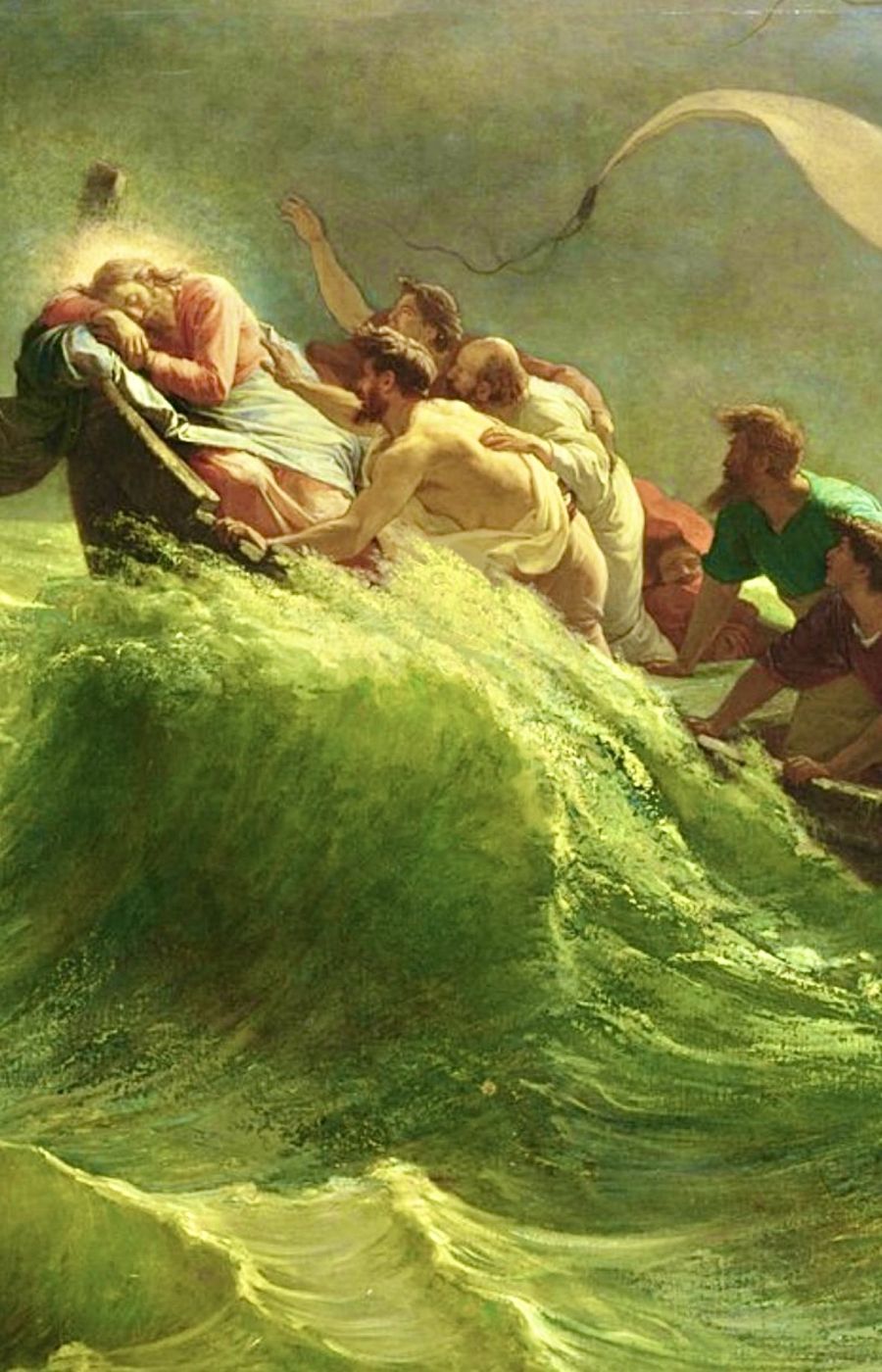
(Mt 8:23-27)


Our adventure proceeds like on a boat tossed by seisms. We go hopeful, but sometimes adversities threaten drowning us, and with us seem to drag down all life.

Using paraphrases from the book of Exodus, Mt tries to help his communities understand the Mystery of the Person of Jesus.

Not a few converted Jews considered Christ a character all in line with their mentality and tradition, in agreement with prophecies and figures of the First Testament.

Elsewhere, some pagans who had accepted the Lord advocated an understanding with the worldly mentality - a kind of agreement between Jesus and the Empire.

But Who could appease the storms?

The situation of the tiny Christian families of Galilee and Syria was still dark. Christ seemed not entirely present, and the sea rough, the wind against.

Could the Exodus be re-created?

Precisely in the condition of tossed pilgrims, in approaching his Person,  a strange and different stability was experienced: the against the current enduring.

A crossing towards freedom that came from clinging to Jesus alone, in the chaos of security. For a discordant permanence.


As the disciples caressed nationalist desires, the Master began to make it clear that He is not the vulgarly awaited Messiah, restorer of the late empire of David or the Caesars.

The Kingdom of God is open to all humanity, which in those times of upheaval sought security, acceptance, points of reference. Everyone could find home and shelter there (Mt 13:32c; Mk 4:32b).

But the apostles and church veterans seemed averse to Christ’s proposal; they remained insensitive to an overly broad idea of fraternity - which was crowding them out.

The teaching and call imposed on the disciples is that of passing to the other shore (cf. Mk 4:35; Lk 8:22), that is, not to hold God’s treasures in favour of themselves.

The Apostles have the task of communicating the Father’s riches even to the pagans, considered impure and infamous.

Yet it were precisely the intimates of the Master who did not want to know about risky disproportions, which would actually the wide-meshed action of the Son of God bring out.

They were willingly calibrated to habits of common religiosity, and an (circumscribed) ideology of power.

Already in the 70s, resistance to divine proposal as well as the tearing internal debate that had ensued from it, had unleashed a great storm in the assemblies of believers.

«And behold, there came a great agitation into the sea, so that the boat was covered by the waves» (Mt 8:24).

The storm were concerning the disciples, the only dismayed; not Jesus: «but He was asleep» (v.24c) [it is the Risen Lord].

What happened "inside" the little boat of the Church was not the simple reflection of what happened "outside"! This is the mistake to be corrected.


Emotionally relevant situations make sense, carry a meaningful appeal, introduce a different introspection, the decisive change; a new 'genesis'.

Trial in fact activates souls in the most effective way, because it disengages us from the idea of stability, and brings us into contact with dormant energies, initiating the new dialogue with events.

In Him, we are therefore imbued with a different vision of danger.


[Tuesday 13th wk. in O.T.  June 30, 2026]

229 Last modified on Tuesday, 30 June 2026 12:00
don Giuseppe Nespeca

Giuseppe Nespeca è architetto e sacerdote. Cultore della Sacra scrittura è autore della raccolta "Due Fuochi due Vie - Religione e Fede, Vangeli e Tao"; coautore del libro "Dialogo e Solstizio".

Many situations, then, which unfortunately do not conform to the legitimate predictions and rules established, are anything but negative; and instead of taking away confidence for the harassment they cause, They should have it more generous and far-sighted in favor of their process of responsible decantation (Pope Paul VI)
Molte situazioni, poi, che non sono purtroppo conformi alle legittime previsioni e alle norme stabilite, sono tutt’altro che del tutto negative; e invece di togliere la fiducia per la molestia che arrecano, esse dovrebbero averla più generosa e lungimirante in favore del loro processo di responsabile decantazione (Papa Paolo VI)
We must not fear the humility of taking little steps, but trust in the leaven that penetrates the dough and slowly causes it to rise (cf. Mt 13:33) [Pope Benedict]
Occorre non temere l’umiltà dei piccoli passi e confidare nel lievito che penetra nella pasta e lentamente la fa crescere (cfr Mt 13,33) [Papa Benedetto]
The joy of the Gospel fills the hearts and lives of all who encounter Jesus. Those who accept his offer of salvation are set free from sin, sorrow, inner emptiness and loneliness. With Christ joy is constantly born anew [Evangelii Gaudium n.1]
La gioia del Vangelo riempie il cuore e la vita intera di coloro che si incontrano con Gesù. Coloro che si lasciano salvare da Lui sono liberati dal peccato, dalla tristezza, dal vuoto interiore, dall’isolamento. Con Gesù Cristo sempre nasce e rinasce la gioia [Evangelii Gaudium n.1]
The Spirit of the Lord continues to pour out his gifts upon the Church to guide us into all truth, to show us the meaning of the Scriptures and to make us credible heralds of the word of salvation before the world [Pope Benedict, Verbum Domini]
Lo Spirito del Signore continua ad effondere i suoi doni sulla Chiesa perché siamo condotti alla verità tutta intera, dischiudendo a noi il senso delle Scritture e rendendoci nel mondo annunciatori credibili della Parola di salvezza [Papa Benedetto, Verbum Domini]
This belonging to each other and to him is not some ideal, imaginary, symbolic relationship, but – I would almost want to say – a biological, life-transmitting state of belonging to Jesus Christ (Pope Benedict)
Questo appartenere l’uno all’altro e a Lui non è una qualsiasi relazione ideale, immaginaria, simbolica, ma – vorrei quasi dire – un appartenere a Gesù Cristo in senso biologico, pienamente vitale (Papa Benedetto)
Jesus invites us to discern the words and deeds which bear witness to the imminent coming of the Father’s kingdom. Indeed, he indicates and concentrates all the signs in the enigmatic “sign of Jonah”. By doing so, he overturns the worldly logic aimed at seeking signs that would confirm the human desire for self-affirmation and power (Pope John Paul II)
Gesù invita al discernimento in rapporto alle parole ed opere, che testimoniano l'imminente avvento del Regno del Padre. Anzi, Egli indirizza e concentra tutti i segni nell'enigmatico "segno di Giona". E con ciò rovescia la logica mondana tesa a cercare segni che confermino il desiderio di autoaffermazione e di potenza dell'uomo (Papa Giovanni Paolo II)
In reality, an abstract, distant god is more comfortable, one that doesn’t get himself involved in situations and who accepts a faith that is far from life, from problems, from society. Or we would even like to believe in a ‘special effects’ god (Pope Francis)
In realtà, è più comodo un dio astratto, distante, che non si immischia nelle situazioni e che accetta una fede lontana dalla vita, dai problemi, dalla società. Oppure ci piace credere a un dio “dagli effetti speciali” (Papa Francesco)

Due Fuochi due Vie - Vol. 1 Due Fuochi due Vie - Vol. 2 Due Fuochi due Vie - Vol. 3 Due Fuochi due Vie - Vol. 4 Due Fuochi due Vie - Vol. 5 Dialogo e Solstizio I fiammiferi di Maria

duevie.art

don Giuseppe Nespeca

Tel. 333-1329741


Disclaimer

Questo blog non rappresenta una testata giornalistica in quanto viene aggiornato senza alcuna periodicità. Non può pertanto considerarsi un prodotto editoriale ai sensi della legge N°62 del 07/03/2001.
Le immagini sono tratte da internet, ma se il loro uso violasse diritti d'autore, lo si comunichi all'autore del blog che provvederà alla loro pronta rimozione.
L'autore dichiara di non essere responsabile dei commenti lasciati nei post. Eventuali commenti dei lettori, lesivi dell'immagine o dell'onorabilità di persone terze, il cui contenuto fosse ritenuto non idoneo alla pubblicazione verranno insindacabilmente rimossi.






