May 22, 2026 Written by 

Translating power into Silence

The authority of Jesus and ours

(Mk 11:27-33)


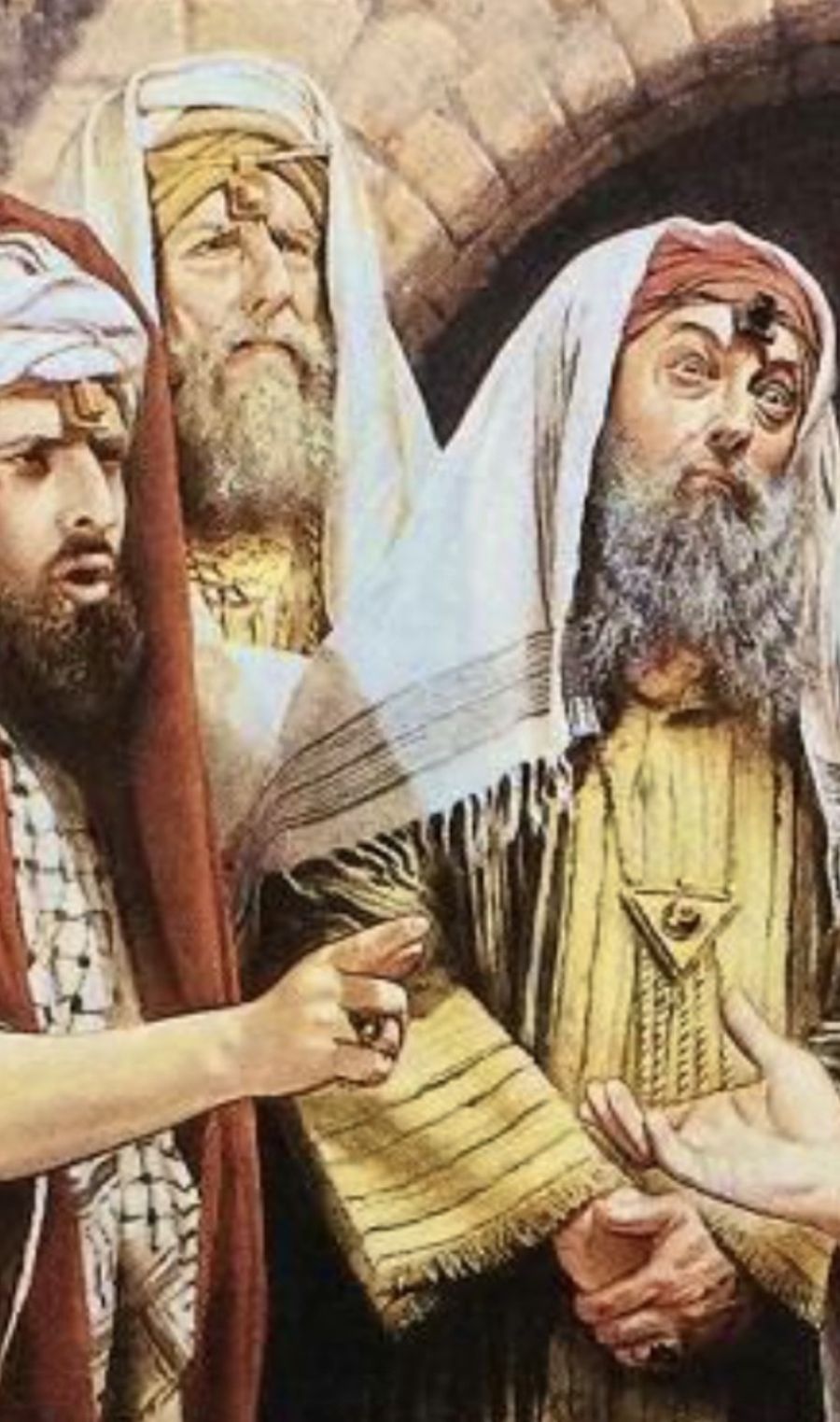
«By what authority do you do these things? Or who gave you this authority to do these things?» (Mk 11:28).

In the traditional Judaizing milieu of the early communities, questions bounced around about Christ's authority to lay siege to the ordinary religious system, and his distinguishing himself even from recognised prophets like the Baptist.

The only answer: the 'power' of God expressed in the sign of the times - by fermenting consciences.

This in Rome, because of the serious crisis of the civil war in the late 60s. In Palestine, because of the Jewish revolt and the destruction of the holy city.

Jesus' mission was not a regular one: he disconcerted the atmosphere, so his sharp, living Word had to be circumscribed at all costs.

Such bold behaviour would have seemed irreverent to political and spiritual leaders, even if adopted by the expected Messiah himself.

And a landless man could only be a false claimant....


The religious leaders faced by the Lord - entrenched in established patterns of thought and strategies - were always content to fit Heaven into closed dishcloths.

Even the faithful of the Roman communities seemed to be under the tutelage of interests, roads, words and gestures imposed by the imperial climate.

Mk tried to help his small churches: they had to continue fearlessly, and not be seduced by official religious practices, nor polluted by corrupt imperial ideology.

The evangelist also seems to suggest to the faithful in Christ to avoid punctilious diatribes with the representatives of a world only apparently stable - on the contrary, destined to implode on its own contradictions.


After driving out the sellers, usurers and money-changers who were profaning the temple (Mk 11:15–17), Jesus’s fate was sealed (v. 18).

But through his intimates, the new Kingdom - now unencumbered by fetters - must be proposed in the spirit of selflessness, and as a Surprise.

Only the Father can manage seed, roots and development.

No man can give “permission” for any person to be reflective and free from conformity.

There is an unpredictable path even for those accustomed to being directed in every affair. While guarantees clutter the minds and clog the paths that then lead to frontier experiences.

The seed carried by the wind of the Spirit makes its own plant, which does not necessarily resemble the surrounding ones: it does not bind itself in its particular expressiveness, and also flies 'out of bounds'.

In this way, we manifest independence and freedom, because Jesus himself demonstrated it - overriding all expectations and intentions.


Sooner or later, the bosses would have been dismayed by those who cannot stand ratifications, finally acknowledging their ignorance.

They would have run aground permanently, on their own - even by reason of their will not to expose themselves (vv.31-33a). Tactical perplexity, revealing unbelief - lukewarmness - total lack of Faith.

In short, the Silence of those who are in Christ, and who appreciate a more attentive and less outward-looking Church, is often the right echo of God, more eloquent than many brilliant disquisitions (v.33b).

Thus Jesus avoids the ambiguity of mental restriction or evasive semantics: in Him, the non-answer to leaders is transformed into a question.


Indeed, the Lord remains silent, but without sidestepping the question.


[Saturday 8th wk. in O.T.  May 30, 2026]

229 Last modified on Saturday, 30 May 2026 11:59
don Giuseppe Nespeca

Giuseppe Nespeca è architetto e sacerdote. Cultore della Sacra scrittura è autore della raccolta "Due Fuochi due Vie - Religione e Fede, Vangeli e Tao"; coautore del libro "Dialogo e Solstizio".

Our commitment does not consist exclusively of activities or programmes of promotion and assistance; what the Holy Spirit mobilizes is not an unruly activism, but above all an attentiveness that considers the other in a certain sense as one with ourselves (Pope Francis)
Il nostro impegno non consiste esclusivamente in azioni o in programmi di promozione e assistenza; quello che lo Spirito mette in moto non è un eccesso di attivismo, ma prima di tutto un’attenzione rivolta all’altro considerandolo come un’unica cosa con se stesso (Papa Francesco)
The drama of prayer is fully revealed to us in the Word who became flesh and dwells among us. To seek to understand his prayer through what his witnesses proclaim to us in the Gospel is to approach the holy Lord Jesus as Moses approached the burning bush: first to contemplate him in prayer, then to hear how he teaches us to pray, in order to know how he hears our prayer (Catechism of the Catholic Church n.2598)
L’evento della preghiera ci viene pienamente rivelato nel Verbo che si è fatto carne e dimora in mezzo a noi. Cercare di comprendere la sua preghiera, attraverso ciò che i suoi testimoni ci dicono di essa nel Vangelo, è avvicinarci al santo Signore Gesù come al roveto ardente: dapprima contemplarlo mentre prega, poi ascoltare come ci insegna a pregare, infine conoscere come egli esaudisce la nostra preghiera (Catechismo della Chiesa Cattolica n.2598)
“Love is an excellent thing”, we read in the book the Imitation of Christ. “It makes every difficulty easy, and bears all wrongs with equanimity…. Love tends upward; it will not be held down by anything low… love is born of God and cannot rest except in God” (III, V, 3) [Pope Benedict]
«Grande cosa è l’amore – leggiamo nel libro dell’Imitazione di Cristo –, un bene che rende leggera ogni cosa pesante e sopporta tranquillamente ogni cosa difficile. L’amore aspira a salire in alto, senza essere trattenuto da alcunché di terreno. Nasce da Dio e soltanto in Dio può trovare riposo» (III, V, 3) [Papa Benedetto]
For Christians, non-violence is not merely tactical behaviour but a person's way of being (Pope Benedict)
La nonviolenza per i cristiani non è un mero comportamento tattico, bensì un modo di essere (Papa Benedetto)
The Angel does not enter our room visibly, but the Lord has a plan for each of us, he calls each one of us by name (Pope Benedict)
Nella nostra camera l’Angelo non entra in modo visibile, ma con ciascuno di noi il Signore ha un suo progetto, ciascuno viene da Lui chiamato per nome (Papa Benedetto)
A mysterious love, which in the texts of the New Testament is revealed to us as God’s boundless and passionate love for mankind. God does not lose heart in the face of ingratitude (Pope Benedict)
Un amore misterioso, che nei testi del Nuovo Testamento ci viene rivelato come incommensurabile passione di Dio per l'uomo. Egli non si arrende dinanzi all'ingratitudine (Papa Benedetto)
The road that Jesus points out can seem a little unrealistic with respect to the common mindset and to problems due to the economic crisis; but, if we think about it, this road leads us back to the right scale of values (Pope Francis)
La strada che Gesù indica può sembrare poco realistica rispetto alla mentalità comune e ai problemi della crisi economica; ma, se ci si pensa bene, ci riporta alla giusta scala di valori (Papa Francesco)

Due Fuochi due Vie - Vol. 1 Due Fuochi due Vie - Vol. 2 Due Fuochi due Vie - Vol. 3 Due Fuochi due Vie - Vol. 4 Due Fuochi due Vie - Vol. 5 Dialogo e Solstizio I fiammiferi di Maria

duevie.art

don Giuseppe Nespeca

Tel. 333-1329741


Disclaimer

Questo blog non rappresenta una testata giornalistica in quanto viene aggiornato senza alcuna periodicità. Non può pertanto considerarsi un prodotto editoriale ai sensi della legge N°62 del 07/03/2001.
Le immagini sono tratte da internet, ma se il loro uso violasse diritti d'autore, lo si comunichi all'autore del blog che provvederà alla loro pronta rimozione.
L'autore dichiara di non essere responsabile dei commenti lasciati nei post. Eventuali commenti dei lettori, lesivi dell'immagine o dell'onorabilità di persone terze, il cui contenuto fosse ritenuto non idoneo alla pubblicazione verranno insindacabilmente rimossi.






