Apr 8, 2026 Written by 

Faith and Salvation: Life «not with measure», already on earth

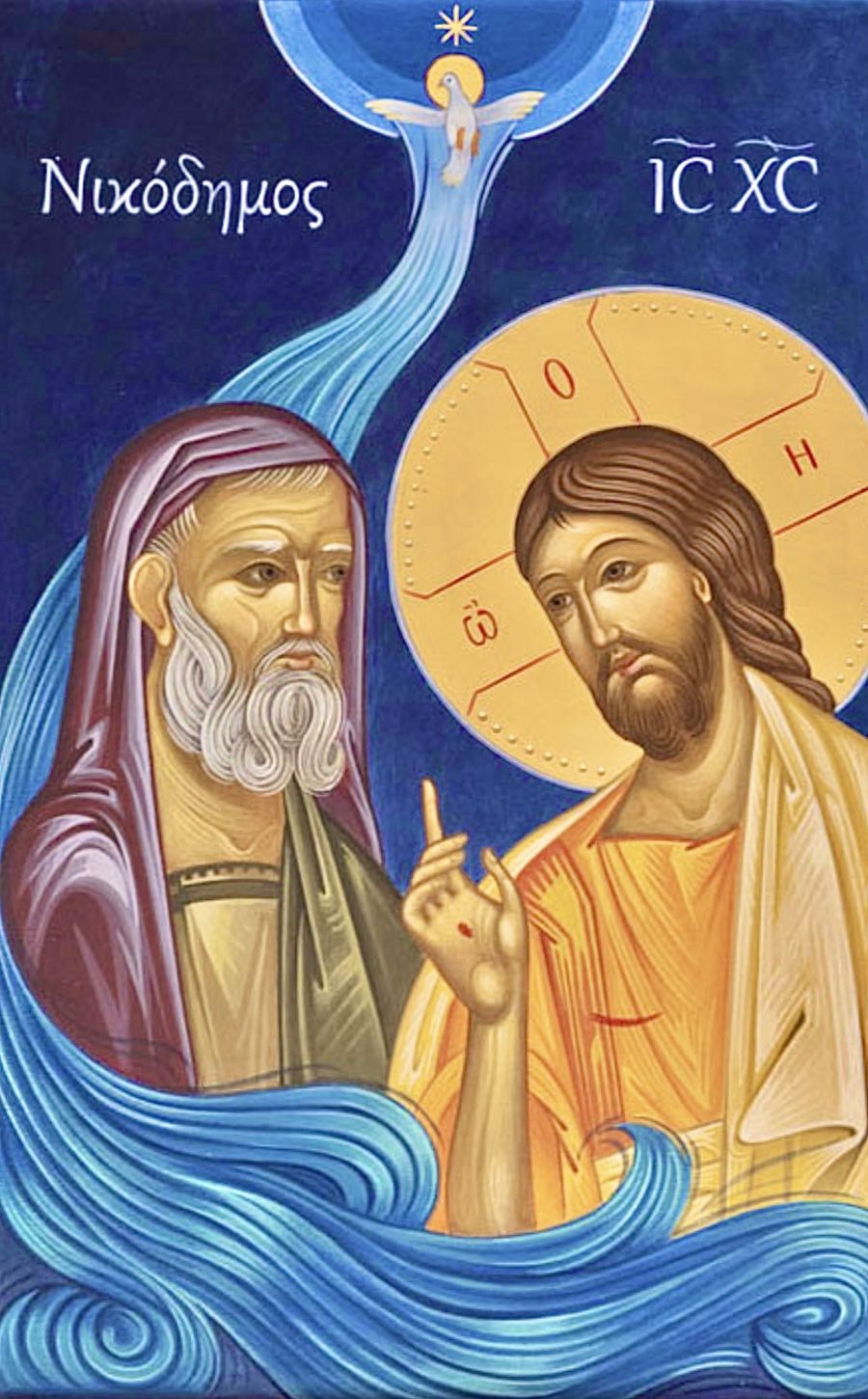
(Jn 3:31-36)


In the Gospel passage, John uses descriptive categories [from above, from below, from heaven, from the earth - that is, our whole “domain”].

Natural terms, to introduce us to the Person of the revealing Son, and the importance of his proposal for real life.

Indeed, the divine condition of the Father's Envoy proceeds from the human dimension.

However, his earthly nature is incomparable to his origin as a being from heaven, superior to any possible contention.

The Messiah testimony about the world above is a Word that challenges us. But it is not accepted (cf. Jn 1:11) by a «world» (Jn 1:10) that loves only what corresponds to it.

Yet those who accept such a testimony (cf. Jn 1:12) harbour within themselves the same Revealer - because of the identity between the Person and the Word.

In the expressions of the One who unveils, God's plans and action are made manifest (v.33).

It is the Master of Nazareth who shows the truth of the Most High.

For the Father has bestowed upon the Son his entire Spirit «not with measure»  (v.34); no limits, no restrictions, as e.g. in prophets, kings or patriarchs.

And he who believes in the Son is of the Father - he is already at the level of eternity: he has in him the same «Life of the Eternal» (v. 36).

He who welcomes Christ already lives in God. He is turned to the Father; he enjoys his ineffable presence, assimilates and speaks his ‘language’ unique.

He becomes capable of non-unilateral relationships, because he knows how to recover opposites.

Only from the fullness of the gifts of the Spirit [and its participation: v.34] comes adherence to a Torah imprinted in the heart, as well as self-acknowledged obedience.

In this way, it becomes Resemblance, which takes the story of the new Master as its criterion.


Keeping the precepts of the Pentateuch seemed to bring «long days and years of life and so much peace» (Pr 3,1-2).

A [normal] expected fulfilment was assumed from the fulfilments of the Law and oral tradition.

Salvation, on the other hand, does not come from origins, from 'territory' (v.31) - culture and ethnicity.

Nor does redemption proceed from the outcome of a verification of ancient teaching.

Complete realisation seizes us - rather - from believing in the Son (v.36): absolute ‘birth’ [always renewed] imparted by the Spirit who does not hinder.

Spirit of divine configuration, communicated (precisely) «not with measure».


Ancient religions promise “eternal life” - in some cases, almost a consolation prize after the hardships of this vale of tears.

Alienation that breaks wings, produces alibis, and makes one external, already registered and predictable.

The «Life of the Eternal» (v.36), the very, intimate Life of God, is instead a condition that dwells, bursting into our paths.

It does so with eccentric, unprecedented inclinations; previously inconceivable - where we are ourselves, not reduced creatures.

It can be experienced in the concrete, even excessive, ways of being that correspond to an unveiling, a 'revelation' within us.


Especially in the Fourth Gospel, the dimension of the Eternal is a protruding measure, yes, but embodied and in action. Not by natural virtue, but by openness to Totality.

For the action of the Spirit, which ceaselessly creates and regenerates - and weaves a radical empathy into being.

It is not we who produce the Love that fills and activates, or that can return us to life without restriction.

But the dimension of Sons who from Baptism know and recognise themselves in the Fullness, concerns us.

Then - as in Jesus the Son - everything is placed in our hands (v.35).


To internalize and live the message:


What vocational excess have you left in abeyance?


[Thursday 2nd wk. of Easter, April 16, 2026]

282 Last modified on Thursday, 16 April 2026 11:59
don Giuseppe Nespeca

Giuseppe Nespeca è architetto e sacerdote. Cultore della Sacra scrittura è autore della raccolta "Due Fuochi due Vie - Religione e Fede, Vangeli e Tao"; coautore del libro "Dialogo e Solstizio".

Whoever is inscribed in God's name participates in God's life, and lives. Therefore to believe is to be inscribed in the name of God. Thus we are alive. Whoever has a share in God's name is not dead but rather belongs to the living God. In this sense we should be able to understand the dynamism of faith, which entails enrolling our names in the name of God and in this way entering into life [Pope Benedict]
Chi è scritto nel nome di Dio partecipa alla vita di Dio, vive. E così credere è essere iscritti nel nome di Dio. E così siamo vivi. Chi appartiene al nome di Dio non è un morto, appartiene al Dio vivente. In questo senso dovremmo capire il dinamismo della fede, che è un iscrivere il nostro nome nel nome di Dio e così un entrare nella vita [Papa Benedetto]
As sometimes happens in the Gospel, faced with the trap set for him by his enemies, Jesus, with his response, rises above the contingent controversy and goes far beyond the particular and mutually divergent positions (John Paul II)
Come talora accade nel Vangelo, di fronte al tranello mossogli dai suoi nemici, Gesù, con la sua risposta, s’innalza al di sopra della polemica contingente e va ben oltre le posizioni particolari e tra loro divergenti (Giovanni Paolo II)
This Name clearly expresses that the God of the Bible is not some kind of monad closed in on itself and satisfied with his own self-sufficiency but he is life that wants to communicate itself, openness, relationship [Pope Benedict]
Questo nome esprime dunque chiaramente che il Dio della Bibbia non è una sorta di monade chiusa in se stessa e soddisfatta della propria autosufficienza, ma è vita che vuole comunicarsi, è apertura, relazione [Papa Benedetto]
There, however, in the place that should have been taken up by the encounter between God and man, he found livestock merchants and money-changers who occupied this place of prayer with their commerce […] In the temple's purification, however, it was a matter of more than fighting abuses. A new time in history was foretold (Pope Benedict)
Ma là dove doveva esservi lo spazio dell’incontro tra Dio e l’uomo, Egli trova commercianti di bestiame e cambiavalute che occupano con i loro affari il luogo di preghiera […] Nella purificazione del tempio, però, si tratta di più che della lotta agli abusi. È preconizzata una nuova ora della storia (Papa Benedetto)
«Ask Jesus for the grace to follow him closely», so as not to leave him alone, thus overcoming the temptations of looking at ourselves to «share the cake» of personal interests [Pope Francis]
«Chiedere a Gesù la grazia di seguirlo da vicino», per non lasciarlo solo, superando così le tentazioni di guardare noi stessi per «spartirsi la torta» degli interessi personali [Papa Francesco]
First, in Nazareth, he makes him grow, raises him, educates him, but then follows him: "Your mother is there" (Pope Francis)
Prima, a Nazareth, lo fa crescere, lo alleva, lo educa, ma poi lo segue: “La tua madre è lì” (Papa Francesco)
Unity is not made with glue [...] The great prayer of Jesus is to «resemble» the Father (Pope Francis)
L’Unità non si fa con la colla […] La grande preghiera di Gesù» è quella di «assomigliare» al Padre (Papa Francesco)
Divisions among Christians, while they wound the Church, wound Christ; and divided, we cause a wound to Christ: the Church is indeed the body of which Christ is the Head (Pope Francis)

Due Fuochi due Vie - Vol. 1 Due Fuochi due Vie - Vol. 2 Due Fuochi due Vie - Vol. 3 Due Fuochi due Vie - Vol. 4 Due Fuochi due Vie - Vol. 5 Dialogo e Solstizio I fiammiferi di Maria

duevie.art

don Giuseppe Nespeca

Tel. 333-1329741


Disclaimer

Questo blog non rappresenta una testata giornalistica in quanto viene aggiornato senza alcuna periodicità. Non può pertanto considerarsi un prodotto editoriale ai sensi della legge N°62 del 07/03/2001.
Le immagini sono tratte da internet, ma se il loro uso violasse diritti d'autore, lo si comunichi all'autore del blog che provvederà alla loro pronta rimozione.
L'autore dichiara di non essere responsabile dei commenti lasciati nei post. Eventuali commenti dei lettori, lesivi dell'immagine o dell'onorabilità di persone terze, il cui contenuto fosse ritenuto non idoneo alla pubblicazione verranno insindacabilmente rimossi.






