


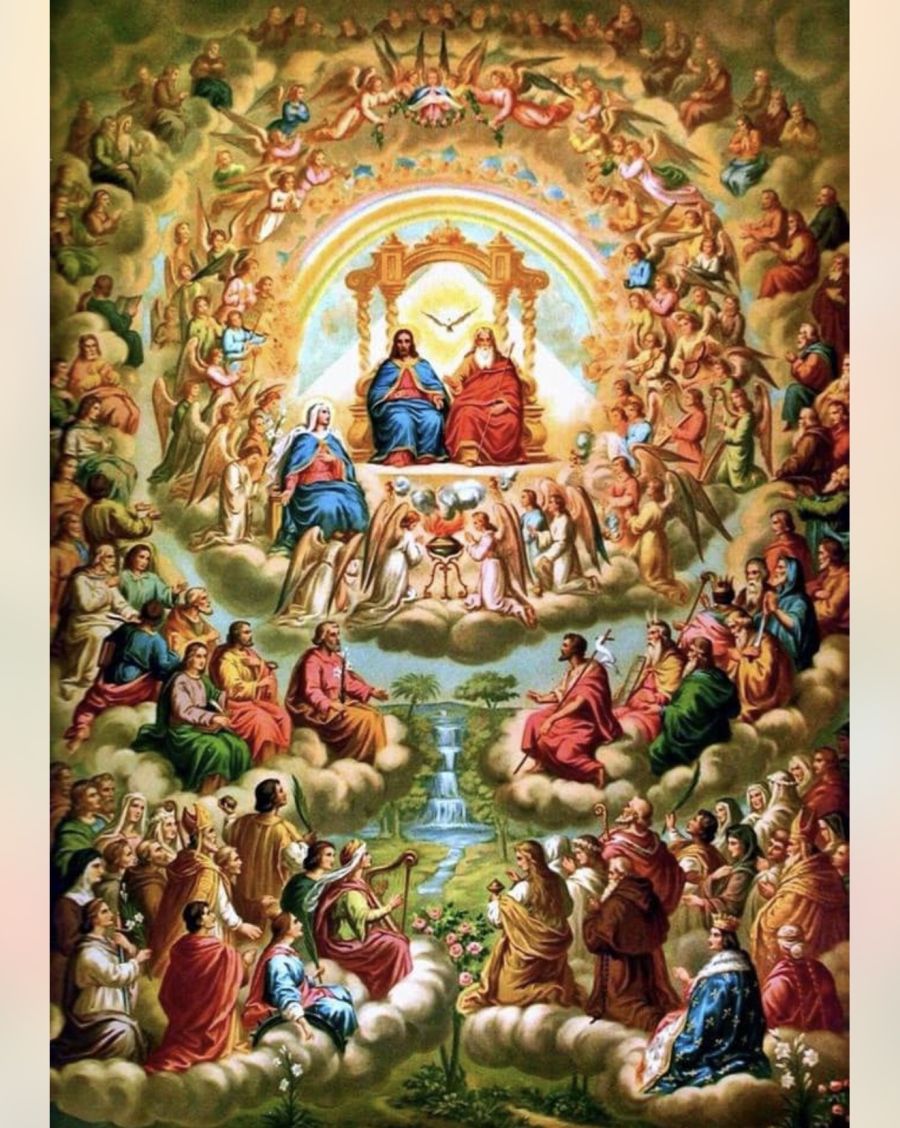
Solemnity of the Most Holy Trinity (year A) [31 May 2026]
First Reading from the Book of Exodus (34:4–6, 8–9)
The text presents one of the most precious moments of biblical revelation: God speaks of himself and proclaims his name before Moses, who prostrates himself in recognition of the greatness of what he hears. God defines himself as ‘the Lord (YHWH), a God who is compassionate and gracious, slow to anger, and abounding in love and faithfulness. This name, already revealed in the burning bush, is the foundation of Israel’s faith. Even then, God had shown his face: he sees the misery of his people in Egypt, hears their cry, knows their sufferings and comes down to set them free, inspiring Moses with the necessary strength. This means that man is never alone in his trials: God is present, accompanying and sustaining him. The Jewish Passover commemorates this liberating intervention every year. In today’s text, however, a further step is taken: God does not merely feel compassion, but loves deeply. His ‘passing’ before Moses recalls the passage during the Exodus: whenever God passes by, he sets free. This second revelation is even more important because it frees man from false images of God. It is not man who has invented a good God: it is God himself who has revealed himself in this way, unexpectedly. Moses fully understands the meaning of ‘slow to anger’ and asks forgiveness for the people, aware of their unfaithfulness. Israel is described as a “stiff-necked people”, an image drawn from the agricultural yoke: just as animals resist the yoke, so the people struggle to walk in step with God in the covenant. Despite this, Moses trusts that God will continue to forgive and keep the people as his inheritance. Finally, God’s faithfulness (“truth”) remains the foundation of hope: He does not abandon His people nor forget the covenant. For this reason, Israel remains the chosen people and, as the New Testament also reminds us, God remains ever faithful, even when man is unfaithful.
Responsorial Psalm: Song of Daniel (3:52–56)
To understand the Book of Daniel, we can use a modern comparison: in the 1980s, during Soviet rule in Czechoslovakia, a young actress staged a play about Joan of Arc. On the surface, it spoke of 15th-century France, but between the lines the message was clear: like Joan, the Czech people too could resist oppression. Similarly, the Book of Daniel, written in the 2nd century BC during the persecution by the Greek king Antiochus IV Epiphanes, is a text of resistance. It tells stories set in an earlier era, under the Babylonian king Nebuchadnezzar, but in reality it speaks of the author’s contemporary situation. Its aim is to encourage the faithful to remain steadfast, even unto martyrdom. A central episode is that of the three young men, Shadrach, Meshach and Abednego, condemned to be burned alive for refusing to worship a statue. Thrown into a blazing furnace, they are miraculously saved: the flames kill their executioners, whilst they walk unharmed through the fire, praising God. The greatest miracle, however, is their faith: they acknowledge the sins of the people and humbly entrust themselves to God’s mercy. In their song they proclaim: “Blessed are you, Lord, God of our fathers”. It is a reference to the covenant with Abraham, Isaac and Israel, to the divine promises and the history of salvation, but also to God’s continual forgiveness despite the people’s unfaithfulness. When speaking of God’s “Name”, God himself is referred to with respect. The reference to the “holy temple” reflects the historical context of persecution: even when worship is desecrated, it is affirmed that God alone is the true Lord. The images of the throne and the cherubim recall the Holy of Holies in the Temple, a sign of God’s presence among his people. This is a message of hope: even in the harshest trials, God is present and evil will not have the last word. The hymn thus becomes a song of trust and victory: despite violence and persecution, faith remains steadfast. This message of resilience and hope remains relevant even today.
Second Reading from the Second Letter of Saint Paul to the Corinthians (13:11–13)
The final sentence: “The grace of the Lord Jesus Christ, the love of God the Father and the fellowship of the Holy Spirit be with you all”, is the formula with which the Eucharistic celebration begins, and this is no coincidence: St Paul concludes his Second Letter to the Corinthians in this way, summarising God’s entire plan. This expression, spoken by the celebrant in the name of God, indicates that God invites humanity to enter into his intimacy, that is, into the communion of love of the Trinity. “Grace”, “love” and “communion” express the same reality: the Trinitarian life of the Father, the Son and the Holy Spirit. The subjunctive verb “may be with you” does not indicate any doubt about God, who is always the source of forgiveness, blessing and presence, but rather points to human freedom: God continually offers his love, but man is free to accept or reject it. This clear expression of the Trinity is rare in the Bible and marks the fulfilment of revelation in Jesus Christ. From this spring Paul’s exhortations, beginning with joy: “Brothers and sisters, rejoice.” In the Bible, joy is linked to the experience of liberation, such as at the end of a war or the return from exile, when the people experience God’s salvation. These liberations that occur in history foreshadow the definitive joy promised by God, that of a new creation. Jesus himself speaks of this full and definitive joy at the end of his discourse at the Last Supper: “Take heart, I have overcome the world”, and promises a joy that no one can take away, even through trials. Paul’s second exhortation concerns unity and peace: “Be of one mind… live in peace”. Unity among believers is essential, for it is God’s witness to the world and echoes Jesus’ prayer: “May they be one.” Paul insists on one faith, one Lord, one baptism, one God and Father of all. This communion is also expressed in the liturgical gesture of the kiss of peace, already present in the early Christian communities. Ancient testimonies, such as those of Saint Justin and Saint Hippolytus, show how this gesture was an integral part of the celebration, a concrete sign of unity and brotherhood.
From the Gospel of John (3:16–18)
‘God so loved the world that he gave his only Son’: this sentence expresses the great transition from the Old to the New Testament. That God loves humanity was already known, and was Israel’s great discovery; the novelty lies in the gift of the Son for the salvation of all. God so loved the world… that whoever believes in him may not perish, but have eternal life. According to the Gospel of John, it is enough to believe to be saved: whoever receives Christ becomes a child of God and already possesses eternal life. This “eternal life” is the life of the Spirit received at Baptism: it is true salvation, that is, living in peace with oneself and with others, as brothers and sisters amongst men and children of God. To be saved, one need only turn to Jesus, allow oneself to be transformed by him, and pass from a heart of stone to a heart of flesh. In biblical language: “to lift one’s gaze towards him”. It is extraordinary news, if taken seriously, for in the face of the Crucified One the true face of God is revealed. In the face of the crucified Christ, who freely gives his life, humanity discovers the true face of God: not a domineering or vengeful God, but a God who is love and mercy. “Whoever has seen me has seen the Father,” says Jesus. All that is required is faith: to believe in God who saves in order to be saved. In the Gospels, in fact, Jesus often repeats: “Your faith has saved you.” The evangelist John links this mystery to Zechariah’s prophecy: looking upon the one who has been pierced leads to conversion and purification. This vision also recurs in Revelation: all will see the one whom they have pierced. The expression ‘only Son’ indicates that Jesus is the fullness of grace and truth, the sole source of eternal life and the head of the new humanity. God’s plan is for all humanity to be united in Christ and to share in the life of the Trinity: this is salvation, true life, already present from this moment onwards. Eternal life is to know you, the one true God, and the one you have sent, Jesus Christ: to know God means to recognise him as mercy and to enter into a profound relationship with him, in accordance with the meaning that ‘to know’ holds in St John. ‘Avoiding judgement’ means avoiding separation from God: it is enough to believe in his forgiveness. As in human relationships, if one believes in forgiveness, one can return and be reconciled; if one does not believe, one remains trapped in one’s own error. So it is with God. God offers salvation, but does not impose it, and man remains always free. Those who believe are saved; those who reject faith exclude themselves. This is shown in an extraordinary way by the good thief when he turns to Jesus, who is crucified alongside him. Despite having lived a life of sin, at the very last moment before dying he entrusts himself to Jesus and receives a surprising promise: ‘Today you will be with me in Paradise.’
+Giovanni D’Ercole








