Mar 24, 2026 Written by 

Betrayals. Relief of weakness

(Mt 26:14-25)


Mt Mk Lk situate the institution of the Eucharist within the Jewish Passover supper.

A theological re-elaboration to affirm in Faith the meaning of the authentic Liberation Easter in Christ.

Compared to the Synoptics, the fourth Gospel is more in keeping with the sense of the Broken Bread: source of Life for all.

Jn places the death of the Lord at the moment in which the priests slaughtered the lambs [destined for the Passover] on the esplanade of the Temple.


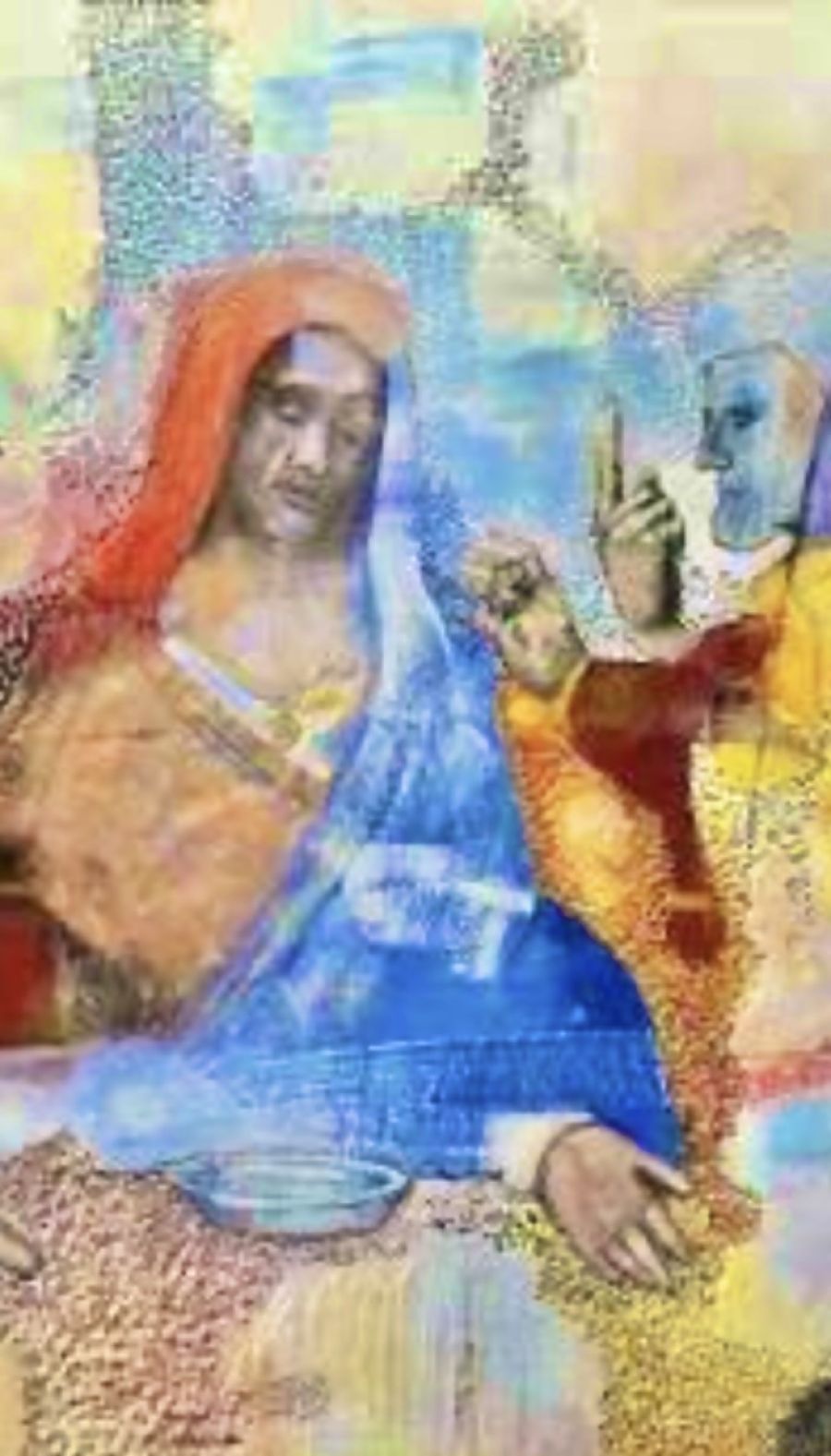
The Face of Christ is that of the betrayed man.

But He lets it happen, because friends belong together - and knows: the inviolability of the loved one may not persist, even out of greed.

Even at the expense of who first welcomed us.

All this happens with a sense of peaceful loss - not as a result of preordained plan, but so that the disciples reflect on their own situation.

It is as if [to activate us] through the doubt about Judas and the whole group around, the Lord was still silently saying - precisely to us, but without moralizing: «Where are you?».


Because of the persecutions, some faithful of Mt community had allowed themselves to be intimidated and had abandoned their brothers of faith.

What attitude to adopt towards them?

The scandalous story of the first disciples’ failure opens incessant glimmers to the all times’ assemblies: the logic of the Kingdom is not affected by anything.

Wide-open doors even for those who deny and flee the Master.


Religious way without the Faith’s leap instills in sensitive people a progressive and marked sense of unworthiness: it imposes an unnerving waiting, of pressing perfections.

What counts is the splendid ability and attitude: how much each person does for God.

But divine Love is not subject to conditions. Therefore, in the genuine and more reliable path, the Surprise is first of all worth it: what the Lord creates for us.

He is the Coming One, and the Subject who operates, disposes, guides - the One who reweaves again the plot. And with unexpected setbacks or leaps, He snatches us away from the insufficiency obsession.

Without this more than wise Friendship, one gives in and it can happen to sell Christ in exchange for the convictions of others, for futile junk; trivial profits, shoddy happinesses.


Jesus continues to dip the morsel in his Blood and hand it to us.

Little by little we will learn to stand up for his values, so that he lives through us as Bread broken and distributed.

Little by little we will even manage not to fall silent and not run away from the gift of life, by transmuting ourselves into humanizing Food.

The only character who instead ruins and self-destructs himself (Mt 27,5) is the one who is fully compromised with external seductions, and false spiritual guides.


To internalize and live the message:


If asked about what characterizes, do you undertake to flaunt the others’ beliefs and external or already traced out targets? Or do you unravel the freedom to be and become yourself in Christ?


[Holy Week Wednesday, April 1st, 2026]

229 Last modified on Wednesday, 01 April 2026 12:00
don Giuseppe Nespeca

Giuseppe Nespeca è architetto e sacerdote. Cultore della Sacra scrittura è autore della raccolta "Due Fuochi due Vie - Religione e Fede, Vangeli e Tao"; coautore del libro "Dialogo e Solstizio".

In addition to physical hunger man carries within him another hunger — all of us have this hunger — a more important hunger, which cannot be satisfied with ordinary food. It is a hunger for life, a hunger for eternity which He alone can satisfy, as he is «the bread of life» (Pope Francis)
Oltre alla fame fisica l’uomo porta in sé un’altra fame – tutti noi abbiamo questa fame – una fame più importante, che non può essere saziata con un cibo ordinario. Si tratta di fame di vita, di fame di eternità che Lui solo può appagare, in quanto è «il pane della vita» (Papa Francesco)
The Eucharist draws us into Jesus' act of self-oblation. More than just statically receiving the incarnate Logos, we enter into the very dynamic of his self-giving [Pope Benedict]
L'Eucaristia ci attira nell'atto oblativo di Gesù. Noi non riceviamo soltanto in modo statico il Logos incarnato, ma veniamo coinvolti nella dinamica della sua donazione [Papa Benedetto]
Jesus, the true bread of life that satisfies our hunger for meaning and for truth, cannot be “earned” with human work; he comes to us only as a gift of God’s love, as a work of God (Pope Benedict)
Gesù, vero pane di vita che sazia la nostra fame di senso, di verità, non si può «guadagnare» con il lavoro umano; viene a noi soltanto come dono dell’amore di Dio, come opera di Dio (Papa Benedetto)
The locality of Emmaus has not been identified with certainty. There are various hypotheses and this one is not without an evocativeness of its own for it allows us to think that Emmaus actually represents every place: the road that leads there is the road every Christian, every person, takes. The Risen Jesus makes himself our travelling companion as we go on our way, to rekindle the warmth of faith and hope in our hearts and to break the bread of eternal life (Pope Benedict)
La località di Emmaus non è stata identificata con certezza. Vi sono diverse ipotesi, e questo non è privo di una sua suggestione, perché ci lascia pensare che Emmaus rappresenti in realtà ogni luogo:  la strada che vi conduce è il cammino di ogni cristiano, anzi, di ogni uomo. Sulle nostre strade Gesù risorto si fa compagno di viaggio, per riaccendere nei nostri cuori il calore della fede e della speranza e spezzare il pane della vita eterna (Papa Benedetto)
Romano Guardini wrote that the Lord “is always close, being at the root of our being. Yet we must experience our relationship with God between the poles of distance and closeness. By closeness we are strengthened, by distance we are put to the test” (Pope Benedict)
Romano Guardini scrive che il Signore “è sempre vicino, essendo alla radice del nostro essere. Tuttavia, dobbiamo sperimentare il nostro rapporto con Dio tra i poli della lontananza e della vicinanza. Dalla vicinanza siamo fortificati, dalla lontananza messi alla prova” (Papa Benedetto)
In recounting the "sign" of bread, the Evangelist emphasizes that Christ, before distributing the food, blessed it with a prayer of thanksgiving (cf. v. 11). The Greek term used is eucharistein and it refers directly to the Last Supper, though, in fact, John refers here not to the institution of the Eucharist but to the washing of the feet. The Eucharist is mentioned here in anticipation of the great symbol of the Bread of Life [Pope Benedict]
Narrando il “segno” dei pani, l’Evangelista sottolinea che Cristo, prima di distribuirli, li benedisse con una preghiera di ringraziamento (cfr v. 11). Il verbo è eucharistein, e rimanda direttamente al racconto dell’Ultima Cena, nel quale, in effetti, Giovanni non riferisce l’istituzione dell’Eucaristia, bensì la lavanda dei piedi. L’Eucaristia è qui come anticipata nel grande segno del pane della vita [Papa Benedetto]

Due Fuochi due Vie - Vol. 1 Due Fuochi due Vie - Vol. 2 Due Fuochi due Vie - Vol. 3 Due Fuochi due Vie - Vol. 4 Due Fuochi due Vie - Vol. 5 Dialogo e Solstizio I fiammiferi di Maria

duevie.art

don Giuseppe Nespeca

Tel. 333-1329741


Disclaimer

Questo blog non rappresenta una testata giornalistica in quanto viene aggiornato senza alcuna periodicità. Non può pertanto considerarsi un prodotto editoriale ai sensi della legge N°62 del 07/03/2001.
Le immagini sono tratte da internet, ma se il loro uso violasse diritti d'autore, lo si comunichi all'autore del blog che provvederà alla loro pronta rimozione.
L'autore dichiara di non essere responsabile dei commenti lasciati nei post. Eventuali commenti dei lettori, lesivi dell'immagine o dell'onorabilità di persone terze, il cui contenuto fosse ritenuto non idoneo alla pubblicazione verranno insindacabilmente rimossi.






