Nov 20, 2025 Written by 

Words and Nature, codes that will not pass

Sources of Hope

(Lk 21:29-33)


Lk ends his Apocalyptic Discourse with recommendations on the attention and penetrating gaze to be placed at the ‘sign of the times’.

And - rooted in the Word of God that becomes event and directs us to the future, Hope inaugurates a new phase in history.

Its depth surpasses all current possibilities, which conversely fluctuate between signs of catastrophe.

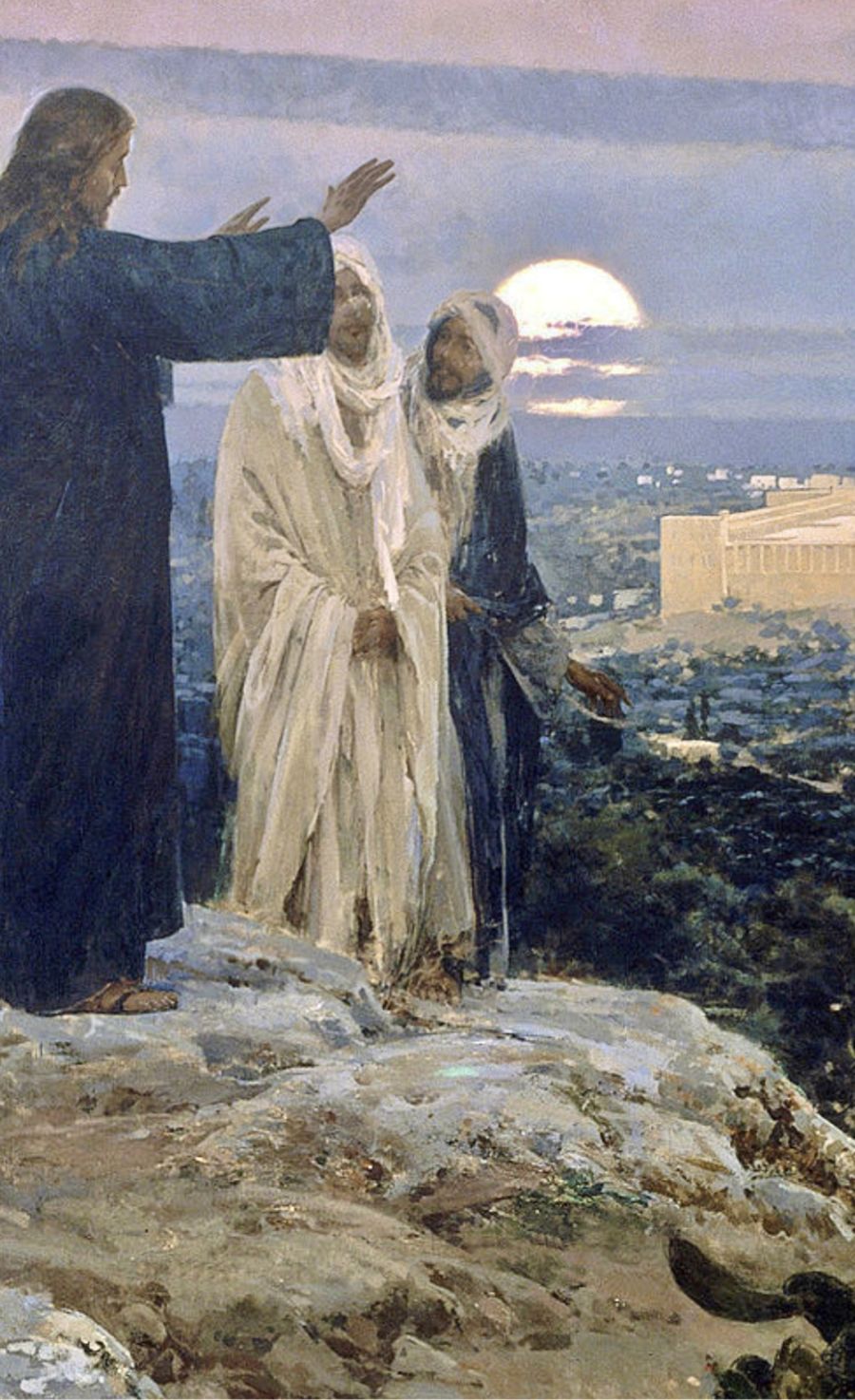
Jesus reassures the disciples about the fears of the world’s end, and requires them not to look at coded messages, but Nature.

Only in this way will they be able to read and interpret the events.

Wise discernment, which serves not to close us in the immediate present: it pushes us on a path of uniformity or defense.

Indeed, because of the upheavals, a hasty assessment could lead us to fear reversals, blocking growth and testimony.


The world and things are moving towards a Spring, and above all in this regard we have a sentinel role.

On the ruins of a collapsing century, the Father makes us understand what’s happening - and continues to build what we hope [not according to immediate tastes].

Here and there we can catch the first stirrings of it, like the shoots on the ‘fig tree’.

It’s a tree that alludes to the fruit of love that God awaits from his people, called to be tender and sweet: signs of the new season - that of healthy relationships.

In this way, the spirit of dedication manifested by the sons will be the prefiguration of the imminent advent of a completely different empire - able to replace in consciences all others of a competitive character.

The fig tree is precisely the image of the ideal people of blessings; Israel of the exodus towards freedom, and trace of the Father [in the desert’s reflective sobriety and sharing].

It remains long time stripped and bare; suddenly its buds sprout, open and in a few days it’s covered with luxuriant leaves.

Such will be the passage from chaos to the sensitive and fraternal order produced by the proclamation and assimilation of the Word: not equal thought; divine step in history.


Through suggestions that belong to processes of nature, we are introduced into discernment of the Mystery - expressed throughout the wilde of transformations.

Its riches are contained in the codes of the Word and in the ordinary concrete events, which have a symptomatic weight. Chests of treasure, of invisible realities, which do not pass.

Such a wealth will even develop (and in particular) from confusion and collapses, as per intrinsic strength and essence, day by day.

Not for an abstract exemplarity, but for the fullness of life that finds its roots - rediscovering them in error and in the small.

A paradoxical seed of hope, and harbinger of better conditions.

Because without imperfection and limit there is no growth or flowering, nor nearby Kingdom (vv.30-31) which always takes contact with the wounds [Fratelli Tutti n.261].


Word of God and rhythms of Nature are codes that pass time. Authentic reliefs, created, donated, and revealed.

Sources of discernment, of the penetrating gaze, of the signs of time, of free thought, of Hope that does not queue.


[Friday 34th wk. in O.T.  November 28, 2025]

188 Last modified on Friday, 28 November 2025 12:23
don Giuseppe Nespeca

Giuseppe Nespeca è architetto e sacerdote. Cultore della Sacra scrittura è autore della raccolta "Due Fuochi due Vie - Religione e Fede, Vangeli e Tao"; coautore del libro "Dialogo e Solstizio".

The ancient priest stagnates, and evaluates based on categories of possibilities; reluctant to the Spirit who moves situations
Il sacerdote antico ristagna, e valuta basando su categorie di possibilità; riluttante allo Spirito che smuove le situazioni
«Even through Joseph’s fears, God’s will, his history and his plan were at work. Joseph, then, teaches us that faith in God includes believing that he can work even through our fears, our frailties and our weaknesses. He also teaches us that amid the tempests of life, we must never be afraid to let the Lord steer our course. At times, we want to be in complete control, yet God always sees the bigger picture» (Patris Corde, n.2)
«Anche attraverso l’angustia di Giuseppe passa la volontà di Dio, la sua storia, il suo progetto. Giuseppe ci insegna così che avere fede in Dio comprende pure il credere che Egli può operare anche attraverso le nostre paure, le nostre fragilità, la nostra debolezza. E ci insegna che, in mezzo alle tempeste della vita, non dobbiamo temere di lasciare a Dio il timone della nostra barca. A volte noi vorremmo controllare tutto, ma Lui ha sempre uno sguardo più grande» (Patris Corde, n.2)
Man is the surname of God: the Lord in fact takes his name from each of us - whether we are saints or sinners - to make him our surname (Pope Francis). God's fidelity to the Promise is realized not only through men, but with them (Pope Benedict).
L’uomo è il cognome di Dio: il Signore infatti prende il nome da ognuno di noi — sia che siamo santi, sia che siamo peccatori — per farlo diventare il proprio cognome (Papa Francesco). La fedeltà di Dio alla Promessa si attua non soltanto mediante gli uomini, ma con loro (Papa Benedetto)
In the communities of Galilee and Syria the pagans quickly became a majority - elevated to the rank of sons. They did not submit to nerve-wracking processes, but spontaneously were recognizing the Lord
Nelle comunità di Galilea e Siria i pagani diventavano rapidamente maggioranza - elevati al rango di figli. Essi non si sottoponevano a trafile snervanti, ma spontaneamente riconoscevano il Signore
And thus we must see Christ again and ask Christ: “Is it you?” The Lord, in his own silent way, answers: “You see what I did, I did not start a bloody revolution, I did not change the world with force; but lit many I, which in the meantime form a pathway of light through the millenniums” (Pope Benedict)
E così dobbiamo di nuovo vedere Cristo e chiedere a Cristo: “Sei tu?”. Il Signore, nel modo silenzioso che gli è proprio, risponde: “Vedete cosa ho fatto io. Non ho fatto una rivoluzione cruenta, non ho cambiato con forza il mondo, ma ho acceso tante luci che formano, nel frattempo, una grande strada di luce nei millenni” (Papa Benedetto)
Experts in the Holy Scriptures believed that Elijah's return should anticipate and prepare for the advent of the Kingdom of God. Since the Lord was present, the first disciples wondered what the value of that teaching was. Among the people coming from Judaism the question arose about the value of ancient doctrines…
Gli esperti delle sacre Scritture ritenevano che il ritorno di Elia dovesse anticipare e preparare l’avvento del Regno di Dio. Poiché il Signore era presente, i primi discepoli si chiedevano quale fosse il valore di quell’insegnamento. Tra i provenienti dal giudaismo sorgeva il quesito circa il peso delle dottrine antiche...
Gospels make their way, advance and free, making us understand the enormous difference between any creed and the proposal of Jesus

Due Fuochi due Vie - Vol. 1 Due Fuochi due Vie - Vol. 2 Due Fuochi due Vie - Vol. 3 Due Fuochi due Vie - Vol. 4 Due Fuochi due Vie - Vol. 5 Dialogo e Solstizio I fiammiferi di Maria

duevie.art

don Giuseppe Nespeca

Tel. 333-1329741


Disclaimer

Questo blog non rappresenta una testata giornalistica in quanto viene aggiornato senza alcuna periodicità. Non può pertanto considerarsi un prodotto editoriale ai sensi della legge N°62 del 07/03/2001.
Le immagini sono tratte da internet, ma se il loro uso violasse diritti d'autore, lo si comunichi all'autore del blog che provvederà alla loro pronta rimozione.
L'autore dichiara di non essere responsabile dei commenti lasciati nei post. Eventuali commenti dei lettori, lesivi dell'immagine o dell'onorabilità di persone terze, il cui contenuto fosse ritenuto non idoneo alla pubblicazione verranno insindacabilmente rimossi.






