Nov 12, 2025 Written by 

Drops of emotion, Prayer and vital Energy

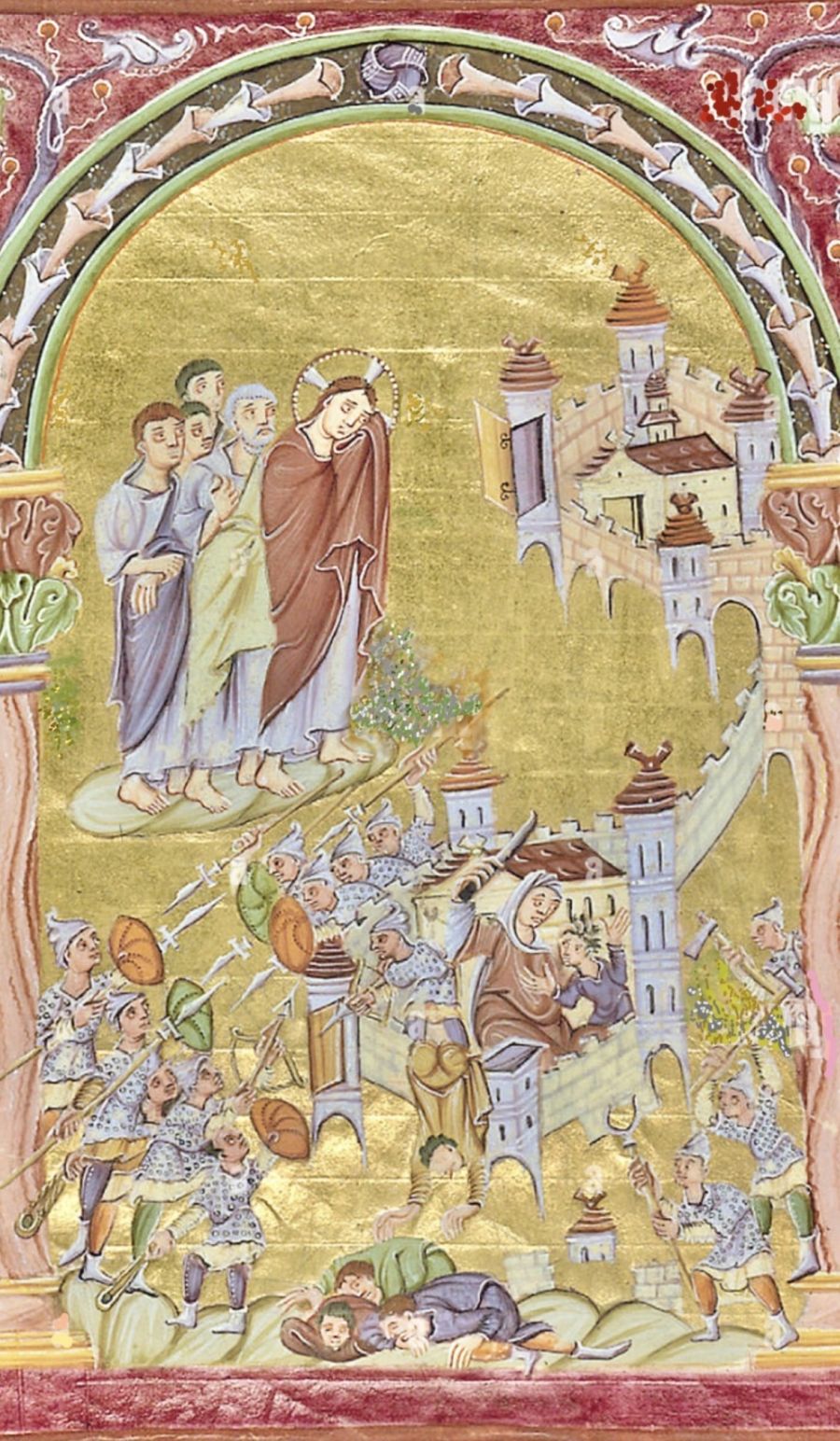
Weeping over the eternal city, with tears of a father, mother and son

(Lk 19:41-44)


We like to be in the wake of fashion or opportunism, but rejecting the Lord’s Call is a great responsibility.

We must recognize His Visit, in Presence, in the inspiration that emerges.

Scrutinizing the signs, seizing the moments of grace instead of closing stubbornly; and do not turn back.

All this changes life in root - guides to the heart of history [even in its breaking places].

Jesus wants to conquer the closed doors of every citadel; above all of the toughest bone: Jerusalem.

Sometimes the search for the divine and human tension are made vain, because of a world of the sacred that seems under the sign of a completely different ‘deity’.

In fact, the choice of an ideology of power feeds illusions - but leads to disaster the entire people.

By blurring the gaze, it doesn’t allow us to get rid of the most insidious idols, and distorts the path to the Shalôm.

Once, here are trenches, killings and destruction of the walls and houses by Nebuchadnezzar; then the Roman one of 70 which the text more directly alludes to.

But the gloomy prediction extends, and perhaps the image of the pile of ruins concerns us. Historical background, ecclesial and pastoral meditation.


Unfortunately we continue to condemn Jesus-Peace as a criminal to be expelled. Situation that drags problems.

Thus in filigree the Christ stands out in the position of King, who reluctantly pronounces a definitive sentence.

Where salvation is prepared, offered and re-proposed so intensely but in vain, rejection becomes certainly more painful - for us and for this passionate, moving Son.

Yet the class of the elect still chooses to fall and ruin, self-destructing their own people.

Rejecting the Messiah as a servant and ignoring even in time the work of Good of its authentic witnesses, the religious centre will continue to lose its special character of a saving sign.


Even today it’s time for the Master’s Visit, who knocks and asks for permission to enter, to open the seals of the great questions of history and life.

The warning is global, communitarian and personal; again with tears of father, mother and son.

The encyclical Brothers All [FT] denounces precisely the regression of an extravagant world that - with a sense of the “here and now” shrunken - seems to have learned little from the tragedies of the twentieth century, until rekindling anachronistic conflicts (nn.11.13).


To internalize and live the message:


What do you think is hidden from your eyes, but previously announced - and is crying bitterly?

With what orientation you are willing to live in the «craftsmanship of Peace», even family or social, putting aside the enmities and the ephemeral [cf. FT nn. 57. 100. 127. 176. 192. 197. 216-217. 225-236. 240-243. 254-262. 271-272. 278-285]?


[Thursday 33rd wk. in O.T.  November 20, 2025]

176 Last modified on Thursday, 20 November 2025 11:59
don Giuseppe Nespeca

Giuseppe Nespeca è architetto e sacerdote. Cultore della Sacra scrittura è autore della raccolta "Due Fuochi due Vie - Religione e Fede, Vangeli e Tao"; coautore del libro "Dialogo e Solstizio".

We cannot draw energy from a severe setting, contrary to the flowering of our precious uniqueness. New eyes are transmitted only by the one who is Friend. And Christ does it not when we are well placed or when we equip ourselves strongly - remaining in a managerial attitude - but in total listening
Non possiamo trarre energia da un’impostazione severa, contraria alla fioritura della nostra preziosa unicità. Gli occhi nuovi sono trasmessi solo da colui che è Amico. E Cristo lo fa non quando ci collochiamo bene o attrezziamo forte - permanendo in atteggiamento dirigista - bensì nell’ascolto totale
The Evangelists Matthew and Luke (cf. Mt 11:25-30 and Lk 10:21-22) have handed down to us a “jewel” of Jesus’ prayer that is often called the Cry of Exultation or the Cry of Messianic Exultation. It is a prayer of thanksgiving and praise [Pope Benedict]
Gli evangelisti Matteo e Luca (cfr Mt 11,25-30 e Lc 10,21-22) ci hanno tramandato un «gioiello» della preghiera di Gesù, che spesso viene chiamato Inno di giubilo o Inno di giubilo messianico. Si tratta di una preghiera di riconoscenza e di lode [Papa Benedetto]
The human race – every one of us – is the sheep lost in the desert which no longer knows the way. The Son of God will not let this happen; he cannot abandon humanity in so wretched a condition. He leaps to his feet and abandons the glory of heaven, in order to go in search of the sheep and pursue it, all the way to the Cross. He takes it upon his shoulders and carries our humanity (Pope Benedict)
L’umanità – noi tutti - è la pecora smarrita che, nel deserto, non trova più la strada. Il Figlio di Dio non tollera questo; Egli non può abbandonare l’umanità in una simile miserevole condizione. Balza in piedi, abbandona la gloria del cielo, per ritrovare la pecorella e inseguirla, fin sulla croce. La carica sulle sue spalle, porta la nostra umanità (Papa Benedetto)
"Too bad! What a pity!" “Sin! What a shame!” - it is said of a missed opportunity: it is the bending of the unicum that we are inside, which every day surrenders its exceptionality to the normalizing and prim outline of common opinion. Divine Appeal of every moment directed Mary's dreams and her innate knowledge - antechamber of her trust, elsewhere
“Peccato!” - si dice di una occasione persa: è la flessione dell’unicum che siamo dentro, che tutti i giorni cede la sua eccezionalità al contorno normalizzante e affettato dell’opinione comune. L’appello divino d’ogni istante orientava altrove i sogni di Maria e il suo sapere innato - anticamera della fiducia
It is a question of leaving behind the comfortable but misleading ways of the idols of this world: success at all costs; power to the detriment of the weak; the desire for wealth; pleasure at any price. And instead, preparing the way of the Lord: this does not take away our freedom (Pope Francis)
Si tratta di lasciare le strade, comode ma fuorvianti, degli idoli di questo mondo: il successo a tutti i costi, il potere a scapito dei più deboli, la sete di ricchezze, il piacere a qualsiasi prezzo. E di aprire invece la strada al Signore che viene: Egli non toglie la nostra libertà (Papa Francesco)
Inside each woman and man resides a volcano of potential energies which are not to be smothered and aligned. The Lord doesn’t level the character; he doesn’t wear out the creatures. He doesn't make them desolate. The Kingdom is Near: it reinstates the imbalances. It does not mortify them, it convert them and enhances them
Dentro ciascuna donna e uomo risiede un vulcano di energie potenziali che non devono essere soffocate e allineate

Due Fuochi due Vie - Vol. 1 Due Fuochi due Vie - Vol. 2 Due Fuochi due Vie - Vol. 3 Due Fuochi due Vie - Vol. 4 Due Fuochi due Vie - Vol. 5 Dialogo e Solstizio I fiammiferi di Maria

duevie.art

don Giuseppe Nespeca

Tel. 333-1329741


Disclaimer

Questo blog non rappresenta una testata giornalistica in quanto viene aggiornato senza alcuna periodicità. Non può pertanto considerarsi un prodotto editoriale ai sensi della legge N°62 del 07/03/2001.
Le immagini sono tratte da internet, ma se il loro uso violasse diritti d'autore, lo si comunichi all'autore del blog che provvederà alla loro pronta rimozione.
L'autore dichiara di non essere responsabile dei commenti lasciati nei post. Eventuali commenti dei lettori, lesivi dell'immagine o dell'onorabilità di persone terze, il cui contenuto fosse ritenuto non idoneo alla pubblicazione verranno insindacabilmente rimossi.






