Nov 16, 2026 Written by 

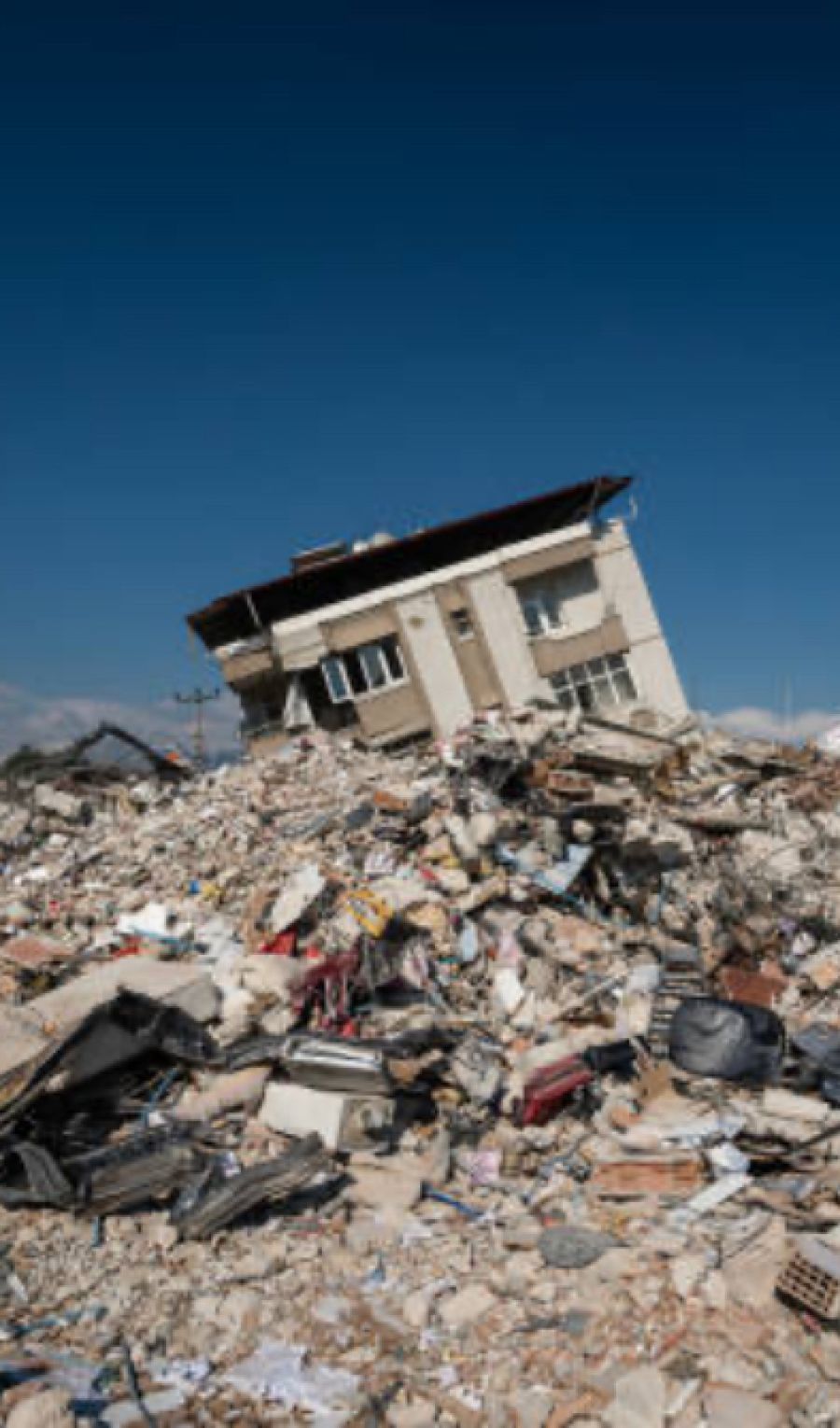
Stone on stone, in gloomy colors?

Instances of the world, idea of ‘perfection’, sense of the Christ

(Lk 21:5-11)


In his Apocalyptic Discourse Lk wants us to meditate on the meaning of history and ‘what is it that remains’... but how many adverse conditions and oppositions!

So he aims to support the hope of poor people and persecuted of his communities.

Certainly, Faith turns to the God who guides history. He is Lord of it; but today remains obscure and uncertain, so we remain as if hunted by instances that do not correspond to us - but loom.

Even some believers were beginning to doubt: does God really have control over the facts and the cosmos? It is the same question we ask ourselves today: in the midst of so many calamities, where will we end up?

In order not to be confused and plagiarized, a better awareness, a refinement of perception must take over in order to discern the meaning of the “realms” that alternate and pass.

The authentic Church has a new Vision, which precisely advocates these earthquakes and calamities, i.e. the shattering of the concatenations of the ancient world.

On the other hand, the turmoils do not disintegrate creation: they prepare a radically new one.

We have to endure within and apply ourselves - perhaps taking more care of the character of time, of unusual friends of the soul, and neglecting the inherited [or imposed] idea of ‘perfection’.

So many worlds built by the mind and hands of man imagined themselves perpetual, even the Goal of everything.

Instead they continue to collapse, dragging away ancient expressions, beliefs, customs, hegemonies, visions of things.

Each era carries with it the crumbling of human ediments and its empires - fragile and insubstantial, despite the contrary appearances (and the sense of permanence with which we interpreted them).


The functions of the earth have no other law than that of perishing: they are undermined at the base, destined to evaporate.

In a moment they move from control to flaking and from dominance to insignificance.

A reversal is enough.

Conversely, the New Kingdom is intimate and like whisper: for this reason it does not remain chipped by external events.

We are not so much called to resist some hard changes, as to stay with them.

The objective is to be ‘re-born’ - as sons, still regenerated, who go through another founding Eros [to whom abandon themselves, otherwise it will not be able to perform its high function].

This impetus settles in hearts and transforms them; it cements them, without clamour: with a very great, subversive power, which triggers new forms - but with secret virtue.

It has another step and rhythm, cozy; and a different time.

So we do not lose any part of ourselves, indeed we let grow all sides of personality and relationships.


It is the Faith [plural] that accepts the opposites - to solidify the stones.


To internalize and live the message:


How do you experience the upheavals?

Do you contract your freedom or do you ignite your most brilliant (even opposing) secret powers?


[Tuesday 34th wk. in O.T.  November 24, 2026]

29 Last modified on Monday, 16 November 2026 05:09
don Giuseppe Nespeca

Giuseppe Nespeca è architetto e sacerdote. Cultore della Sacra scrittura è autore della raccolta "Due Fuochi due Vie - Religione e Fede, Vangeli e Tao"; coautore del libro "Dialogo e Solstizio".

The evangelization of the world involves the profound transformation of the human person (Pope John Paul II)
L'opera evangelizzatrice del mondo comporta la profonda trasformazione delle persone (Papa Giovanni Paolo II)
The Church, which is ceaselessly born from the Eucharist, from Jesus' gift of self, is the continuation of this gift, this superabundance which is expressed in poverty, in the all that is offered in the fragment (Pope Benedict)
La Chiesa, che incessantemente nasce dall’Eucaristia, dall’autodonazione di Gesù, è la continuazione di questo dono, di questa sovrabbondanza che si esprime nella povertà, del tutto che si offre nel frammento (Papa Benedetto)
How we treat them will be taken as the way we treat Jesus himself. We do not see here a simple literary device, or a simple metaphor [Pope Benedict]
Il comportamento che noi abbiamo nei loro confronti sarà dunque considerato come il comportamento che abbiamo nei confronti di Gesù stesso. Non vediamo in questo una semplice formula letteraria, una semplice immagine! [Papa Benedetto]
The Sadducees, addressing Jesus for a purely theoretical "case", at the same time attack the Pharisees' primitive conception of life after the resurrection of the bodies; they in fact insinuate that faith in the resurrection of the bodies leads to admitting polyandry, contrary to the law of God (Pope John Paul II)
I Sadducei, rivolgendosi a Gesù per un "caso" puramente teorico, attaccano al tempo stesso la primitiva concezione dei Farisei sulla vita dopo la risurrezione dei corpi; insinuano infatti che la fede nella risurrezione dei corpi conduce ad ammettere la poliandria, contrastante con la legge di Dio (Papa Giovanni Paolo II)
Today, as yesterday, the Church needs you and turns to you. The Church tells you with our voice: don’t let such a fruitful alliance break! Do not refuse to put your talents at the service of divine truth! Do not close your spirit to the breath of the Holy Spirit! (Pope Paul VI)
Oggi come ieri la Chiesa ha bisogno di voi e si rivolge a voi. Essa vi dice con la nostra voce: non lasciate che si rompa un’alleanza tanto feconda! Non rifiutate di mettere il vostro talento al servizio della verità divina! Non chiudete il vostro spirito al soffio dello Spirito Santo! (Papa Paolo VI)
Sometimes we try to correct or convert a sinner by scolding him, by pointing out his mistakes and wrongful behaviour. Jesus’ attitude toward Zacchaeus shows us another way: that of showing those who err their value, the value that God continues to see in spite of everything (Pope Francis)
A volte noi cerchiamo di correggere o convertire un peccatore rimproverandolo, rinfacciandogli i suoi sbagli e il suo comportamento ingiusto. L’atteggiamento di Gesù con Zaccheo ci indica un’altra strada: quella di mostrare a chi sbaglia il suo valore, quel valore che Dio continua a vedere malgrado tutto (Papa Francesco)
Deus dilexit mundum! God observes the depths of the human heart, which, even under the surface of sin and disorder, still possesses a wonderful richness of love; Jesus with his gaze draws it out, makes it overflow from the oppressed soul. To Jesus, therefore, nothing escapes of what is in men, of their total reality, in which good and evil are (Pope Paul VI)

Due Fuochi due Vie - Vol. 1 Due Fuochi due Vie - Vol. 2 Due Fuochi due Vie - Vol. 3 Due Fuochi due Vie - Vol. 4 Due Fuochi due Vie - Vol. 5 Dialogo e Solstizio I fiammiferi di Maria

duevie.art

don Giuseppe Nespeca

Tel. 333-1329741


Disclaimer

Questo blog non rappresenta una testata giornalistica in quanto viene aggiornato senza alcuna periodicità. Non può pertanto considerarsi un prodotto editoriale ai sensi della legge N°62 del 07/03/2001.
Le immagini sono tratte da internet, ma se il loro uso violasse diritti d'autore, lo si comunichi all'autore del blog che provvederà alla loro pronta rimozione.
L'autore dichiara di non essere responsabile dei commenti lasciati nei post. Eventuali commenti dei lettori, lesivi dell'immagine o dell'onorabilità di persone terze, il cui contenuto fosse ritenuto non idoneo alla pubblicazione verranno insindacabilmente rimossi.