Oct 26, 2026 Written by 

Eucharist, gratuitousness and strangers: the unheard of or marketing

(Lk 14:15-24)


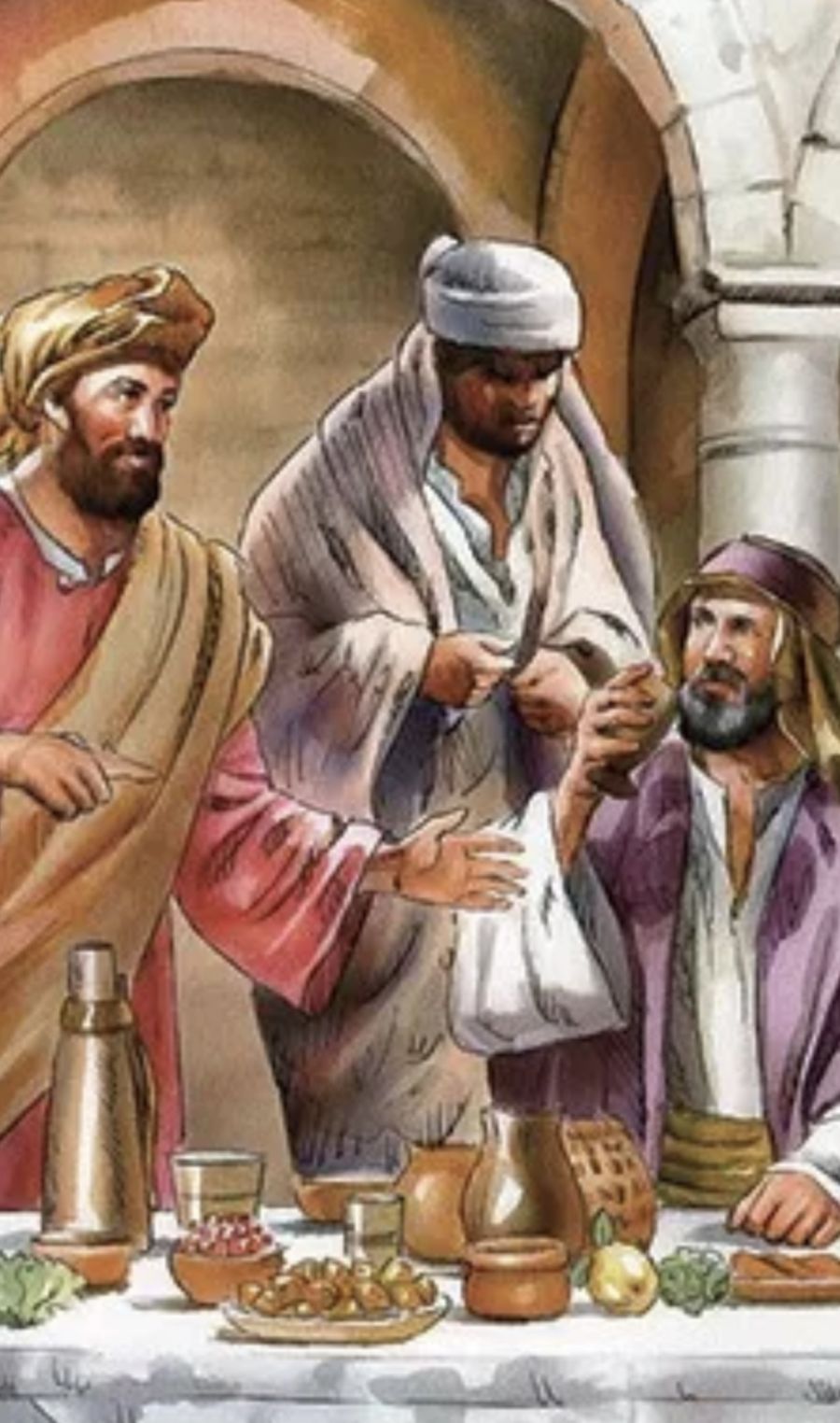
Jesus does not compare the Father's Kingdom to a solemn assembly, but to a great Supper!

However, the proposal of festive novelty is rejected. The self-sufficient ones and experienced have other commitments and interests.

The invitation to take part in the Feast was initially addressed to the sons of Israel, who still likened the Messianic times to a Banquet, characterised by gratitude and [internal] fraternity.

In the first communities, the difficulties in broadening the criteria of communion came precisely from converts from Judaism, who by long practice retained the custom of not sharing food with those far away; thus the breaking of the Eucharistic Bread.

Within the framework of their conventions and the sacred norms attested in the Torah (Deut 20:5-7), the behaviour of those refusing the invitation in the parable of the Banquet (vv.18-20) was legitimate from the point of view of the recognised right - not friendship.

It is to accentuate the meaning of the gesture that the master of the feast orders the servants to gather precisely those who were socially excluded from the ancient religion, because they were considered impure: the pagans, the wobblers. Open ones to waiting for.

Christ continues to draw a dividing line between those who advocate an untouchable order and ideals above human reality, and those who, being on the periphery, are always willing to participate in the Feast.

They are not the “all concerned with ritual”, manners, appearance; but with the life they spread.

They do not let themselves be conditioned by privileges, their things, and laws: they give without double-entry.

They accept with natural readiness; rejoicing in reality and not in the distinction between sacred and profane.

They do not think already have the answer, and do not end up being slaves to it.


Jesus' teaching invites not to limit one's affections and not to let one's heart be cluttered by customs, by the particular or current mentalities, by legalistic blocks - or by the 'many things'.

In the assembly of sons, it is not the well provided for [serious, busy people with no time to waste, with too many possessions and invitations to manage] but the petty people... who come to the fore. Despite their poor aptitude.

All this, because characteristic of the Little and beggar is the readiness to cross fences: that which makes them fit to grasp God's summons.

Those who are far away - even if they are on tight corner - fill the Father's House.

‘In society’ the poor man is one of many, but the invitation to [Eucharistic] canteen conveys to him a sense of values that do not suffocate life with pettiness, and ties.

Indeed, the poor man often has a better understanding of divine-human things.

This ever more conscious resemblance to the Son of God is accentuated in the scarcity of ‘adequate means’: scarcity that makes true, that induces others to reflect - remaining unremarkable, incapable of “make lightning”.


Our solidarity is not a matter of sympathy, common interests and esprit de corps, but rather the result of an extended Calling; of one powerful Life circulating in all, respecting their freedom and reality - as well as their phases of change.

Paraphrasing the encyclical Fratelli Tutti [nos.13-15, passim] according to the passage from Lk we must remain careful not to impoverish the life of Faith, turning it into a detached commitment to «cultural colonisation».

If this were the case, even the universal-Catholic horizon of a conviviality of differences would dissolve into an overly normalised, utterly predictable; ultimately deserted invitation.

The entrenched or self-interested rejection of the Banquet would bring with it - as before our eyes - the «further disintegration» of «critical thinking», of action «for justice», of its «paths to integration».

In fact, even ecclesial society can run the risk of «distorting the great words», «risking impoverishment»; thus «reducing itself to the arrogance of the strongest» and to «merely ephemeral marketing recipes, which find in the destruction of the other the most effective resource».

But God's people cannot live in a parallel, disconnected, double world - as if the One Eternal worshipped was a patchwork of wiles, marketing and convenience.


[Tuesday 31st wk. in O.T.  November 3, 2026]

80 Last modified on Monday, 26 October 2026 05:11
don Giuseppe Nespeca

Giuseppe Nespeca è architetto e sacerdote. Cultore della Sacra scrittura è autore della raccolta "Due Fuochi due Vie - Religione e Fede, Vangeli e Tao"; coautore del libro "Dialogo e Solstizio".

The horizon of friendship to which Jesus introduces us is the whole of humanity [Pope Benedict]
L’orizzonte dell’amicizia in cui Gesù ci introduce è l’umanità intera [Papa Benedetto]
The Church invites believers to regard the mystery of death not as the "last word" of human destiny but rather as a passage to eternal life (Pope John Paul II)
La Chiesa invita i credenti a guardare al mistero della morte non come all'ultima parola sulla sorte umana, ma come al passaggio verso la vita eterna (Papa Giovanni Paolo II)
The saints: they are our precursors, they are our brothers, they are our friends, they are our examples, they are our lawyers. Let us honour them, let us invoke them and try to imitate them a little (Pope Paul VI)
I santi: sono i precursori nostri, sono i fratelli, sono gli amici, sono gli esempi, sono gli avvocati nostri. Onoriamoli, invochiamoli e cerchiamo di imitarli un po’ (Papa Paolo VI)
Man rightly fears falling victim to an oppression that will deprive him of his interior freedom, of the possibility of expressing the truth of which he is convinced, of the faith that he professes, of the ability to obey the voice of conscience that tells him the right path to follow [Dives in Misericordia, n.11]
L'uomo ha giustamente paura di restar vittima di una oppressione che lo privi della libertà interiore, della possibilità di esternare la verità di cui è convinto, della fede che professa, della facoltà di obbedire alla voce della coscienza che gli indica la retta via da seguire [Dives in Misericordia, n.11]
We find ourselves, so to speak, roped to Jesus Christ together with him on the ascent towards God's heights (Pope Benedict)
Ci troviamo, per così dire, in una cordata con Gesù Cristo – insieme con Lui nella salita verso le altezze di Dio (Papa Benedetto)
There are also serious, dangerous omissions and we have to recognize with healthy realism that in this way things are not all right, it is not all right when errors are made. However, we must also be certain at the same time that if, here and there, the Church is dying because of the sins of men and women, because of their non-belief, at the same time she is reborn (Pope Benedict)
Ci sono anche cadute gravi, pericolose, e dobbiamo riconoscere con sano realismo che così non va, non va dove si fanno cose sbagliate. Ma anche essere sicuri, allo stesso tempo, che se qua e là la Chiesa muore a causa dei peccati degli uomini, a causa della loro non credenza, nello stesso tempo, nasce di nuovo (Papa Benedetto)
The question makes apparent the concern, present in ancient Jewish tradition, over finding a unifying principle in the various formulations of God's will […] Emphasis is placed on the totality of this dedication to God, listing the three faculties that define man in his deep psychological structures: heart, soul and mind. The word mind, diánoia, contains the rational element (Pope Benedict)
La domanda lascia trasparire la preoccupazione, presente nell’antica tradizione giudaica, di trovare un principio unificatore delle varie formulazioni della volontà di Dio […] L’accento è posto sulla totalità di questa dedizione a Dio, elencando le tre facoltà che definiscono l’uomo nelle sue strutture psicologiche profonde: cuore, anima e mente. Il termine mente, diánoia, contiene l’elemento razionale (Papa Benedetto)
A “year” of grace: the period of Christ’s ministry, the time of the Church before his glorious return, an interval of our life (Pope Francis)

Due Fuochi due Vie - Vol. 1 Due Fuochi due Vie - Vol. 2 Due Fuochi due Vie - Vol. 3 Due Fuochi due Vie - Vol. 4 Due Fuochi due Vie - Vol. 5 Dialogo e Solstizio I fiammiferi di Maria

duevie.art

don Giuseppe Nespeca

Tel. 333-1329741


Disclaimer

Questo blog non rappresenta una testata giornalistica in quanto viene aggiornato senza alcuna periodicità. Non può pertanto considerarsi un prodotto editoriale ai sensi della legge N°62 del 07/03/2001.
Le immagini sono tratte da internet, ma se il loro uso violasse diritti d'autore, lo si comunichi all'autore del blog che provvederà alla loro pronta rimozione.
L'autore dichiara di non essere responsabile dei commenti lasciati nei post. Eventuali commenti dei lettori, lesivi dell'immagine o dell'onorabilità di persone terze, il cui contenuto fosse ritenuto non idoneo alla pubblicazione verranno insindacabilmente rimossi.