Aug 29, 2026 Written by 

Fraternal Correction and Common Prayer, everywhere

In the midst of the reconciled: the change of course and destiny in the Kingdom

(Mt 18:15-20)


«The word that the Evangelist uses for "agree" is synphōnēsōsin:  there is reference made to a "symphony" of hearts» [Pope Benedict].

This malleable energy has a mysterious grip on the reality core - which is always stronger than we are; it unfolds the plot and proposes, but here, conversely, it welcomes us.

Or it disturbs us with discomfort... which, however, is already therapy. Because every tear leads to the deep layers of our primordial being, our seed and its own world of relationships.

And then the soul loosens up, becomes less tortuous, follows a direction it was not thinking of; it finds the intoxicating road of deep attunements, abandons the shoddy path.

It prefers the Way that corresponds to person, more than the identifications: all the idols that previously held sway, which - despite appearances - struggled with our essential destination.

And without running away from ourselves, but only from external conventions, 'together' we can move from one-sidedness to wholeness, from banality to fullness; to the reason why we are in the world; to the destiny of being that we are.

Perhaps we could not perceive it before, because the eye was bouncing between the walls of the usual domestications.

And the ephemeral, addictive thought did not destroy the idea [without perception] of ourselves; an idea without listening, which did not vanish.


Fraternal correction tugs at our throats, but it is that bitterness that brings back the essentials; it is that anxiety (if accepted) that truly heals us.


Mt suggests dialogue, which attempts to understand the motives of the other.

Indeed, in the early Judeo-Christian realities, the climate was perhaps overly scrupulous.

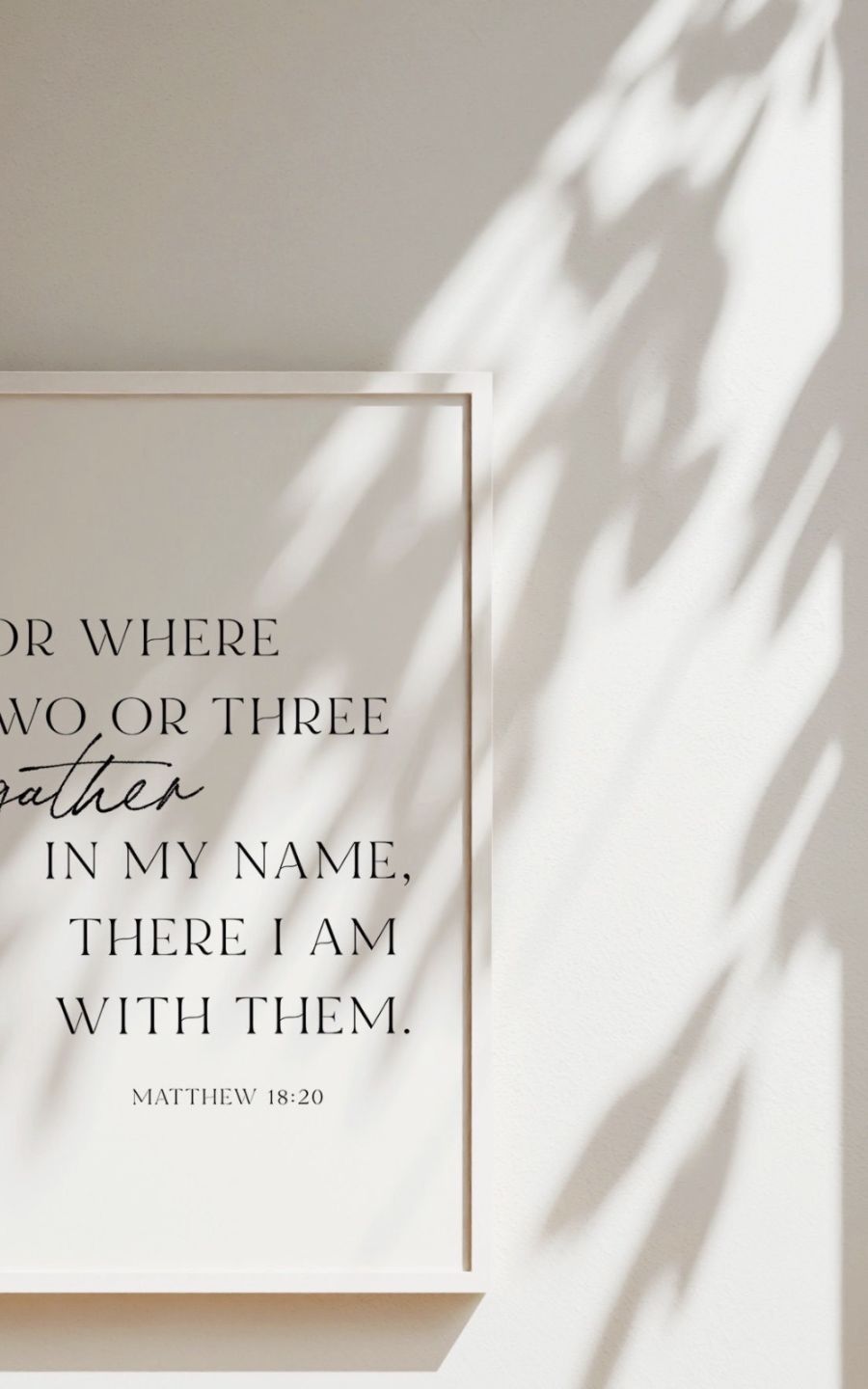
Thus detachment from the community was also foreseen, but there remained the knowledge that the sinner was not a divided from God, even 'outside' the particular church: «Where are two or three gathered in my Name» (v.20).

It is the centre of the new pedagogical concept - no longer “religious” and mass, but of living and personal Faith.

The expression «in my Name» indicates that Jesus himself had his hands full with the judges of his time.

All real. Even an exclusion can unite us to Him and bring Him to life concretely.

If the true - not vague - Christ remains the pivot of the fraternity, the Father will grant the return of the excluded brother.

Obviously, this can only happen if the excluded person experiences that community leaders first, seek human confrontation - following the same position as the Master: «in the midst».

Equal distance from everyone, and every now and then a nice rotation of roles, which indeed strengthens the ‘harmony’ and genuine unity.


Those who still show us the living Jesus today are not “above” others. They do not take the lead, nor do they place themselves “at the front” – so that some are close by whilst others remain at a safe distance.

People amongst people, and turnover.

We are called to rediscover the bond between honouring God and a humanising understanding of our sisters and brothers.

Love calls for love, forgiveness spontaneously attracts forgiveness - not out of effort, not out of good manners or duty, but as a channel for to enter the world new preparatory energies, and twists.


Fragrant sign of the Church is the reversal of roles and courses.


[23rd Sunday in O.T. (year A), September 6, 2026]

104 Last modified on Saturday, 29 August 2026 04:46
don Giuseppe Nespeca

Giuseppe Nespeca è architetto e sacerdote. Cultore della Sacra scrittura è autore della raccolta "Due Fuochi due Vie - Religione e Fede, Vangeli e Tao"; coautore del libro "Dialogo e Solstizio".

Origen says “we should practise this symphony” (Commentary on the Gospel according to Matthew, 14,1), in other words this harmony within the Christian community [Pope Benedict]
Dice Origene che “dobbiamo esercitarci in questa sinfonia” (Commento al Vangelo di Matteo 14, 1), cioè in questa concordia all’interno della comunità cristiana [Papa Benedetto]
Thus in communion with Christ, in a faith that creates charity, the entire Law is fulfilled. We become just by entering into communion with Christ who is Love (Pope Benedict)
Così nella comunione con Cristo, nella fede che crea la carità, tutta la Legge è realizzata. Diventiamo giusti entrando in comunione con Cristo che è l'amore (Papa Benedetto)
«Francis was reproaching his brethren too harsh towards themselves, and who came to exhaustion by means of vigils, fasts, prayers and corporal penances» [FS 1470]
«Francesco muoveva rimproveri ai suoi fratelli troppo duri verso se stessi, e che arrivavano allo sfinimento a forza di veglie, digiuni, orazioni e penitenze corporali» [FF 1470]
From a human point of view, he thinks that there should be distance between the sinner and the Holy One. In truth, his very condition as a sinner requires that the Lord not distance Himself from him, in the same way that a doctor cannot distance himself from those who are sick (Pope Francis)
Da un punto di vista umano, pensa che ci debba essere distanza tra il peccatore e il Santo. In verità, proprio la sua condizione di peccatore richiede che il Signore non si allontani da lui, allo stesso modo in cui un medico non può allontanarsi da chi è malato (Papa Francesco)
The life of the Church in the Third Millennium will certainly not be lacking in new and surprising manifestations of "the feminine genius" (Pope John Paul II)
Il futuro della Chiesa nel terzo millennio non mancherà certo di registrare nuove e mirabili manifestazioni del « genio femminile » (Papa Giovanni Paolo II)
And it is not enough that you belong to the Son of God, but you must be in him, as the members are in their head. All that is in you must be incorporated into him and from him receive life and guidance (Jean Eudes)
E non basta che tu appartenga al Figlio di Dio, ma devi essere in lui, come le membra sono nel loro capo. Tutto ciò che è in te deve essere incorporato in lui e da lui ricevere vita e guida (Giovanni Eudes)
Consequently, just as for Christ carrying the cross was not an option but a mission to be embraced for love, so it is for Christians too. In our world today, where the forces that divide and destroy seem to dominate, Christ does not cease to offer to all his clear invitation [Pope Benedict]
Come per Cristo, così pure per i cristiani portare la croce non è dunque facoltativo, ma è una missione da abbracciare per amore. Nel nostro mondo attuale, dove sembrano dominare le forze che dividono e distruggono, il Cristo non cessa di proporre a tutti il suo chiaro invito [Papa Benedetto]
We see this great figure, this force in the Passion, in resistance to the powerful. We wonder: what gave birth to this life, to this interiority so strong, so upright, so consistent, spent so totally for God in preparing the way for Jesus? The answer is simple: it was born from the relationship with God (Pope Benedict)
Noi vediamo questa grande figura, questa forza nella passione, nella resistenza contro i potenti. Domandiamo: da dove nasce questa vita (Papa Benedetto)

Due Fuochi due Vie - Vol. 1 Due Fuochi due Vie - Vol. 2 Due Fuochi due Vie - Vol. 3 Due Fuochi due Vie - Vol. 4 Due Fuochi due Vie - Vol. 5 Dialogo e Solstizio I fiammiferi di Maria

duevie.art

don Giuseppe Nespeca

Tel. 333-1329741


Disclaimer

Questo blog non rappresenta una testata giornalistica in quanto viene aggiornato senza alcuna periodicità. Non può pertanto considerarsi un prodotto editoriale ai sensi della legge N°62 del 07/03/2001.
Le immagini sono tratte da internet, ma se il loro uso violasse diritti d'autore, lo si comunichi all'autore del blog che provvederà alla loro pronta rimozione.
L'autore dichiara di non essere responsabile dei commenti lasciati nei post. Eventuali commenti dei lettori, lesivi dell'immagine o dell'onorabilità di persone terze, il cui contenuto fosse ritenuto non idoneo alla pubblicazione verranno insindacabilmente rimossi.






